
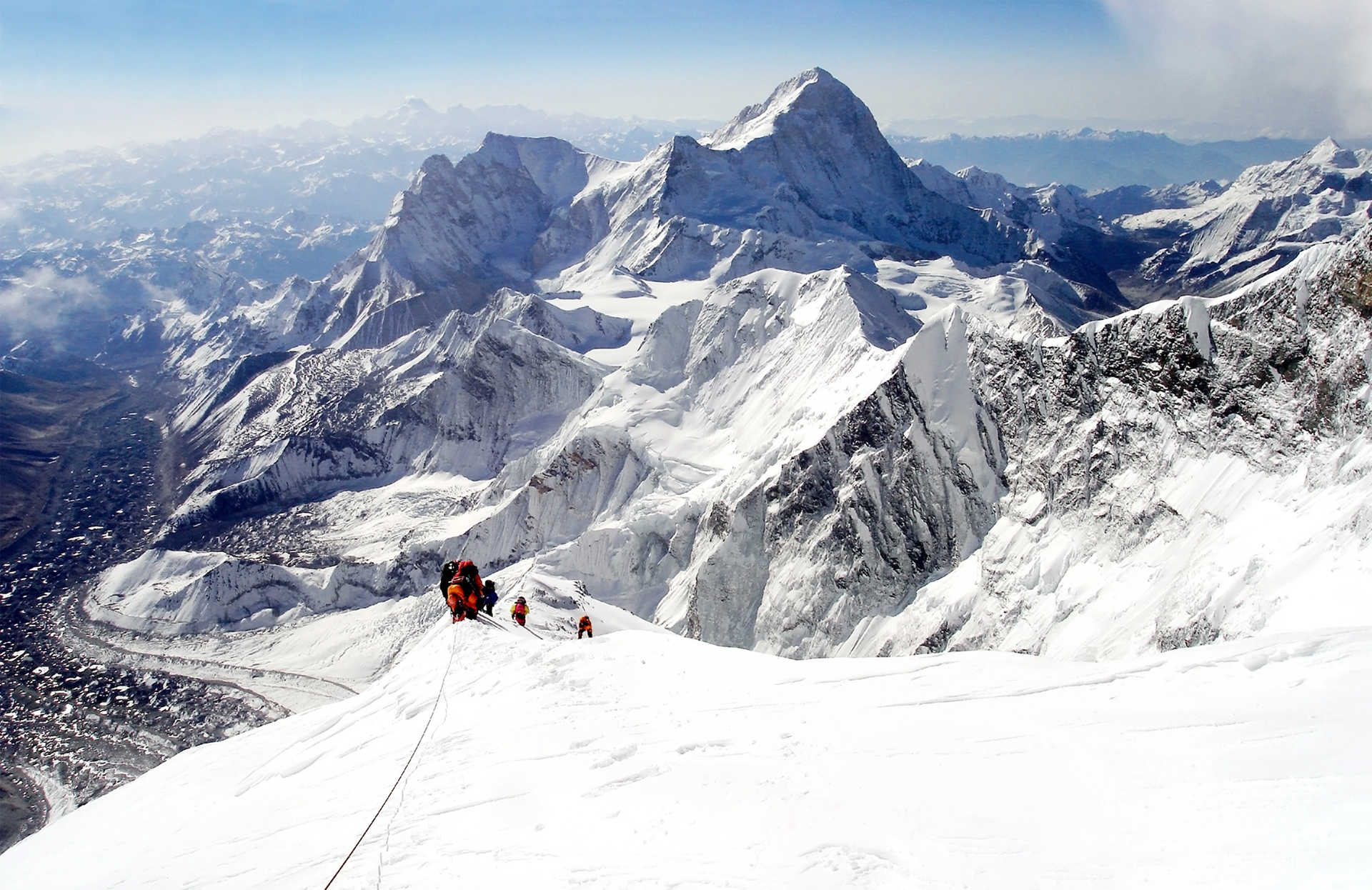
An Everest peak climb - the holy grail?
Climbing Mount Everest is often considered the ultimate goal for many high-altitude mountaineers. Understandably, how much does climbing Everest cost is therefore a commonly asked question. The truth is, undertaking this extraordinary feat comes at a high financial cost, but it can vary dramatically depending on how you choose to do it.
In this guide, we break down the true cost of climbing Everest. We also take a look at some alternative, budget-friendly options to climbing Mount Everest. Here’s a snapshot of what you’ll discover:
- What’s included in different expedition styles
- Fees to climb Everest and recent changes
- A realistic breakdown of what the cost to climb Everest summit includes
- Additional costs climbers often overlook when planning an Everest peak climb
- A comparison of budget, full-service, and premium Everest expeditions
- Alternative challenges to climbing Mount Everest
How much is it to climb Mount Everest, in reality?
An Everest summit price can typically be categorised as follows:
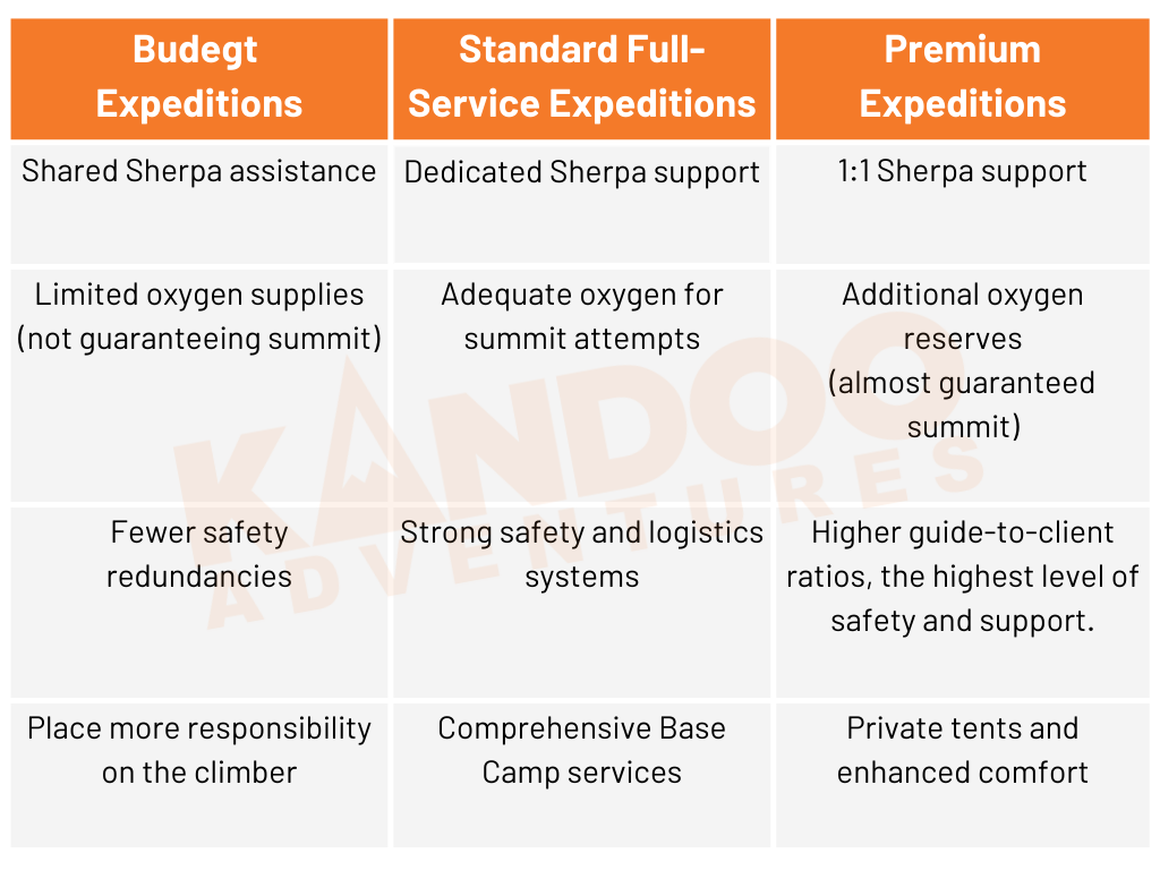
- Budget/basic Everest expeditions: £26,000-£33,000 or USD $35,000-$45,000. These prices are rare, but you’ll mostly find local Nepali operators in this category.
- Standard full-service Everest expeditions: £33,000-£52,000 or USD $45,000-$70,000. This is the most common option, typically including full logistics, Sherpa support, acclimatisation rotations, and sufficient oxygen for summit attempts.
- Premium or luxury expeditions: £59,000+ or USD $80,000+. These offer maximum support, often with 1:1 Sherpa ratios, increased oxygen supplies, smaller groups, and higher overall safety margins, plus pre-trip support and additional comfort during your trip.
The full price of summiting Everest depends on factors such as guide support, logistics, oxygen supply, insurance, and the level of comfort and safety built into the expedition. But we’ll look at the finer details further down.
Side note: The prices above include the costs associated with a trip booked with an operator. We have a section below about additional costs. These should be added to the prices above.
The cost to summit Everest: contributing factors
Summiting Mount Everest is more than a climb. A key contributing factor to your overall cost is how long the expedition takes.
So, how long does it take to climb Mount Everest?
In reality, reaching the summit is a staggering two-month expedition, spent in one of the most remote and hostile environments on Earth.
And that’s just the time spent on the mountain. Some Everest summit trip providers even include pre-trip training plans and at-home hypoxic tent acclimatisation.
Every climber on Everest relies on an enormous support network long before they ever step above Base Camp. Let’s look at these factors in more detail.
Everest permit fees and government costs
Permit fees
One of the largest fixed expenses is the fee to climb Everest, set by the Nepalese Government. For the first time in 11 years, the Everest permit fee for the main spring season increased in 2025, rising from USD $11,000 to USD $15,000 (£11,133) per climber. Income from permit fees is a key source of revenue for Nepal, with mountain climbing and trekking contributing more than 4% to the country's economy.
Environmental and waste management deposits
These are refundable deposits required by the Government of Nepal to ensure expeditions carry out responsible waste removal on Everest and are typically around USD $4,000 (£3,000) per team.
The deposit is refunded after the team demonstrates that all waste - including human waste, oxygen bottles, and camp rubbish has been brought down and properly disposed of according to regulations.
Local liaison officer and administrative fees
Nepal mandates that major peak expeditions must have a government-appointed liaison officer (LO) attached to the team. They monitor safety, expedition compliance, and environmental rules.
A base fee for an LO is roughly USD $2,500-$3,000 (£1,855-£2,220) per team, depending on duration and peak.
Side note: The above fees are typically bundled into the overall expedition price that reputable operators quote, rather than being an extra add-on that you pay separately.
These costs are mandatory and non-negotiable, regardless of expedition style or operator.
What else is included in your Everest summit package?
If you’re comparing the cost of climbing Everest between operators, it’s key to understand what you’re paying for. These are some of the elements that contribute to the cost of your trip.
Logistics and base camp operations
These costs cover the movement of your belongings and nutrition for your trip, such as:
- Transport of equipment and supplies to Everest Base Camp
- Accommodation at Base Camp (tents, dining, toilets
- Food and cooking staff for the duration of the expedition
Sherpa support and high-altitude staff
Sherpas are full of local wisdom and are essential to a safe Everest peak climb. The cost of your trip covers their salaries, insurance, any additional training needs, equipment, and oxygen.
Side note: Ethical operators invest heavily in fair pay and safety for Sherpas, which is reflected in the price, so watch out for this.
Oxygen, equipment, and rope fixing
At higher altitudes, our blood oxygen concentration levels can dip as low as 40%, compared to 98-99% at sea level. Invariably, Everest summit expeditions rely on bottled oxygen above 7,000m, with many climbers requiring supplementary oxygen at lower altitudes than this. Costs of oxygen include:
- Personal oxygen cylinders - this is for climbers, Sherpa, and other high-altitude workers
- Regulators and masks - devices that control the flow of oxygen from a cylinder to the climber’s mask
- Shared oxygen caches on summit day - backup oxygen cylinders placed along the route in advance, available to the team if a climber needs extra oxygen during the final ascent.
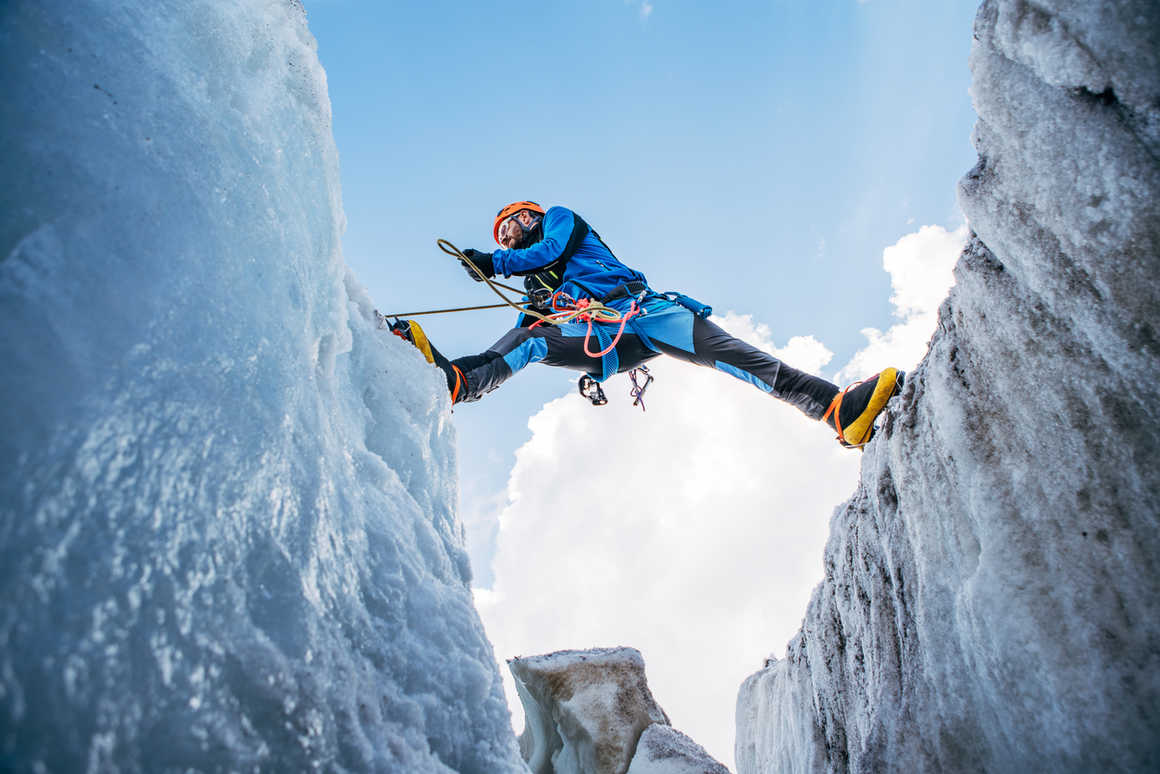
In addition to oxygen supply, a contribution of your trip cost goes towards route fixing (ropes, ladders and anchors, used for leverage in the ice and over crevasses).
Pre-trip training and preparation (operator-dependent)
Some Everest summit expedition operators include structured pre-trip training and preparation as part of the overall Everest summit price.
This may include:
- Personalised training plans,
- Guided physical conditioning
- Access to hypoxic or altitude-simulation systems
- Pre-expedition skills refreshers
Side note: These services are not standard across all expeditions and are usually reflected in higher overall trip costs.
Additional costs to summit Everest
On top of paying for your Everest expedition with an operator, you need to factor in any costs that sit outside of what they provide. Let’s take a look at them all.
Insurance and emergency coverage
Most Everest summit operators cannot legally include personal insurance in their package because policies must be taken out in the climber’s own name, and coverage varies by nationality, age, and risk tolerance.
Climbers are expected to arrange:
- High-altitude rescue insurance
- Medical and evacuation cover
- Trip cancellation insurance
- Travel and expedition insurance
This is a critical and unavoidable part of the cost to summit Everest.
Flights, visas, and domestic travel within Nepal
Most expedition prices start and end in Kathmandu, but you will need to check this to ensure you have your domestic travel covered within your trip price.
Climbers need to include the cost of international flights from their home and tourist visas in their budget. These expenses can add several thousand pounds or dollars to the total cost of climbing Everest. Prices vary depending on season and location.
What to factor in:
- International flights to Nepal
- Domestic flights from Kathmandu to Lukla - operator dependent
- Nepal tourist visas
Personal expenses
In addition to the main expedition costs, climbers should budget for personal expenses. These are often overlooked when looking at the cost to summit Everest, but can stack up easily.
Altogether, most climbers can expect these additional costs to range from roughly £2,000-£5,000 (USD $2,500-$6,000) depending on gear choices, duration in Kathmandu, and personal spending habits.
Elements to consider include:
- Hotels and food in Kathmandu
- Pre-travel immunisations
- Medical kits
- Technical gear such as high-altitude boots, down suits, gloves, thermal layers, crampons, and sleeping bags
- Snacks and energy bars for during the climb
Budget vs full-service vs premium expeditions
Not all Everest expeditions are created equal. Understanding the differences is essential when evaluating the cost to climb Everest summit. Here’s a handy at-a-glance comparison.
Cost-effective alternatives to an Everest peak climb
If summiting Everest isn’t the right goal for you, there are many other ways to discover the Himalaya’s dramatic landscapes and cultures. In fact, Nepal recently opened nearly 100 lesser-known peaks for climbers without royalty fees for the next two years, highlighting the variety of options beyond Everest.
Here are our 4 alternative adventure suggestions to climbing to the peak of Mount Everest that offer breathtaking scenery and challenge.
Mera Peak, Nepal (6,476 m)
Mera Peak is a classic Himalayan trekking peak with an impressive summit that gives you an authentic high altitude experience and incredible views of Everest and Makalu. It’s technically accessible for fit trekkers and a perfect stepping stone to bigger climbs.
Everest Base Camp Trek + Kala Pattar, Nepal (5,545 m)
While not a summit climb, this iconic trek to EBC gets you deep into the Everest region, up close to Everest itself, and includes a high viewpoint at Kala Pattar for dramatic panoramic views. It’s one of the world’s most celebrated high‑altitude treks and is significantly cheaper than an Everest peak climb. The cost to climb Everest Base Camp is typically between £1,200-£2,200 or USD $1,500-$3,000.
Island Peak, Nepal (6,189 m)
Often combined with the Everest Base Camp trek (it is on our trip!), Island Peak is a rewarding and challenging summit that introduces basic climbing skills without the full logistical complexity of an 8,000 m expedition. It’s one of the most popular peaks in the Khumbu region.
Markha Valley & Kang Yatse II, Ladakh, India (6,250 m)
Away from Nepal, this route in Ladakh combines stunning high‑altitude trekking with a significant summit challenge on Kang Yatse II. It’s a great Himalayan alternative that blends culture and adventure and sits in the 6,000 m peak category.
Kandoo Adventures - for Mount Everest adventures and beyond
The cost of climbing Everest reflects safety, experience, ethics, and preparation. A cheaper Everest summit price means cutting corners, something that can have serious consequences at 8,848 metres.
Alternatively, investigate climbing to the peak of one of the many other magnificent summits our planet has to offer. We recommend checking out Kilimanjaro in Tanzania, Aconcagua in Argentina, or Chimborazo in Ecuador - all around or over the 6000 m mark, offering remarkable scenery and wildlife spotting along the way.
If you’d like to know more about trekking and climbing adventures, speak to the Kandoo team - we’re the friendly experts!