

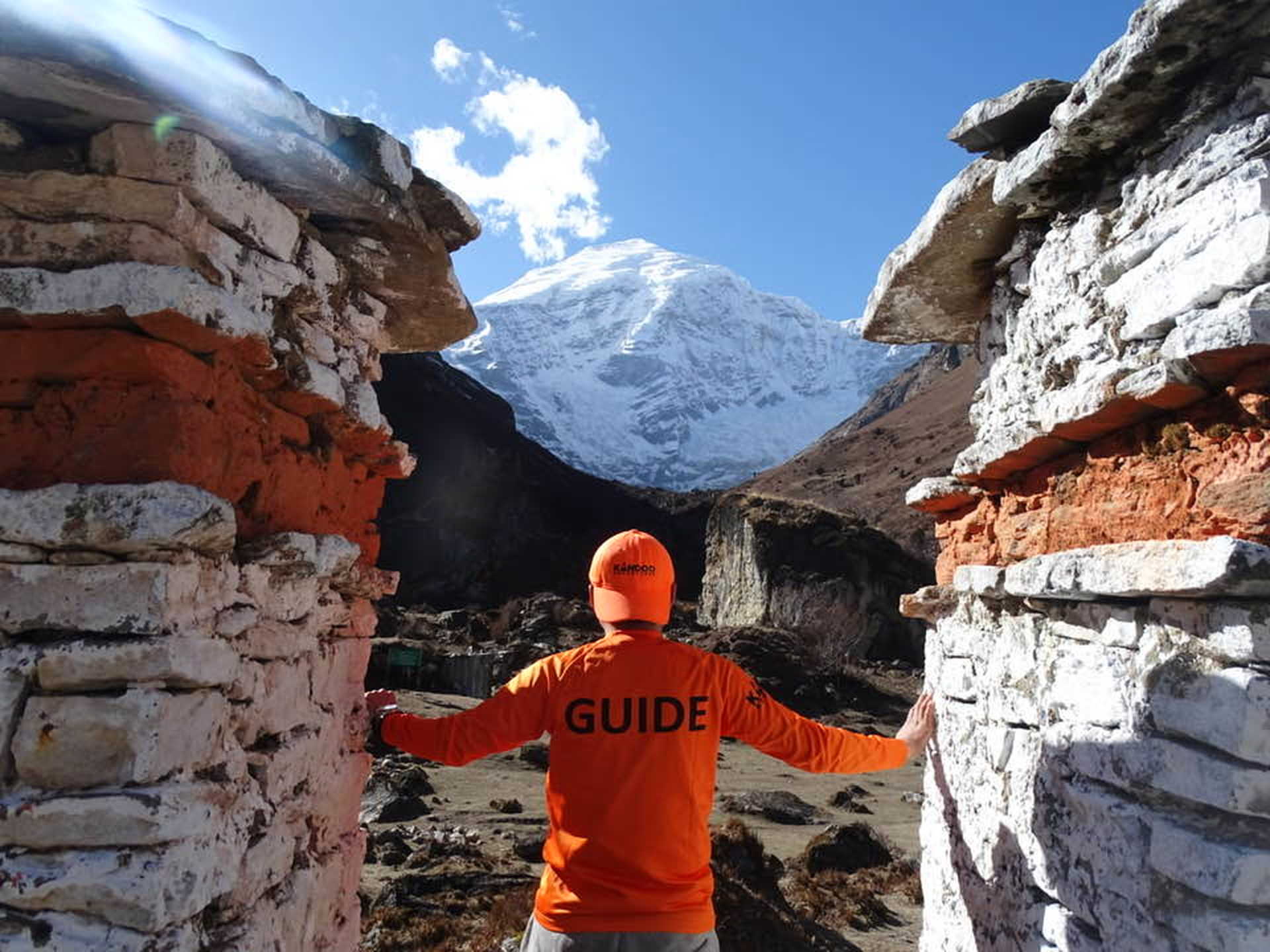
A simple breakdown of Bhutan’s National Parks
Bhutan was shrouded in mystery until 1974 when borders were finally opened to foreign visitors. That same year, the first protected area in Bhutan was designated – Jigme Dorji National Park – named after the recently deceased Dragon King (Druk Gyalpo), Jigme Dorji Wangchuck.
Since then, Bhutan has steadily expanded its protected areas network. Today, these parks form a connected web of conservation zones that stretch from subtropical lowlands to the high Himalayas, protecting some of the most diverse and intact ecosystems in the world.
Because of this, trekking through the national parks in Bhutan should be on every adventurer’s list.
Read on to find out why you should consider a visit to Bhutan’s national parks (plus details of where to go when).
How many national parks are there in Bhutan?
In Bhutan, there are five national parks, four wildlife sanctuaries, one nature reserve and nine protected natural corridors linking the nine protected territories in Bhutan.
Together, these areas cover almost 20,000 km2, just over 51% of Bhutan.
Almost the entire country is within the Himalayan Mountain Range:
- The north of Bhutan is part of the Great Himalayas with soaring peaks and high altitudes.
- The central region of Bhutan, within the Inner Himalayas, includes the Black Mountains – so named for dense and dark coniferous forests that line its slopes.
- Southern Bhutan, although more moderate in climate, lies within the foothills of the Himalayas.
Bhutan’s species density is also in the top 10% of all countries in the world. Aside from incredible mountains, vibrant culture and rich history, Bhutan is also a wildlife-lovers paradise.
What are the main national parks in Bhutan?
There are five designated national parks in Bhutan, each with its own unique terrain and character. Here’s a more detailed look at their characteristics.
1. Wangchuck Centennial National Park
- Location: Central northern Bhutan
- Size: 4,914km2 / 1,897m2
- Established: 2008
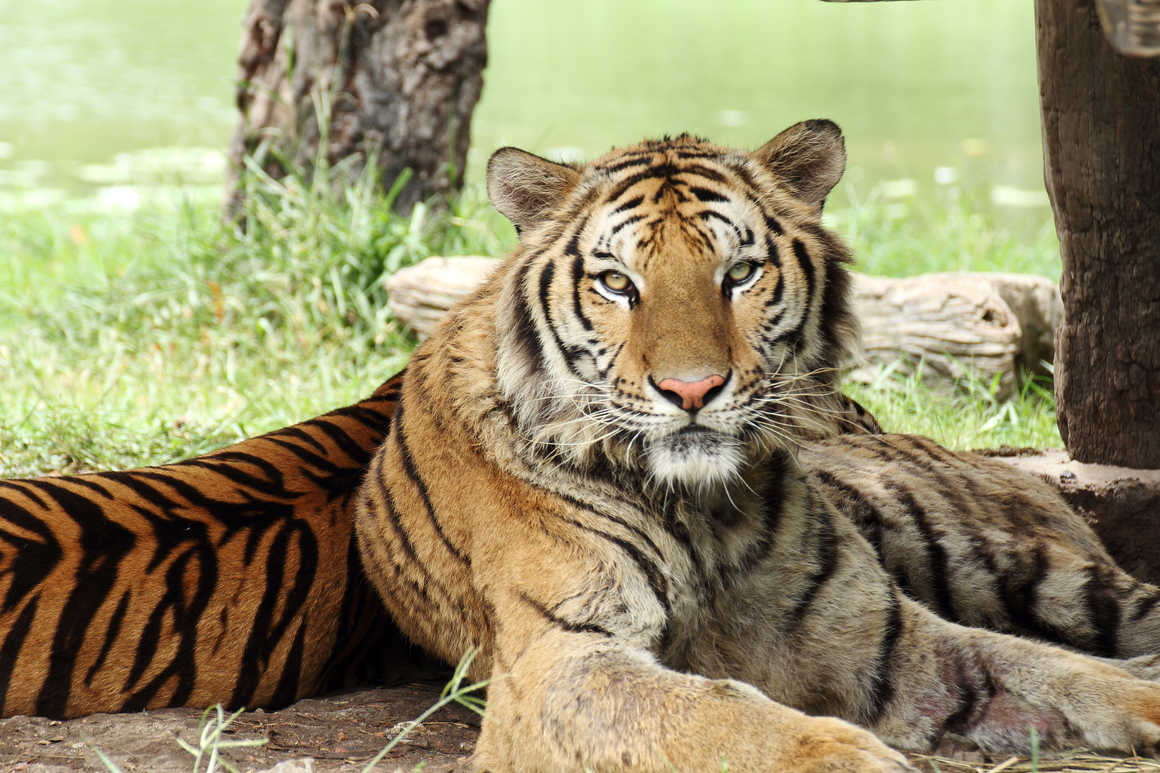
Wangchuck Centennial National Park is Bhutan’s largest national park. Named after the Wangchuck dynasty, the ruling family of Bhutan, it was opened 100 years after their rise to power.
This vast wilderness links to other protected areas through natural corridors that allow fauna to roam freely between regions. There are an estimated 43 species of mammal found here, including Royal Bengal tigers, snow leopards and Tibetan wolves.
Top tip: A particular highlight of any visit to this remote region should include Dhur Tshachu (or Dur Tshachu), a natural hot spring found on the epic Snowman Trek route through Bhutan.
2. Jigme Dorji National Park
Location: Northwestern Bhutan
Size: 4,319km2 / 1,667m2
Established: 1974
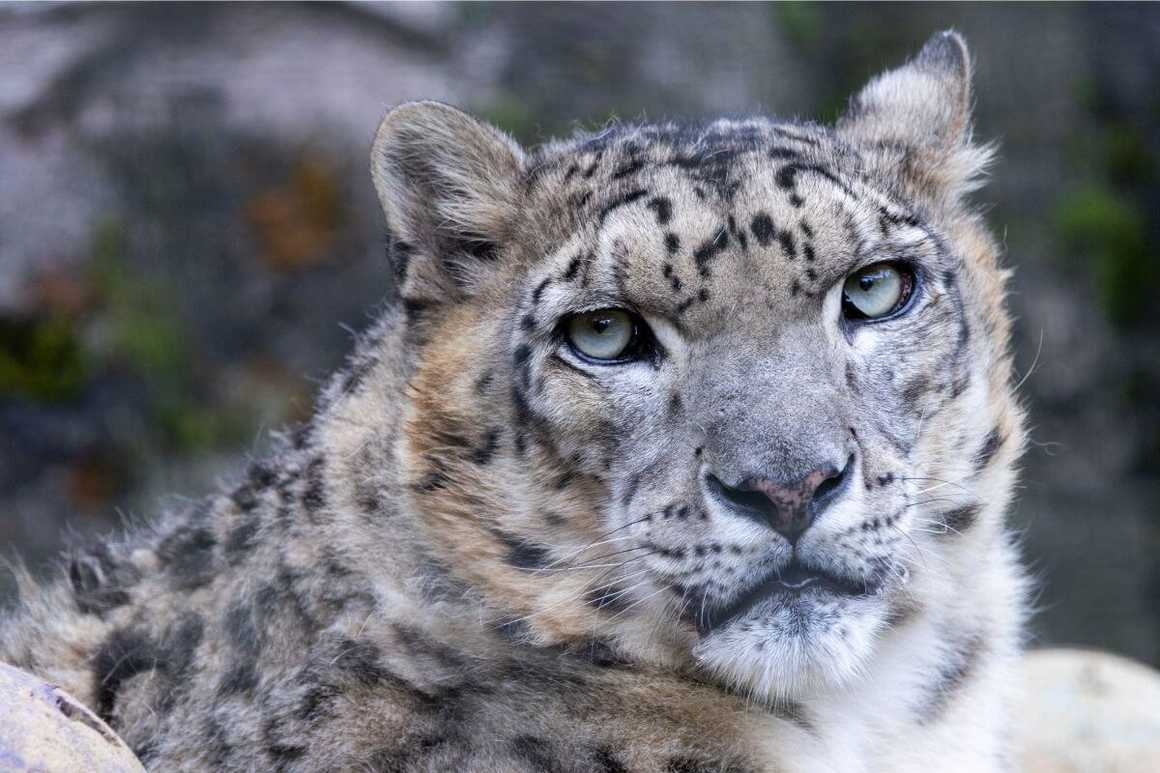
Jigme Dorji National Park is the oldest national park in Bhutan and the second largest. The area spans all three climate zones spanning from 1,400–7,000m in altitude and is rich in biodiversity.
The park is one of the best places in Bhutan to experience high-altitude trekking routes, rare wildlife (such as snow leopards and takin) and sweeping views of some of the country’s most remote Himalayan landscapes.
3. Royal Manas National Park
Location: Central southern Bhutan
Size: 1,057km2 / 408m2
Established: 1993
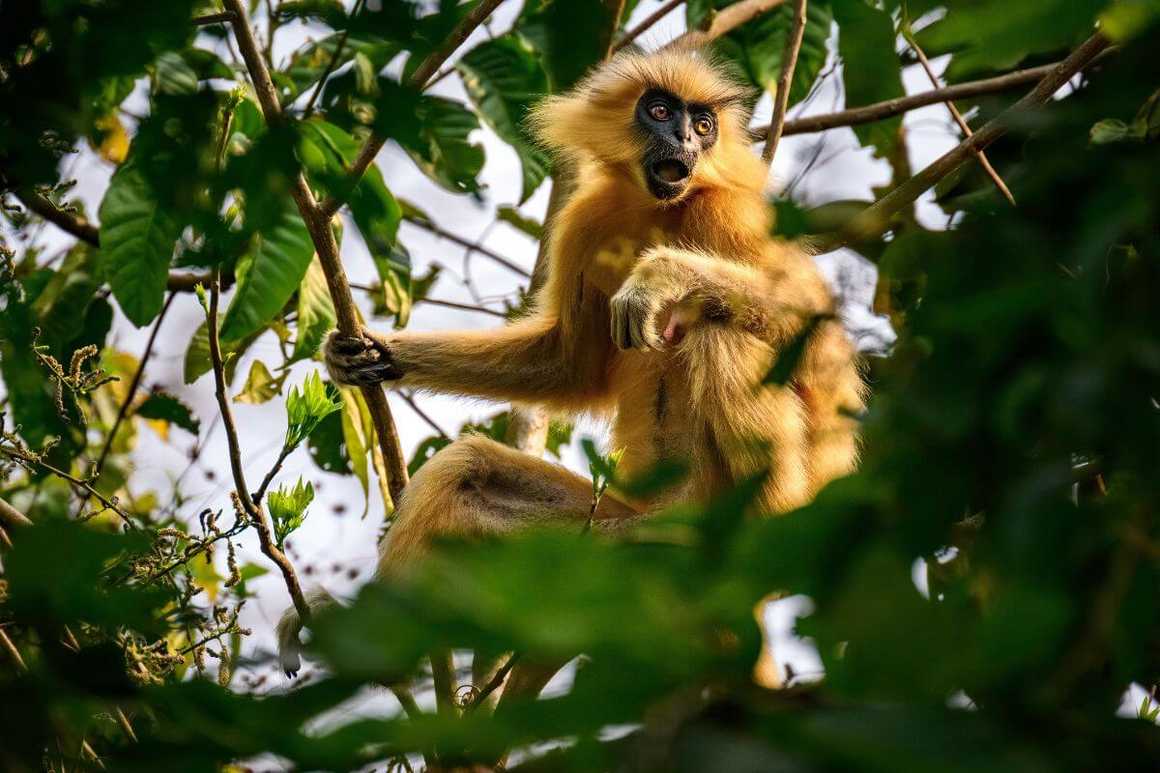
Initially established as a game sanctuary in 1966, Royal Manas National Park was designated as a national park in 1993. The park sits alongside Manas National Park in India and forms part of a transnational conservation area.
Here you’ll find rare, vulnerable and endangered species thriving on the wild slopes and plains of this magnificent park.
4. Phrumsengla National Park
Location: Central eastern Bhutan
Size: 905km2 / 349km2
Established: 1998
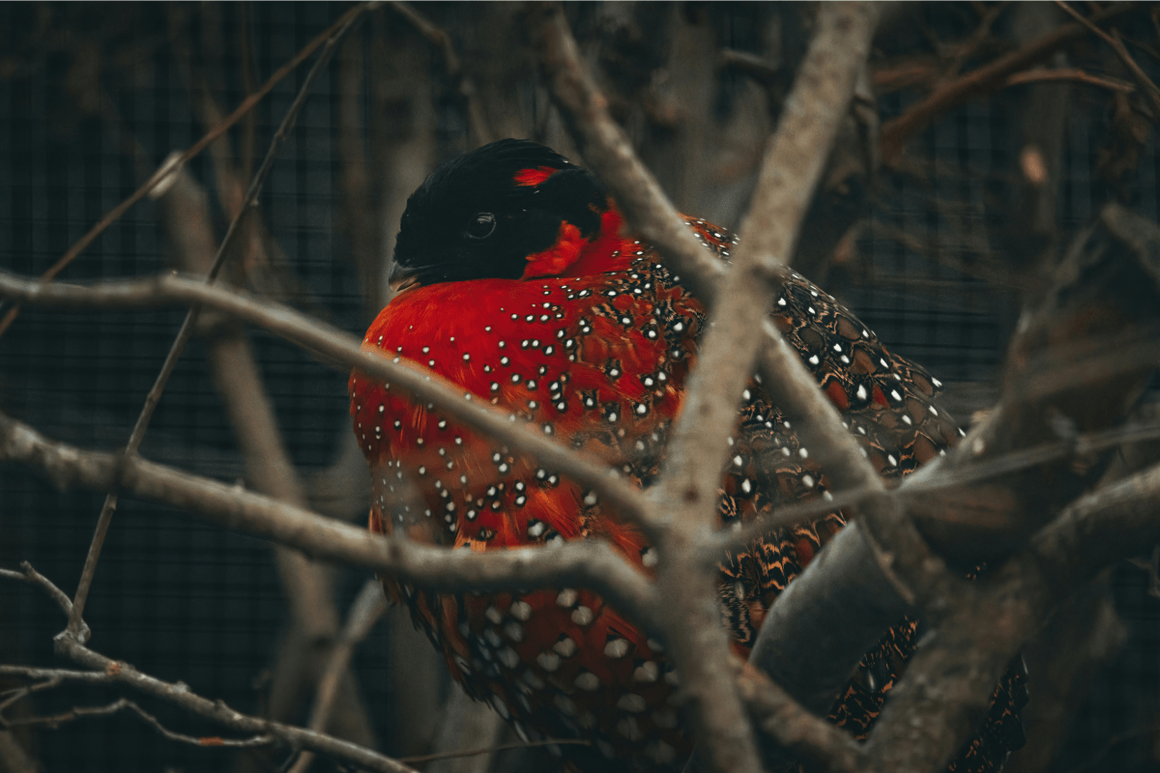
Formerly known as Thrumpsengla, Phrumsengla National Park is home to steep forested slopes and some of the largest remaining tracts of fir forest in the world. Phrumsengla may be the smallest national park in Bhutan, but it’s well worth a visit.
Plus, it’s a haven for birdlife, like the rare and colourful satyr tragopan.
5. Jigme Singye Wangchuck National Park
Location: Central Bhutan
Size: 1,730km2 / 668m2
Established: 1995
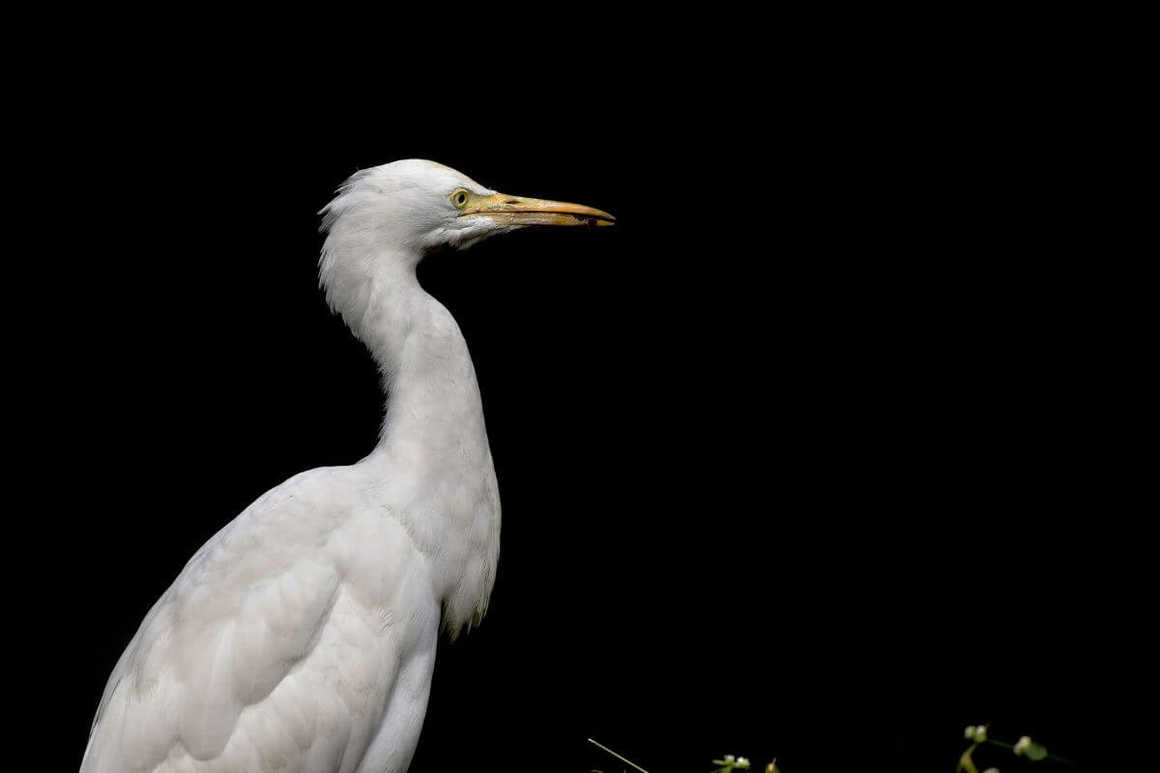
Covering the Black Mountains that separate eastern and western Bhutan, Jigme Singye Wangchuck National Park was named after the fourth king of Bhutan and son of Jigme Dorji Wangchuck.
The park borders Royal Manas to the south and is connected to Phrumsengla, Wangchuck Centennial and Jigme Dorji National Parks through biological corridors. The contiguous protected areas allow freedom of movement for animal species, preserving biodiverse populations both here and in the connected regions.
Why visit Jigme Dorji National Park in Bhutan?
Jigme Dorji National Park is the ultimate destination for trekking in Bhutan. Three iconic hiking routes – the Druk Path Trek, the Snowman Trek and Chomolhari Treks – all pass through this incredible region, one of the most diverse in the country.
Notoriously known as one of the hardest routes in the world, the Snowman Trek journeys through Jigme Dorji (and Wangchuck Centennial National Park) across high altitude terrain and through remote communities. This epic 25-day adventure is a once-in-a-lifetime experience for hikers.
Trekkers of all levels can enjoy trekking in Bhutan’s largest national park with dramatic scenery around every corner and routes that bisect the stunning Himalayan Mountains.
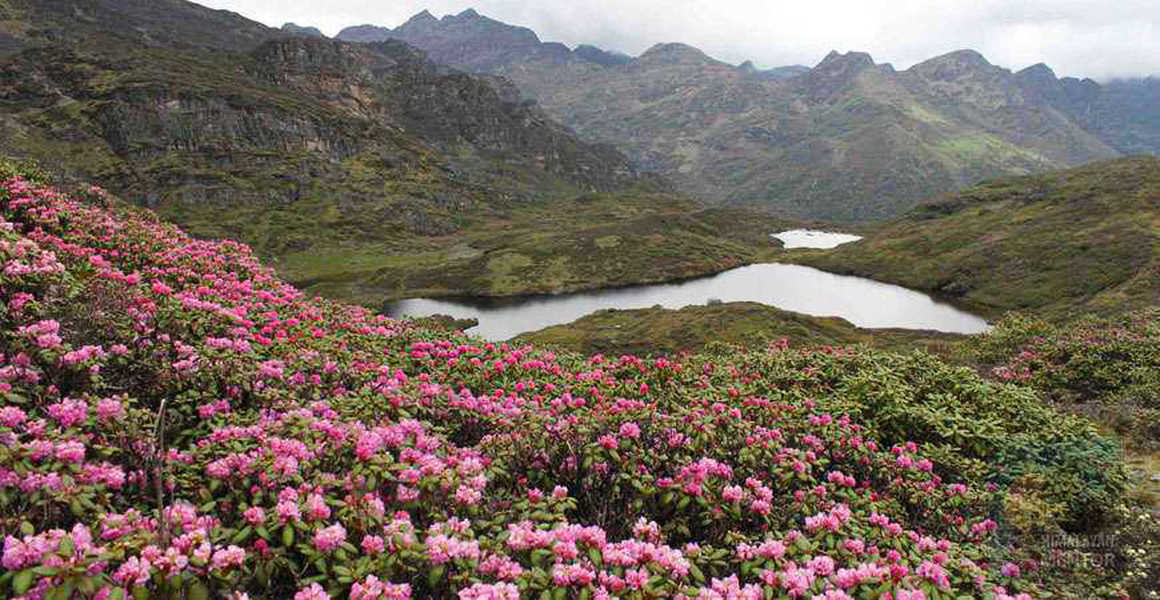
The park includes snow-capped peaks and vast glaciers, ancient rhododendron forests and high alpine meadows, not to mention the abundant wildlife found here. Royal Bengal tigers coexist alongside snow leopards, and takin, langur, red panda, black bear and elephant all roam the protected fir forests.
UNESCO lists Jigme Dorji National Park as “one of Bhutan's conservation jewels”. The organisation also describes the value of the park to trekkers as outstanding on its tentative list (a pre-recognition status required before the allocation of UNESCO World Heritage Site status).
What wildlife can you see in Royal Manas National Park Bhutan?
If wildlife is a priority during your visit to Bhutan, the only place that tops the biodiversity of Jigme Dorji is Royal Manas National Park (RMNP) in the eastern Himalayas.
A veritable haven of fauna, this wildlife hotspot forms part of a huge transboundary ecosystem that ensures the safe passage of mammals, birds and other animals.
Largely forested and mostly mountainous, the few open savannah plains and wide Manas River offer wonderful wildlife-spotting opportunities where large populations congregate.
The lower elevations of Royal Manas are also listed as a tentative UNESCO site due to the diverse populations of large cat species and the high density of tigers per square kilometre. In fact, it has the highest tiger density in the world!
The WWF describes visiting Royal Manas as like stepping into The Jungle Book. With 65 mammal species, 430 bird species and hundreds of species of reptile and aquatic animals, it’s easy to see why!
Aside from Bengal tigers, RMNP is home to the following wildlife:
- Indian rhinoceros
- Pygmy hog
- Indian elephant
- Clouded leopard
- Jungle cats
- Marbled cat
- Water buffalo
- Hare
- Gaur
- Porcupine
- Wild dogs
- Giant flying squirrel
What makes Jigme Singye Wangchuck National Park worth visiting?
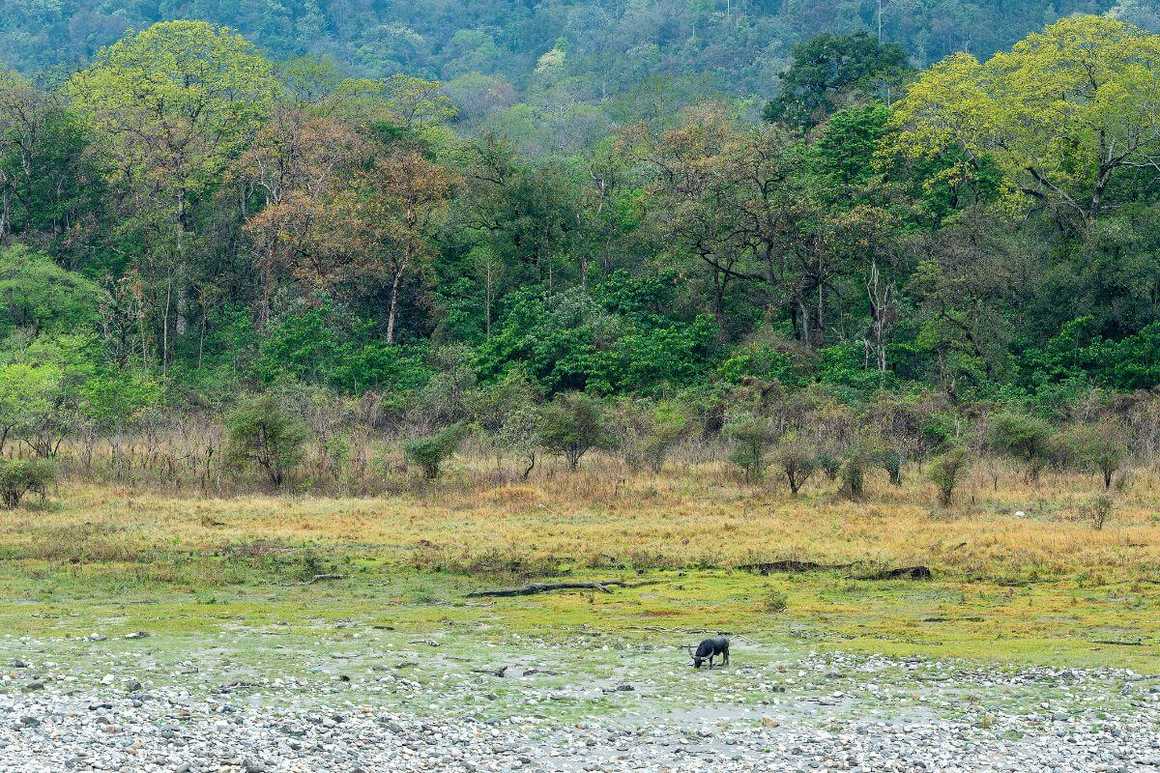
The opportunity to explore warm rainforest AND cooler climates (and their resident animal populations) in one national park makes JSWNP such a gem to visit.
Forested trails flanked by lush flora give way to alpine meadows offering spectacular views of the high mountains beyond in Jigme Singye Wangchuck National Park (JSWNP).
Trekking in Jigme also offers visitors a mix of high altitude and moderate climate, varied wildlife and remote routes. This special park connects subtropical valleys in the south with high altitude ecosystems in the north where wildlife can adapt to the changing of the seasons.
One of the most popular hikes in JSWNP is the Nabji Korphu Trail which is a 5–6-day trekking route through the national park.
Taking in the remote village communities, this multi-day hike combines cultural experiences with wildlife encounters. The trek also covers relatively low altitudes, making it ideal for adventurers of all levels of experience.
Which national park in Bhutan is best for trekking and wildlife?
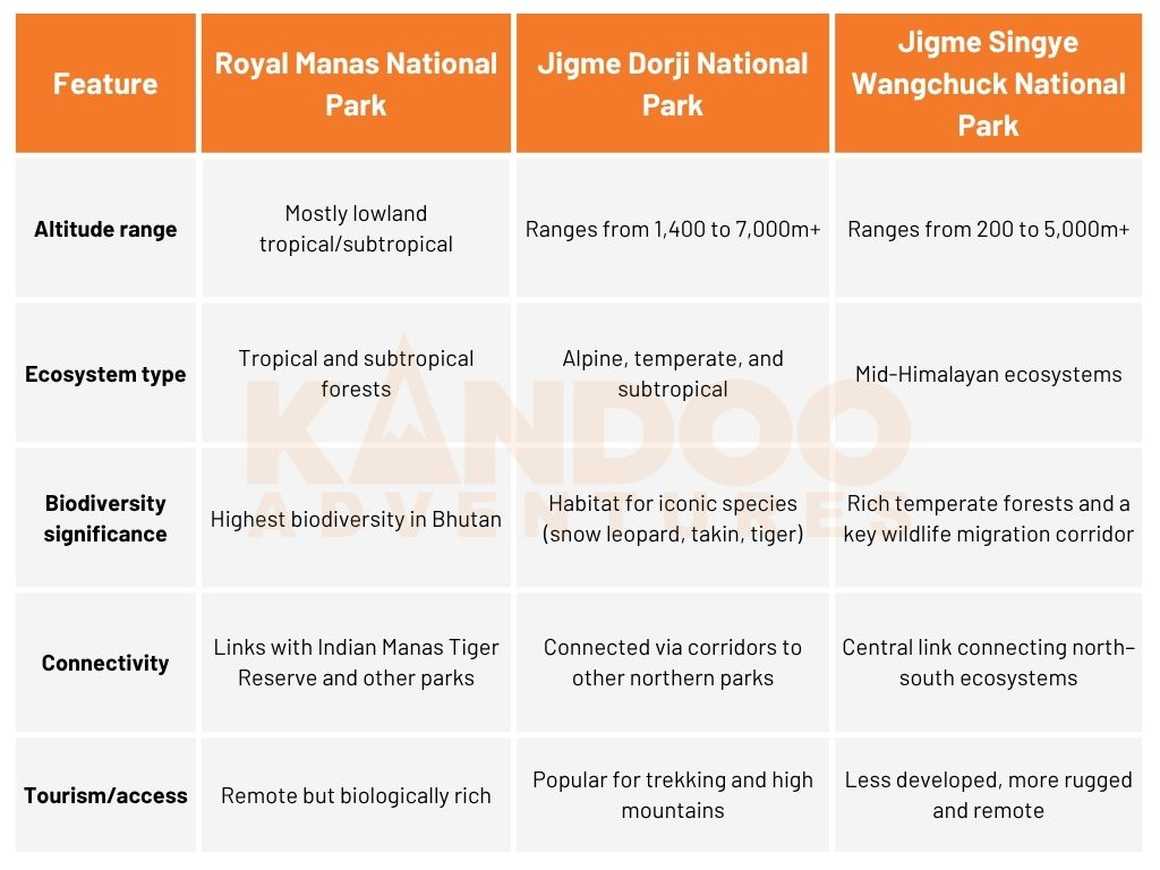
Each of the three national parks described above are incredibly unique destinations to visit. If you’re short on time and need to figure out which to shortlist, check out our quick summary:
- Jigme Dorji National Park. Best for soaring peaks, high altitude treks and epic adventures.
- Royal Manas National Park. Best for exceptionally rich biodiversity and unrivalled wildlife spotting
- Jigme Singye Wangchuck National Park. Best of both! Stunning scenery, plenty of trekking and tons of wildlife.
And here’s a bit more detail:
When is the best time to visit national parks in Bhutan?
The best time to visit the national parks in Bhutan is during the spring and autumn trekking seasons.
Outside of these seasons, winter brings subzero temperatures, snow and storms. Summer signals the start of the monsoon season where torrential rain and summer heat create an unbearable humidity.
There’s a huge difference in climate between the northern regions and the south, distinct as they are in altitude and terrain. Royal Manas National Park has lower altitude and milder temperatures with less snow, making it a better destination for winter visits.
Spring in Bhutan
From February to May, it’s springtime in Bhutan. Now that the snow and cold has passed, new life begins to bloom in the mountains and temperatures steadily get warmer.
There’s still the chance of the odd shower but nothing like the monsoon rains. April and May are the driest, warmest months. Although the landscapes may be dry and parched, they’re far from arid.
Autumn in Bhutan
By September, the monsoonal rains have passed, and the landscapes are lush and green again. Days are generally sunny and warm with much less chance of rain.
September to November is one of the best times to visit Bhutan. Temperatures range from 15-25°C during the daytime. While the nights are much colder, good visibility ensures breathtaking views when trekking during this season.
Autumn is also the best time to visit a local festival in Bhutan – Thimphu Tshechu in the capital city of Thimphu is a particular highlight.
Trekking in Bhutan with Kandoo Adventures
Bhutan is notoriously protective of its history, culture and values, making it a highly desirable destination for adventurers. With much of its landmass protected from development, trekking here feels wonderfully wild and remote.
Kandoo has welcomed people to Bhutan for almost two decades. Our local team is experienced and knowledgeable in the customs, traditions and landmarks that makes our treks truly extraordinary.
And where else do you get to spot such unique wildlife whilst hiking through dense, untouched forest across hidden mountain slopes?! This enticing combination is what makes Bhutan a top destination for hikers.
For a trekking experience like no other, consider visiting Bhutan and explore the magical Himalayas for yourself. You won’t regret it!