

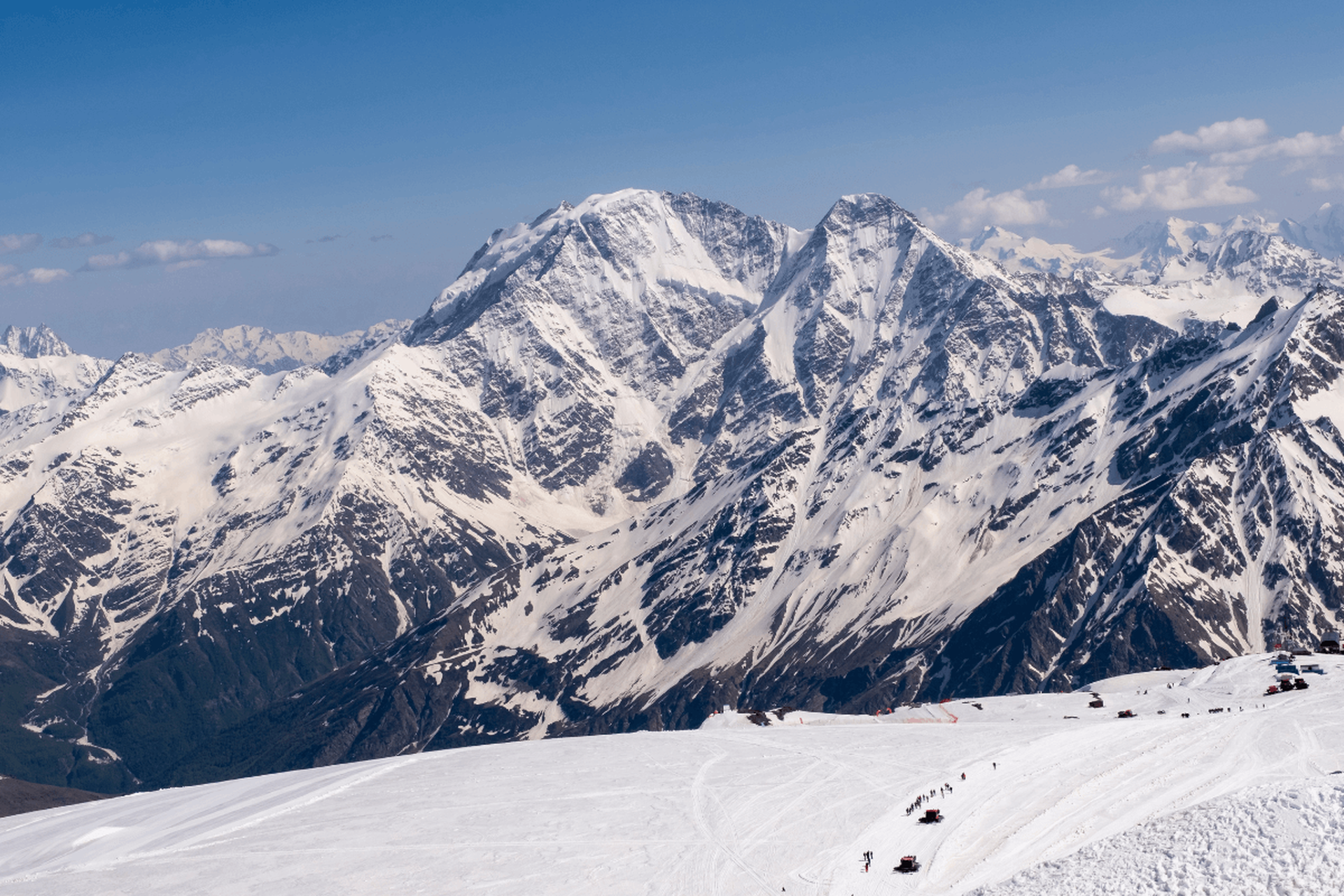
Europe is a top destination when looking for BIG mountains to climb. From the mighty Caucasus mountains of Eastern Europe to the majestic Alps in the West, the choice and variety of incredible mountains (which are relatively close together) is a huge draw for outdoor adventurers.
Keep reading to find out more about why this diverse continent offers exciting opportunities for experienced mountaineers and budding adventurers alike. We explore the highest mountains in Europe, where to find them and get a breakdown of how to climb the highest peak in Europe.
What is the highest peak in Europe?
The highest peak in Europe is Mount Elbrus at 5,642m (18,510ft).
Sitting just north of the border between Russia and Georgia, Mt Elbrus is part of the Greater Caucasus Mountains that divide Russia from neighbouring Georgia and Azerbaijan.
Europe’s highest peak is considered one of the iconic Seven Summits – the highest mountains on each continent. Known as one of the easier Seven Summits to climb, variable conditions and quickly changing weather on the mountain make this a challenging journey even for experienced mountaineers.
Climbing Mount Elbrus requires few technical skills. But as the tallest peak in Europe, experience of high altitude adventures, climbing in freezing conditions and plenty of support is essential for a summit success.
The highest peaks in Europe ranked by elevation
Of the highest peaks in Europe, nine are in the mighty Caucasus Mountains which stretch from the Black Sea in the west to the Caspian Sea in the east:
1. Mount Elbrus: 5,642m – Caucasus Mountains, Russia
2. Dykh-Tau: 5,250m – Caucasus Mountains, Russia
3. Shkhara: 5,193m - Caucasus Mountains, Georgia
4. Koshtan-Tau; 5,151m – Caucasus Mountains, Russia
5. Jangi-Tau: 5,085m - Caucasus Mountains, Russia
6. Mount Kazbek: 5,047m – Caucasus Mountains, Georgia
7. Mizhirgi: 5,025m – Caucasus Mountains, Russia
8. Katyn-Tau: 4,979m – Caucasus Mountains, Russia
9. Tetnuldi: 4,858m – Caucasus Mountains, Georgia
10. Mont Blanc: 4,808m – Alps, France/Italy
There’s some dispute around this list and the top 10 highest peaks in Europe differ depending on whether you classify the mountain as being in Europe or Asia.
Geographically, Europe and Russia sit atop the Eurasian tectonic plate. The Caucasus are located along the junction of this plate with the Arabian tectonic plate, which marks the divide between Europe and Asia. The general consensus is that Russia is geographically part of Europe.
The highest peaks in Europe may also differ depending on how much they rise above the surrounding landscape. Some mountaineering bodies require a minimum topographical prominence to class peaks as separate mountains.
Example: The mountains of Shkhara, Koshtan-Tau and Dykh-Tau have multiple summits. The prominence between them (the distance from the saddle to peak) is less than 300m. For this reason, they’re often considered as single peaks, despite having more than one summit.
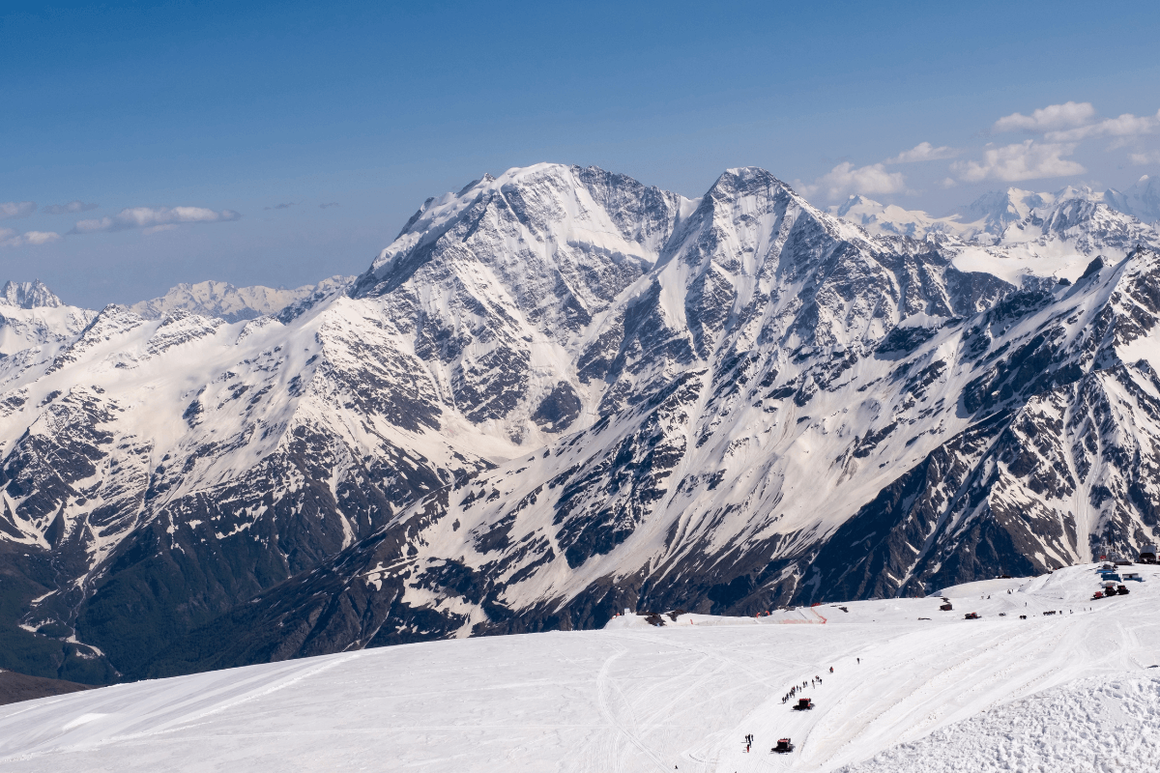
Mount Elbrus – the highest peak in Europe
Topography of Elbrus
Mount Elbrus is a dormant stratovolcano (a conical volcano with steep sides of layered rock). Stratovolcanoes, like Mt Elbrus, are often found at the junctions of tectonic plates where one plate overlaps the other to form volcanic ridges, like the Caucasus range.
Although considered dormant, Elbrus has hot springs along its slopes indicating ongoing geothermal activity. Elbrus last erupted over 2,000 years ago and still experiences minor tremors making it prone to avalanches.
Elbrus has two peaks and several large craters where volcanic lava has hardened and collapsed. The Western peak at 5,642m is the highest point in Europe, closely followed by the Eastern peak at 5,621m.
The saddle which separates the two summits is coated by ice and snow year-round. There are also more than 20 glaciers along the rocky slopes. This distinctive mountain is characterised by white-capped twin peaks, and its prominence over the surrounding mountains and alpine meadows.
Climbing Ebrus
There are two main routes to climb Elbrus – the South Route and the North Route. Each route ascends from the Russian side of the peak and journeys to the Western Summit, the highest point of Mount Elbrus.
High altitude acclimatisation is crucial across both routes and permits are required for each.
The South Route: The shortest and easiest route up Elbrus
- Approximately 16 – 18km
- Most popular route
- Lift available to 3,800m
- Huts and rescue nearby
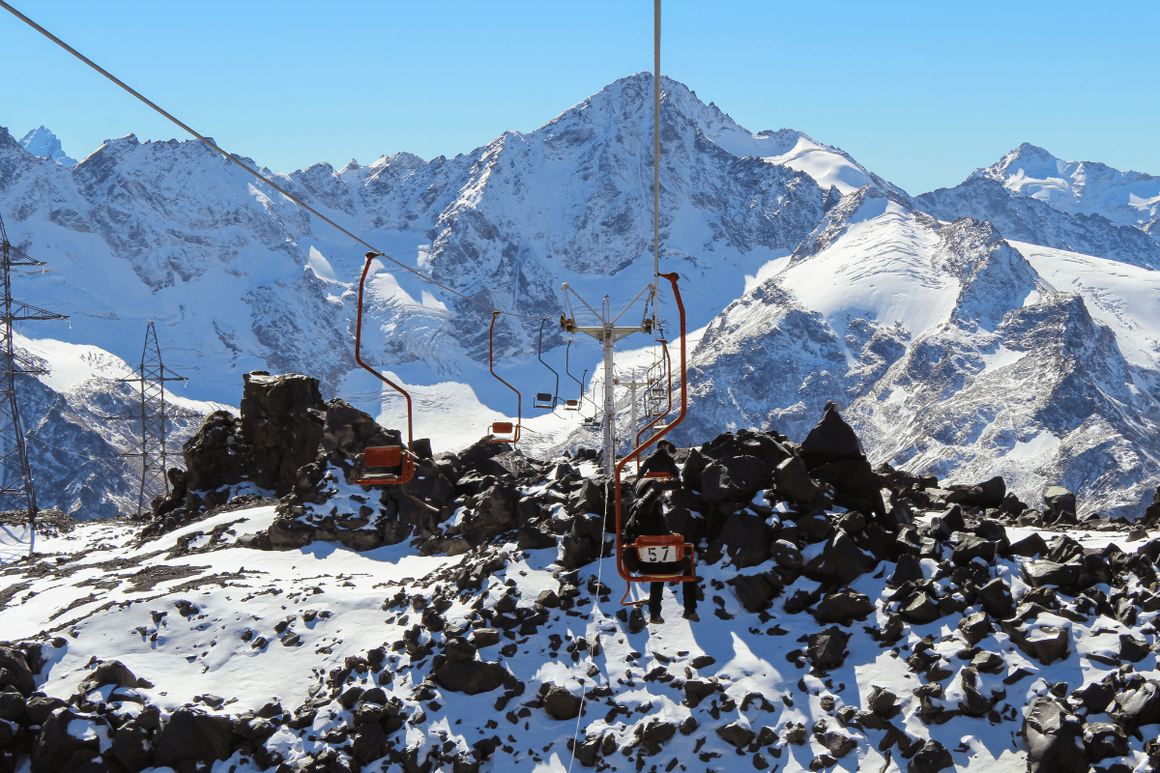
Also known as the Normal Route, the South Route climbs from the Azau Valley and offers the opportunity to use ski lifts to reach the Garabashi Station at 3,800m. No technical climbing experience is necessary to summit Mount Elbrus via the Normal Route, but perpetual winter conditions and unpredictable weather make this a physically demanding trek.
The North Route: This route is longer, more technical and prone to extreme weather
- Approximately 20 – 25km
- More technical trek
- No lift access
- Limited infrastructure and rescue available
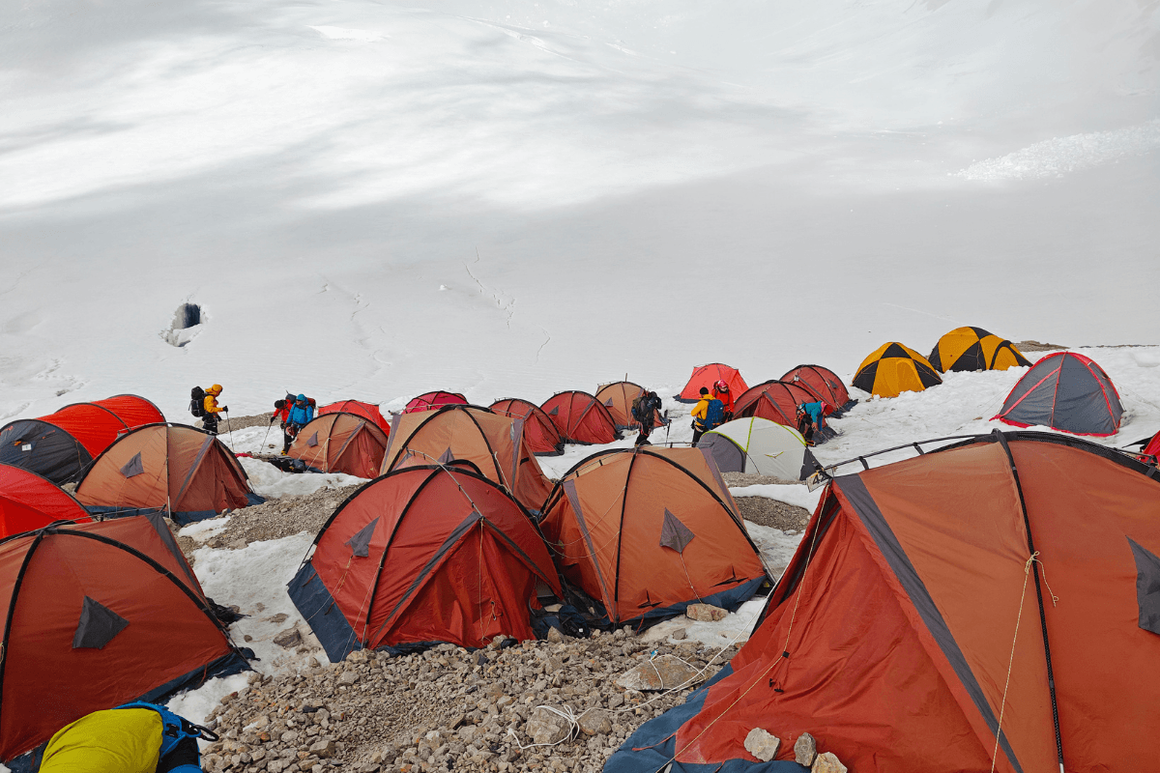
Following the path of the first ascent up Elbrus, the North Route begins at Dzhily-Su before climbing to Base Camp at Emmanuel Glade. The route is remote and wild with far fewer trekkers, offering an immersive adventure for experienced mountaineers.
The tallest mountains in the Caucasus
The tallest mountains in the Caucasus are located along the northern ridge forming a natural barrier between Europe and Asia. With 30 peaks over 4,500m in the Greater Caucasus region, and over 200 independent summits, this is the best place to find high altitude adventures in Europe.
Lesser Caucasus is further south and sprawls across the south of Georgia into Armenia. Generally speaking, this range is significantly lower than its neighbour. The highest peak in the Lesser Caucasus is Mount Aragats at 4,090m high.
A quick summary:
- Hikers seeking challenging high summits, exciting mountaineering and technical climbing opportunities will find the Greater Caucasus an adventurer’s paradise.
- Those seeking milder weather and cultural experiences may find the trekking in the Lesser Caucasus more accessible although equally breathtaking.
Mont Blanc and the highest peaks in the Alps
Outside of the Caucasus Mountains, the Alps are the second highest mountain range in Europe. Spanning eight countries, the Alps are famously home to Mont Blanc, the highest peak in Western Europe.
The highest peaks in the Alps
1. Mont Blanc 4,810m – France/Italy
2. Dufourspitze 4,634m – Switzerland
3. Dom 4,545m – Switzerland
4. Weisshorn 4,506m – Switzerland
5. Matterhorn 4,478m – Switzerland/Italy
The Alps form the backbone of Europe, stretching from Monaco, France and Switzerland in the west through Italy, Liechtenstein, Germany, Austria and Slovenia to the east.
Famed for their height, beauty and mountaineering history, the Alps attract visitors from all over the world who trek, ski, climb and paddle the incredible natural landscapes.
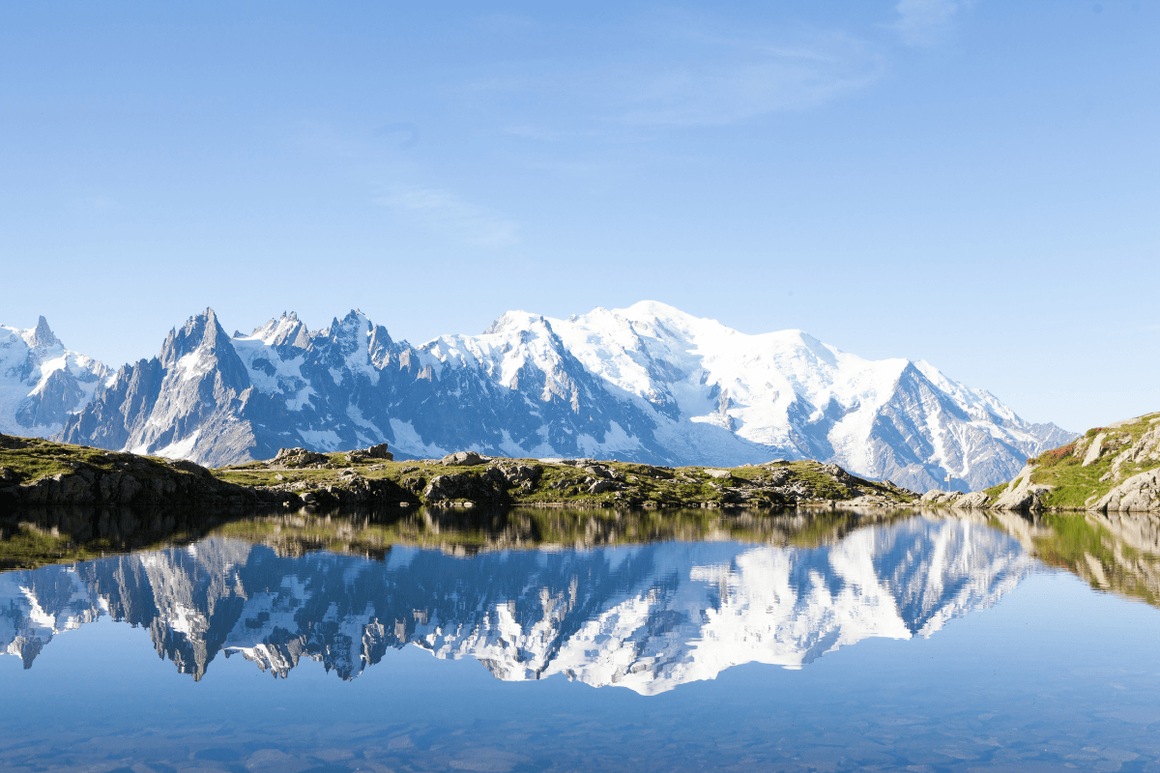
What is the highest peak in Western Europe?
Mont Blanc is the highest peak in Western Europe at 4,810m (15,774ft).
The Alps are the largest mountain range and form a boundary between Eastern and Western Europe. Mont Blanc straddles the border between France and Italy.
There are two main routes up Mont Blanc and a couple of alternatives depending on your ability and experience.
The Goûter Route up Mont Blanc
Considered the standard route up Mont Blanc, the Goûter Route is the shortest and least technical route. Some scrambling over rock and trekking through snow and ice is required.
The route starts at Nid d’Aigle at 2,372m, which you can reach via the Tramway du Mont Blanc from public transport in Chamonix. Ascending the Goûter Ridge requires basic knowledge of using crampons and high-altitude acclimatisation.
If you’re not climbing with a guide, you’ll also need the equipment and skills to travel safely on a glacier and carry out a crevasse rescue if needed.
The Trois Monts Route up Mont Blanc
Also known as the Three Mountains Route, the Trois Monts Route starts from the Cosmiques Hut at 3,613m, just a short walk from the top of the Aiguille du Midi cable lift. While the start of this climb may be gentler, the rest is much more technical. Ice climbing and technical mountaineering skills are essential to traverse the high-altitude glaciers.
The Trois Monts Route is less crowded than the Goûter Route. Both have a high risk of rock fall, ice fall and involve climbing over crevasses and seracs (massive blocks of ice).
Other routes up Mont Blanc
You can also climb Mont Blanc from the Italian side (known as the Italian Route), the Pope Route or the Aiguilles Grises Route. Starting from Courmayeur in Italy, this is a physically demanding journey that requires technical ice climbing experience.
The approach is remote and far less crowded, offering plenty of challenges for experienced mountaineers.
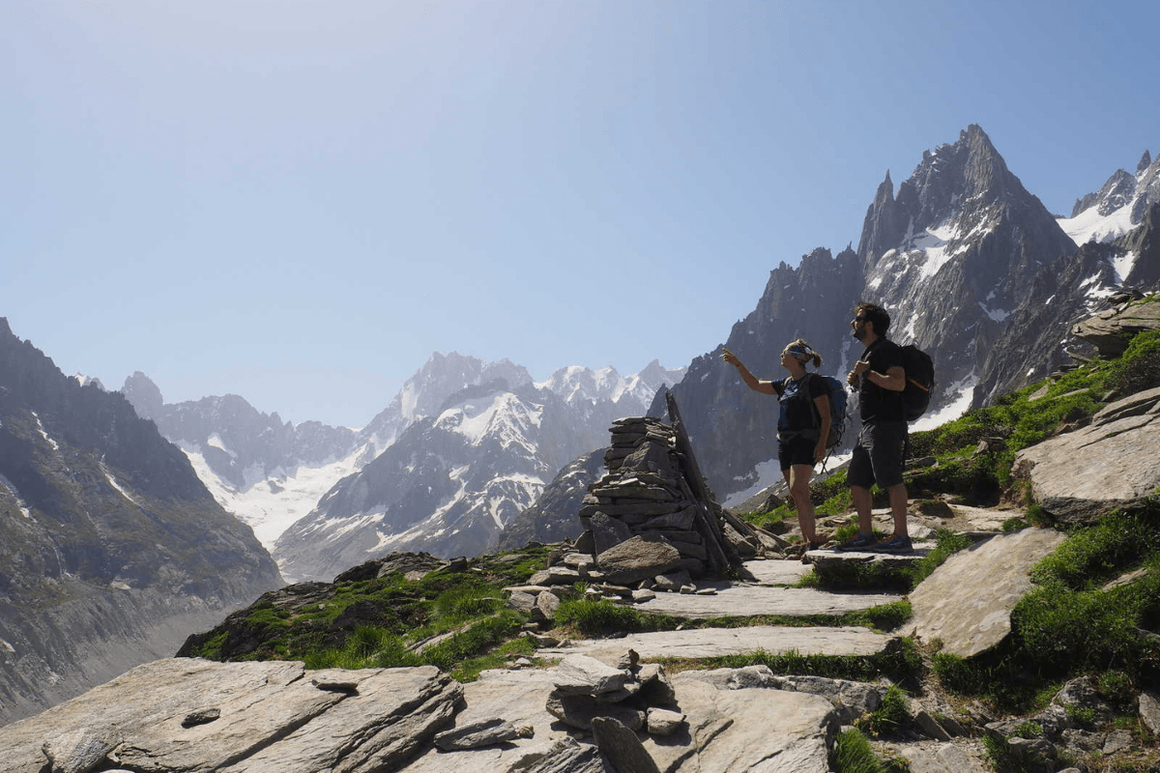
Where are the highest mountains in Europe?
Although the Caucasus boast the highest peaks in Europe, the Alps are the longest and most prominent mountain range on the continent. There are several other notable mountain ranges in Europe renowned for their scenery, biodiversity and adventure opportunities.
- Pyrenees – forms a natural border between France and Spain
- Carpathian Mountains – spans 8 countries in Eastern Europe
- Balkan Mountains – divides northern and southern Bulgaria, and extends from the Carpathian Mountains
- Scandinavian Mountains – separates Norway and Sweden on the Scandinavian Peninsula
- Ural Mountains – forms a natural boundary between Europe and Russia
- Apennines – known as the backbone of Italy
- Dinaric Alps – sprawls across 8 countries, but mainly Bosnia and Herzegovina
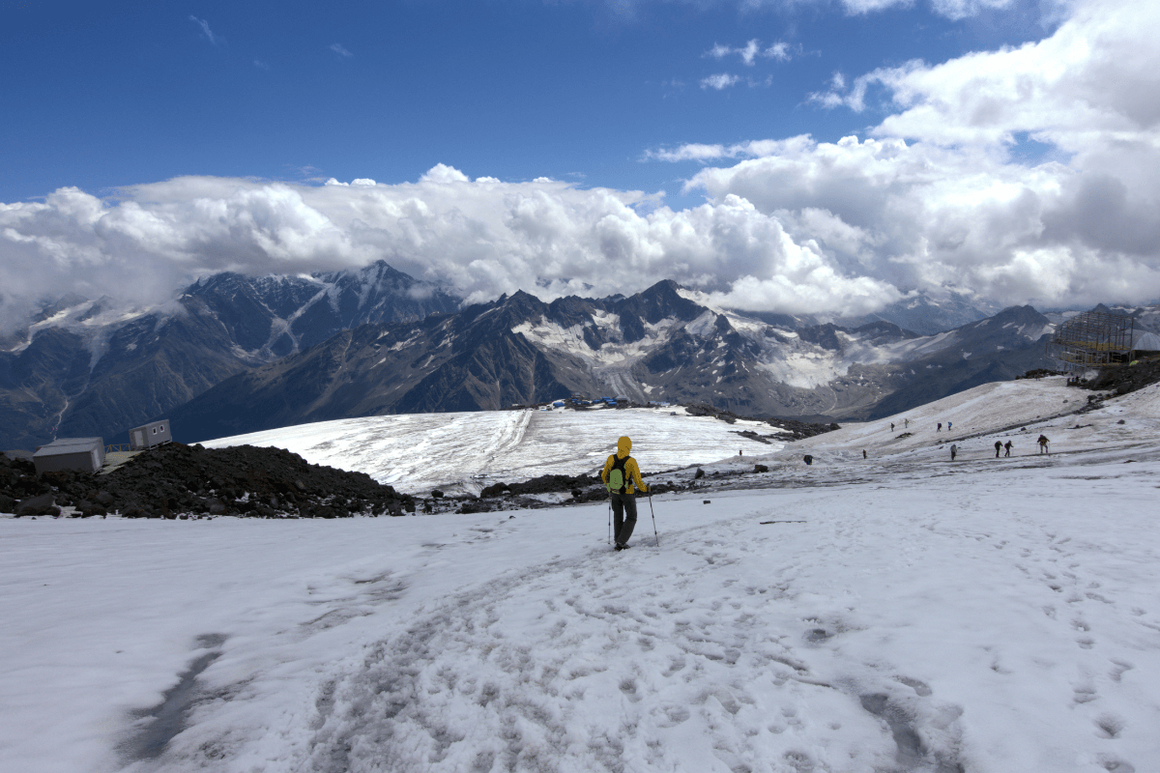
Trekking European Mountains with Kandoo
It’s no surprise that Kandoo Adventures offer awesome Georgian, Armenian and Alpine treks, considering they’re home to the biggest peaks in Europe. Explore the Svaneti region, home of Shkhara and Tetnuldi, or climb Mount Kazbek and bag yourself a 5,000m+ peak with our experienced local guides.
Climbing Mont Blanc, the ninth tallest mountain in Europe and an iconic Western European peak, is a great alternative to hiking in Georgia. With one of the highest prominences, Mont Blanc is an absolute stunner of a peak, overlooking the spectacular Alps. You can also walk around the mountain along the famous Tour du Mont Blanc which circumnavigates the base on a 100-mile, multi-day hike through three unique European countries – France, Italy and Switzerland.
Whether you’re after summit success or an epic journey, Kandoo has just the trip for you. You can even combine hikes in different countries for an unforgettable European adventure. Get in touch with our friendly travel experts to find out more.