

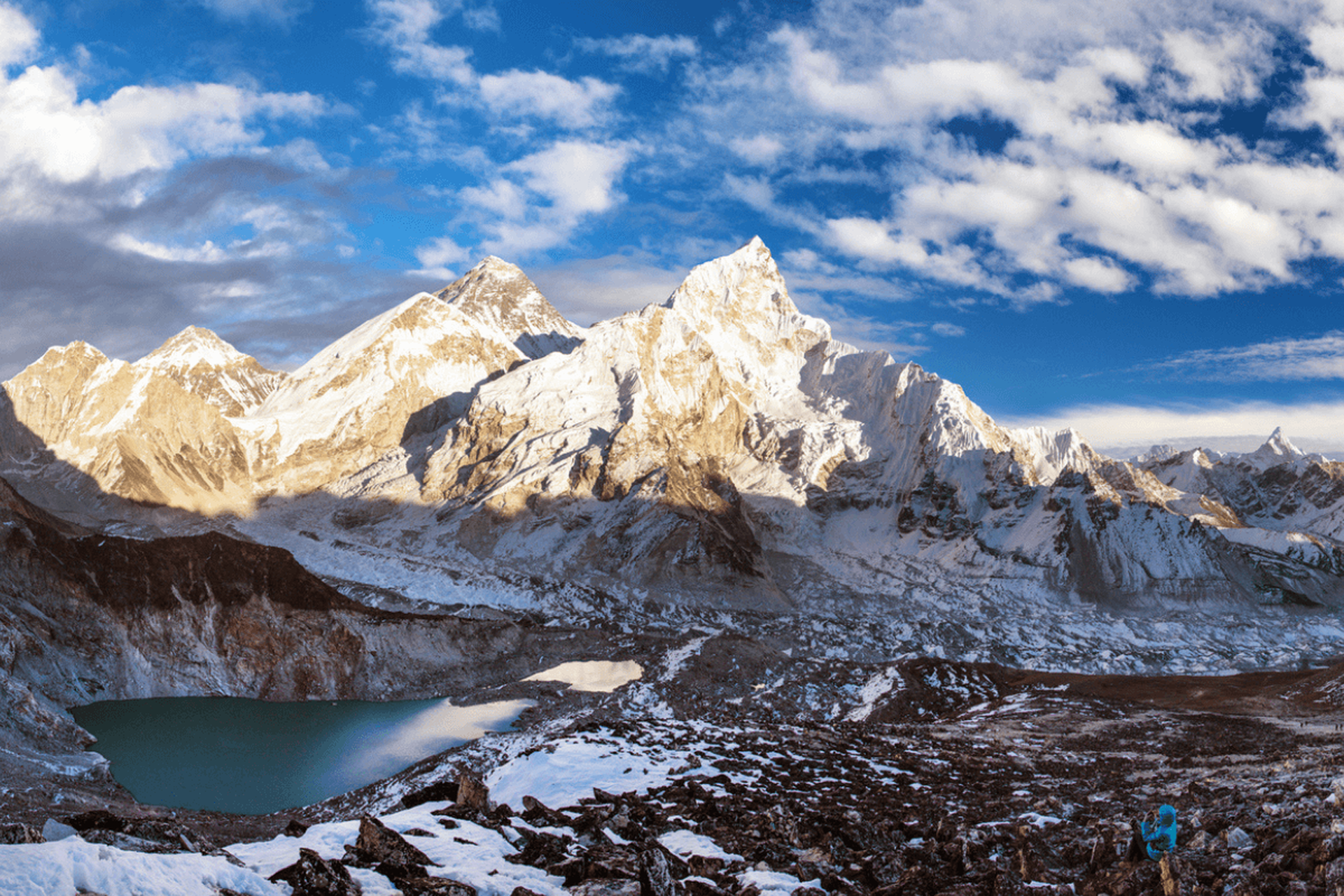
Everything you need to know about Annapurna vs Everest Base Camp
Everest Base Camp vs Annapurna Base Camp is a classic dilemma. Both are two of Nepal’s most famous treks, but if you’re choosing between them, how do you know which is the best option?
This guide puts both treks side by side so you can compare altitude, difficulty, cost, scenery, and seasons. By the end, you’ll be able to choose the trek that fits your fitness, time, and budget.
Everest Base Camp vs Annapurna Base Camp at a glance
The biggest difference between these treks is height. Everest Base Camp sits more than 1,200m higher than Annapurna Base Camp, meaning altitude can have a real impact on your sleep, appetite, and how fast you walk.
Annapurna is three days shorter, stays at a lower elevation, and swaps glaciers for forests, villages, and stone staircases.
The table below compares the two trips*:
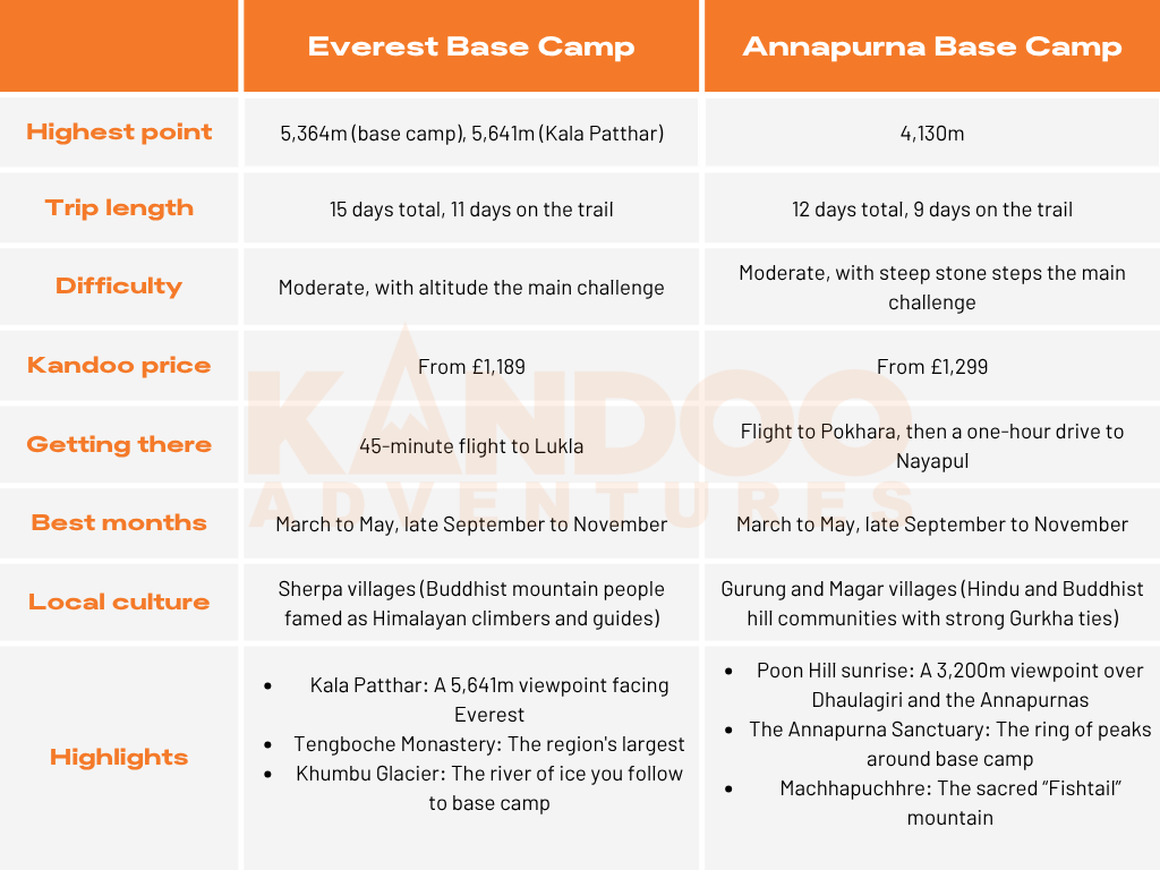
*Based on Kandoo’s Everest Base Camp and Annapurna Base Camp treks.
Recommended reading: 10 reasons why you should trek to Base Camp Annapurna.
How high is Everest Base Camp compared with Annapurna Base Camp?
Everest Base Camp is 5,364m high, while the Annapurna Base Camp height is 4,130m.
Because of the altitude at EBC, altitude sickness is a real risk for almost everyone, no matter how fit they are. There's roughly half the oxygen you'd get at sea level. Some trekkers notice headaches, broken sleep, and a slower pace above 4,000m.
The Annapurna Base Camp trek is more than 1,200m lower than EBC, so altitude sickness is less likely and easier to manage. You might still feel it on the final climb from Machhapuchhre Base Camp (3,700m) into the Sanctuary, but serious altitude sickness is far less common.
Here’s how the two treks handle acclimatisation when you join a Kandoo trip:
- For Everest Base Camp, you’ll have two rest days, one in Namche Bazaar and another in Pheriche. We also adopt a short “walk high, sleep low” approach* to reduce the impact of altitude.
- For Annapurna Base Camp, we don’t incorporate rest days because you gain height gradually and never sleep higher than 3,700m. Instead, you visit base camp and descend the same day.
Altitude sickness can still strike on either trek, which is why our guides run health checks from your pre-trek briefing onwards.
*“Walk high, sleep low” is an acclimatisation technique that means hiking higher during the day, but sleeping lower down so your body adjusts more easily.
Find out more about Kandoo’s high-altitude adventures!
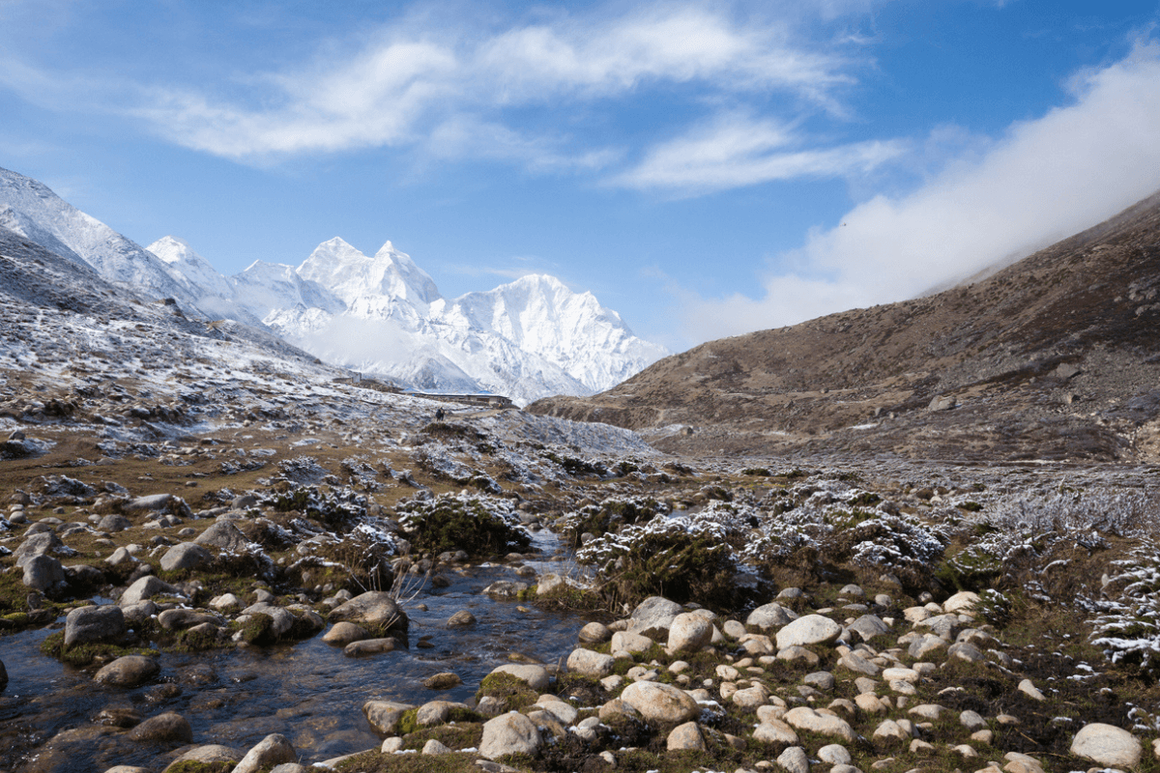
How difficult is Everest Base Camp compared with Annapurna Base Camp?
We grade both treks as moderate, but they're tough in different ways. Both will work your legs and your lungs, but on Everest, long days above 4,000m make the thin air the bigger test. On Annapurna, altitude sickness is possible, but the relentless stone steps take more out of you.
The gradients on Everest are mostly kind (the steep pull up to Namche Bazaar is the exception!). The real challenge is stringing together long days in thin air, including:
- Eight to nine hours on base camp day, crossing rocky glacial moraine
- An early start for Kala Patthar, followed by a 1,281m descent to Dingboche
- Day after day of walking above 4,000m
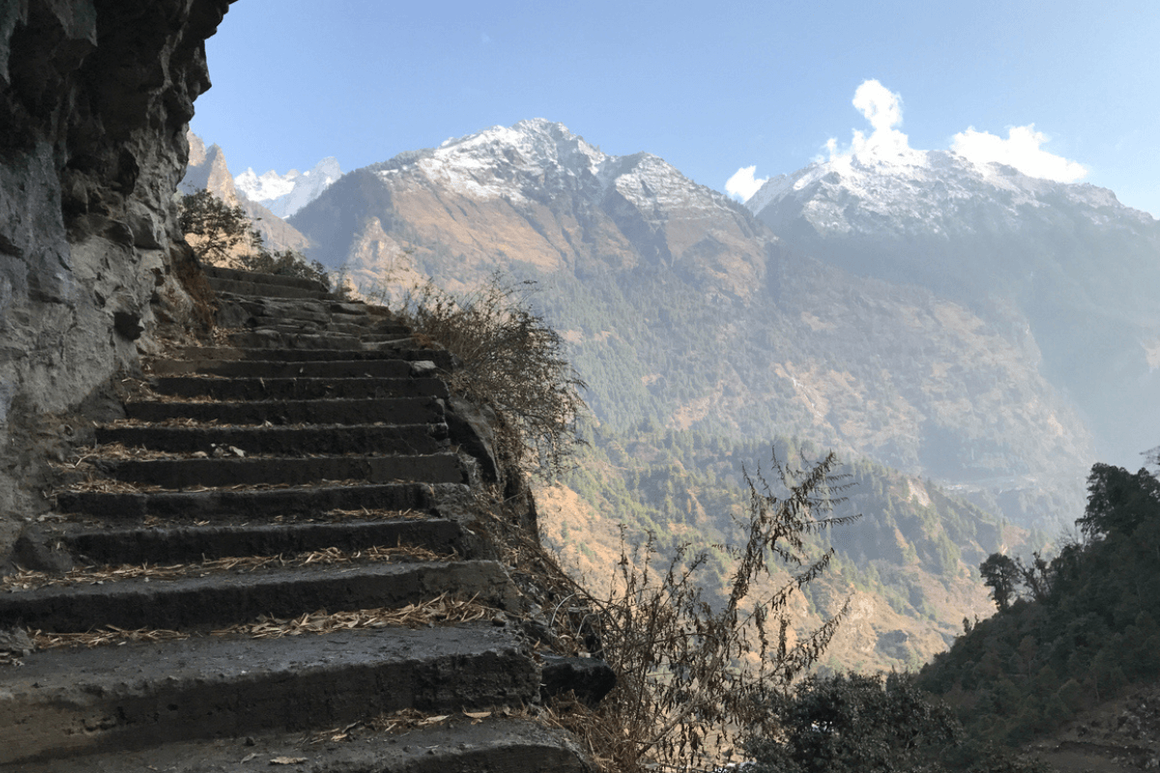
Annapurna feels harder underfoot. Much of the route is on stone steps, and the trail keeps dropping into valleys only to climb out again. Expect:
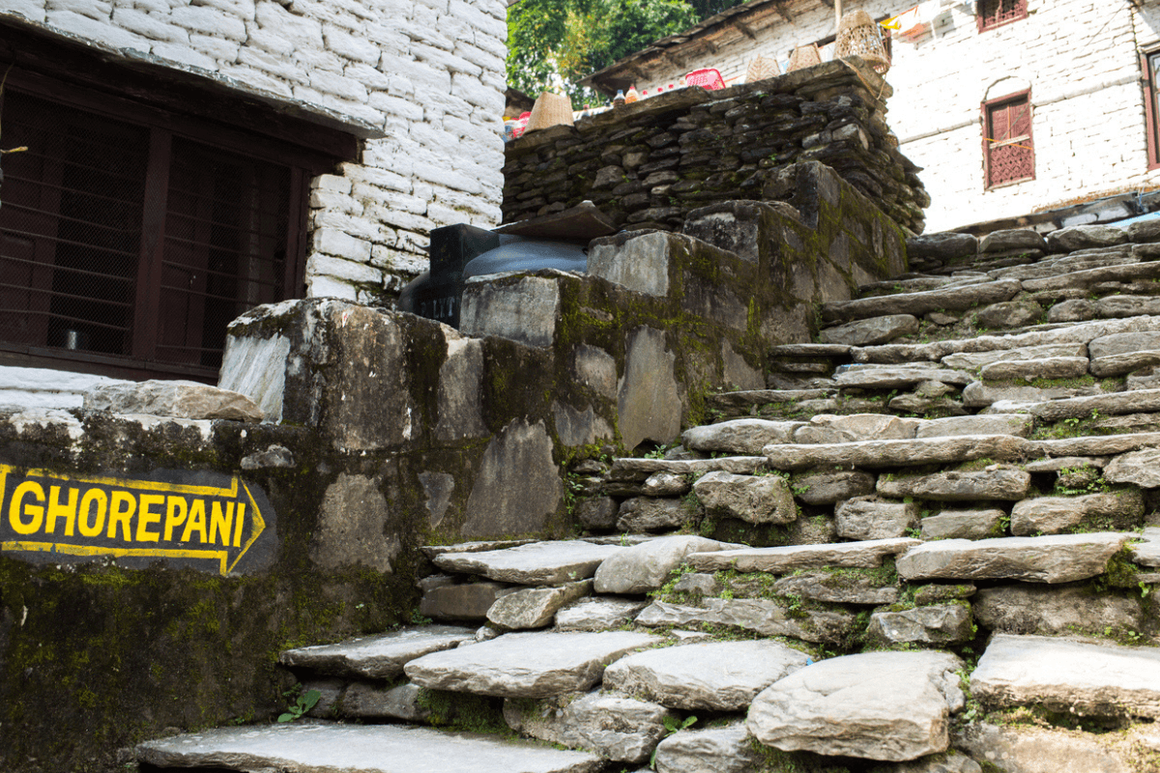
- A 1,240m climb to Ghorepani, including the Ulleri staircase
- The “thousand steps” up to Upper Chomrong
- Long, knee-jarring descents on the way out
For either trek, it’s a good idea to train on hills with a loaded daypack. Trekking poles are also well worth packing, especially for Annapurna's steps!
Recommended reading: The complete Everest Base Camp packing list.
How long is the Everest Base Camp trek vs Annapurna?
Our classic Everest Base Camp trek takes 15 days, with 11 on the trail, covering around 130km in total. Annapurna Base Camp takes 12 days, with 9 on the trail, covering around 110km.
Everest needs the extra time for two reasons: acclimatisation and flight delays. Your body needs time to adjust before you climb above 5,000m, so the acclimatisation days are essential.
During this time, you rest in Namche Bazaar and Pheriche and take short hikes to higher viewpoints (like the Everest View Hotel at 3,880m) before heading back down to sleep. The aim is to give your body time to adjust to the altitude before the final push.
We also build in a spare day in Kathmandu, because mountain weather can sometimes delay Lukla flights.
Annapurna is three days shorter because the route is low enough to skip dedicated acclimatisation days. The trek finishes with a night in a lakeside hotel in Pokhara, then a flight back to Kathmandu.
Recommended reading: A complete travel guide for Everest.
Everest Base Camp trek cost: How does it compare to the cost of Annapurna Base Camp?
With Kandoo, Everest Base Camp starts from £1,189 and Annapurna Base Camp from £1,299. Prices vary depending on which operator you use, what they include in their price, and what you need to book outside of the inclusive operator cost.
Both Kandoo trips include:
- Hotels in Kathmandu before and after the trip
- Airport transfers
- Internal return flights (Kathmandu to Lukla for EBC, or Kathmandu to Pokhara for Annapurna)
- National park or conservation area fees, plus TIMS permits
- Qualified guides, porters, and filtered drinking water
- Twin-share teahouse rooms
You'll need to budget separately for these:
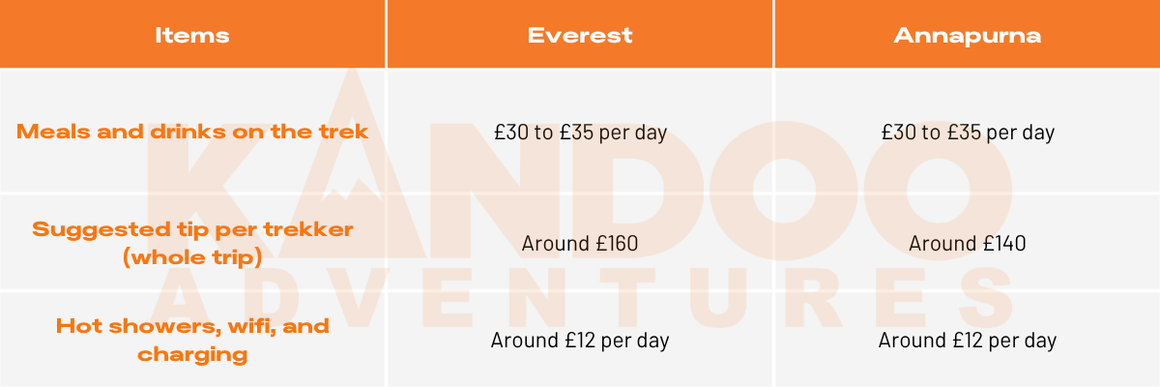
International flights, your Nepal visa, and insurance are extra too. On Everest, keep around £240 to £400 in reserve for a helicopter seat if bad weather grounds the Lukla planes.
Recommended reading: A complete guide to Nepal visa and permits for trekkers from the UK.
Trail and scenery: EBC vs Annapurna Base Camp
Everest is high, stark, and glacial. Annapurna starts in subtropical forest and ends in a ring of icy giants.
The Everest trail follows the Dudh Koshi river over high suspension bridges into Sagarmatha National Park. Above Namche Bazaar, Ama Dablam, Lhotse, and Nuptse fill the skyline. Past Pheriche, the trees vanish. You pick your way along the Khumbu Glacier's grey moraine to a base camp of ice pinnacles and crevasses.
Annapurna changes almost daily. You'll pass:
- Terraced hillsides and farming villages
- Rhododendron and bamboo forests, with waterfalls along the way
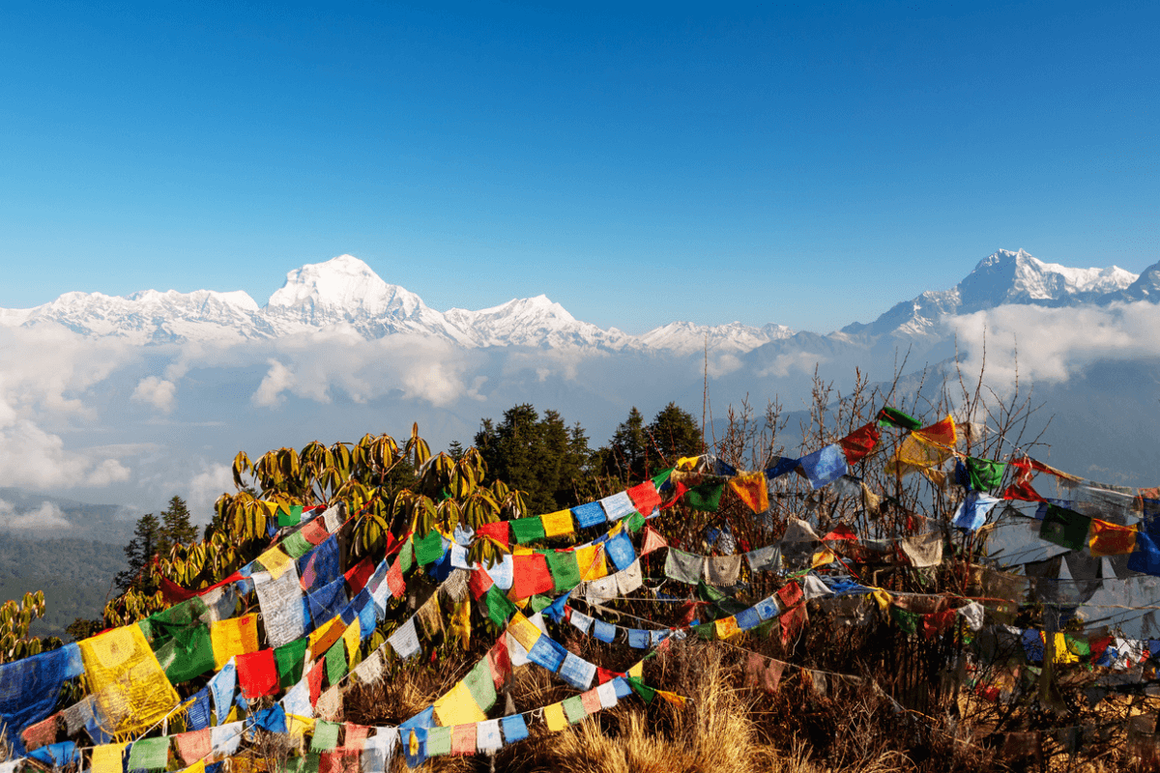
- Poon Hill at sunrise, looking out over Dhaulagiri and the Annapurna range
- A narrow gateway between Hiunchuli and Machhapuchhre into the Annapurna Sanctuary
Fun fact: The Sanctuary is a natural amphitheatre ringed by Annapurna I, Annapurna South, Gangapurna, and Machhapuchhre, known as the “Fishtail” mountain. Because Machhapuchhre is sacred to Hindus, outsiders didn't enter the Sanctuary until 1956!
Culture, teahouses, and crowds at EBC and Annapurna
Everest brings Sherpa culture and the region's best lodges low down. Annapurna brings Gurung villages and a quieter feel, though its Sanctuary lodges are small and fill fast.
In the Everest region, the Khumbu is Sherpa country. Prayer flags, mani walls, and monasteries line the route, and Tengboche Monastery is the largest in the region.
Time your visit to Namche Bazaar right and you'll catch its Saturday market! Traders from the lowlands sell everything from fresh vegetables to goods brought over the high passes from Tibet.
Recommended reading: How Sherpa expertise has shaped a century of climbing Mount Everest.
On the Annapurna side, you'll stay in Gurung and Magar villages such as Ghorepani and Chomrong. Many Gurkha soldiers come from these hill communities. You'll find Hindu and Buddhist traditions, from small village shrines to prayer flags strung above the trail.
Nepalese teahouses follow the same pattern on both treks: twin rooms with wooden beds, shared bathrooms, and a heated dining room. Namche has some excellent lodges, with proper coffee on the menu. Higher up, things get simpler on both routes.
Top tip: Order dinner early, because kitchens serve in order of arrival!
As for crowds, Everest is busier, especially in October and April. Lukla's tiny airport is the bottleneck. Annapurna is popular too, but the traffic spreads out across more villages until the trail narrows into the Sanctuary.
Getting from Kathmandu to Everest Base Camp
Everest starts with a 45-minute flight from Kathmandu to Lukla. Annapurna starts with a short flight to Pokhara and an hour's drive to the trailhead.
The Lukla flight is an adventure in itself. Sit on the left for mountain views, then brace for a landing on a short, steep runway. Cloud can also ground flights for a day or more, which is why we build in a spare day.
For Annapurna, you fly to Pokhara past Dhaulagiri and Manaslu, then drive to Nayapul. With a road at both ends, there are more ways around delays.
Best time to trek Everest Base Camp vs Annapurna Base Camp
Both treks are at their best in spring (March to May) and autumn (late September to November). Each season has pros and cons:
- Autumn has the clearest skies and most stable weather, but also the busiest trails.
- Spring has milder temperatures and rhododendrons in bloom on Annapurna, but can be a little hazy by May.
To avoid getting caught in a monsoon, it’s best to avoid June to August! The areas experience rain, cloud, leeches in Annapurna's lower forests, and frequent delays at Lukla.
In the winter, the trails are colder, but skies are often crisp and clear, and you'll have more choice of teahouse rooms. We still run Everest departures through January and February.
Annapurna vs Everest Base Camp weather
Weather at Everest Base Camp depends on when you go, and conditions can change dramatically within hours. You need to pack for sun, wind, snow, and freezing nights. Annapurna is milder overall, but the Sanctuary still gets bitterly cold after dark.
Here’s a quick summary of what weather to expect on each trek:
- Everest Base Camp weather: In the Khumbu, clear mornings often give way to afternoon clouds and wind. Nights at Gorak Shep regularly fall well below freezing, even in peak season. Pack a four-season sleeping bag and a buff to protect against the dry, cold air.
- Annapurna Base Camp weather: Annapurna's lower trail is warm and often humid, so you'll usually start in a t-shirt. Above Deurali, the temperature drops fast. After heavy snow, the trail into the Sanctuary can face avalanche risk, and your guide may hold the group until it clears.
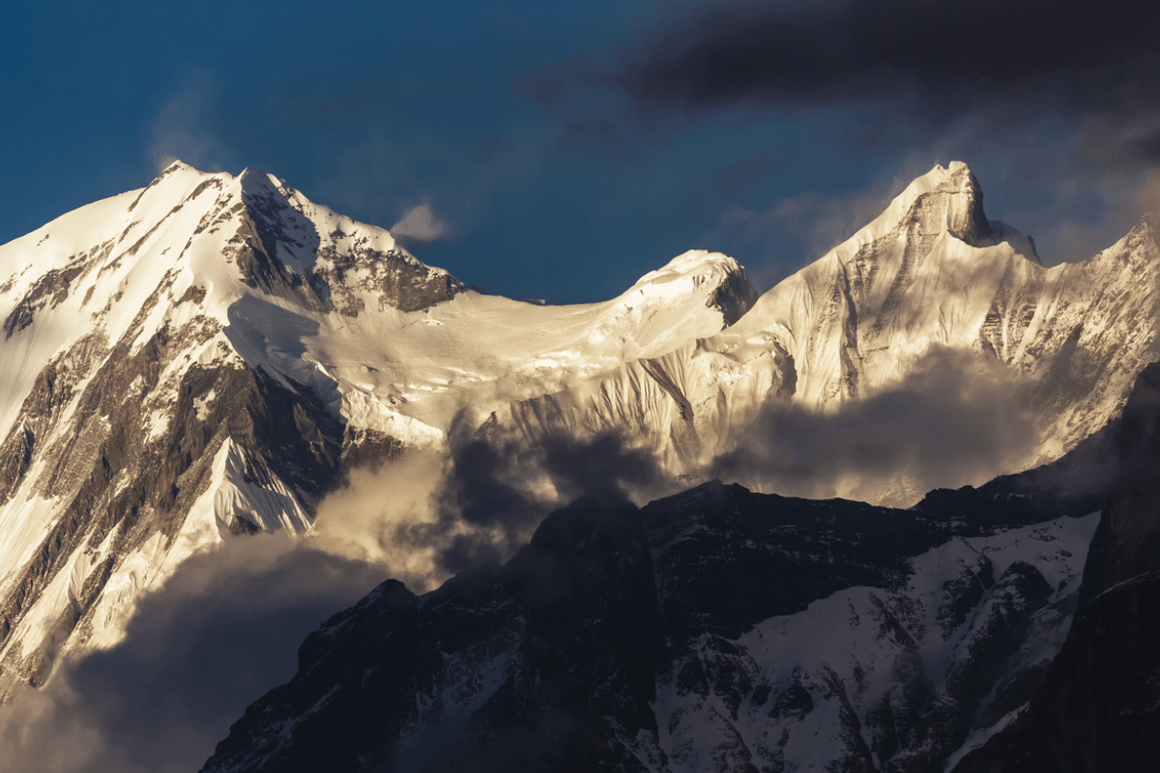
Can you see Everest from Annapurna Base Camp?
No, unfortunately not. Everest is around 300km east of the Annapurna Sanctuary, way beyond the horizon.
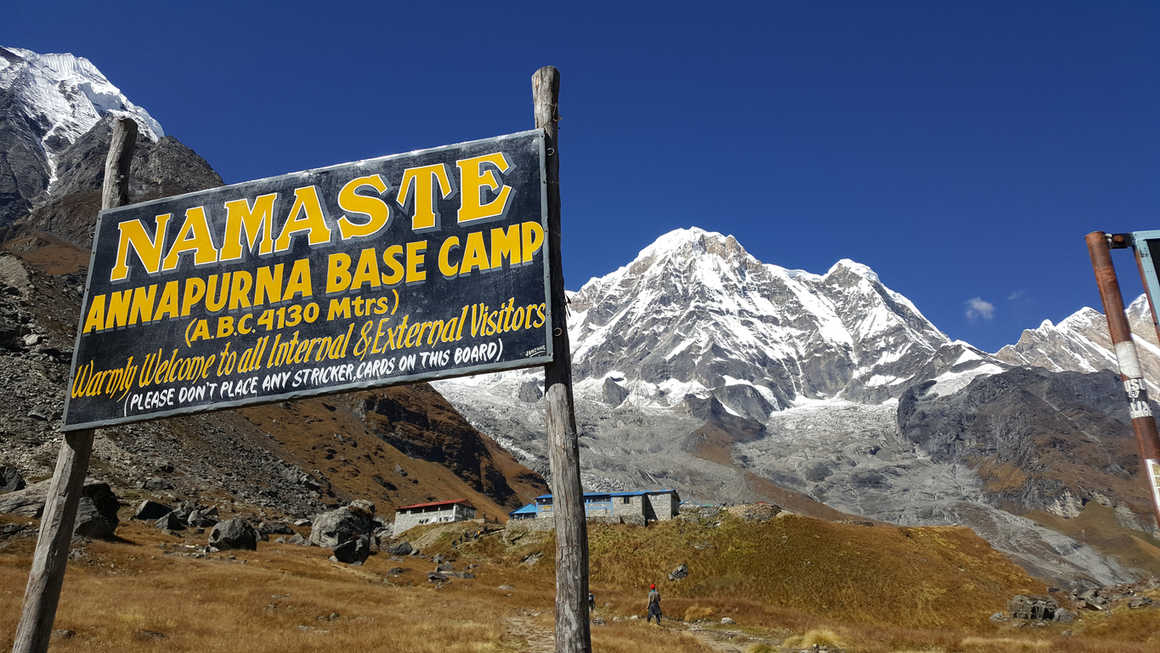
Annapurna Base Camp has its own giants instead, with Annapurna I rising to 8,091m. The fishtail summit of Machhapuchhre also towers over your approach, which is a pretty spectacular sight.
But if seeing Mount Everest with your own eyes is the dream, choose the Everest trek.
Annapurna or Everest Base Camp: Which trek should you choose?
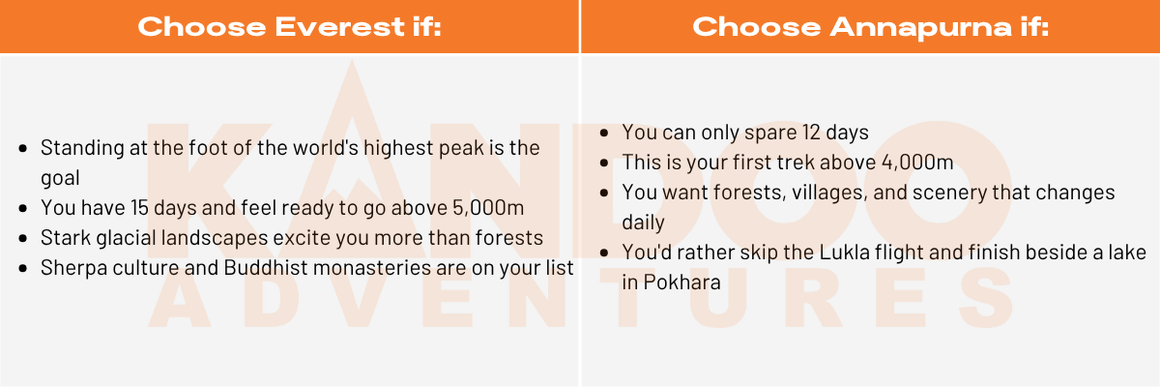
Choose Everest to see the world's highest mountain and undertake a serious altitude challenge. Choose Annapurna for variety, lower altitude, and a shorter trip.
Here’s a quick summary of when to choose each trek:
If you want to know more about Nepal trekking, or you still aren’t sure which one to book, get in touch with the team at Kandoo!
We've run our own operation in Kathmandu since 2012, and our own Nepali guides and porters lead your trek, with no third parties involved. Our guides hold Wilderness First Responder certificates, carry emergency oxygen, and check your health throughout the trek.
Every booking also supports the Kandoo Himalaya Foundation, which funds education in the remote village of Hongong, home to many of our team. We offset the carbon from your time in Nepal as standard, too.