

Everything you need to know about trekking in Annapurna, Nepal
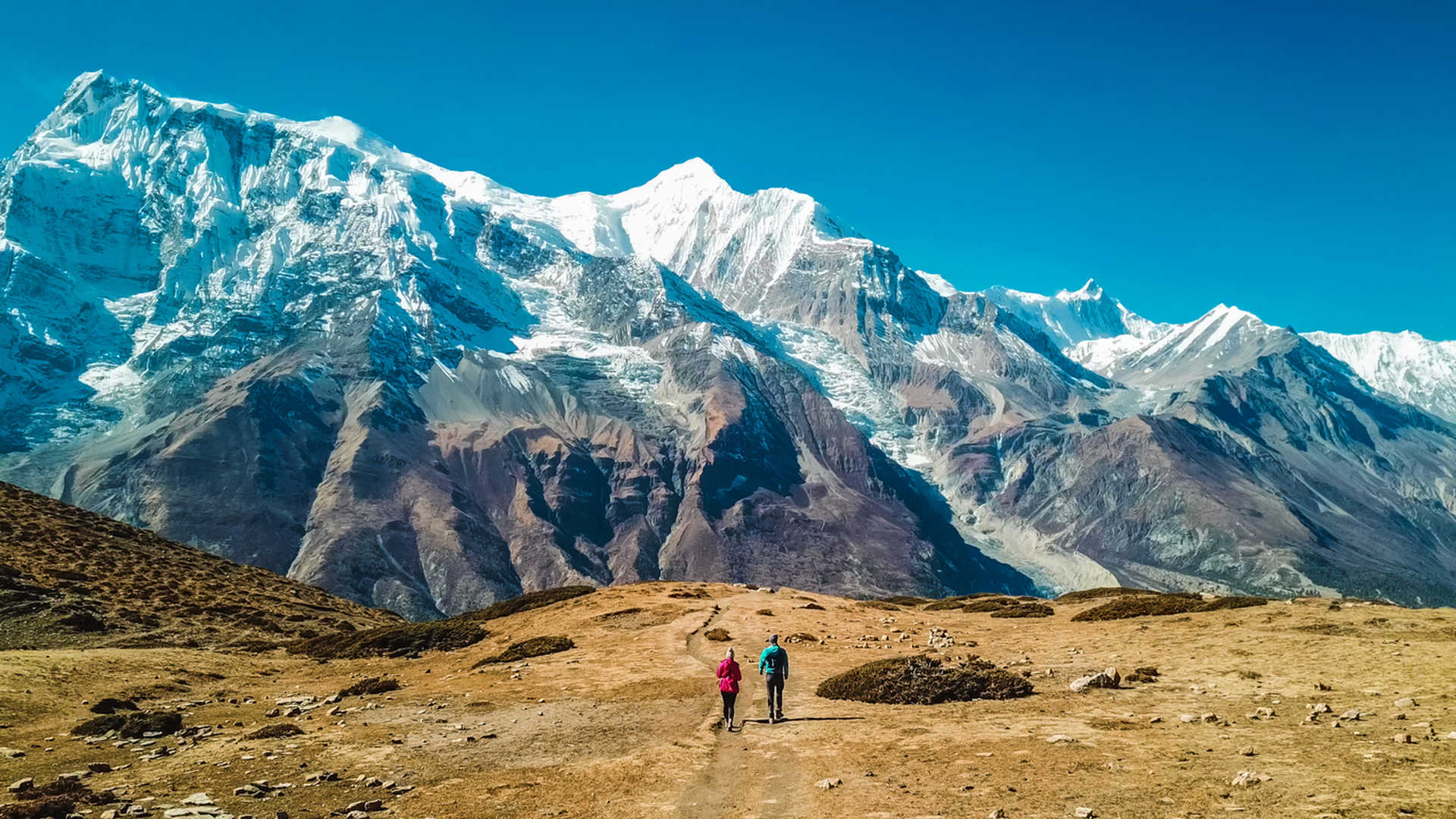
The Annapurna region is one of Nepal’s most diverse trekking destinations. The majestic Himalayan mountain peaks, mountain villages rich in culture, and abundant wildlife make it a top destination for trekking in Nepal.
With routes including the classic Annapurna Circuit to the stunning Annapurna Base Camp trek, many trekkers find themselves asking: What is the best Annapurna region trek? The answer depends on your experience, timeframe and what you want from the journey.
In this guide to the Annapurna region, we help you choose the adventure that’s right for you by exploring:
- Where Annapurna is
- The best Annapurna treks
- How long Annapurna treks take
- The cost of Annapurna trekking
- The ideal trekking seasons for Annapurna
- Whether you need a guide to trek in Annapurna
What is the Annapurna region?
The Annapurna region is a trekking and geographic area in the Nepalese Himalayas built around the Annapurna Massif. It's formed of a vast mountain landscape of peaks, valleys, and traditional villages.
Nepal itself is divided into provinces, but trekking “regions” like Annapurna are informal labels used by hikers and tourism. Rather than a political boundary or a single mountain range, it’s best understood as a protected Nepal trekking area shaped by one major massif and the diverse ecosystems around it.
Here’s a quick lowdown on the region:
Where is Annapurna?
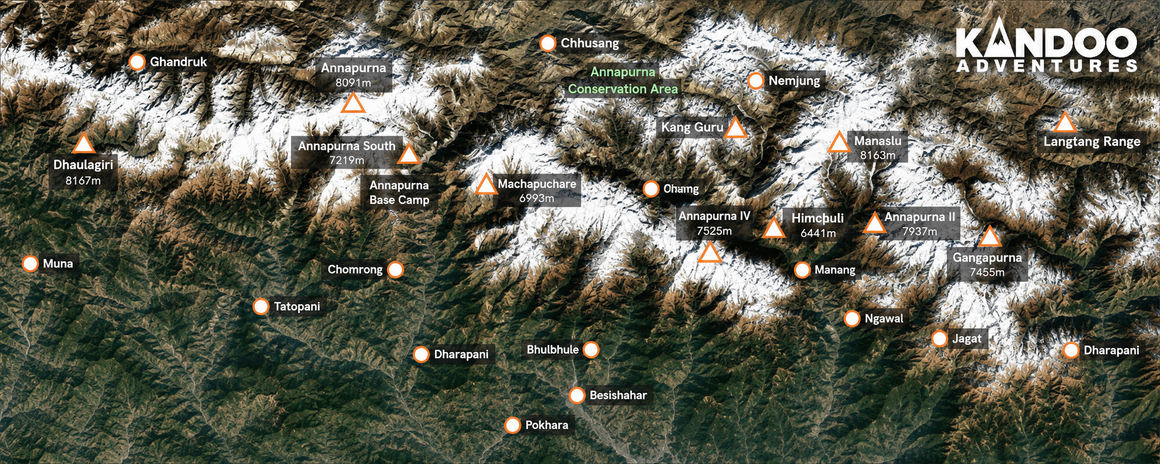
The Annapurna region is a mountainous area of the Nepalese Himalayas, centred around the Annapurna Massif and home to some of Nepal’s most famous trekking routes.
- The region is in north-central Nepal
- Within the Nepalese Himalayas
- One of Nepal's most popular trekking areas
How do you get to the Annapurna region?
Most trekkers reach the Annapurna region by travelling from Kathmandu to Pokhara, then continuing by road to the appropriate trailhead for their chosen trek.
- Treks in Annapurna, such as Annapurna Base Camp, usually start in Pokhara, approximately 200km west of Kathmandu
- Kandoo Adventures organises flights from Kathmandu to Pokhara for their Annapurna treks
- Travel by jeep, taxi or local bus from Pokhara to trailheads such as Nayapul or Jhinu Danda, where the trekking routes begin
What is the Annapurna Massif?
The Annapurna Massif is a collection of Himalayan peaks that forms the centrepiece of the Annapurna region and the backdrop to many of Nepal's most iconic treks.
- Annapurna massif at the heart of the region
- Annapurna I is the highest Annapurna mountain, at 8,091 metres
- The massif peaks are a backdrop for many of Nepal's most famous trekking routes, such as the Annapuran Circuit and Annapuran Base Camp
What is the Annapurna Conservation Area?
The Annapurna Conservation Area is a protected landscape that preserves the region's wildlife, natural habitats and traditional mountain communities.
- Most of the region is within the Annapurna Conservation Area
- Nepal's largest protected area
- Home to rich biodiversity, varied ecosystems and culturally diverse mountain communities
What’s the best Annapurna trek?
For most travellers, the best Annapurna trek comes down to two classics: the Annapurna Base Camp Trek and the Annapurna Circuit Trek.
Both showcase the grandeur of the Annapurna Massif, pass through traditional mountain communities, and deliver unforgettable Himalayan scenery.
The right choice depends on what you want from your adventure. If you're after a moderate trek focused on mountain scenery, Annapurna Base Camp is hard to beat. If you want a longer expedition that includes a high mountain pass, the Annapurna Circuit is your ticket. Let’s look at both treks in more detail.
Annapurna Circuit Trek
Duration: 14 days
Maximum altitude: 5,416m
Difficulty: Moderate to challenging
Best for: Experienced hikers and adventure seekers
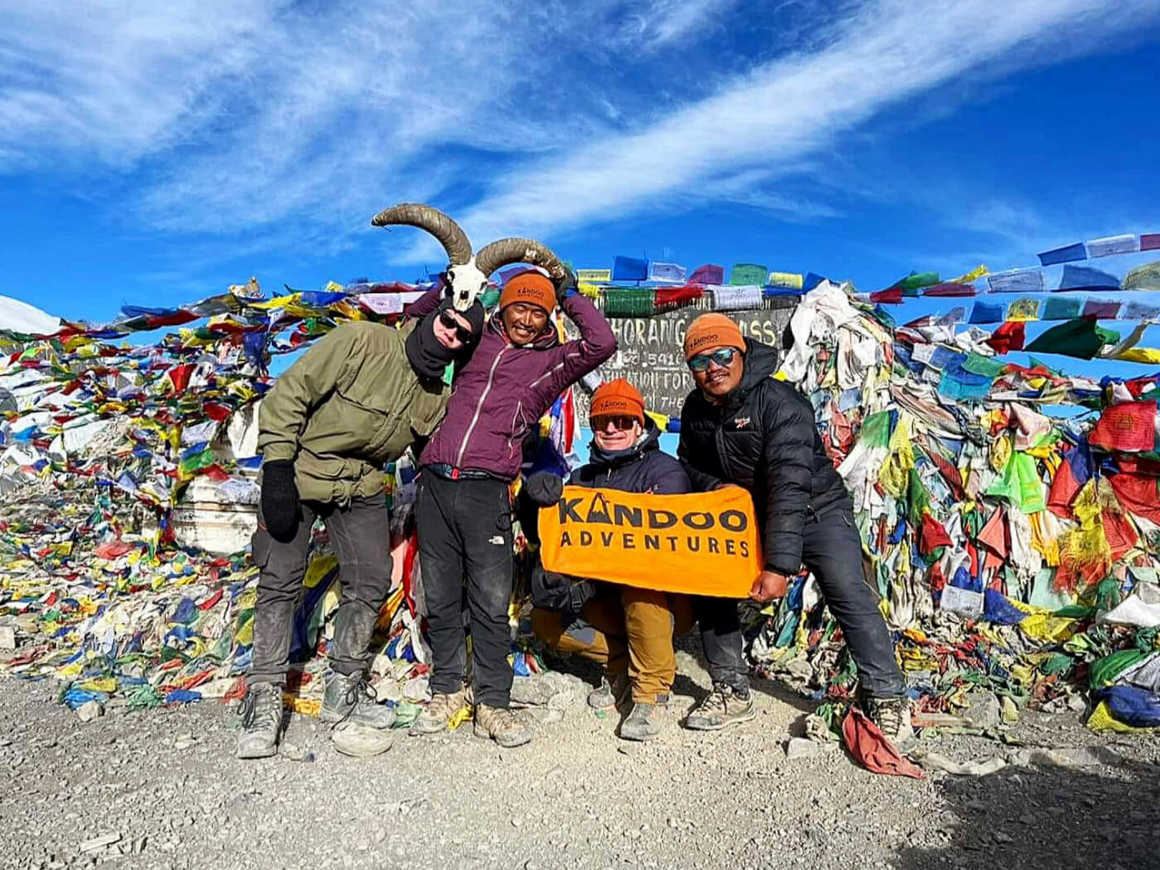
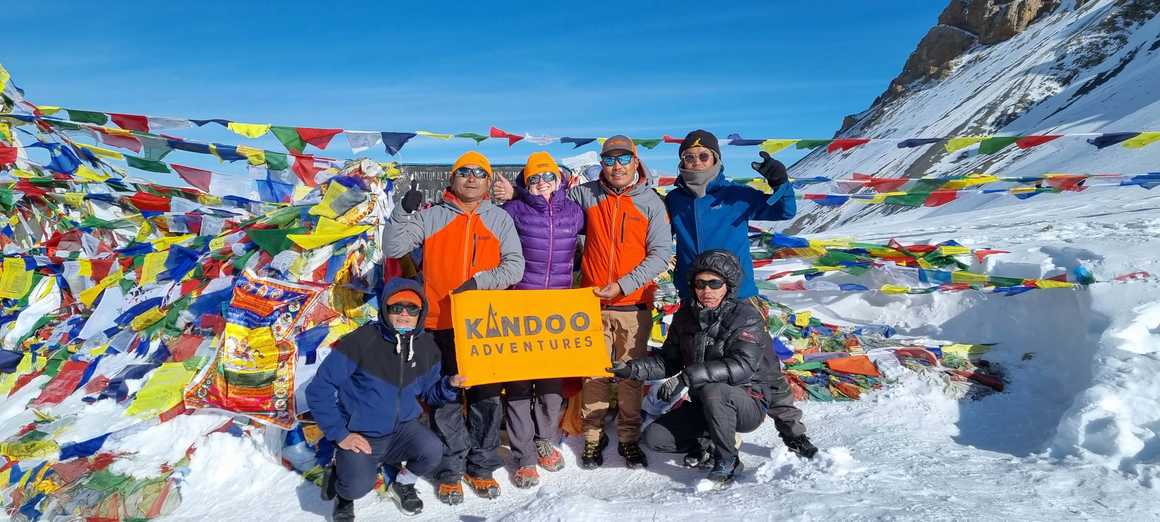
Signature moment: Crossing Thorung La Pass
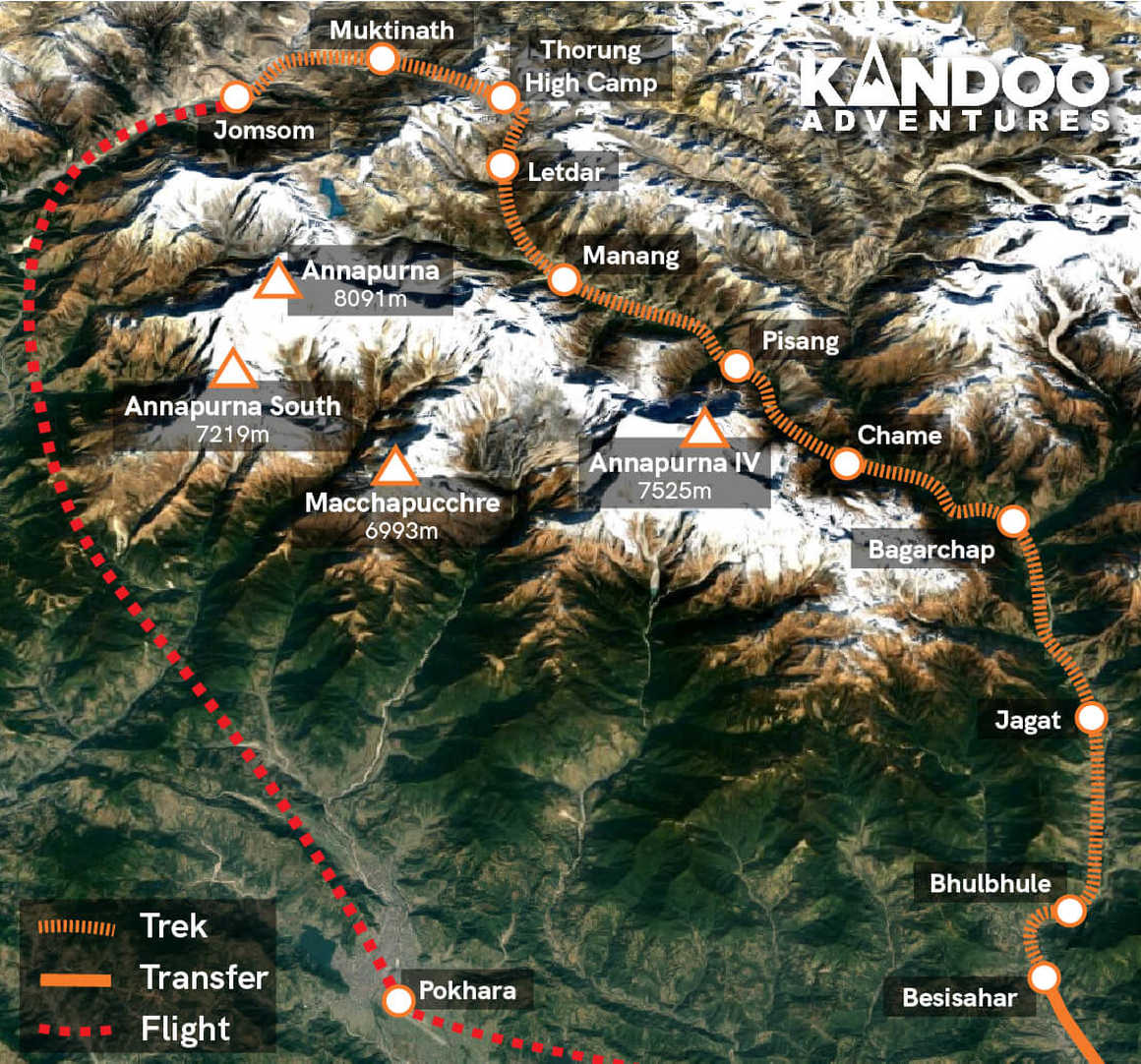
The Annapurna Circuit Trek itinerary combines the lush river valleys of central Nepal with the rugged, stark high-altitude region around Manang. It’s culturally diverse too, with Hindu villages lower down and strong Tibetan Buddhist influences higher up.
The route starts in warm and green farmland, forests, and traditional villages, following the Marshyangdi River. This Annapurna trail reaches its peak at Thorung La Pass (5,416m), before descending into the arid Mustang region with a flight over the vast Kali Gandaki Valley, one of the world’s deepest gorges.
Trekking in Nepal’s Annapurna Circuit offers one of the world’s most varied long-distance hiking experiences, circling the Annapurna Massif and revealing constantly changing landscapes and cultures along the way.
Why choose the Annapurna Circuit?
The scenery
- Subtropical forests and fertile valleys
- Alpine meadows and glacial landscapes
- Arid, high-altitude terrain influenced by Tibetan culture and stone villages
- Continuous views of Annapurna I, Dhaulagiri, Gangapurna, and numerous other Himalayan peaks
Culture and wildlife
- Fantastic cultural variety
- Hindu communities in the lower valleys and Tibetan Buddhist influences higher up
- Chances to see blue sheep, Himalayan griffons, and rare sightings of snow leopards
What makes the Annapurna Circuit Trek stand out?
The Annapurna Circuit Trek’s greatest strength is its diversity. Few treks anywhere in the world transition so dramatically from lush green valleys to high-altitude desert landscapes.
What Kandoo trekkers say:
“I cannot recommend Kandoo enough. I just got back from completing the Annapurna Circuit and had such an amazing time! My guide was incredible, he helped me learn so much about the Nepalese culture, about the places we were seeing and kept me feeling so safe and happy the whole time. The Annapurna circuit was too incredible to put into words. I will talk about this trip for years because it was so so special. I have completely fallen in love with Nepal so thank you Kandoo!” Anna, TrustPilot
Annapurna Base Camp Trek
Duration: 12 days
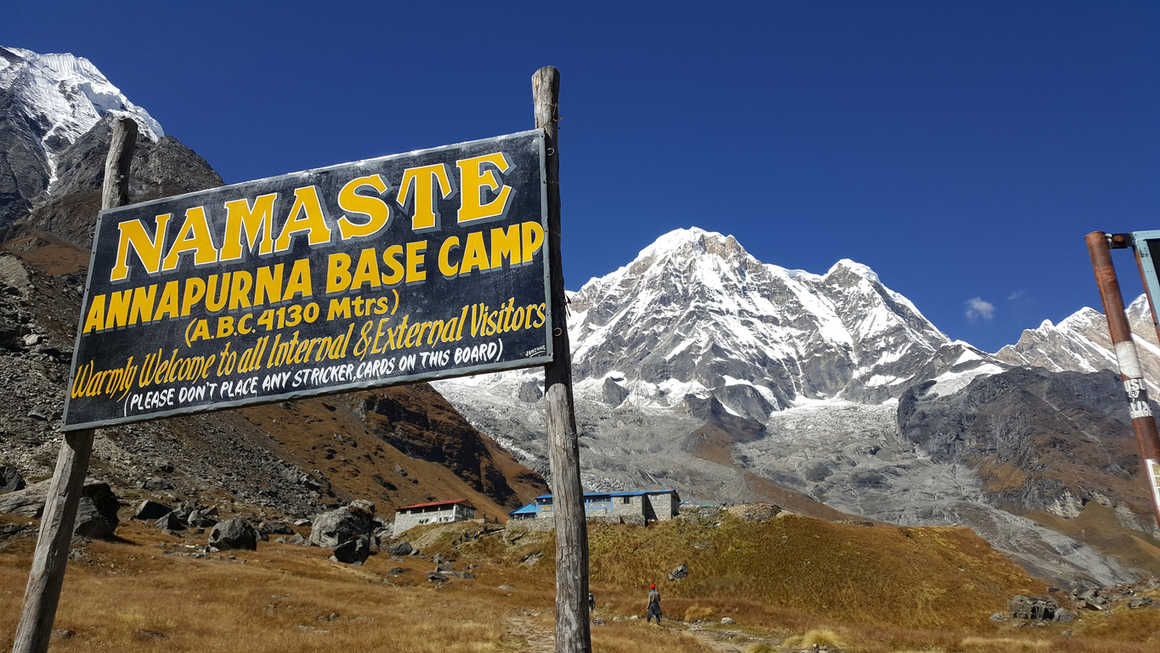
Maximum altitude: 4,130m
Difficulty level: Moderate
Best for: First-time Himalayan trekkers
Signature moment: Reaching the Annapurna Sanctuary amphitheatre
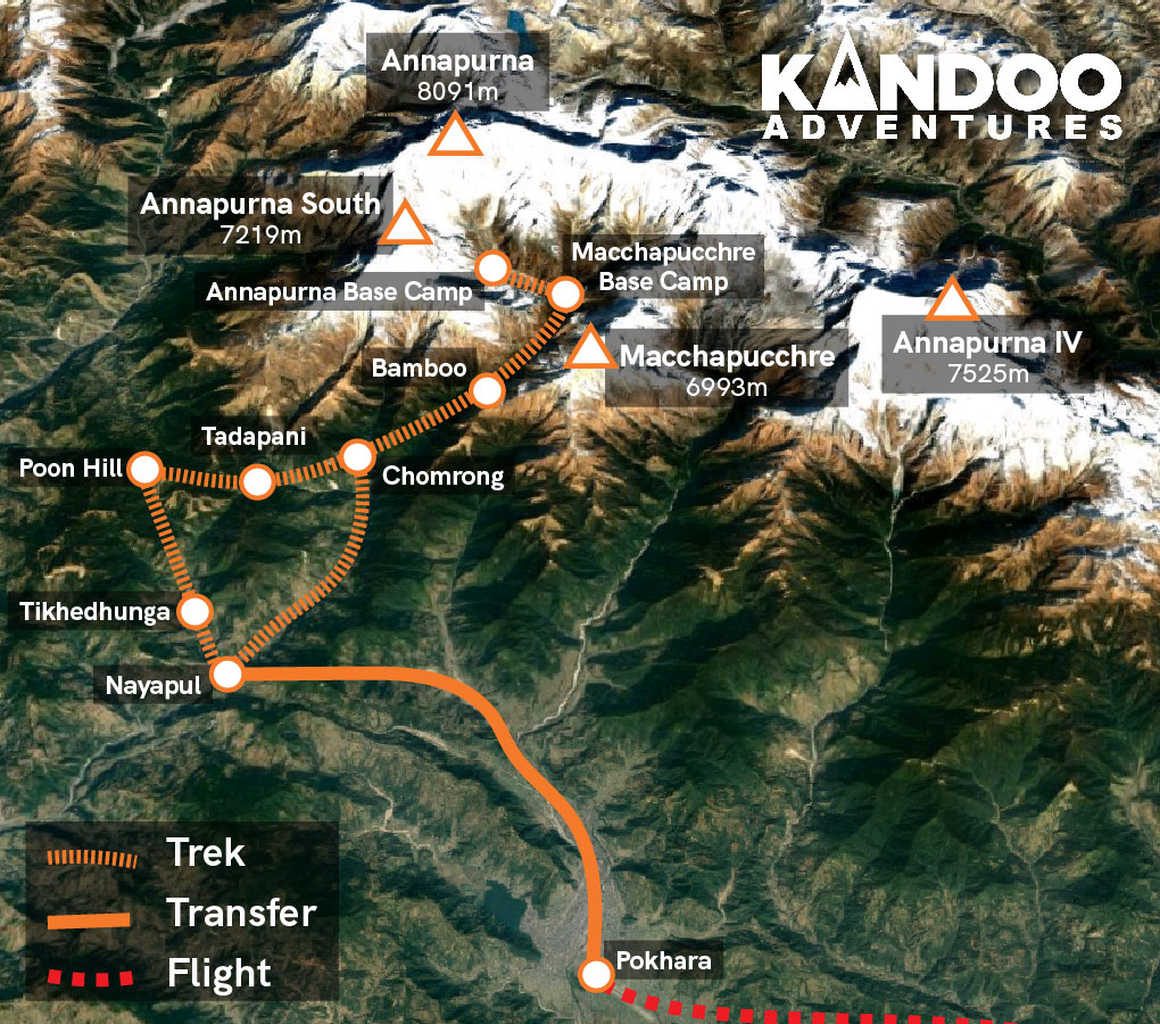
This trek (also known as the Annapurna Sanctuary Trek) begins in the low foothills of the Himalayas, winding through terraced farmland, subtropical forest, and traditional Gurung villages. As you climb higher, the landscape becomes increasingly dramatic, with steep valleys, suspension bridges, and dense forests leading deeper into the mountains.
The route funnels you towards the Modi Khola Valley, where the terrain narrows and the peaks begin to close in around you. Each day feels like a gradual ascent into a natural amphitheatre, until you finally reach Annapurna Base Camp itself, encircled by towering Himalayan summits.
Why choose Annapurna Base Camp?
The scenery
- Dense rhododendron forests and bamboo groves
- Terraced farmland and traditional Gurung villages
- Up-close views of Annapurna I, Annapurna South, Hiunchuli, and Machhapuchhre (Fishtail Mountain)
- Sunrise inside the Annapurna Sanctuary, with 7,000m and 8,000m peaks rising on all sides
Culture and wildlife
- Traditional tea house trekking experience
- Gurung communities with important cultural traditions
- Opportunities to spot Himalayan monal pheasants, langur monkeys, musk deer, and Himalayan tahrs
What makes the Annapurna Base Camp Trek stand out?
While a key viewpoint defines many Nepal treks, Annapurna Base Camp immerses you in what feels like a mountain fortress. The route is lower and generally more accessible than many of Nepal's high-altitude treks, making it an excellent introduction to Himalayan trekking.
What Kandoo trekkers say:
“My daughter and I undertook the tour to Annapurna Base Camp. Kandoo were excellent in the tour information, booking, itinerary and set up. The Nepalese team (manager/guide/porter) were excellent in their care, help and attention. We had a magnificent trip - hugely enjoyed it and would certainly book Kandoo again.” Swimferg, TrustPilot
How long does an Annapurna trek take?
Annapurna treks can be completed in under two weeks, while others stretch into a full three-week expedition across the Himalayas.
Journeys vary in length depending on the route, pace, and acclimatisation needs.
Typical durations by route
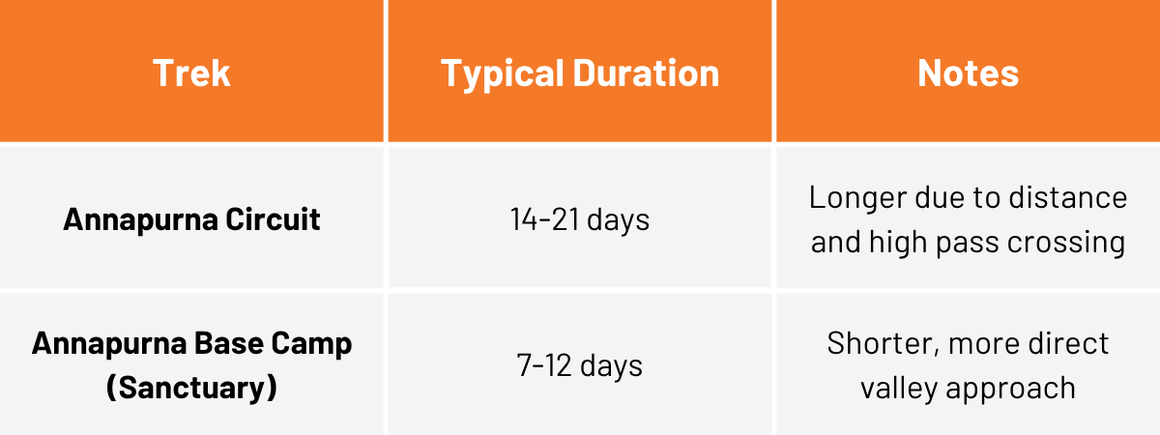
The difference in duration is down to geography. The Annapurna Circuit trek days include a full loop around the Annapurna Massif, while the Annapurna Base Camp trek is an in-and-out journey into the heart of the mountains.
Why acclimatisation days matter
Acclimatisation is essential at altitude for preventing altitude sickness and ensuring you reach the highest point on the trek.
On longer itineraries like the Annapurna Circuit, planned rest days are typically included in places such as Manang. These breaks help your body adjust gradually and are a key part of safe trekking in the Himalayas.
How much does an Annapurna trek cost?
The cost of an Annapurna trek typically ranges from £440-£1,840 (USD600-2,500) per person. The final cost depends on several factors, including:
- Permits
- Duration
- Whether you trek with a private independent guide or a fully supported group
- The level of support you choose
Here's what you need to know about each factor:
Mandatory permits
All trekkers in the Annapurna region require:
- ACAP permit (Annapurna Conservation Area Project) NPR 3,000 (~USD23/~£17)
- TIMS card (Trekkers’ Information Management System) NPR 2,000-2,500 (~USD15-20/~£11-15
The fees for these permits contribute to maintaining trekking trails, conservation work, and local infrastructure.
Side note: Trekking permit requirements in Nepal have changed several times in recent years. Check the latest Nepal trekking permit guidance before your trip.
Annapurna trekking daily budget breakdown (indicative)
You can expect the rough daily spend for independent trekking to be between NPR1700-5500 (£10-23/USD12.50-43).
The breakdown typically looks like this:
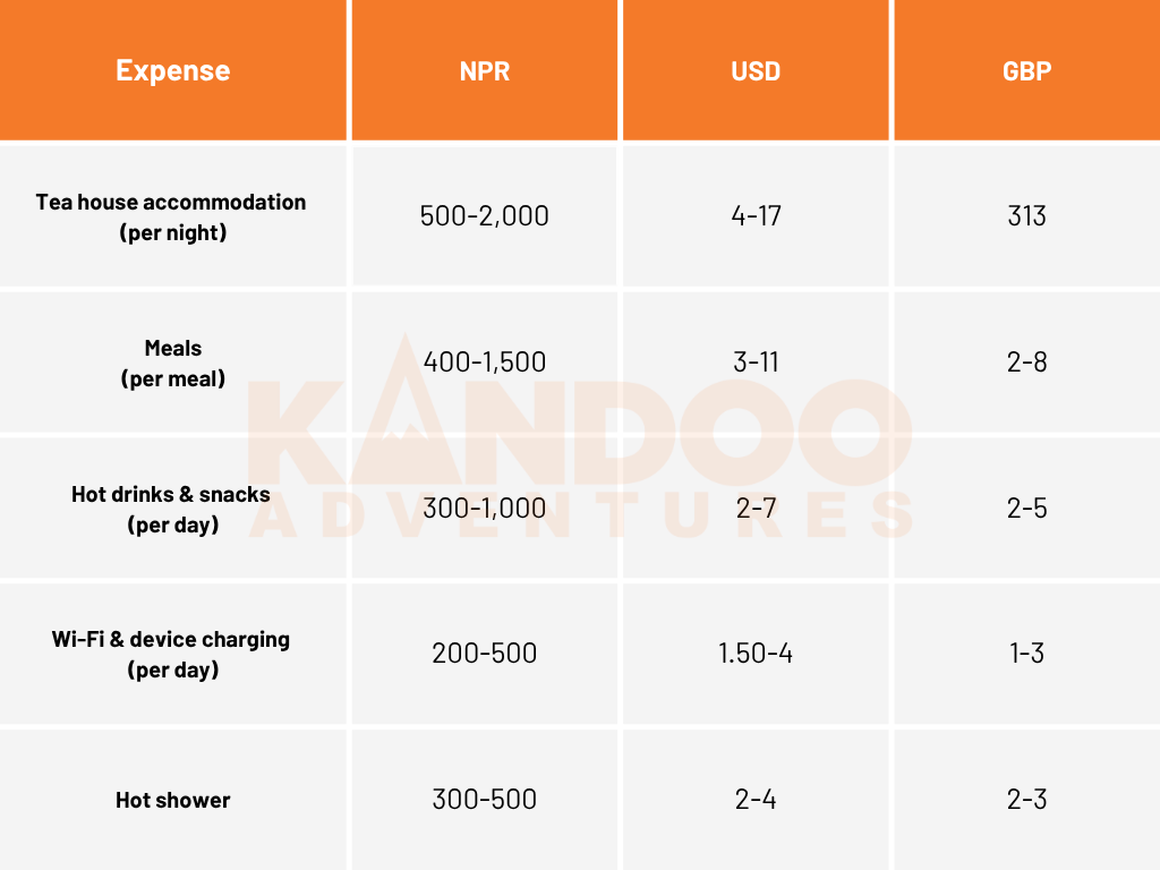
Most trekkers budget a higher daily cost at altitude. Supplies are transported by porters or animals, so costs are naturally higher.
Fully supported vs independent porter-guide trekking cost
- Trekking with an independent porter-guide: Lower cost and more flexibility, but requires strong logistics planning and trust in the independent guide
- Fully supported trekking: Higher cost, but includes logistics, accommodation planning, permits, safety support and local insight
If you’re considering a fully supported experience, Kandoo’s guided Annapurna itineraries include permits, accommodation, logistics, and experienced local guides.
For full trip options and inclusions, see the individual Annapurna Circuit and Annapurna Base Camp trek pages.
Peak trekking seasons for Annapurna: When is the best time to trek in the Annapurna region?
The most favourable conditions for Annapurna trekking are found during the pre-monsoon and post-monsoon seasons. These months are:
Pre-monsoon (March-May)
- Warm temperatures at lower elevations
- Rhododendron forests in bloom
- Stable weather with good visibility and dry trails
Post-monsoon (September-November)
- Clear skies and excellent mountain views
- Crisp air and excellent long-distance visibility
- Comfortable daytime temperatures at most elevations
These seasonal windows offer the most reliable conditions for both the Annapurna Circuit and Annapurna Base Camp treks.
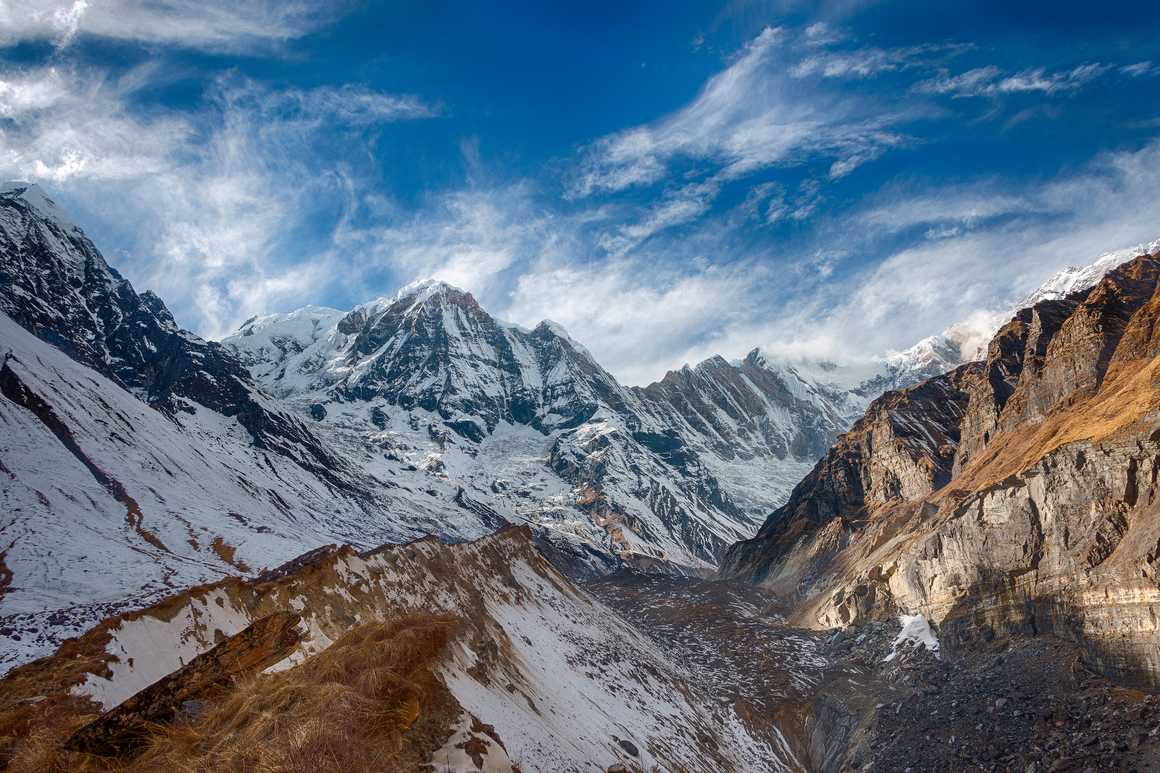
Off-peak conditions in Annapurna
- Monsoon (June-August): Heavy rain, leeches, and limited mountain views; trails can be slippery and less predictable
- Winter (December-February): Cold temperatures, especially at higher altitudes; some passes may be affected by snow, but lower routes can still be possible
The time of year you visit plays a major role in the experience you’ll have in the Annapurna region. Weather conditions, visibility, and comfort on the trails vary significantly in different seasons.
For a deeper seasonal breakdown, see our guide to the Best Time To Trek The Annapurna Circuit.
Do you need a guide for an Annapurna trek?
Yes, the Nepal Tourism Board introduced regulations in 2023 requiring most foreign trekkers to use a licensed guide.
Independent trekking used to be common in the Annapurna region. Today, guided trekking is the only way to experience both the Annapurna Circuit and Annapurna Base Camp.
What a fully supported trek adds
The main benefits of guided treks include:
- Navigation and route management
- Guide and porter support
- Accommodation and meal coordination
- Permit handling and logistics
- Safety support at altitude
- Cultural insight into villages, traditions, and daily life
Some trekkers hire a guide and handle their own accommodation, meals, and travel. However, most enjoy the ease of a fully organised trek.
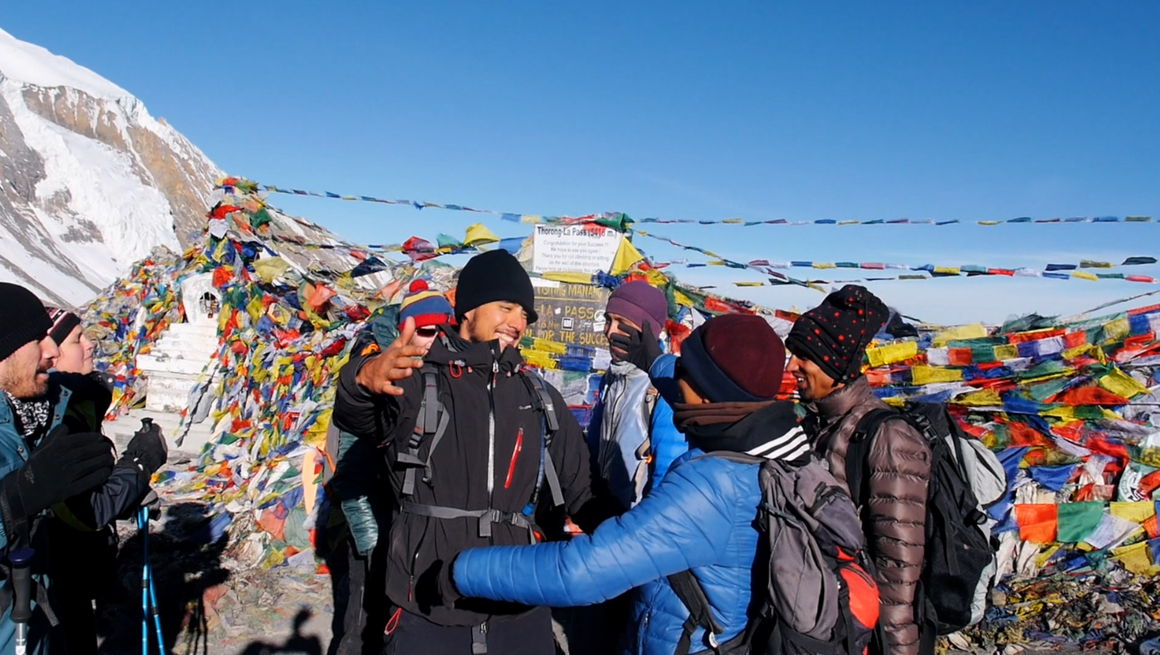
Why book guided Annapurna treks with Kandoo Adventures?
Kandoo’s in-country team works closely with local guides and support staff who have intimate knowledge of the Annapurna region. This means logistics are taken care of from arrival to departure, allowing you to focus on the trekking experience itself rather than the planning.
On the Annapurna Base Camp route or the Annapurna Circuit guided trek, Kandoo guides offer reassurance and expert local knowledge. This ensures a smoother journey through one of the Himalayas’ most iconic regions.
Kandoo supports the communities we work with. We do this by prioritising local employment, utilising in-country specialists, and founding initiatives, such as the Himalayan Foundation, that help sustain life in the mountains. You can feel great about booking your guided Annapurna trek with us.