

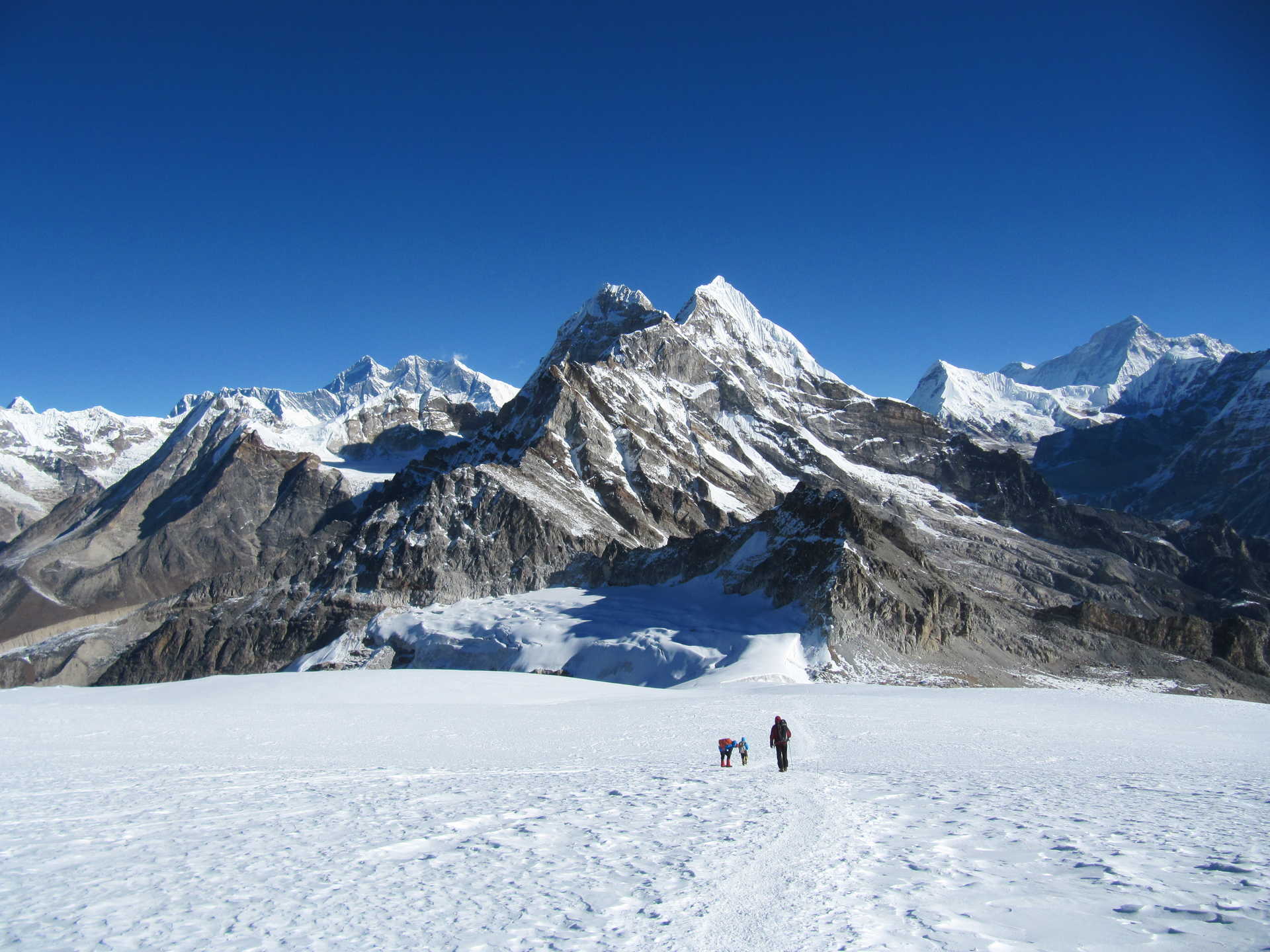
What is the best trek in Nepal for beginners? A guide to five beginner-friendly mountain peaks in Nepal
If you want to climb a mountain in Nepal but you’ve never done anything like it before, where do you begin? It’s hard to know where to start or whether you’re actually ready without having any high-mountain peaks under your belt.
That’s why choosing the right beginner-friendly peak matters. The right mountain will challenge you, but still feel achievable with proper preparation and support.
The good news is that several beginner-friendly trekking peaks make your first Himalayan climb feel within reach.
In this guide, we break down five of the best treks in Nepal for beginners and how to choose the right adventure for your first Himalayan summit.
So, what are the five mountain peaks in Nepal for beginners?
Nepal has several challenging but beginner-friendly trekking peaks. The best five offer the right balance of technical difficulty, altitude, and support for first-time climbers.
Here’s a quick overview of the easiest peaks to climb in Nepal:
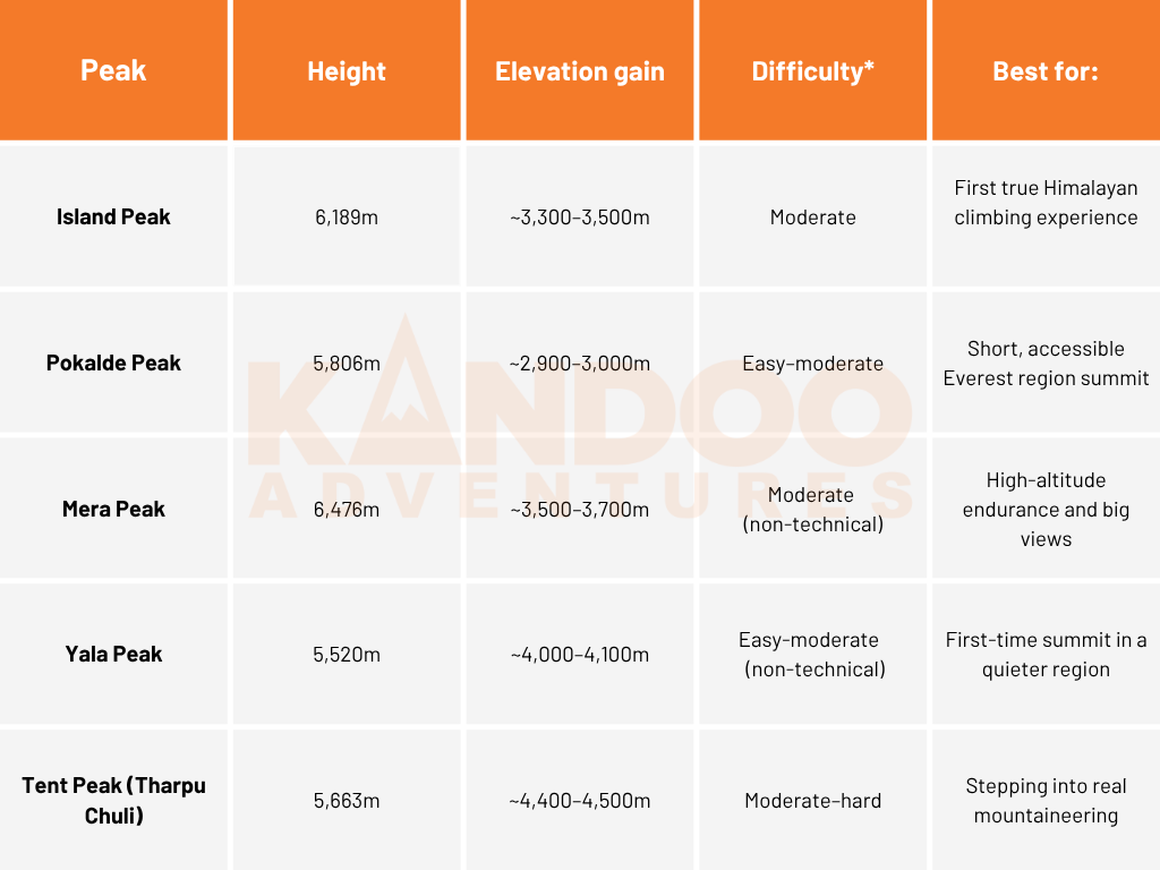
*Difficulty ratings are relative to other Himalayan trekking peaks and are intended as a general guide for beginners. Even “easy” climbs still require good fitness, altitude preparation, and trekking experience.
Now, let’s look at these mountains in Nepal in more detail.
1. Island Peak, Nepal
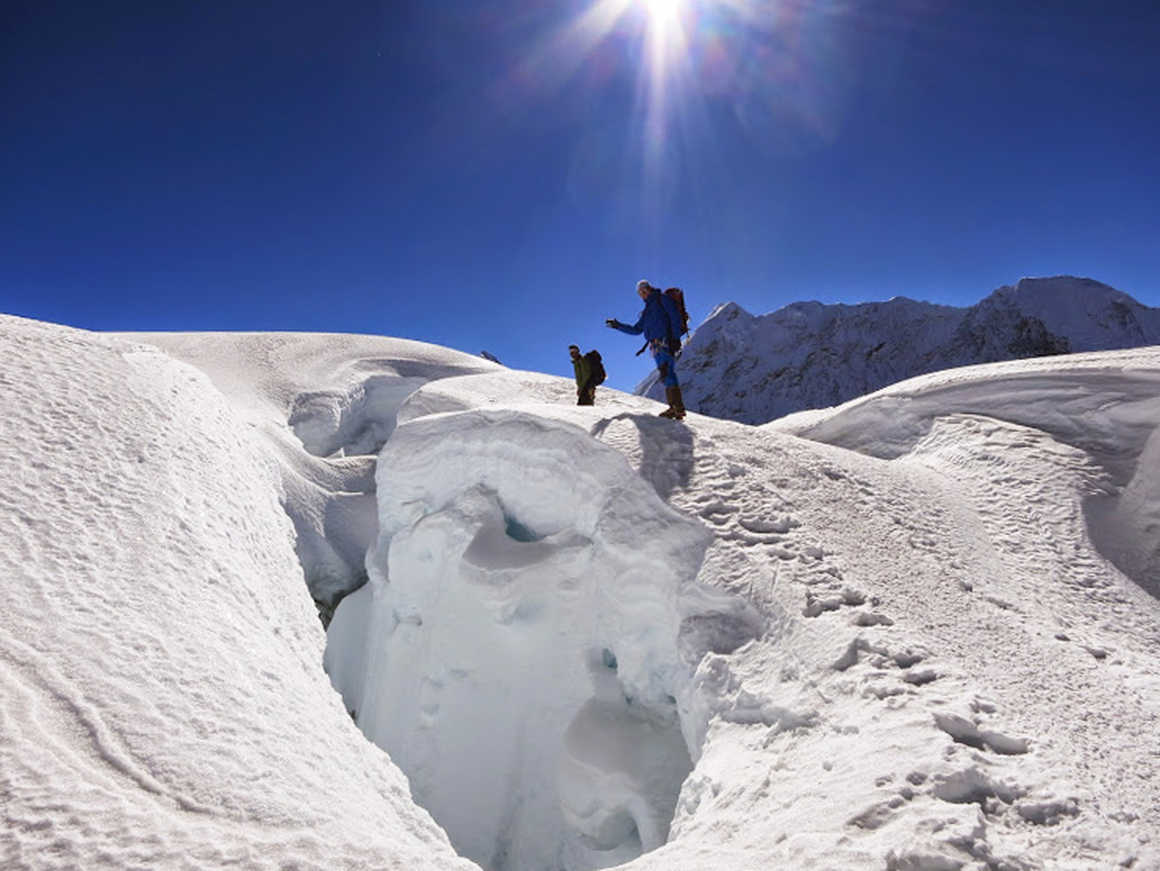
Island Peak introduces you to key mountaineering skills| (like using crampons, fixed ropes, and ladders) without being overly technical.
Set within the stunning Sagarmatha National Park, this 6,189m peak was named in 1951 by Eric Shipton (an English mountaineer). Shipton thought it looked like an island in a sea of ice when viewed from Dingboche (a Sherpa village in the Khumbu region of northeast Nepal).
Today, it’s considered one of the more straightforward (though still physically demanding) sub-7000m peaks of Nepal.
The journey up the mountain is just as memorable as the summit itself, taking you through lush forests, rolling hills, and snow-covered terrain, before finishing with panoramic Himalayan views.
That said, it’s not without its challenges.
The toughest section is the 150-metre headwall near the summit, with a steep 45° incline leading to a narrow summit ridge. It’s certainly a challenge, but one that feels achievable with the right preparation.
2. Pokalde Peak, Nepal
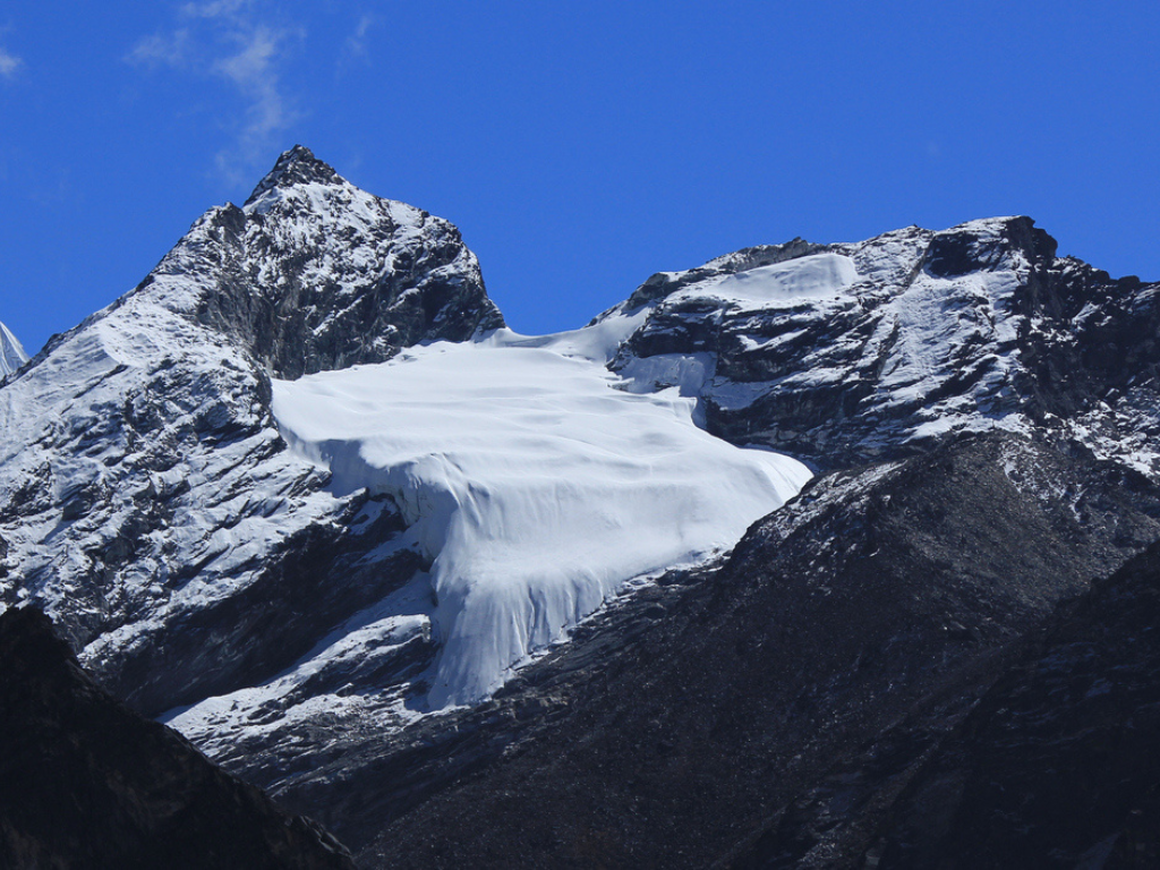
Pokalde Peak is a great option if you’re looking for a shorter, more accessible climb without missing out on the Everest region experience.
Located around 12km southwest of Mount Everest, it’s widely regarded as one of the easiest peaks to climb in Nepal.
At 5,806m, Pokalde is lower than some of its neighbours and isn’t completely snow-covered during trekking season. The final 650 metres lead to incredible views of peaks Ama Dablam (6,812m), Pumori (7,161m), and Makalu (8,485m) in the surrounding Khumbu region.
Most of the ascent involves straightforward walking and scrambling. The final section is where things get more interesting, with fixed ropes, loose rock, and a steep (almost vertical) scramble to the summit.
3. Mera Peak, Nepal
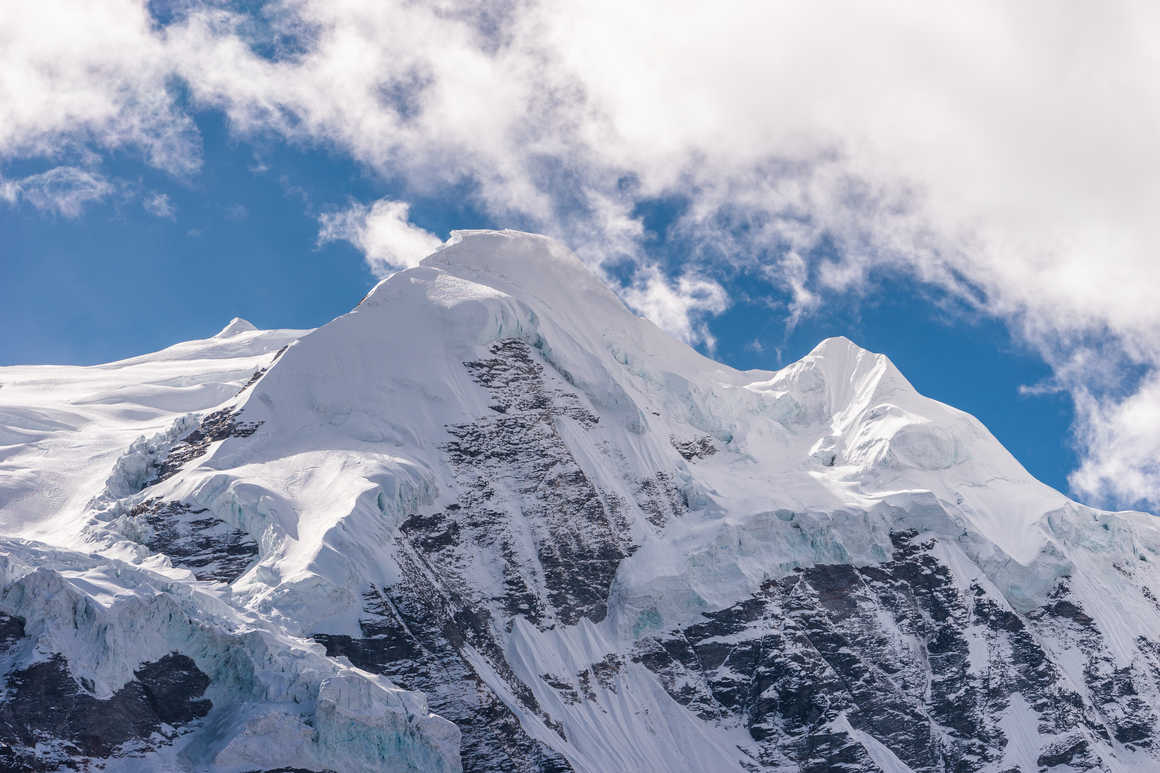
Mera Mountain, Nepal, strikes a great balance between trekking and climbing, making it ideal if you’re building confidence at altitude.
At 6,476m, it’s actually the highest trekking peak in Nepal, but it’s less technically demanding than Island Peak. You still need to know the basics (using crampons, ropes, and possibly an ice axe), but the emphasis is more on endurance than technical skill.
The route itself is incredibly varied. You pass through rhododendron, pine, and bamboo forests, cross open grasslands, and follow ancient mountain trails before reaching the Mera Glacier. From there, it’s a steady climb on snow and ice to the summit.
You’ll cover big distances each day, moving through forests, valleys, and high alpine wilderness before stepping onto the glacier. From there, the climb turns into a long, steady push on snow and ice where rhythm matters more than speed.
The summit day is demanding, but the views make every step feel worth it. From the top, you’ll see five of the world’s six highest mountains, including Mount Everest!
4. Yala Peak, Nepal
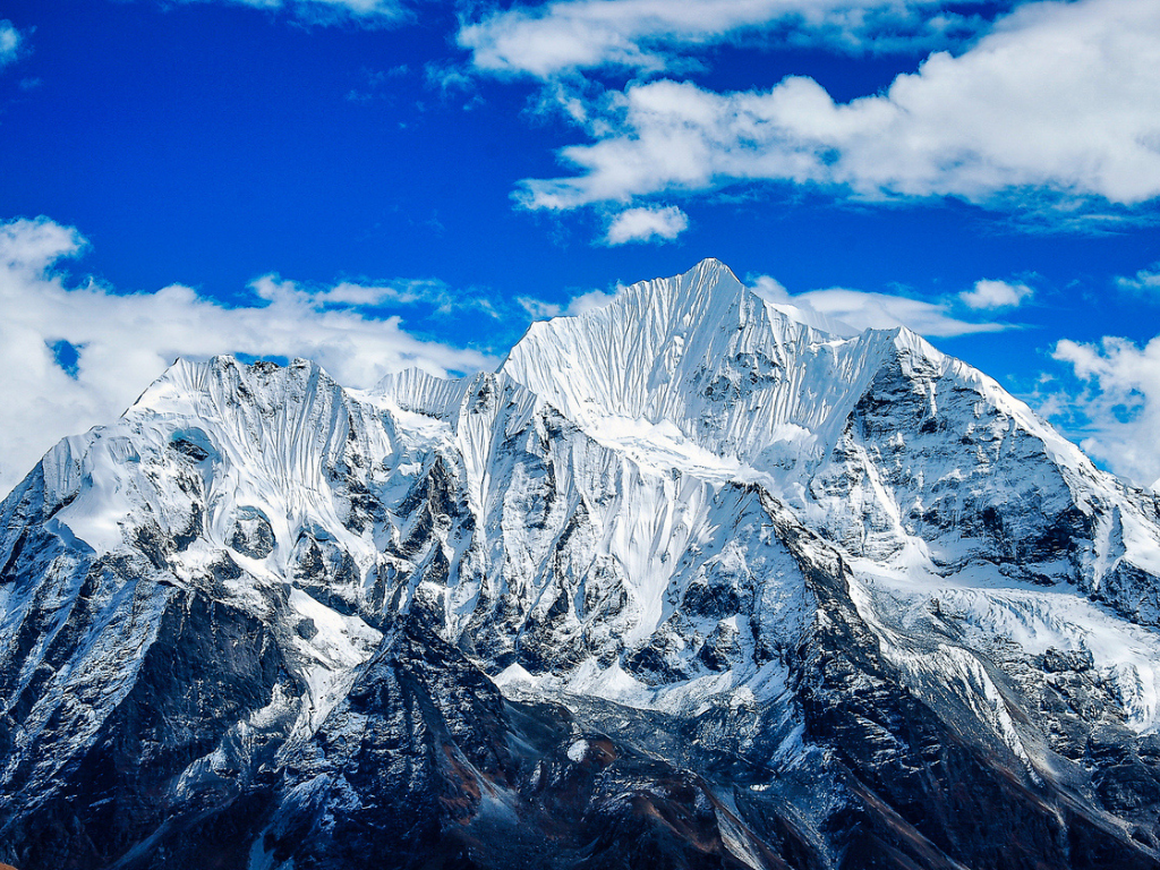
Yala Peak is one of the most accessible Himalayan summits for beginners. There’s no need for ropes or technical climbing, but you’ll be trekking to altitude, so solid fitness and good acclimatisation are essential (as it is with all big mountain peaks).
The trek leading up to this mountain peak in Nepal is a big part of the experience. You’ll pass through dense forests of oak and conifer, terraced hillsides, alpine meadows, and glacial landscapes.
The final ascent follows a snow and rock trail, gradually revealing incredible views. On a clear day, you’ll see Shishapangma (the highest peak in Tibet at 8,027m) alongside a host of other Himalayan giants like:
- Langtang Lirung (7,227m) in the Langtang Valley
- Dorje Lakpa (6,966m) in the Dorje Lakpa Range
5. Tent Peak, Nepal
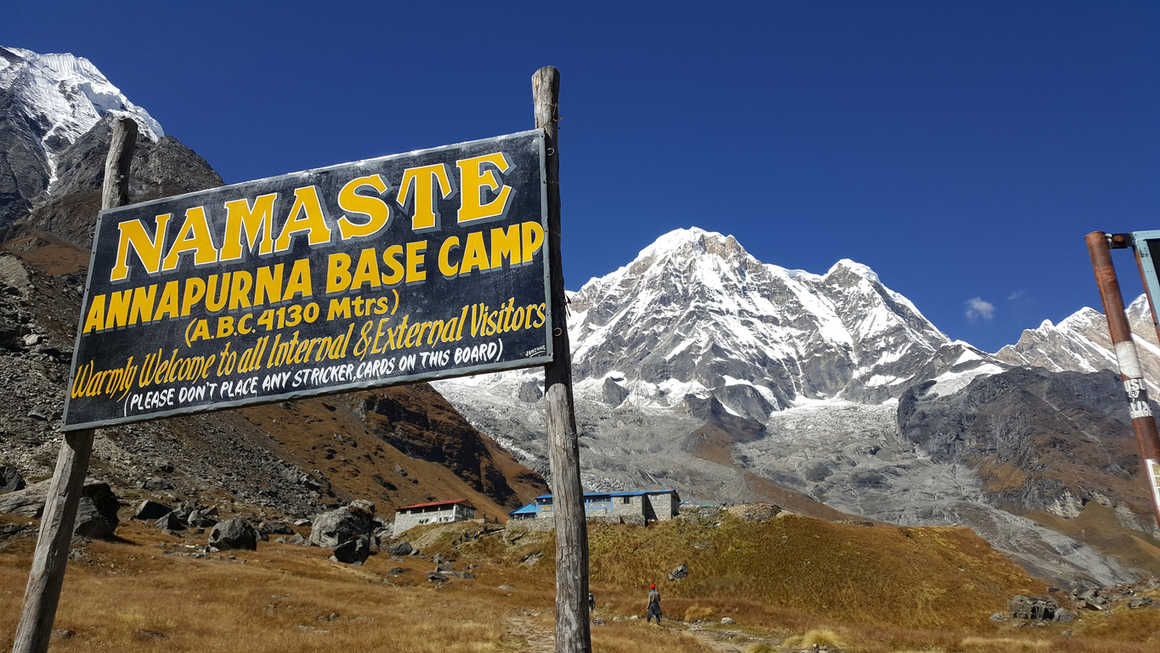
Tent Peak in Nepal is the most challenging climb on this list, but still well within reach for fit and motivated beginners.
This climb introduces more technical elements, including basic ice climbing and navigating narrow, exposed ridges. If you’re ready to take the next step from trekking into mountaineering, Tent Peak is a natural progression.
Known locally as Tharpu Chuli, Tent Peak rises to just over 5,560m and sits within the Annapurna Range.
You’ll start off trekking through lush trails and mountain villages before the landscape shifts dramatically into ice and rock. Once you hit the upper mountain, things get more technical, where you’ll use ropes, move carefully over steep ground, and stay focused on exposed ridges.
It feels like a real step up into mountaineering, but that’s exactly what makes it so rewarding. And the payoff is sweeping views across the Annapurna Massif (with Annapurna mountain reaching 8,091m) that make every step worthwhile.
How to choose the right peak in Nepal for your first adventure
Picking your first Himalayan peak isn’t about choosing the easiest mountain. You need to choose the one that matches your experience, fitness, and what you actually want from the trip.
Here’s how to get it right:
Consider your technical ability
For your first climb, you might want to avoid anything overly technical. As a first-time big mountain trekker, it’s a good idea to focus on being in the mountains and how it feels physically.
The best beginner peaks keep things simple:
- Mostly trekking on snow or glaciers
- Basic use of crampons, ropes, and an ice axe
- No steep ice walls or complex climbing sections
When in doubt, opt for a less technical climb to build confidence and develop skills progressively.
Don’t underestimate altitude
Altitude is a real challenge when trekking in Nepal, regardless of experience. Even the lower peaks sit between 5,000–6,500m, where the air is noticeably thinner, and your body has to work much harder than at sea level.
Fortunately, there are some ways you can prepare your body for altitude:
- Have built-in acclimatisation days. These rest stops give your body time to adjust to reduced oxygen levels.
- Ascend the mountain gradually. A slower climb gives your body more time to adapt. For example, Mera Peak is higher than Island Peak, but its more gradual ascent profile often makes it feel more manageable overall.
- Hydrate and fuel properly. Drinking plenty of water and eating regularly helps your body cope with altitude stress and maintain energy levels when appetite naturally drops.
Trekking in Nepal with a guide is also incredibly beneficial when ascending to high altitudes. In fact, it’s a key safety factor (and on most treks, it’s mandatory to climb Nepal mountains with a guide).
If you join Kandoo for a trek in Nepal, our guides will monitor you closely throughout the trek to ensure your body is coping with the changing altitude.
During high-altitude expeditions, this includes daily health checks, where guides track your pulse rate, blood oxygen saturation levels, and overall acclimatisation progress. If there are early signs of altitude sickness, they’ll pick them up quickly and give you the care you need.
As one of our trekkers, Hannah, shared:
"We had a small group which was perfect and our guides were really knowledgeable and friendly. I struggled at certain parts of the trek but they kept me motivated and I felt reassured that they were observing my health closely." - Daniel, Trustpilot.
Tip: If this is your first time above 4,000m, starting slightly lower (like Yala Peak) is a smart move. Having said that, this doesn’t mean you can’t do higher peaks if you haven’t done much altitude trekking. Just ensure you prepare accordingly by training in advance, allowing enough acclimatisation time, and choosing an itinerary with a sensible ascent profile.
Be realistic about fitness and time
On most beginner climbs, you’ll be trekking for multiple days, often at altitude, before summit day even begins.
As a result, you should be comfortable with:
- Long days of uphill trekking. Expect sustained walking on varied terrain, often with significant elevation gain. Even “easy” trekking days can feel demanding once you’re above 3,000–4,000m.
- Carrying a daypack at altitude. While porters often carry the main load, you’ll still be responsible for packing and carrying your essentials (water, layers, snacks, and personal kit) while your body is already working harder due to thinner air.
- Sustained effort over multiple days. This isn’t a one-day challenge. You’ll be trekking for consecutive days, so recovery, pacing, and consistency matter just as much as fitness.
Doing some preparation hikes is a good way to get your body ready. For example, you could build up to full-day hill walks with a weighted pack so your body gets used to both duration and elevation gain.
Since these are all multi-day trips, it’s also a good idea to include some multi-day practice as part of your training. Planning walking weekends or short trips where you’re out on the trail for several days in a row can help your body and mind adapt to the demands of consecutive hiking days.
You can also read our Himalaya Training Guide for more information on how to prepare.
Experience mountain peaks in Nepal with Kandoo
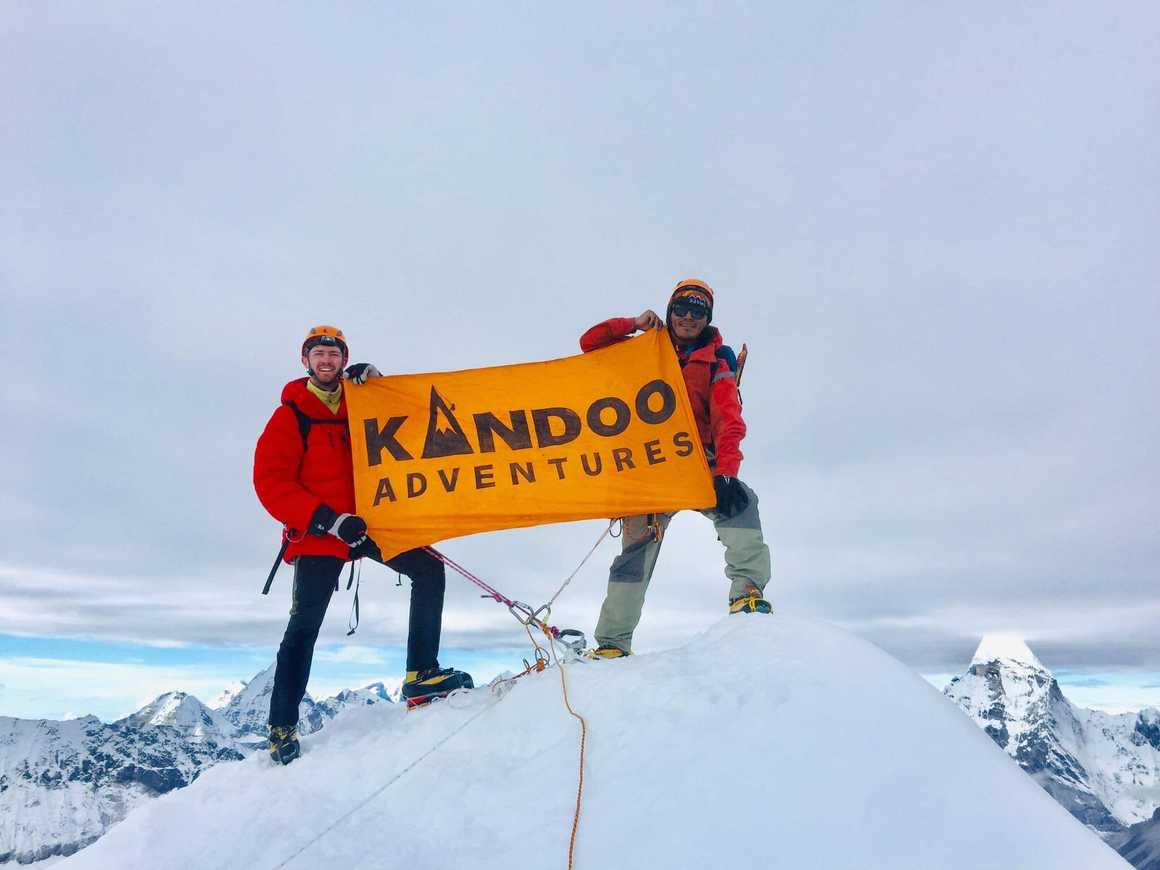
Choosing your first climbing peak in Nepal comes down to finding the right balance between challenge, altitude, and support. Each mountain offers a different way to experience the Himalayas for the first time, and knowing what you want out of your trip helps you choose the best option.
For first-time climbers, Kandoo Adventures takes care of the logistics (like permits, routes, and accommodation) so you can focus on the climb. On the mountain, experienced guides lead the way, managing pace, monitoring conditions, and carrying out daily health checks at altitude.
Expert support throughout makes your first Himalayan peak safer and more enjoyable.