

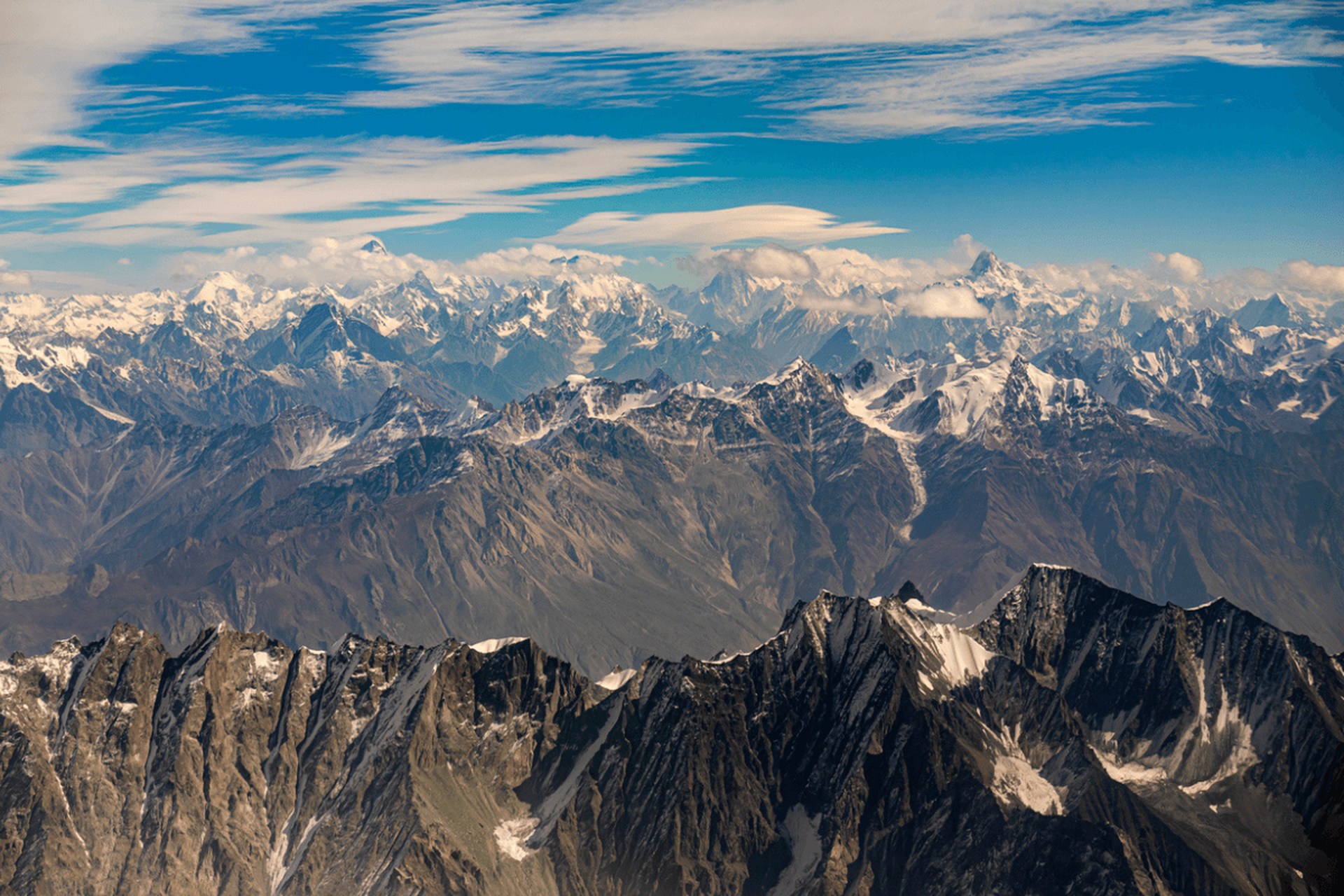
For high-altitude treks like K2 Base Camp, you need a Pakistan visa to enter the country. But there’s a lot of conflicting guidance online, which leaves you with a lot of questions. Which type of visa do you need? How long does it take? And are there extra requirements for trekking K2 Base Camp?
Our article answers all your questions about how to get a visa for Pakistan, maps out the exact process, and covers all other things that need sorting for a trekking expedition.
How to get a Pakistan visa from the UK
The simplest way to get a Pakistan visa is to apply online through the official Pakistan Online Visa System. You have to choose a category that matches your trip. For example, if you’re trekking to K2 Base Camp, you choose Mountaineering & Trekking, not the Tourist visa.
There used to be a scheme for certain travellers (including those from the UK) where you could get a free visa for up to 90 days, often approved within 48 hours. The scheme was suspended at the start of 2026.
Side note: On the 1st January 2026, Pakistan changed its visa policy. All in-person Visa Prior to Arrival (VPA) facilities and Visa On Arrival (VOA) options were suspended. A visa on arrival or Electronic Authorization to Travel (ETA) scheme exists for specific business travelers or eligible nationalities, but standard leisure tourists have to apply online and receive an electronic visa before departing for Pakistan.
Tourist vs trekking visa
If you’re heading to Pakistan to trek K2 Base Camp or Concordia, you need a special visa to pass through restricted mountain zones. A standard tourist visa won’t cover your trekking permit, so you need the Mountaineering & Trekking visa instead.
This visa actually makes your journey much easier. The trekking visa bundles your entry visa, trek permit, and security clearances together, so it’s more convenient.
The tourist visa usually takes a few days to process, but plan for longer to allow for delays. The trekking visa takes up to eight weeks. We recommend submitting your application at least three months before your trip to be safe.
You also can’t obtain a Pakistan trekking visa from the UK on your own. You can do the application yourself, but you need a sponsor letter or an invitation from a licensed tour operator.
Your tasks vs your operator’s responsibilities
You handle the online application yourself but your tour operator handles government clearance and logistics.
Here’s a quick look at what you have to sort vs what your tour operator does for you:
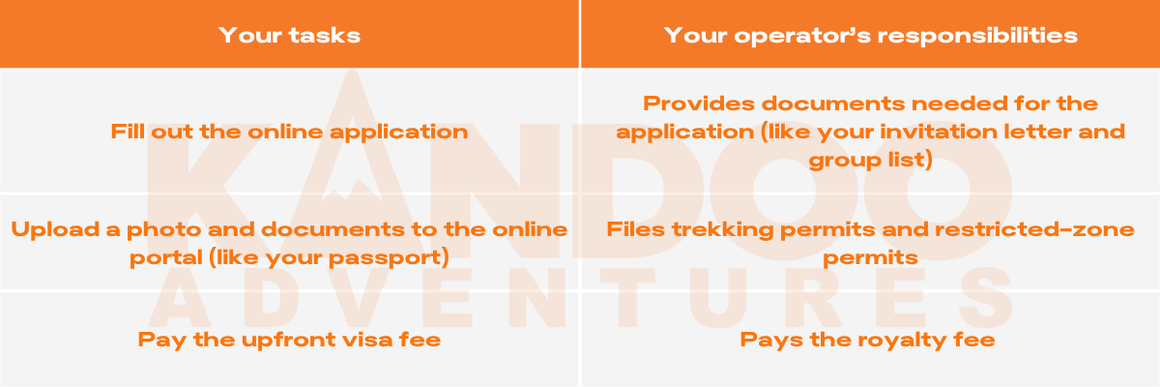
You fill out all the details, upload a photo, and upload documents like your passport. You pay the upfront visa fee. For a standard single-entry visa, this is usually around $60 (£45).
Your licensed tour operator provides some of the documents you need for your application, including an invitation letter and a group list.
For restricted zone treks, your operator files the trekking permits and restricted-zone permits with the Gilgit-Baltistan authorities too. You need these to trek K2 Base Camp or Concordia.
Aside from the standard application fee, certain trekking expeditions involve a mandatory royalty fee. The amount varies depending on the season and whether you’re visiting restricted zones, usually it’s between $75 and $150. Your tour operator pays this with the permit application (more on this later). The fee is included in the trip price.
How to apply for a Pakistan visa online
You create an account via the Pakistan Online Visa website, choose the right visa option, and upload all relevant documents.
Here’s how to complete the process in seven simple steps:
- Get your trek documents ready. Before you start, ask your tour operator for your invitation or sponsor letter and the group list.
- Create an account and sign in. Register with your email address. Then, sign in using a two-step verification process.
- Choose the Mountaineering & Trekking visa. Choose Mountaineering & Trekking > Trekking > Single-entry visa. Don’t choose the tourist visa option because the K2 route passes through a restricted area.
- Add your travel details. Enter your dates, route, and accommodation details exactly as they appear on your operator’s paperwork. If the details don’t match, your application could be delayed. Under Purpose of your visit, enter the route or peak you intend to trek/climb. Take time to fill out every field accurately.
- Upload your documents. Scan and upload your passport photo page, a digital photo, and your operator’s documents. You may also be asked for proof of address, in which case, you can use a utility bill.
- Pay the visa fee. You see the fee before you make the payment, but you can use this fee calculator to check first. For UK residents, it’s usually $60 (about £45).
- Wait for your Visa Grant Notice. Your visa arrives by email. Print a copy to carry with you, and send a copy to your operator.
Everything you need to apply for a Pakistan travel visa
To get a travel visa for Pakistan, there are several documents you need to upload to the online portal including your passport photo and a sponsor letter from your tour operator.
Here’s a full list of everything you need to start the application:
- Passport. It must expire at least six months from the date of arrival into Pakistan.
- Digital passport photo. Make sure your photo/file meets the size and format requirements.
- Paperwork from your operator. This includes a sponsor letter or agreement, a list of all group members, and a signed ‘Trekking in Restricted Area’ form.
Health documents for the airport
If you spend four weeks or more in Pakistan, you may need proof of a recent polio vaccination when you leave the country. Most K2 trips are shorter than that, but bad weather or flight delays can push you over.
Good to know: Most major Pakistani international airports including Islamabad and Lahore offer polio vaccines and vaccination certificates through their Airport Health Offices.
Depending on where you’re travelling from, you may need a yellow fever certificate. This is also the case if you have a layover of longer than 12 hours in a high risk country. If you’re flying directly from the UK, you don’t need it.
All information is accurate at the time of publishing (November 2026). Information may change, so always check the latest travel news from the Foreign, Commonwealth & Development Office (FCDO), and consult a medical professional before travelling.

Common mistakes to avoid when getting a Pakistan visa
One of the most common mistakes when applying for a Pakistan visa is applying for the wrong type of visa, often a tourist visa instead of a trekking one. Other mistakes are mainly to do with timing and paperwork issues.
Check out the most common mistakes below to make sure everything goes to plan with your application:
- Choosing the wrong type of visa in the portal. If you’re heading out on high-altitude treks or climbs, you need the Mountaineering & Trekking visa, not the Tourist visa.
- Leaving it too late. Tourist visas are quicker to process than a trekking visa. The trekking one takes up to eight weeks to process, so give yourself enough time.
- Using an invalid passport. What catches people out often is the six-month expiration date. If your passport is close to expiring, you need to renew it first.
- Using an unofficial site. The Government of Pakistan NADRA Portal is the only official place to apply for Pakistan visas, but there are lots of fake and unofficial websites out there.
- Not checking tour operator paperwork. When you fill in the details via the online portal, make sure they exactly match the details supplied by your tour operator.

What else do you need to trek to K2 Base Camp?
As well as your visa, you need a trekking permit, a licensed guide, registration in Gilgit-Baltistan, and the right travel insurance.
Your tour operator handles most of this for you, but here’s a breakdown of everything needed for a K2 Base Camp trek:
- A trekking permit. The route to K2 Base Camp crosses a restricted area, so every trekker needs a permit. Your tour operator usually applies for this for you, and covers the cost in the overall trip price.
- A licensed guide. You have to travel to K2 Base Camp with an approved guide, which is why it’s to book with a tour operator like Kandoo Adventures. [benefit of booking with an operator like Kandoo].
- Registration in Gilgit-Baltistan. All foreign visitors must register with the local authorities when they arrive in the region. Again, your operator usually arranges this.
- The right travel insurance. Look for a policy that covers trekking above 5,000 metres and includes helicopter evacuation since injuries can happen on the trail.
Recommended reading: The ultimate guide to the K2 Base Camp trek.
FAQs about Pakistan visas
Do I need a visa for Pakistan?
Yes, you need a travel visa for Pakistan, and you must apply online before your trip. You can’t get one on arrival.
There used to be a scheme for certain travellers (including those from the UK) where you could get a free visa for up to 90 days, often approved within 48 hours. The scheme was suspended at the start of 2026. Now, you need a tourist visa, or if you’re trekking, you need the specific Mountaineering & Trekking visa.
Entry rules can change though, so always check the portal guidance and information before you apply.
How long does a Pakistan visa take?
A standard tourist visa generally takes up to ten working days to process, but we recommend planning for longer in case there are delays. A trekking visa can take up to eight weeks, so apply with plenty of time before your trip.
How much does a Pakistan visa cost?
A Pakistan visa for UK travellers usually costs around $60 (about £45). The portal shows the exact fee before you pay. If you’re trekking in Pakistan, your tour operator usually sorts your trekking permit as part of the overall cost of the trip. There may also be royalty fees, depending on where you trek. Again though, tour operators sort this for you.
Trekking in Pakistan? Let Kandoo handle the details
Sorting a Pakistan visa is a pretty straightforward process. You gather the documents you need, complete the online application, and wait for your visa to be approved.
Just remember, if you’re heading to Pakistan for a trekking expedition, you need the Mountaineering & Trekking visa, not the tourist one. Your tour operator usually handles the permit, security clearance, and royalty fees.
If you haven’t booked a trip yet, check out Kandoo’s K2 Base Camp and Concordia trek. We provide you with a group list, an invitation letter, and accommodation details for when you apply for the visa. We also arrange permits for you, so all you have to do is focus on preparing for the trek!