
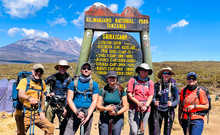
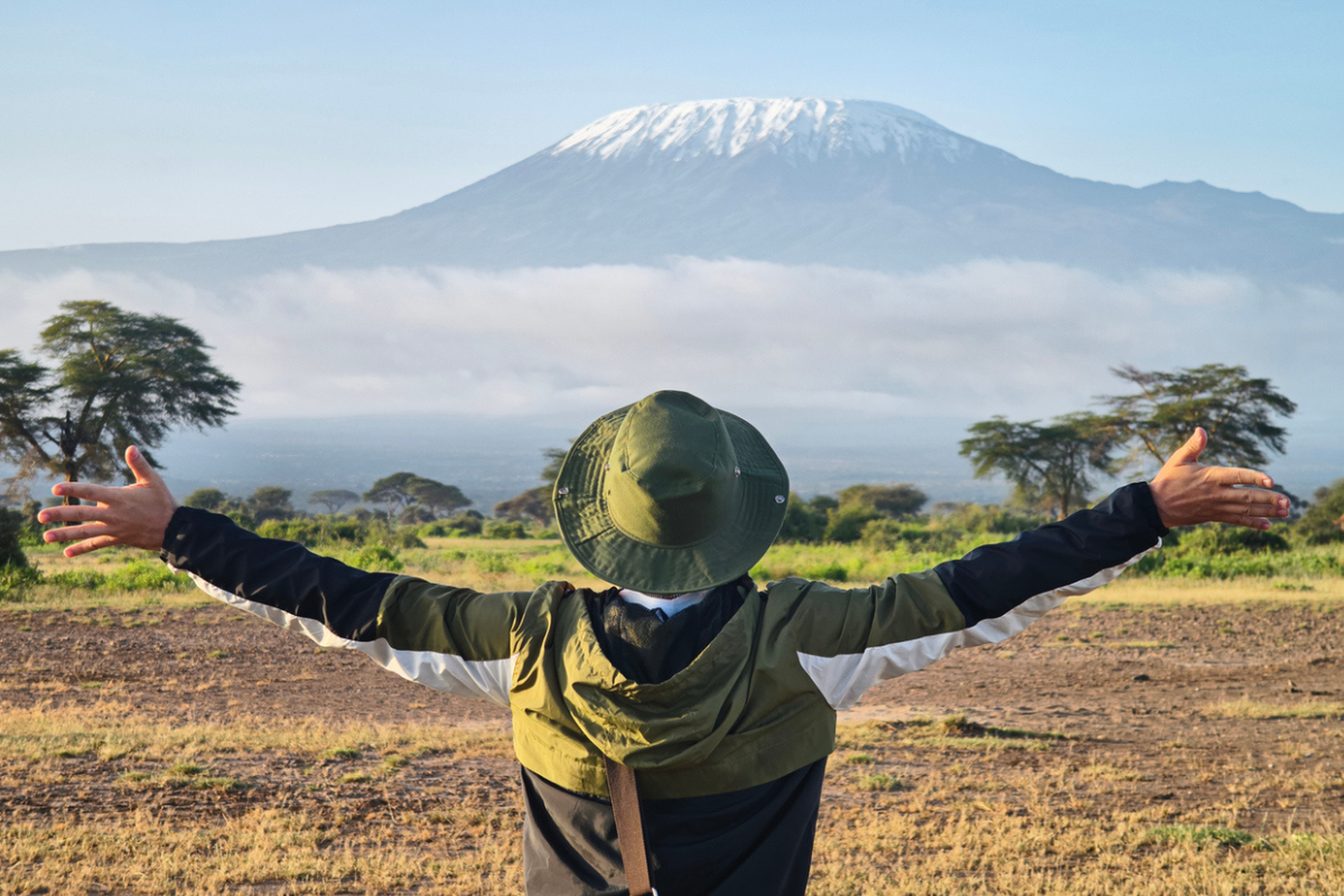
When Aitch, the chart-topping Manchester rapper, climbed to the summit of Mount Kilimanjaro in January 2025, he proved something many people don't realise: you don't need to be an experienced mountaineer to do it.
His climb, documented in Netflix's Aitch, Don't Be Afraid, has inspired thousands of viewers to ask the same question: Could I do it too?
In most cases, the answer is yes. This article reflects on Aitch's journey and explains how to climb Kilimanjaro. We discuss the preparation, fitness, and mindset needed to reach the summit yourself.
Who is Aitch, and why did he climb Kilimanjaro?
Before we get into what his climb actually reveals about the mountain, here’s the downlow on Aitch and climbing Kilimanjaro:
- Who: Aitch, real name Harrison Armstrong, is a Brit Award-winning, multi-platinum-selling Manchester rapper and ambassador for the Down's Syndrome Association.
- What: A multi-day ascent of Mount Kilimanjaro.
- When: Climbed in January 2025; Aitch: Don't Be Afraid documentary directed by Aaron Fitzmaurice and Harry Tatem, released July 2026.
- Why: To raise money and awareness for the Down’s Syndrome Association, in honour of his sister, Gracie.
- Result: Over £160,000 raised, more than double the original £70,000 target.
Aitch's motivation to climb Kilimanjaro
The film's emotional core is Aitch's relationship with his sister Gracie, who was born with Down’s Syndrome. Aitch speaks openly about growing up as a sibling carer, and about how this experience shaped him and his career.
Aitch has said of Gracie: "I wouldn't be half the person I am if she weren't here." It explains a lot about why a rapper with no climbing experience decided that a mountain was the right way to make a point.
For anyone considering a similar challenge, this type of motivation matters. The most successful charity climbs are so because a genuine, personal reason is at the heart of the challenge. This keeps pushing you on when the going gets tough.
Can anyone really climb Kilimanjaro as Aitch did?
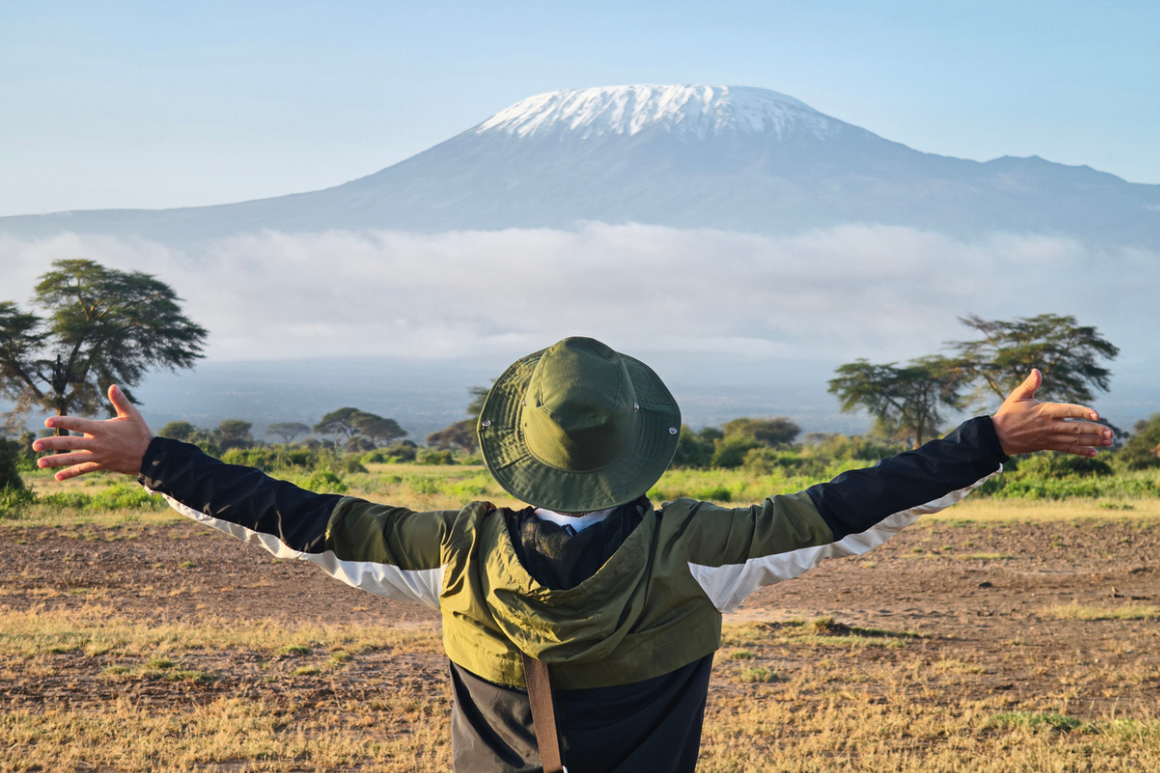
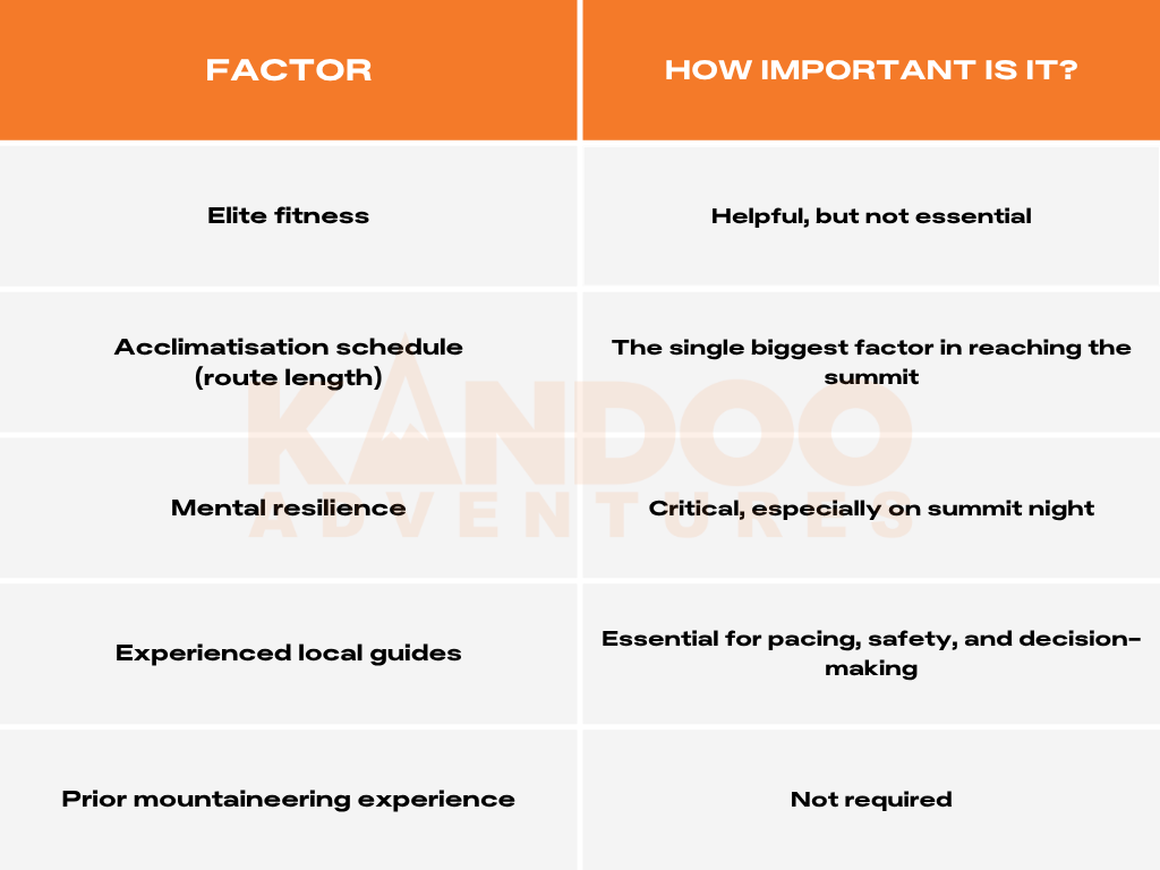
Yes, most people can climb Kilimanjaro because it requires no technical climbing skills, ropes, or prior mountaineering experience. What successfully climbing Kilimanjaro does require is good preparation, the right pace, and the mental resilience to keep putting one foot in front of the other. Aitch was joined by friends, family, and a wider mountain support team along the way, which reflects how most successful Kilimanjaro climbs actually happen.
This table outlines the factors that actually determine success when climbing Kilimanjaro:
Kilimanjaro routes with Kandoo
The various Kandoo routes up Kilimanjaro allow essential but varying amounts of time for acclimatisation. Here's how long each of Kandoo's Kilimanjaro routes takes.
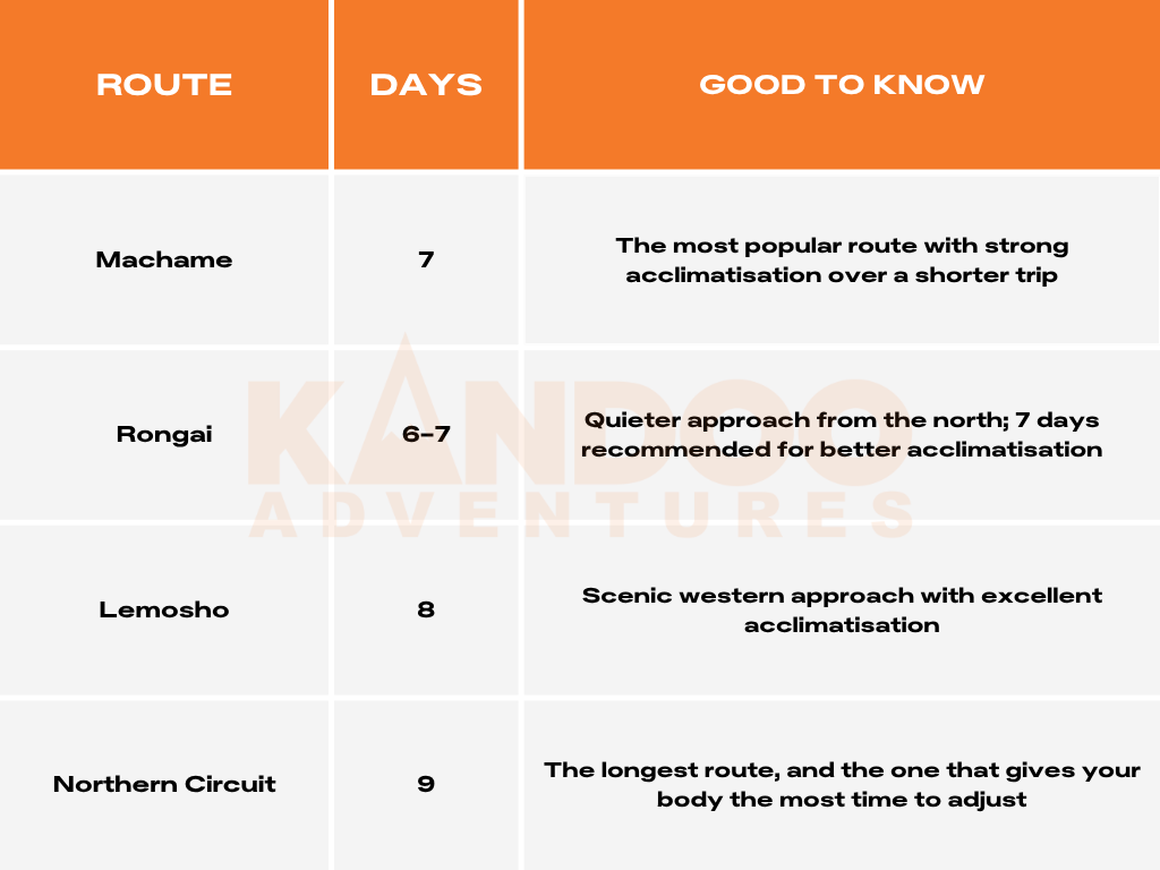
Good to know: Kandoo itineraries always include acclimatisation time, which is why their success rates across all routes are generally around 95%+. Every route above gives you a genuinely strong chance of reaching the summit when paired with the right preparation, like Aitch.
When is the best time to climb Kilimanjaro?
The best time to climb Kilimanjaro is during one of the two dry seasons, December to March or June to October. During these seasons, you benefit from the clearest skies and have the best chance of reaching the summit. Aitch climbed in January, which sits right in the quieter of these two windows. Let’s have a closer look at all the climbing seasons.
- December to March. Colder, with a higher chance of snow near the summit, but noticeably quieter on the trails.
- June to October. Warmer and drier overall, though it overlaps with the European and North American summer holidays, so routes get busier.
- April, May, and November. These are the rainy seasons. Kandoo doesn't run treks during these months due to unpredictable, unsafe conditions.
If you're weighing up dates alongside a route, our guide on the best time to climb Kilimanjaro breaks down month-by-month conditions in more detail.
How high is Kilimanjaro, and why does altitude matter more than fitness?
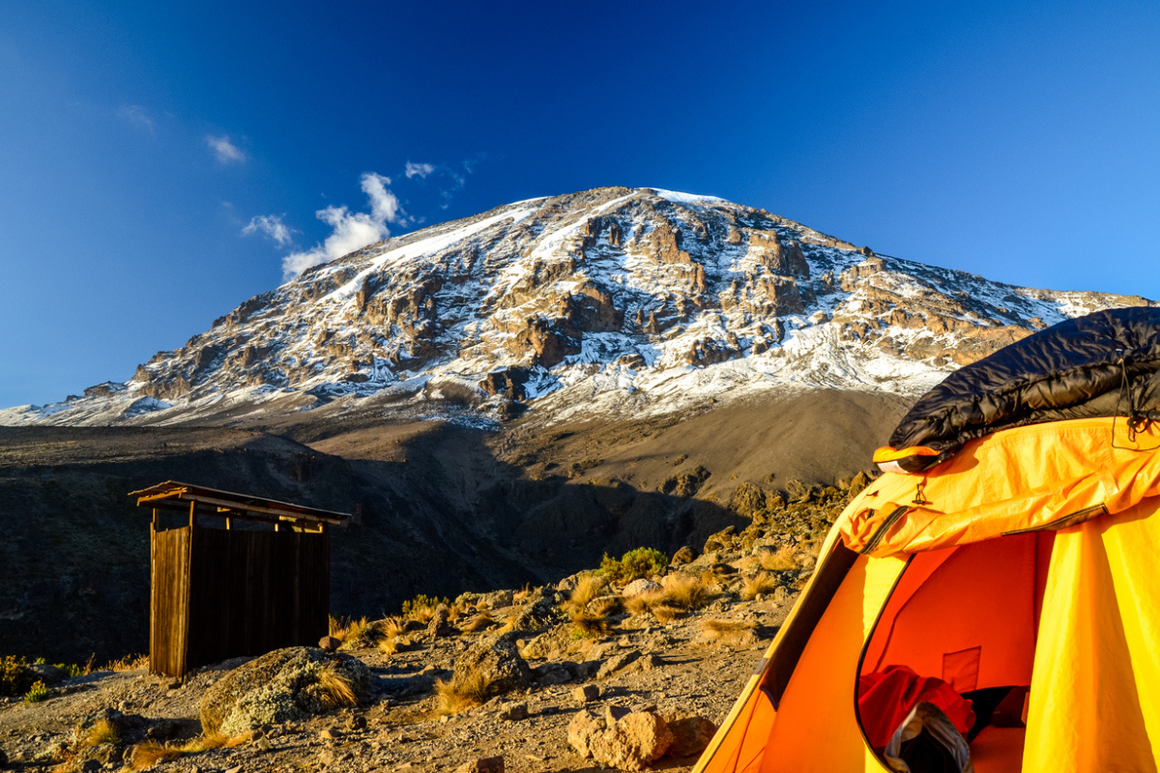
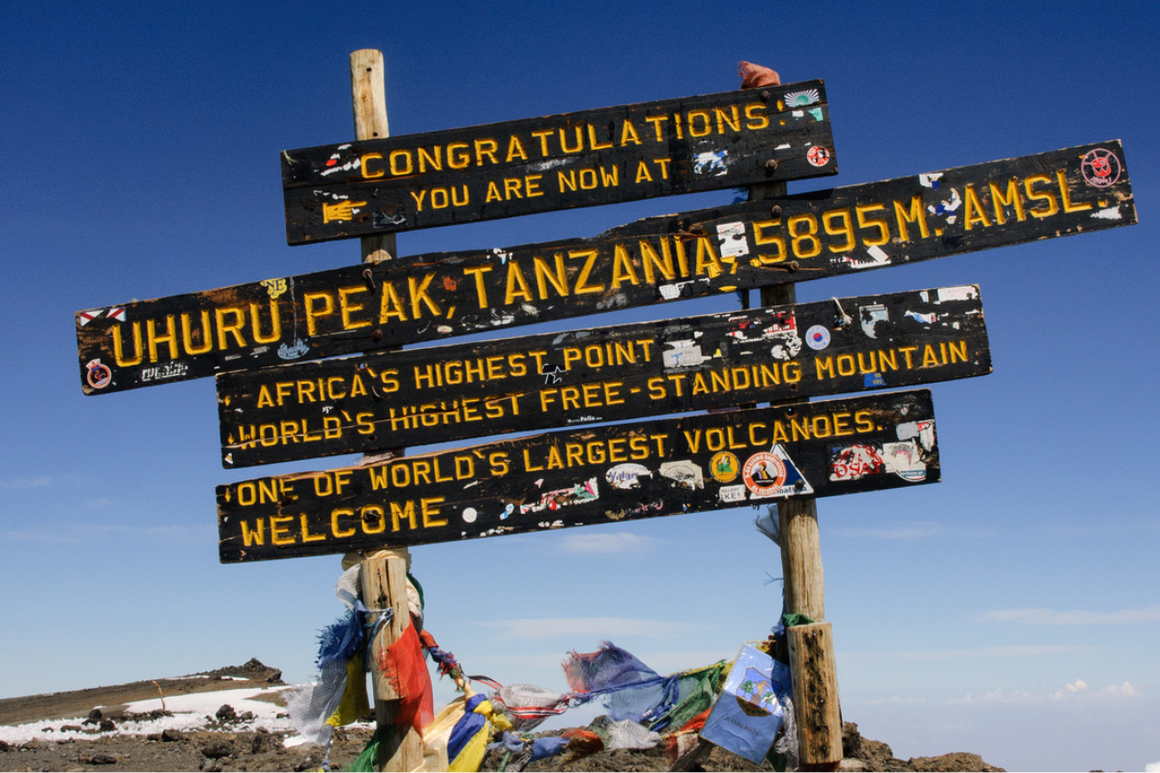
Kilimanjaro stands at 5,895m, the highest freestanding mountain in the world (it rises alone rather than sitting within a mountain range). At that altitude, the air is thinner and contains half the amount of oxygen that it does at sea level. This means that with every intake of breath, you get half the amount of oxygen too.
Less oxygen means your body has to work harder to function, and if it can't adjust quickly enough, altitude sickness is the result.
This is why altitude, not fitness, is the biggest obstacle between most people and Kilimanjaro’s summit. It's also a big part of what “Aitch: Don't Be Afraid” actually shows. In the documentary, as the group climbs higher, conditions get tougher, and the effects of altitude become impossible to ignore, regardless of how fit some of them are.
How altitude sickness works
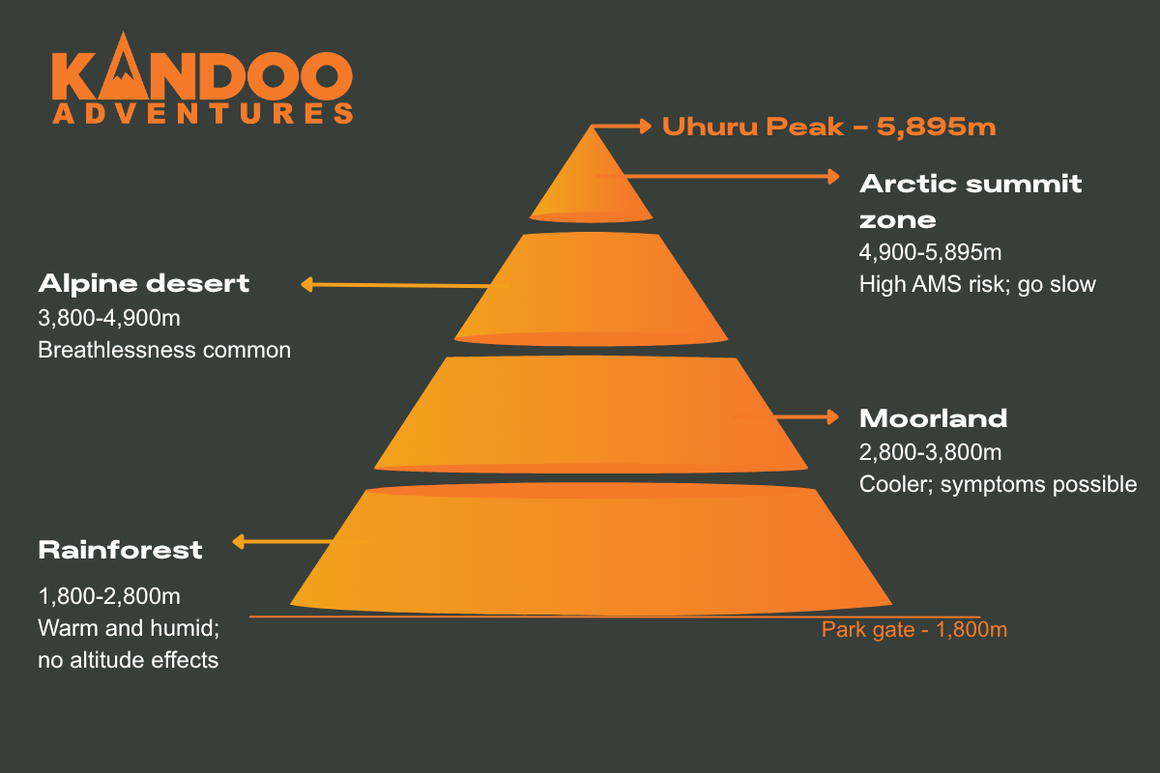
- Most trekkers start to feel some effects of altitude from around 2,500m to 3,000m.
- Symptoms are unpredictable. Fitness, age, and gender have little bearing on who is affected.
- Common symptoms include headaches, nausea, disturbed sleep, and breathlessness.
- Left unmanaged, altitude sickness can escalate to be much more serious.
How to reduce the risk of altitude sickness on Kilimanjaro
- Choose a longer route. A seven- to nine-day itinerary gives your body far more time to acclimatise than a five- or six-day route.
- Follow a "climb high, sleep low" pattern. This means gaining altitude during the day and descending to sleep.
- Stay hydrated. Drink at least three litres of water a day.
- Climb with expert guides. They are trained to spot early symptoms before you notice them yourself.
The graphic below demonstrates Kilimanjaro's climate zones by altitude band and typical symptoms at each stage.
Related reading: For a deeper dive, our guide on preventing altitude sickness on Kilimanjaro gives comprehensive advice, and our piece on why Kilimanjaro climbers fail to summit breaks down the most common causes in more detail.
Why experienced local guides make a difference on Kilimanjaro
Every successful Kilimanjaro summit, including the one in Aitch's documentary, includes the same core factor: a team of experts who know the mountain. It is a legal requirement to have a guide when climbing Kilimanjaro.
They manage:
- A safe climbing pace.
- The early signs of altitude sickness.
- Making the call on when to push on, rest, or turn back.
But that legal requirement is a baseline. Being licensed confirms a guide has met the minimum standard, but doesn’t necessarily reflect how experienced, well-trained, or attentive they actually are on the mountain.
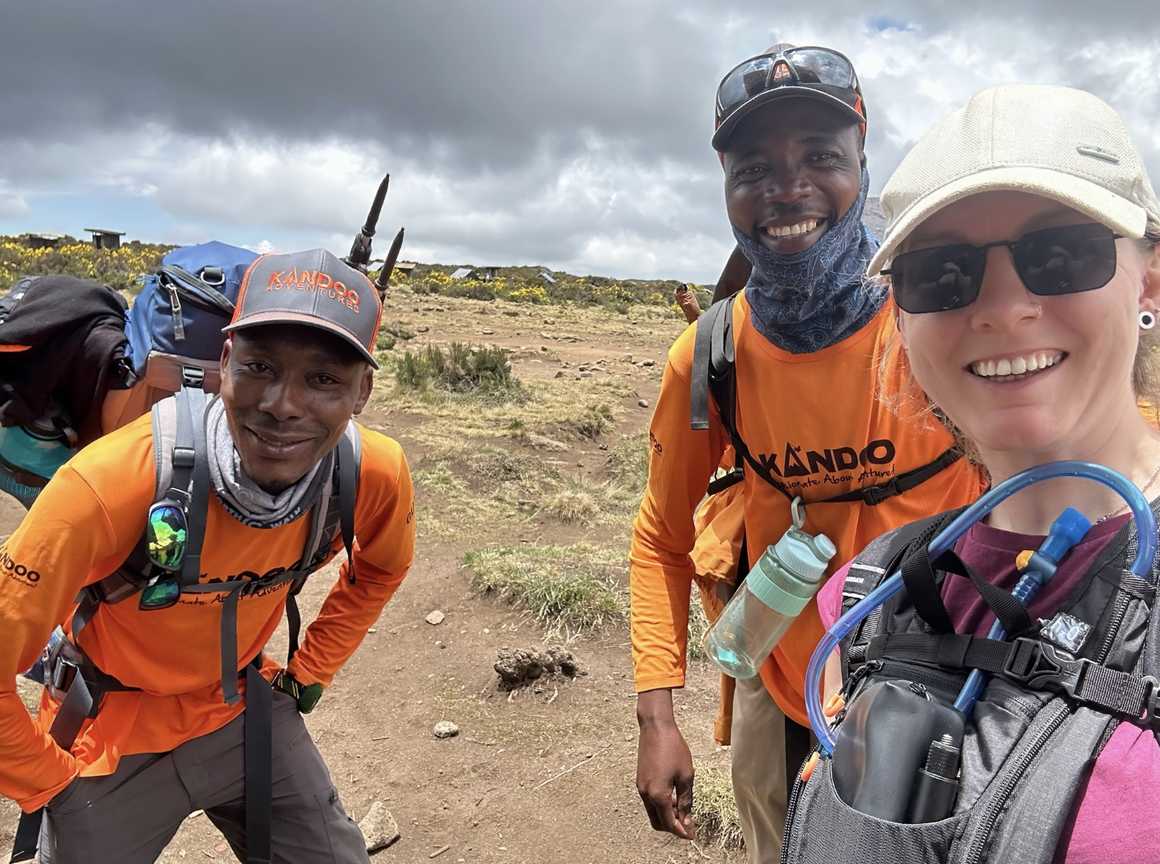
That's where the real difference between trekking operators lies. At Kandoo, our Kilimanjaro guides have worked together for over 15 years, led by Emmanuel Nguma. It's the same guiding team, trip after trip, with the type of mountaineering knowledge that no amount of individual fitness can replace. If Aitch’s Netflix documentary has left you wondering who you'd trust to get you up Kilimanjaro safely, that continuity is your answer.
How to train and prepare for a Kilimanjaro climb
The key to training for Kilimanjaro is building cardio fitness, hiking hills with a loaded pack, and practising mental resilience, starting around six months before you fly out.
Aitch shared glimpses of his own altitude training on social media in the months before he flew out, and it's a good habit to copy. Preparation for Kilimanjaro is defined by two main elements: physical training and mental readiness. Both need the same six-month window.
Let’s take a look at both sides in more detail.
Physical preparation
- Build a good cardio base with regular walking, running, or cycling.
- Practise hill walking with a loaded daypack to simulate trekking days.
- Include back-to-back long walks to build the stamina needed for consecutive high-mileage days.
- Train on stairs or inclines to prepare your legs for the steep summit push.
Mental preparation
- Practise a calming breathing technique, such as box breathing, in the weeks beforehand, so it's second nature by the time you need it on summit night.
- Deliberately train in discomfort, such as cold, wet, or tired conditions, so your mind has already rehearsed pushing through fatigue before you're at altitude.
- Read first-hand accounts or talk to people who've completed the climb, so you know what to expect and aren't caught off guard by how hard summit night feels.
- Write down your motivation for climbing before you go, whether it's a cause, a person, or a personal challenge, and keep it with you when you climb. It can help to have something to draw on when it gets hard.
Related reading: Help prepare for climbing Kilimanjaro with our full breakdown on training for Kilimanjaro and how hard the climb really is.
How to turn climbing Kilimanjaro into a charity fundraiser
You can do a Kilimanjaro charity climb by picking a cause that matters to you, setting up a fundraising page before you book, and using your training and the climb itself as the story that keeps supporters engaged.
Aitch's challenge raised over £160,000 for the Down's Syndrome Association, and proved that a mountain climb can be one of the most effective fundraisers. You don't need a Netflix crew to do the same on a smaller scale.
How to get started:
- Choose a cause that means something to you personally; this makes it easier to move forward through the hard moments.
- Set up a fundraising page on a platform, such as JustGiving, and explain clearly why you're climbing.
- Talk to your chosen charity. Many can offer sponsorship materials, branded kit, or promotional support.
- Share your training and preparation publicly via social channels or your fundraising platform page. Doing this builds momentum and keeps supporters engaged before you even reach Tanzania.
For the full process, our guide to climbing Kilimanjaro for charity walks through everything from choosing a fundraising platform to planning your challenge. Our charity challenges page has more on how we support fundraising climbers directly.
Ready to write your own Kilimanjaro story?
Aitch's climb proves that ordinary preparation, not extraordinary athleticism, gets people to the top of Kilimanjaro. With the right route, the right training, and an experienced local team behind you, the summit can be within your reach.
If you’re ready to start planning your own Kilimanjaro climb, explore our Kilimanjaro routes. Or chat with one of our friendly team, who can help find the right challenge for you.