Tour du Mont Blanc
8-day adventure

Best of the Tour du Mont Blanc

France
  • Trekking
  1. Homepage
  2. France
  3. Best of the Tour du Mont Blanc

Code: FRTOTM

8 days
Moderate

Contact
our UK team
Our local team

Based in Chamonix, our Alps team organise dynamic and challenging treks through some of the world’s most stunning alpine scenery. We work exclusively with professional and passionate IML guides, ensuring an unmatched level of local expertise and safety. They go beyond the trail, sharing deep local knowledge and personal stories from their own mountain adventures to bring the landscape to life. We offer the iconic Tour du Mont Blanc trek in two...
Learn more

Kandoo's view

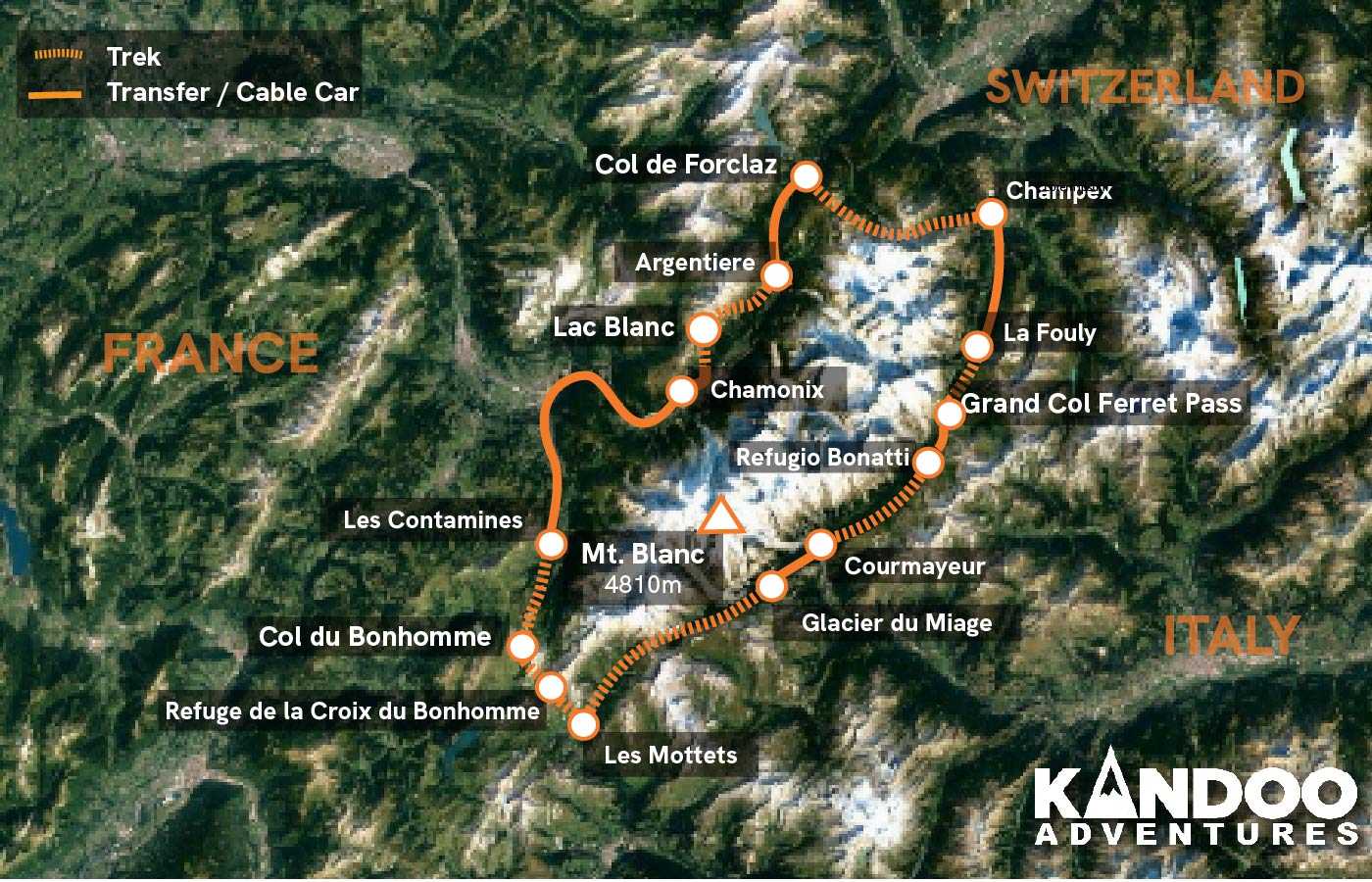
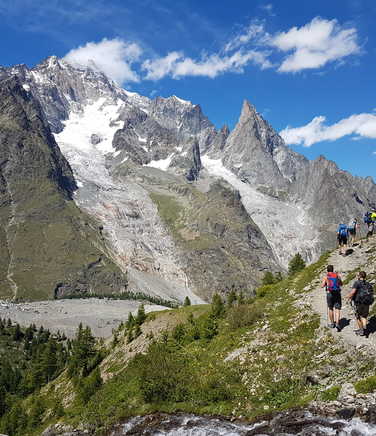
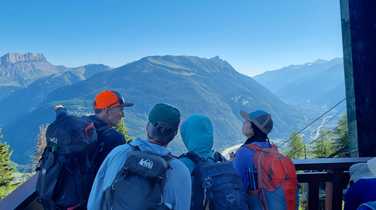
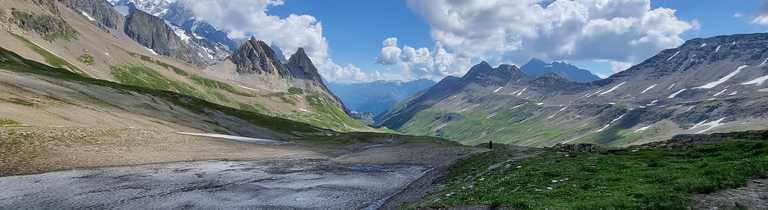
The iconic Tour du Mont Blanc is world-famous for good reason. Circuiting the rooftop of Europe allows you to uncover an incomparable land of high mountains and glistening glaciers, with mighty Mont Blanc dominating the scene at 4807m. With seven valleys, 71 glaciers and 400 peaks, the Mont Blanc massif is extraordinary. From the Chamonix valley to Courmayeur, from the Fenetre d’Arpète to the wild Val Ferret, along the Swiss, Italian and French slopes, the path winds its way between pastures, glaciers and peaks, over passes and through valleys. You’ll begin with an exceptional trek in the reserve of Aiguilles Rouges, where Lac Blanc reflects the magnificent panorama of the peaks and glaciers of the massif and finish traversing the beautiful Col du Bonhomme where glorious alpine meadows sprawl below snow-capped peaks.

Trip highlights

  • One of the world's most iconic trekking routes
  • Comfortable hotel accommodation to relax in at the end of the day's trek
  • Greater flexibility for people making their own arrangements before and after the trek
  • Pass through Italy, France and Switzerland

Experiences

  • Trekking
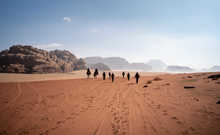
    Small group hiking in the Wadu Rum desert
    Our core collection of treks and hikes, through some of the world's most outstanding landscapes

Gallery

Itinerary

  • Day 1

    Arrival in Chamonix

    You will make your own way to the pre-trek hotel in Chamonix. At 6pm your guide will meet the group and go through a pre-trek briefing to prepare you for your tour. Chamonix, often referred to as the birthplace of modern alpinism, is a vibrant and bustling town. If you have time, head out and explore the mix of outdoor shops, beautiful French architecture, galleries and cobbled streets. There are no meals included today, leaving you free to try one of the many typical Savoyard restaurants close to your hotel and sample some alpine specialities.

    • Accomodation: Hotel
  • Day 2

    Lac Blanc and the Cheserys Lakes

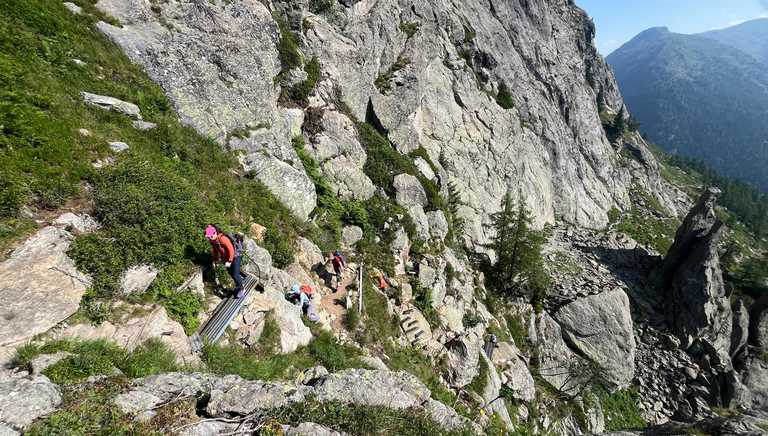
    We take a short transfer to Argentiere for our first walk of the trip, and what a walk to start the tour! The hike takes us on twisting paths that weave through forests and across mountain pastures, before we reach the famous secure ladders that take us up to the beautiful chain of lakes know as Lacs de Chéserys and, finally to the iconic Lac Blanc itself. The ladders are close to vertical in some places, so you should be prepared for this, but the views from this section of the hike are unparallelled and make it more than worthwhile. To our left as we hike, we have spectacular views of the Mont Blanc massif and will be able to see the Drus, the Vert, the Aguille du Midi and, of course, Mont Blanc itself. From Lac Blanc, we continue along the trail to Chamonix and return to our hotel for tonight.

    • Hiking time: 6 - 8 hours
    • Walking distance: 14 km
    • Ascent: 1340 m
    • Descent: 250 m
    • Max. altitude: 2352 m
    • Accomodation: Hotel
    • Meals included: Breakfast / Lunch / Dinner
  • Day 3

    Trient to Champex

    After breakfast, we will take a short private transfer to cross the Swiss border via the village of Châtelard to our starting point in Trient. From here, we start our trek through a pine and larch forest and over the impressive Col du Forclaz to reach the grazing pastures at Bovine. We will enjoy views of the valley and the impressive Coude du Rhônes below us, as well as the northern foothills of Mont Blanc. On the eastern side, the impressive Combins massif stays in our sight all day long and leads us to Champex, a charming lakeside village.

    • Hiking time: 5 - 6 hours
    • Walking distance: 15 km
    • Ascent: 1037 m
    • Descent: 712 m
    • Max. altitude: 1987 m
    • Accomodation: Hotel
    • Meals included: Breakfast / Lunch / Dinner
  • See more

Please note

It is in the nature of a trip of this kind that arrangements and participants have to be flexible. While we use all reasonable endeavours to ensure a trip runs according to your itinerary, the day-to-day agenda and ultimate goal of the trip are taken as aims and not as contractual obligations. It is a necessary condition of your joining any of our trips that you accept this flexibility. Occasionally, we may have to make changes and we reserve the right to do so at any time.

Details

Trip information

Difficulty

The Tour du Mont Blanc is not to be under estimated, there is a lot of steep ascent and descent on this trek, so your legs will be getting a good workout. Yet, whilst a high level of fitness will make the days a lot easier it by no means requires super human fitness. We have reduced the amount of trekking days on this trip and you will have a rest day in the middle of the trip to allow your legs a bit of recovery time. Having a solid training plan in the months prior to departure will allow you to better prepare for the hikes and enjoy yourself when you're on the trail. You will need to reach particular points on the trail each night so you may find the pace faster than on Kilimanjaro or the trek to Everest Base Camp, for example. This is by no means a sprint, and your comfortable accommodation will allow for a good night's sleep at the end of each day, however a good level of fitness will ensure you have a positive experience all round. 


Trekking poles are also a lifesaver, especially on the steep Alpine passes! If you are comfortable walking for 6-8 hours with an ascent and descent of 1000m over consecutive days then you are certainly fit enough to succeed on the Tour. Think of it as climbing Snowdon or Ben Nevis three days in a row! If you can do this then there is no reason why you can't complete the trek. We find that all successful hikers share a real Kandoo attitude and that means high levels of grit and determination. 

Food & drink

This trip is on a full board basis (except for your nights in Chamonix on Day 1 and 7). For your evening meals in Chamonix there are a wide range of local restaurants for you to sample. If you have a dietary requirement or are a vegetarian then just let us know when you book so that your guide can help you to source a suitable menu at the hotels and get appropriate foods for your packed lunch.


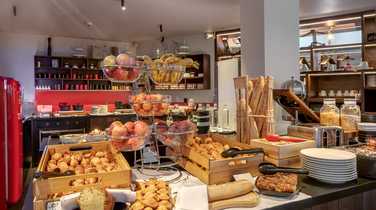
The hotels provide hearty, traditional and generous meals. Drinks are not included with dinner, so please make sure you have some Euros and Swiss Francs with you. Hotels in small villages and town may not accept card payments.   


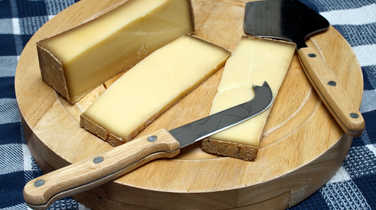
Packed lunches will be produced by your guide and include local meats and cheeses, crusty bread and fresh seasonal vegetables. The lunch items will be shared between all of the group for carrying each day. These are long days so remember to bring your favourite snacks (cereal or energy bars, dried fruits, chocolate) with you to keep you going through the day.


Tap water is typically safe to drink in France so you can fill up your water bottle each morning at the hotel. On the trek itself, you will be passing many refuges where you will also be able to top up your water if needed.


Accommodation

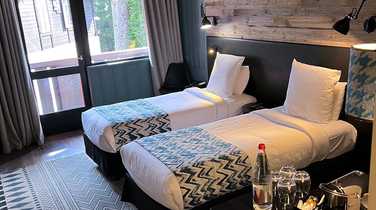
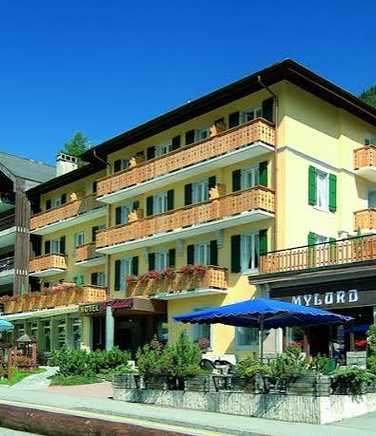
Accommodation in Chamonix is in a 3-star hotel in twin rooms. You will stay in Chamonix on the first and last nights of the trip. Please note that your evening meals are not included when you are in Chamonix.


You will spend five nights on the trek in 3-star hotels in twin rooms, with evening meals included.

Your guide

Our guides are highly experienced, English-speaking International Mountain Leaders (IML).

Luggage

You will need two bags for this trip. One travel bag for your replacement clothes which will be transferred between locations by vehicle (max 15kg). This should be a soft-sided bag such as a duffel bag. Please do not lock your bag as it may need to be checked by Swiss customs. Please note: Do not leave computers, tablets, cameras and valuable objects in your travel bag. One 30-40L rucksack with a large chest strap that you will carry during the day.  You will carry your own personal equipment (spare warm clothes, waterproofs, water bottle, camera and sun screen) and valuables, as well as your packed lunch in your rucksack. If you plan on bringing some items that you will not need on the trek, secure storage is available at your hotel in Chamonix for a small fee. You should bring a case or bag that can be locked to put these items in. 

How do I get there?

For travellers based in the UK or the US, it is best to fly to Geneva International Airport (GVA). Lots of airlines fly to Geneva from all of the major UK airports, and many of the larger US international airports as well. There are lots of companies offering transfers from Geneva to Chamonix. The cheapest options tend to be with Alpybus or Chamexpress who provide regular shared bus transfers allocated by arrival time. These are usually around 40 Euros each way  for a shared transfer. Another option is to book through Mountain Dropoffs, they offer smaller minibus style shared transfers for around 50 Euros each way. With Mountain Dropoffs, it is also possible to pay an additional fee for a private transfer. 

You will meet the rest of the group at the pre-trek hotel in Chamonix.

You will return to Chamonix at the end of your trek and have one final night there before your departure the next day.  

Travelling Responsibly

Here at Kandoo, we like to support our guests to make their travel more sustainable. As of 2025, we are offsetting the carbon on all of our trips whilst in destination. As we don't include flight travel in our trips these aren't included in our offsetting calculations, so we are providing you with the calculator below for you to do this yourselves. 


Alternatively if you wish to travel more responsibly, then there are other ways to reach Chamonix. Flixbus and BlablaCar offer routes from London to Chamonix with a change in Paris. These take around 22 hours and tend to cost between £75-120 each way.  The other option is to travel by train. This is a much quicker option taking between 10-12hrs London - Chamonix, with changes at Paris and Chambery, however this does come at an increased cost. Expect to pay around £250-300 each way on an advance ticket. Tickets can be found at Rail Europe. 
If you choose to travel via train or bus, get in touch and let us know because we like to reward our responsible travellers!

Pre-trek briefing

Your guide team will meet you at your hotel at 6pm the day before your trek begins, where we’ll review the plans for the trip with you, make sure you have all the right gear, and answer any questions you may have. Please try and arrive in time for this briefing. which will be held in the hotel lobby.

Budget & change

The currency in France and Italy is the Euro (EUR) and in Switzerland the Swiss Franc (CHF).  For the latest exchange rates please see www.xe.com. 

Euros are accepted in Switzerland although the exchange rate will not be very good. However, if you are only likely to be buying the odd drink or snack while you are in Switzerland, this would probably be easier that exchanging money into Francs. Foreign money can be exchanged at the Global Exchange in Geneva airport on arrival or you can bring money already exchanged with you, as both these are open currencies.  We would recommend the latter as it is no longer possible to exchange foreign currency notes in banks in France, so you may find it difficult to exchange your money after leaving the airport. The only places that exchange foreign banknotes are bureau-de-change which can be found in large cities. You will, however, be able to withdraw money from ATMs in Chamonix on Day 1 of your trip.

The simplest way to pay for things in the Alps is to use an international credit card or debit card. Visa and Mastercard are accepted everywhere alongside standard travel cards such as Monzo and Revolut. You may wish to have some Euros to hand, to pay for smaller items or souvenirs in case the trader does not accept cards. Credit and debit cards are also not accepted at the mountain refuges so you will need to carry enough cash for snacks, drinks and any personal expenses. 

The average cost of a meal for 2 in Chamonix is around €50 ($55). Its not a cheap place to eat out, however it makes up for this by offering free public transport all around the town. If you are wanting to buy some souvenirs to take home then these generally cost anywhere between €5 ($6) for small items to €500 ($550) for larger more bespoke gifts. Don't forget you will also need to budget for drinks whilst in the hotels too. Therefore, our recommended guidance for spending budget in the Alps would be roughly €220 on top of any tips, to give you ample souvenir spending money. 

Tips

Tipping customs vary all over the world and can be very confusing when travelling to a new country. There is not a strong culture for tipping in France and please note tips are not a substitute for good wages: our guides are all well paid and well looked after. Tipping is completely voluntary, and at your discretion. If you are unsure of how much to tip, we recommend a general guide of €80-100 per person for the entire trip.

Formalities & health

Passport

Most travellers will require a passport valid for at least 6 months after your return date. It is your responsibility to confirm your specific requirements and please be aware that proof of onward travel may be required.

Visa

Travelling to France is visa free for up to 90 days, for UK and US citizens. Please be aware that the new EES (Entry Exit System) is now active for all Non-EU nationals. This means your biometric data (photo and fingerprints) will be taken at the border on arrival. Those travelling from the UK may have have their biometric data taken at the time or boarding, rather than on arrival in the EU.

Vaccinations

There are no specific health risks in the Mont Blanc region. However, you should ensure that your routine vaccinations and boosters are up to date, such as tetanus and MMR.

Insurance

It is your responsibility to ensure that you are fully and adequately insured for the duration of your trip. Please ensure that all activities, excursions and destinations in your itinerary are included in your travel insurance policy, in addition to your regular cover for cancellation and medical expenses. Many insurance policies will have a maximum altitude limit. For trekking trips such as the Haute Route and Tour du Mont Blanc, you will not usually trek above 3000m but you should check for specific altitudes in the trip information. If you are climbing Gran Paradiso you should ensure you are covered for climbing up to 4500m. If you are unsure, please ask one of our travel experts.

We ask that you keep a copy of your policy summary (containing policy number and the emergency contact number for your insurer) in your day sack at all times, so that we can access this information should we need to contact the insurer on your behalf.

Medication

Your guide carries a first aid kit at all times but we recommend you carry the following items: - Painkillers - Anti-inflammatory tablets/gel - Second Skin Elastoplast (to prevent blisters)/ bandages - Sunscreen and after sun cream (for sunburn) - Personal medication

Equipment & clothing

Clothing to bring

HEADGEAR
  • Sun hat – preferably wide-brimmed for protection
  • Sunglasses – high UV protection
  • Neck gaiter or scarf
  • Warm beanie style hat – fleece or wool

UPPER BODY

  • Gloves – warm fleece or wool gloves
  • Short sleeve shirt/t-shirt – lightweight, moisture wicking (x2)
  • Long-sleeve shirt/t-shirt – light/medium weight, moisture wicking (x2)
  • Fleece or soft shell jacket
  • Insulated jacket – down or primaloft
  • Water/windproof hard shell outer jacket

LEGS

  • Trekking shorts
  • Trekking trousers – lightweight – convertible trousers work well
  • Wind and waterproof over trousers (Gore-Tex or similar)
  • Gaiters

FEET

  • Trekking boots – with good ankle support
  • Training shoes or sandals – to wear in the hotels in the evening
  • Light-weight trekking socks (x3 pairs)
  • Breathable, high-wicking liner socks (x2 pairs)

Equipment to bring

  • Travel bag for your replacement clothes – avoid suitcases
  • 30-40L rucksack with chest strap and waterproof cover - to carry water, packed lunch and personal items each day
  • Trekking poles
  • Water bottle or hydration bag – must be able to carry 2.0L of water
  • Drybags or heavy duty plastic bags – provide additional waterproofing for the kit in your rucksack and travel bag
  • Individual plastic tub and cutlery – for your picnic lunch
  • Plastic or thermos mug - for hot drinks whilst trekking
  • Headlamp (plus extra batteries)
  • Microspikes (optional and only advised if trekking early in the season - June to mid-July)

OTHER ACCESSORIES

  • Sunscreen and lip balm (high SPF)
  • Toiletries, including after sun
  • Camera and spare batteries
  • Thermos flask (optional)
  • Personal medication and first aid kit
  • Personal snacks and energy bars – dried fruit and nuts are also good
  • Ear plugs, if you are a light sleeper
  • Plug adapter - for charging devices

Dates & prices

From To Price Availability Book Enquire
03/07/2027 10/07/2027 £2,999 $3,989
2 spaces left
Book now Enquire now
07/08/2027 14/08/2027 £2,999 $3,989
Open for bookings
Book now Enquire now

Want to ask us a question or book a private trip? Don't hesitate to contact us!

Contact us
Price includes

  • Full supervision by an English-speaking International Mountain Leader (IML)
  • 7 nights hotel accommodation
  • Full board: all breakfasts, packed lunches and evening meals (except in Chamonix) 
  • Luggage transfers throughout the trek (1 bag per person, max weight 15kg)
  • Private transfers on the route as indicated

Price does not include

  • International flights and visas
  • Airport transfers
  • Evening meal on Day 1 and day 7  in Chamonix
  • Drinks and personal expenses
  • Snacks: cereal  energy bars, dried fruits, chocolate etc
  • Travel insurance up to 3000m
  • Tips for your guide