

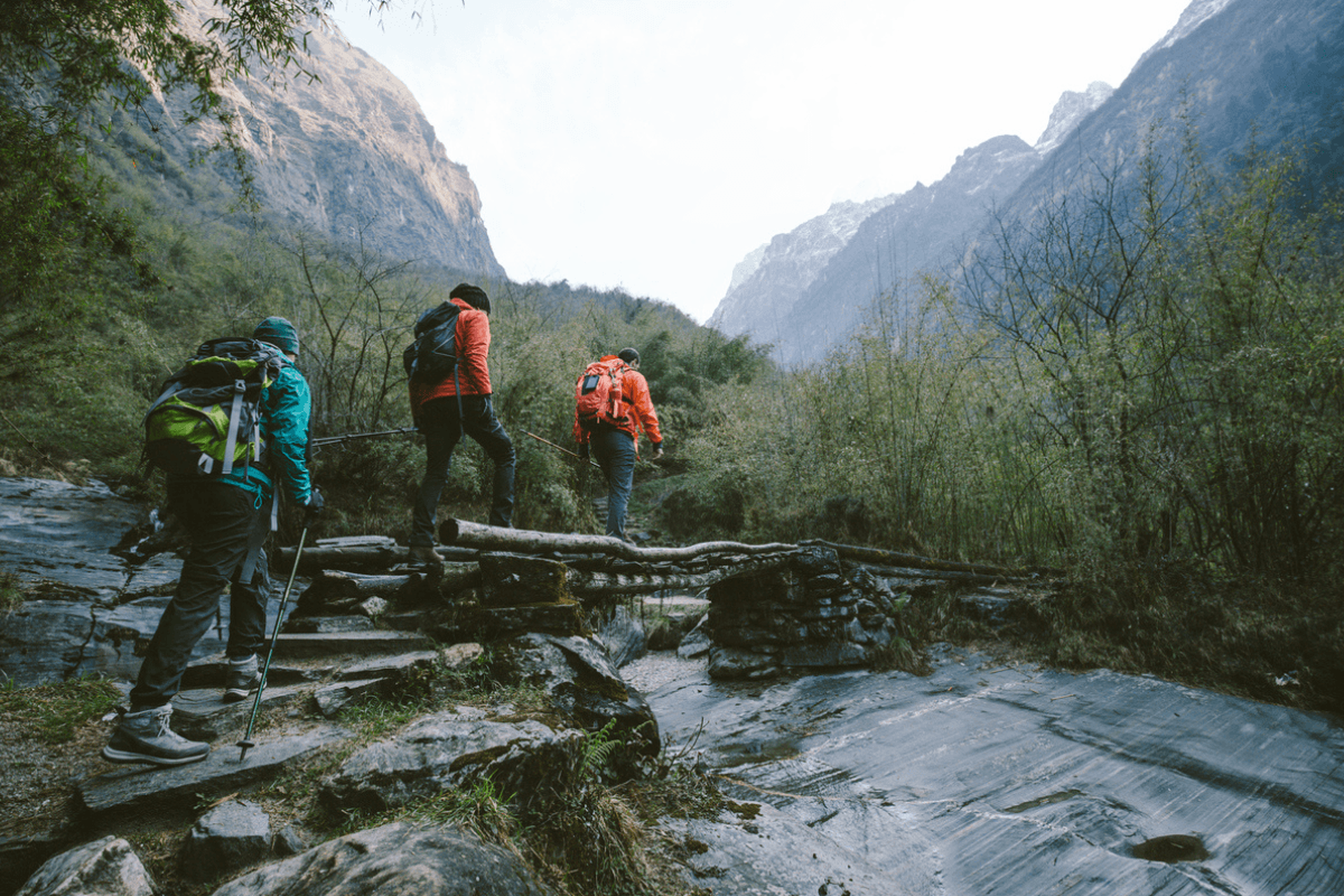
Discover everything you need to know about the difference between trekking and hiking
The terms ‘hiking’ and ‘trekking’ are often used interchangeably, but they describe very different excursions. Knowing the difference helps you choose the adventure that best matches your fitness level, experience, and the kind of trip you want.
Pick well, and you’ll get back home ready to plan the next trip.
Read on to find out the difference of hiking and trekking across key areas like terrain, durations, and kit.
Trekking vs hiking: What’s the difference?
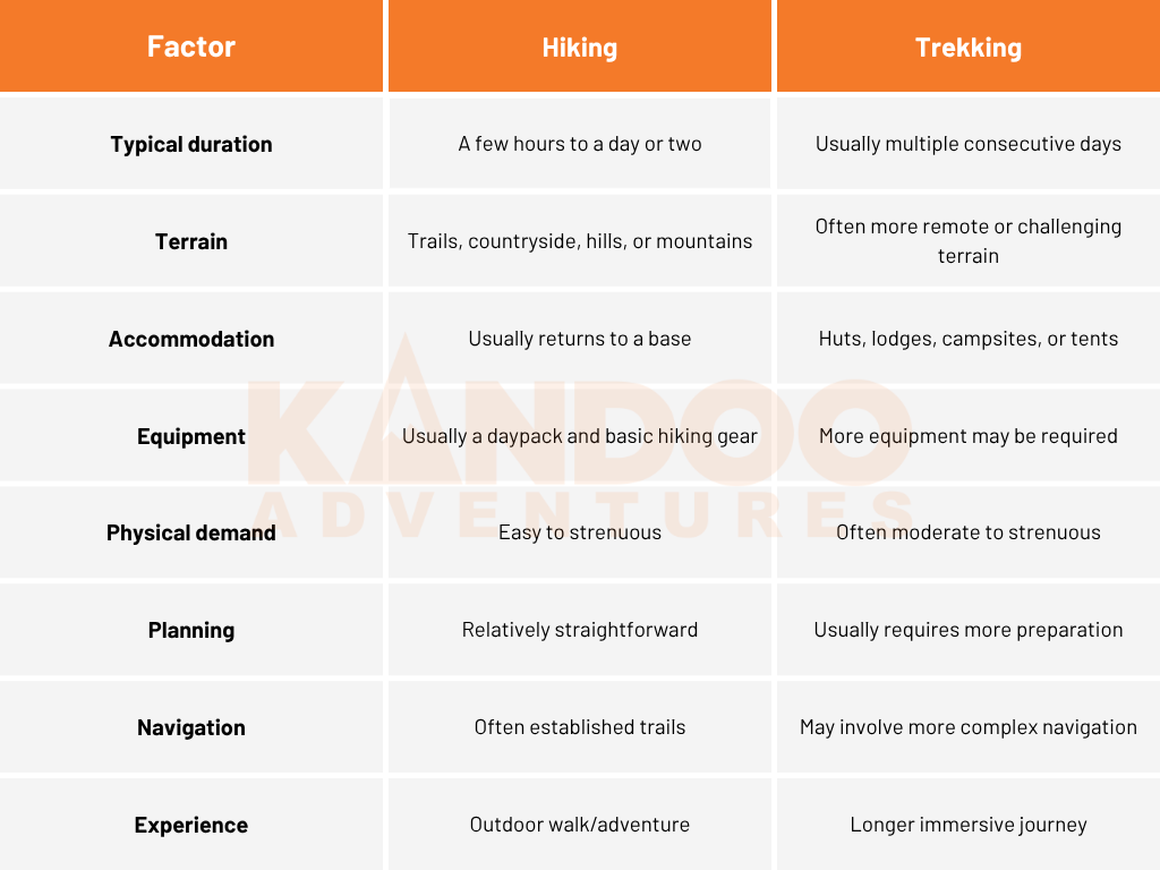
The main differences between trekking and hiking come down to duration and terrain. A hike could take a few hours along established trails, while trekking is a multi-day activity through remote or challenging terrain.
The summary table below highlights the key differences between hiking and trekking, helping you choose the right adventure.
What is hiking?
Hiking takes walking to the next level, involving varied terrain and more physical demands. Often enjoyed somewhere scenic, a hike is a walk of varying difficulty.
Here’s a quick bullet-list summary of hiking:
- Suitable for all levels of experience
- Takes a few hours to a day or two
- Established and well-marked paths
- Varied difficulty (from easy to challenging)
- Basic equipment needed
Hike vs trekking: What does hiking involve?
Compared with trekking, a hike usually involves shorter distances, less time, and less challenge.
Here’s a breakdown of what hiking involves:
- Duration. Hikes can take several hours, all day, or involve an overnight stop. There isn’t an exact length of time or distance where a walk becomes a hike, but spending more than a few hours walking is generally referred to as a hike.
- Terrain. Hiking trails are usually established with signs, paths, and easily navigable terrain. Routes are typically graded in difficulty, allowing you to choose a hike that suits your level of fitness, experience and time available. It can involve ascent, varied terrain, and uneven ground, so it’s always a good idea to research your route before departure.
- Equipment. You’ll need a comfortable pair of hiking boots or trail shoes, a daypack with water, snacks, waterproofs, a map and compass, and spare clothing layers suited to the conditions. If your hike involves an overnight stop, we'd recommend taking a larger backpack with camping kit, including sleeping bags, tents, food, water, and toiletries.
- Hiking clothing. Decent footwear with ankle support is a good idea, alongside comfortable trekking clothing with moisture-wicking properties. You might want to take trekking poles for uneven or steep terrain, and layered clothing to suit the conditions and climate.
- Preparation. Anyone can enjoy hiking somewhere beautiful. For beginners, choose short, flat, easy trails and work your way up to longer, more challenging routes. Experienced hikers may prefer more physically demanding trails with ascent and descent, summits, and overnight stops.
Who is hiking suited to?
Hiking is great for beginners, or those seeking a structured journey that’s easy to follow. Trails are usually clearly marked, with varying options of distance and difficulty.
People of all ages and abilities can enjoy hiking since there are fewer barriers to access compared to trekking, which can require more planning, preparation, and experience.
What is trekking?
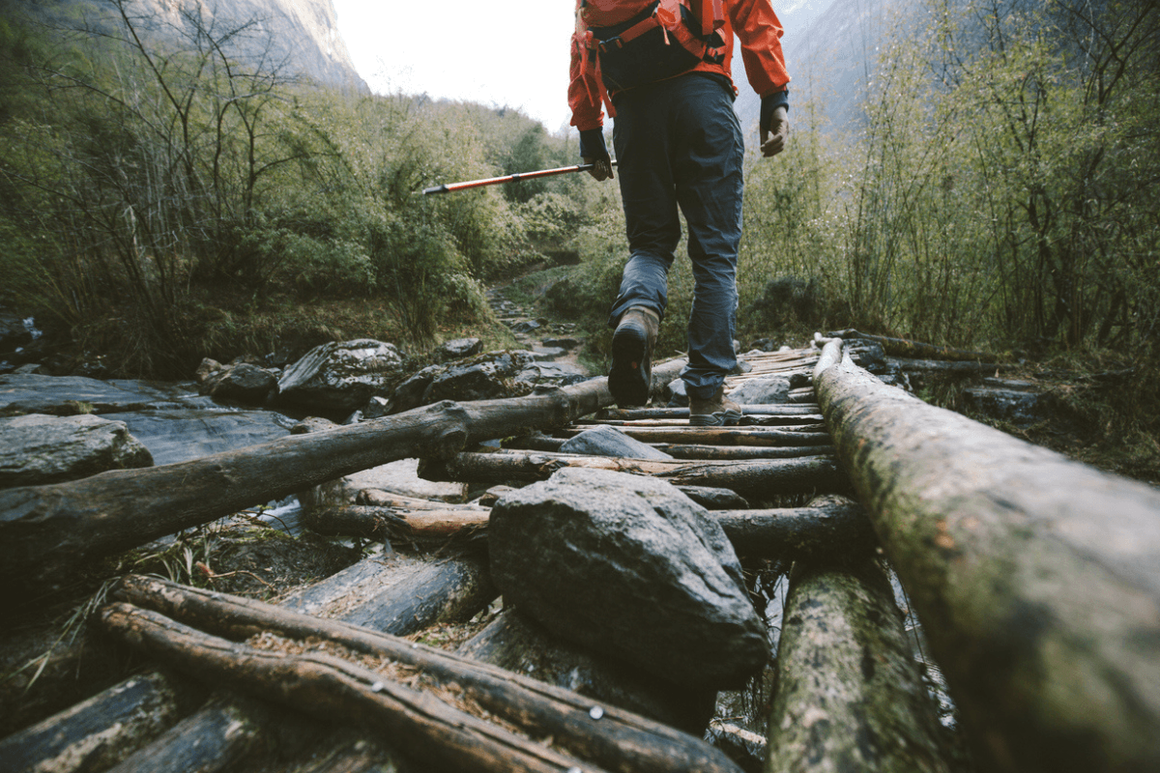
Trekking involves longer journeys and more challenging terrain, conditions, and altitude, compared with hiking. People searching ‘trekking meaning’ ought to know that multi-day adventures are common, where you’ll travel through remote landscapes and follow iconic routes.
Take a look at this summary of what to expect when trekking:
- Multi-day walking on consecutive days
- Longer daily distances
- Navigation needed
- More physical preparation required
- Remote landscapes and communities
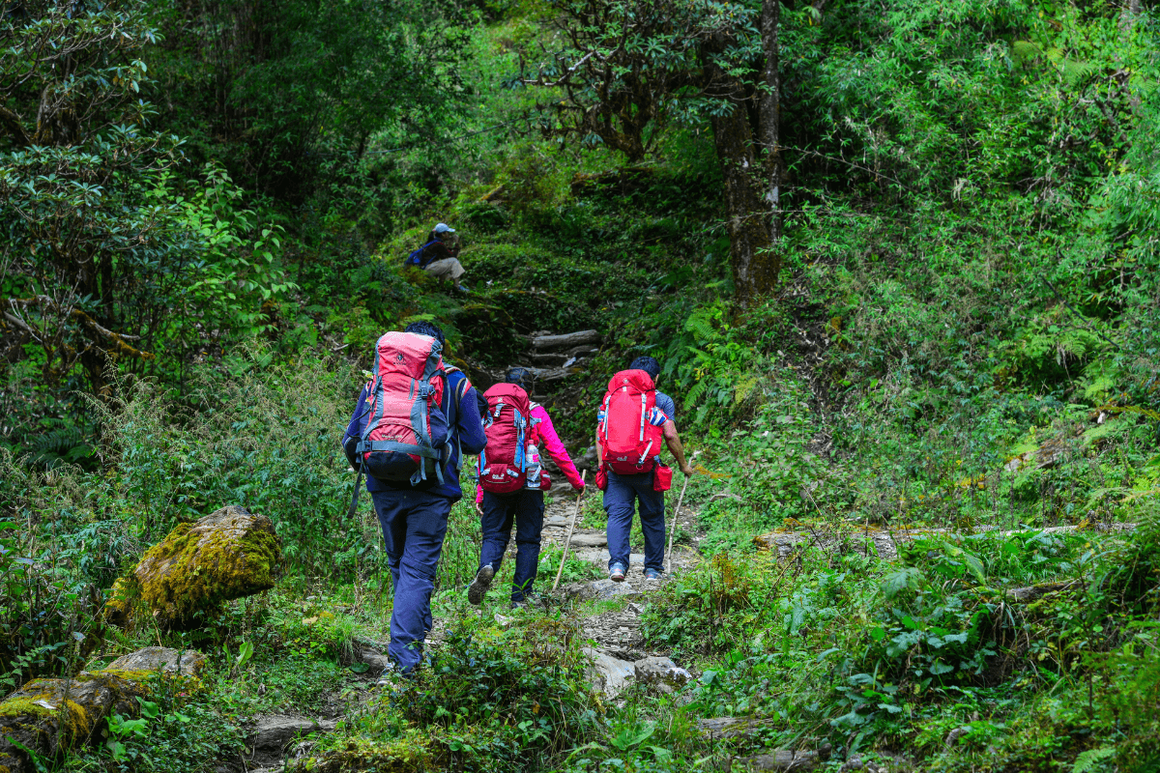
Trekking vs hike: What does trekking involve?
Compared to hiking, trekking is generally a longer, more demanding journey on foot, over several days.
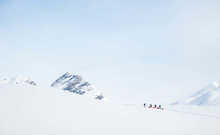
- Duration. Trekking occurs over multiple days, often consecutively, through remote and mountainous landscapes. Routes can involve significant elevation gain and are generally more physically demanding than hiking trails.
- Terrain. Expect varied conditions underfoot and the potential absence of paths. Trekking requires navigational skills when the route is not obvious and may traverse steep, unstable, uneven, or wet terrain.
- Equipment. Longer distances require more kit, and your backpack may be heavier than when hiking. As well as more food, water, layers, waterproofs and navigational tools, you’ll need to carry a first aid kit, trekking poles, a head torch, and spare clothing on a multi-day journey.
- If trekking in winter conditions, you might also need crampons, helmets, and ice axes. Plus, you’ll carry a sleeping bag and sleeping mat if camping.
- Trekking clothing. Quick-drying trekking trousers, multiple layers including soft and hard shells, and comfortable boots with ankle support are essential. Additional layers, spare socks, sock liners, gloves, hats, gaiters, and a down jacket are also useful to pack.
- Preparation. The amount of training needed will depend on the difficulty of the route. You’ll need to be physically fit and well-prepared for long, high treks. If reaching high altitudes, previous experience will help your body acclimatise quicker.
Recommended reading: High altitude acclimatisation: How to prevent and manage altitude sickness.
Who is trekking suited to?
Trekking suits travellers with a good level of fitness, who are up for a more demanding adventure than hiking. It’s also perfect for those who want to go further into remote, wild landscapes where conditions vary and elements are unpredictable.
Trekking is one of the most immersive ways to experience a country because travelling on foot takes you off the beaten track. You’ll discover untouched wonders and get a glimpse into the local way of life.
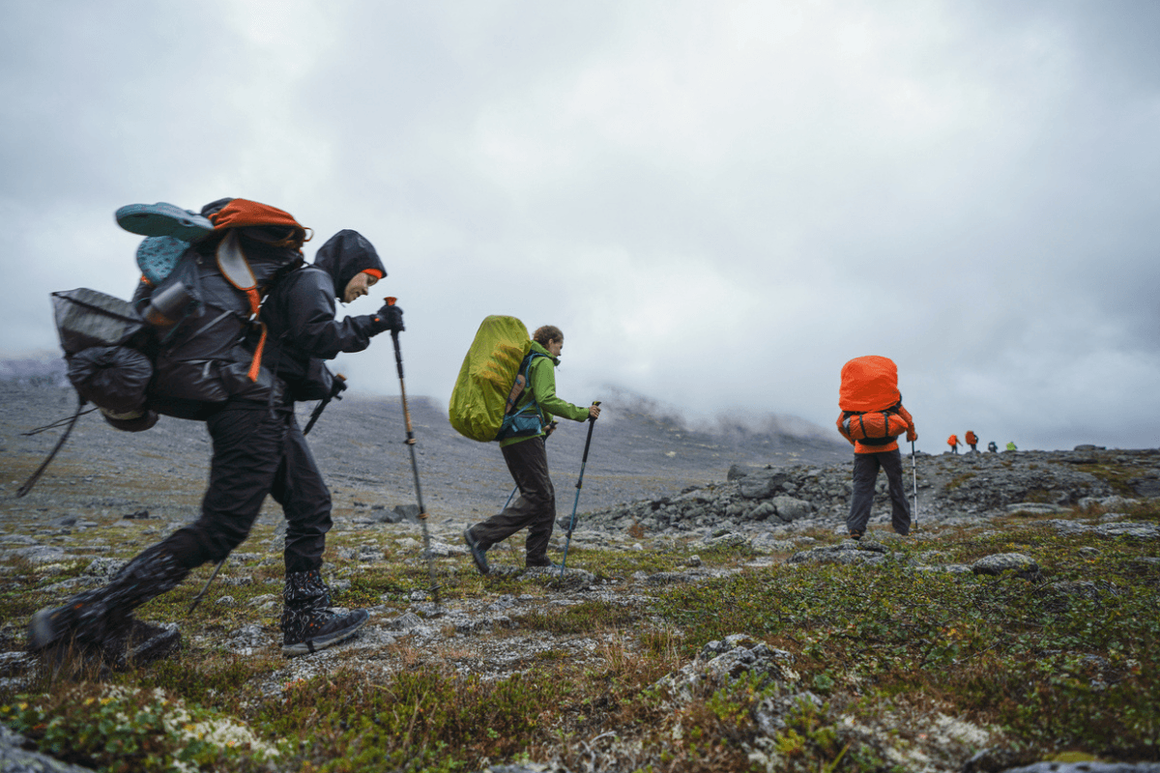
Kandoo hikes for all levels
Hiking with Kandoo takes you on exciting journeys to incredible places with knowledgeable local guides. Less intense than trekking itineraries, the following adventures take advantage of comfortable accommodation and shorter forays.
Easy hike: Gorilla trekking in Uganda
Tracking gorillas through Ugandan rainforests is technically referred to as gorilla trekking, but it’s more of a hiking experience since it only takes half a day. This adventure is perfect if you’re passionate about wildlife. You’ll explore the incredible national parks of Uganda including the iconic Bwindi Impenetrable Forest, which is home to the mountain gorillas. Here’s everything you need to know as a first-time visitor.
Moderate hike: Ultimate Jordan
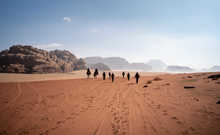
During our Ultimate Jordan adventure, you’ll explore the hot, dramatic landscapes of Jordan, hiking through the iconic ancient city of Petra. You’ll also encounter the famous valleys of the Wadi Rum desert and the Dana Nature Reserve. These are all day-long excursions that take in the highlights of this exotic Middle Eastern country.
Difficult hike: Highlights of the Dolomites, Italy
If you’re after more of a challenge, our week-long Dolomites hiking holiday is for you. We use a hotel as a base and venture out each day for different hikes, which we rate as moderate in difficulty. However, the steep, loose terrain increases the physical demand making it one of our more challenging hikes.

Milti-day treks with Kandoo
Longer in distance and duration than the hikes listed above, the following trekking adventures are multi-day journeys, with challenging terrain and higher altitudes.
Easy trek: Poon Hill, Nepal
Perfect for novice trekkers, this journey into the Himalayas is a great introduction to trekking in Nepal. With manageable distances each day, the Poon Hill trek offers arguably some of the best views in Nepal.
Moderate trek: Inca Trail and Machu Picchu, Peru
With three consecutive trekking days at high altitudes, this epic journey follows the ancient footsteps of the Inca people to the iconic ruins of Machu Picchu, hidden high in the Andean mountains. Our Peru tours are suitable for anyone with a good level of fitness, and the Inca Trail and Machu Picchu trek promises a truly unforgettable experience.
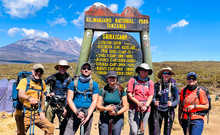
Difficult trek: Kilimanjaro, Tanzania
Climb to the roof of Africa by trekking up Kilimanjaro. No technical skills or experience are needed, but a good level of fitness and plenty of determination will see most travellers to the summit. We build enough acclimatisation into our Tanzania adventure itinerary to help deal with the progressively higher altitudes, so you’re ready for summit night.
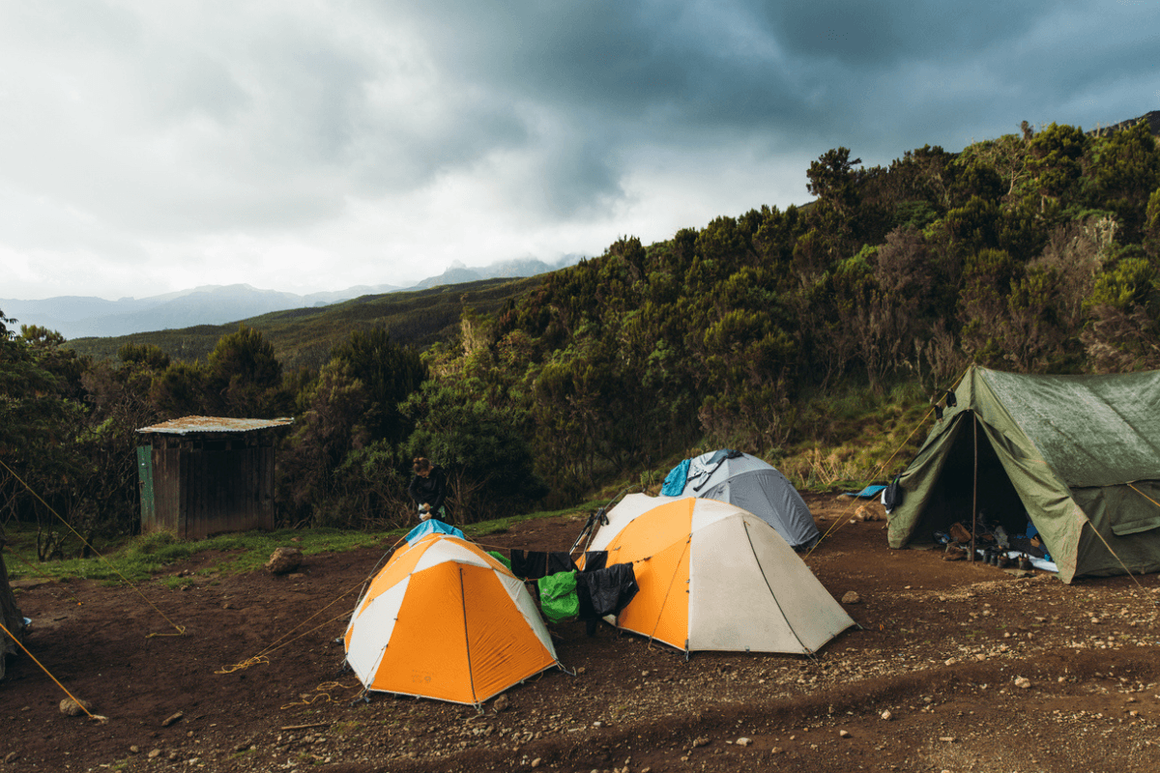
How to prepare for your hike or trek
With enough training and the right kit anyone can enjoy hiking and trekking.
Build up your fitness
We recommend building up your walking distance gradually. Start with a few hours in a familiar place before heading out on half-day, then full-day hikes. Move on to ascent and descent routes as fitness improves, then add consecutive days of walking to train for trekking adventures.
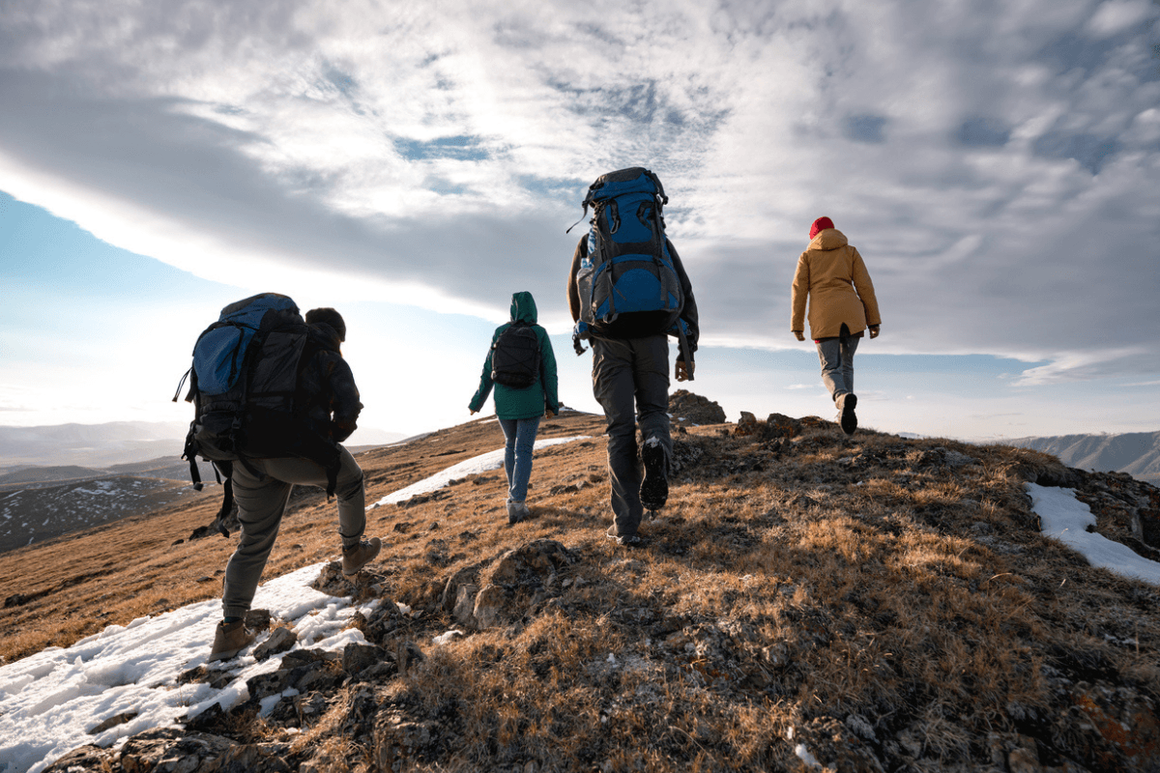
Buy the right clothing and footwear
Footwear with good grip and ankle support is highly recommended for hiking and trekking. Break in new boots gradually before heading on multi-day adventures to avoid blisters and rubbing.
Take a layered approach to clothing with warm, moisture-wicking base layers under a fleece or softshell, with a waterproof hardshell on top. A good down jacket is a great addition for colder climates. Take plenty of layers to allow for changing weather and conditions. Don’t forget a sunhat and sunglasses during warmer weather, and gloves and a beanie for colder months.
Prepare your route
Research your route before setting out. Take navigation tools if self-guiding, and check weather forecasts to avoid getting stuck in challenging conditions. Make sure you know the route and how to access emergency support if needed.
FAQs about trekking vs hiking
Is trekking harder than hiking?
Trekking is often harder than hiking due to the longer distances and higher physical demand of multiple days of walking. However, a difficult hike can be more challenging than an easy multi-day trek.
Key factors that affect the difficulty of trekking and hiking include:
- Distance
- Duration
- Elevation
- Terrain
- Weather
- Altitude
- Pack weight
- Fitness
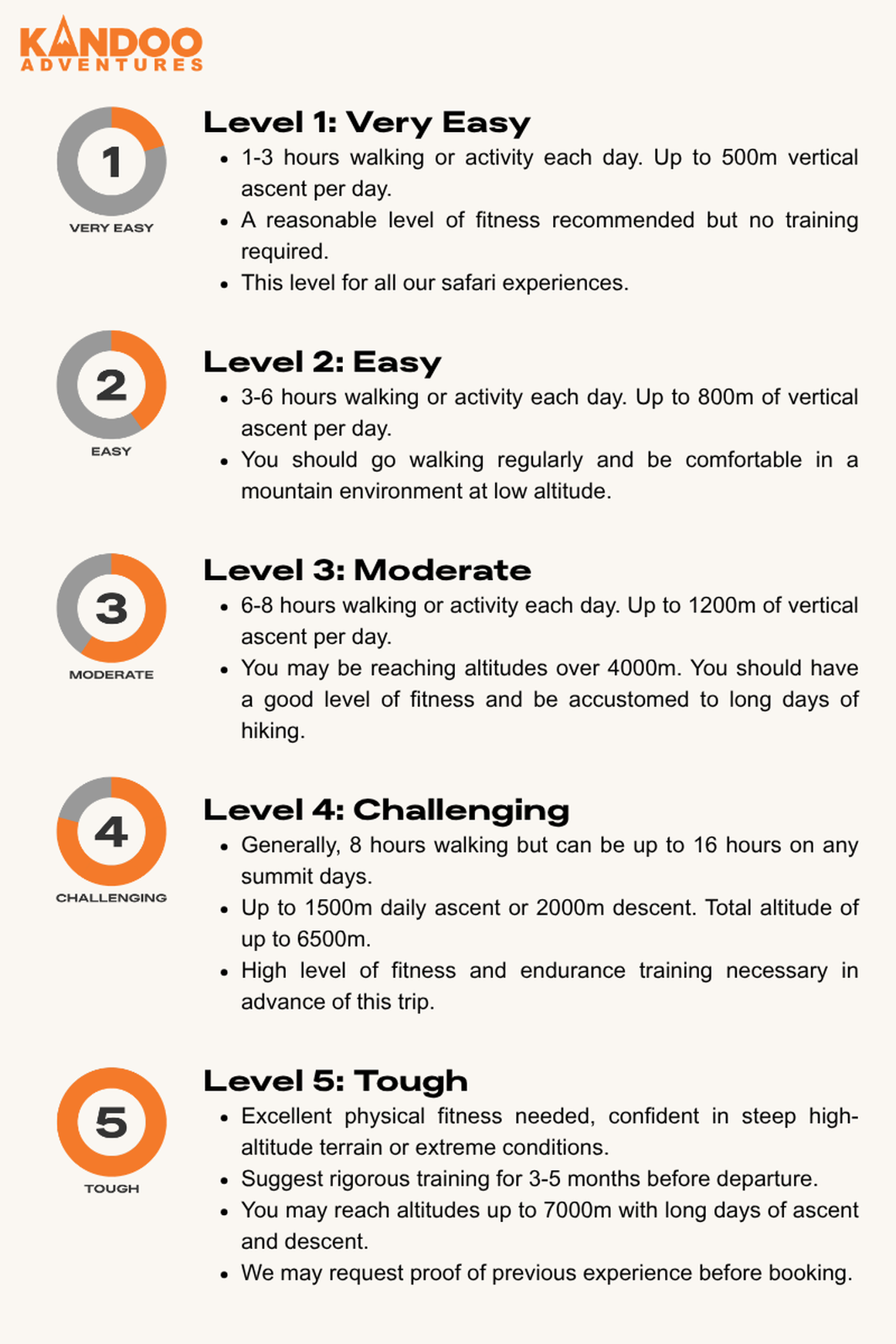
Difficulty ratings on routes are a good gauge of how challenging a journey might be. Here at Kandoo, we rate all our trips to help travellers manage training and preparation expectations.
Where can you go hiking or trekking?
Where you go depends on your goals, budget, and time available. Europe’s hut-to-hut routes, such as the Tour du Mont Blanc, are a good way to step up to multi-day trekking without paying for a long haul flight.
If you don’t mind somewhere further afield, Mount Toubkal The Short Way reaches North Africa’s highest peak in just five days. For a classic multi-day trek, the Inca Trail leads to Machu Picchu, while the climb to Kilimanjaro is the ultimate challenge for experienced trekkers.
Can hiking be multi-day?
Yes. Hiking can refer to walks lasting multiple days, so the terminology overlaps with trekking.
Is trekking just long-distance hiking?
Most of the time, yes, but terminology varies between countries and organisations.
Do I need special equipment for trekking?
This depends on the destination, duration, and accommodation options. Multi-day or remote treks generally require more equipment than day hikes.
Can beginners go trekking?
Yes. Beginners can choose appropriately graded treks and build their fitness before tackling longer, further, or high-altitude routes.
Hiking vs trekking with Kandoo Adventures
At Kandoo Adventures, we specialise in epic adventures to iconic destinations. Most of our experiences are on foot, with varying levels of difficulty, to explore the natural landscapes of the places we visit.
Whatever your level of experience, find your next unforgettable adventure with Kandoo. If you have any questions about our trips, get in touch with our friendly team today!