Discover everything you need to know before gorilla trekking in Uganda
Uganda is one of only three countries where you can see mountain gorillas in the wild. Yes, you read that right – one of three.
So what’s the best way to approach planning a trip like this? With such a limited number of countries offering these experiences, surely it’s not hard to figure everything out?
Unfortunately, that’s not the case. Navigating logistics, permits, and safety can be a real challenge. Fortunately, you’ve come to the right place for a simple breakdown.
In this guide, we’ll take you through what to expect on a gorilla trek, the best time to visit, essential permits, and tips for making the most of this once-in-a-lifetime experience.
What is a gorilla trek in Uganda?
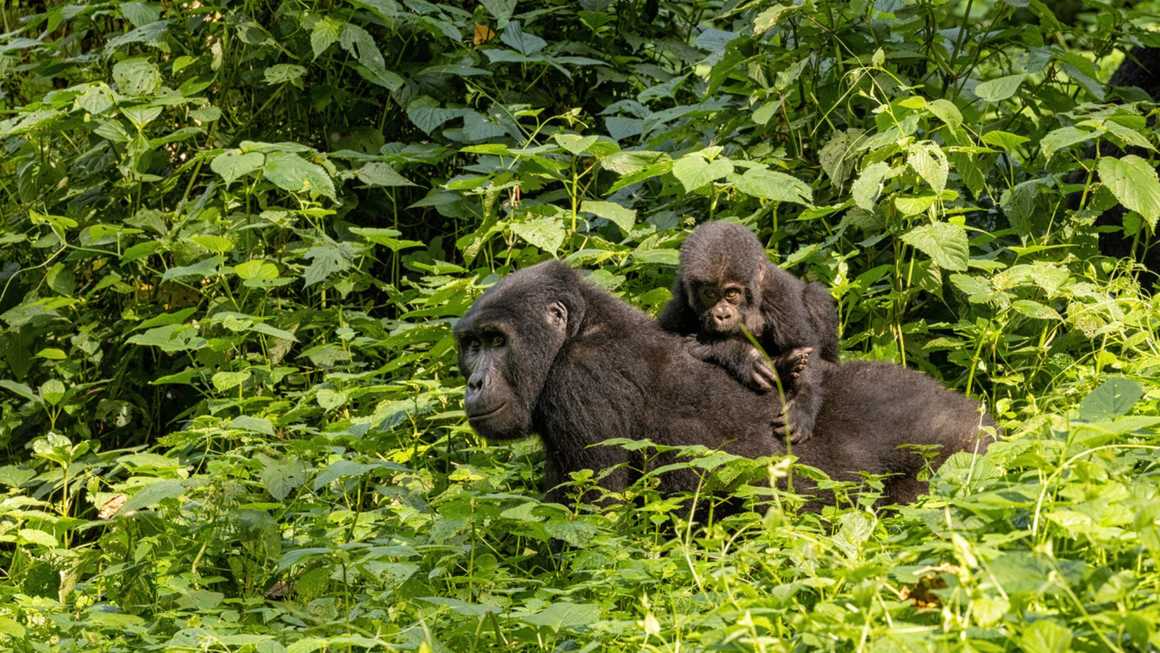
A gorilla trek is a guided hike into protected rainforest to find and observe a specific family of habituated mountain gorillas living in the wild.
Here’s how the typical day pans out:
- Your day starts early, usually around 7:00 am, at the park headquarters. Rangers from the Uganda Wildlife Authority (UWA) lead a briefing where you’ll learn about gorilla behaviour, safety rules, and what to expect on the trek.
- You’ll be assigned to a small group of up to eight people and matched to a gorilla family based on fitness levels and trekking difficulty.
- Trackers head into the forest ahead of you, communicating with guides by radio to pinpoint the gorillas’ location. Once you set off, the hike can take anywhere from 30 minutes to several hours, winding through thick jungle, climbing steep slopes, and crossing muddy paths.
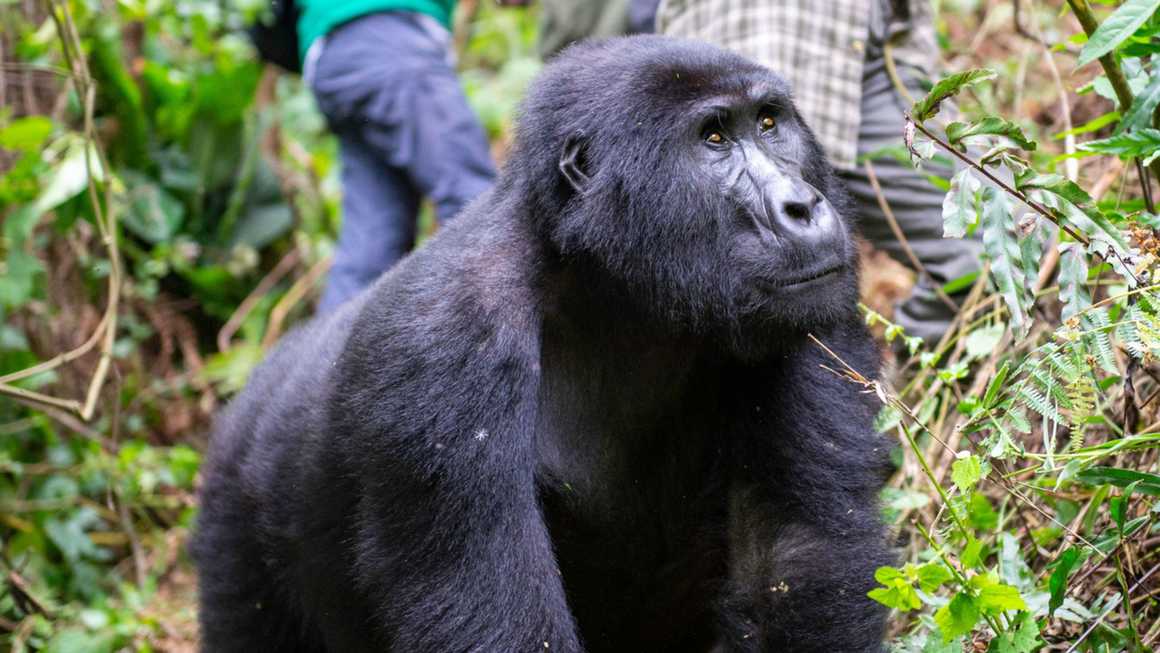
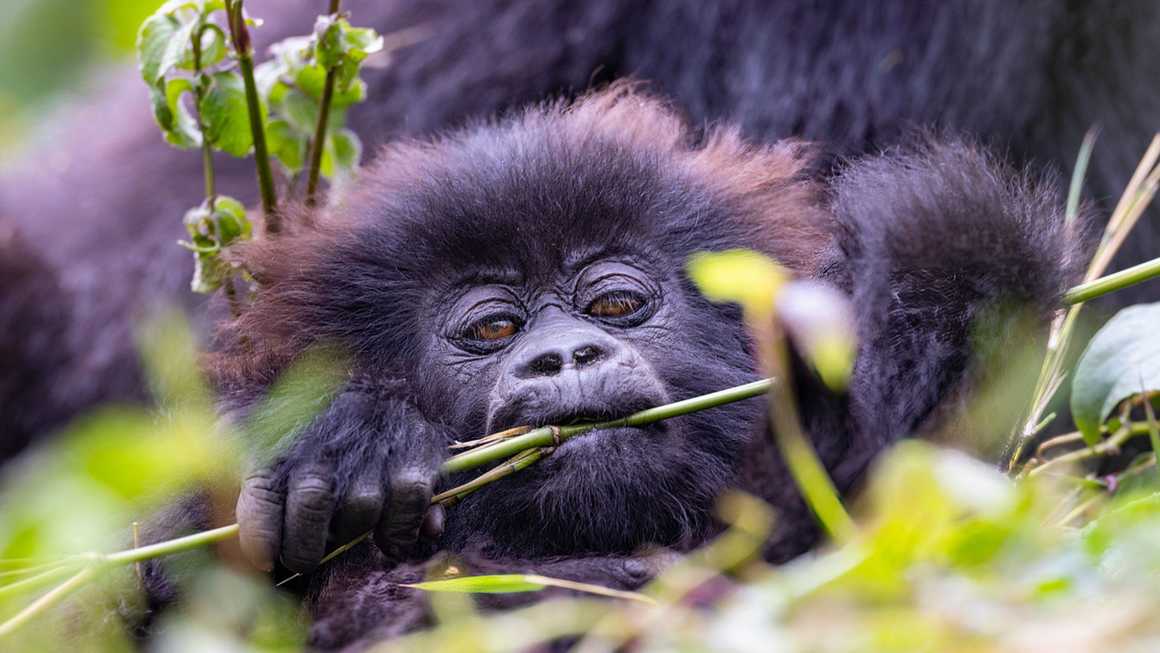
- When you finally reach the gorillas, everything slows down. You’re allowed one hour in their presence – enough time to watch them feed, groom, rest, and interact with each other. Seeing a silverback up close, or a young gorilla at play, is often the highlight of the entire trip!
- After your hour is up, you hike back to the trailhead, usually tired, muddy, and exhilarated. Along the way, you gain a deep appreciation for the conservation efforts that make this extraordinary experience possible!
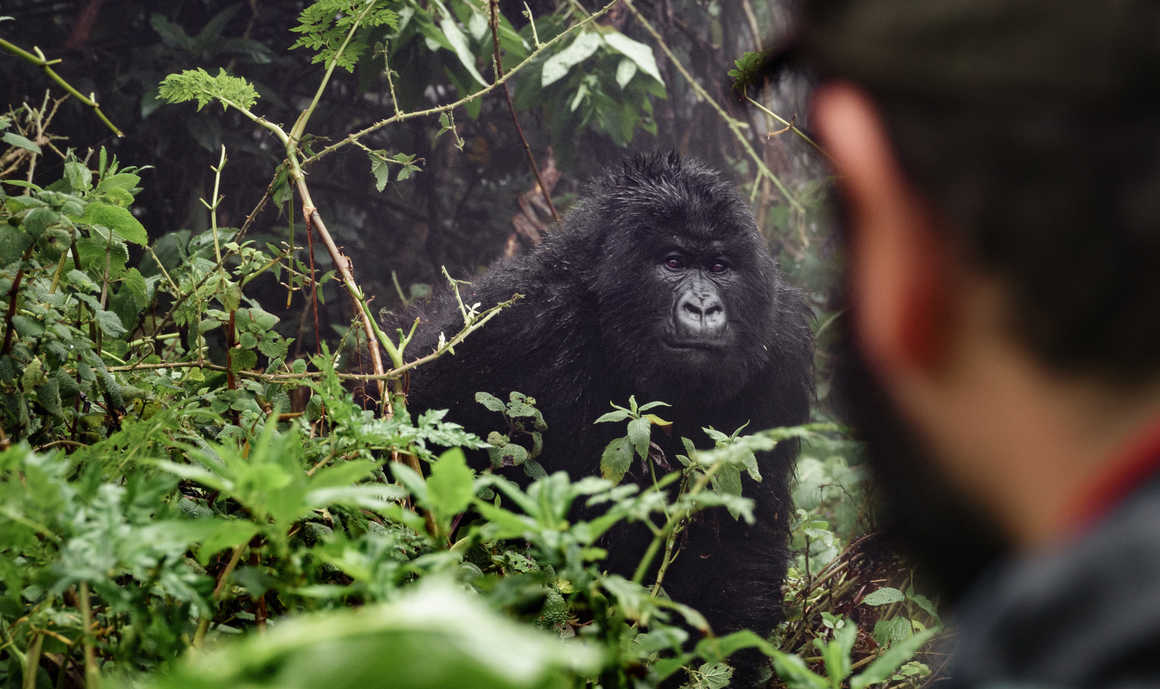
There are no fences or glass barriers. Just you, the forest, and a wild gorilla family going about their day.
Where does Uganda gorilla trekking take place?
Trekking takes place in south-western Uganda, in two national parks: Bwindi Impenetrable National Park and Mgahinga Gorilla National Park.
Bwindi is ideal if you want variety, multiple gorilla families, and a truly immersive rainforest adventure. Mdahinga is set in dramatic volcanic landscape and suits travellers looking for a quieter, more intimate trek
However, the best choice simply depends on how adventurous, remote, or peaceful you want your gorilla trekking experience to be.
Let’s take a look at each location in more detail:
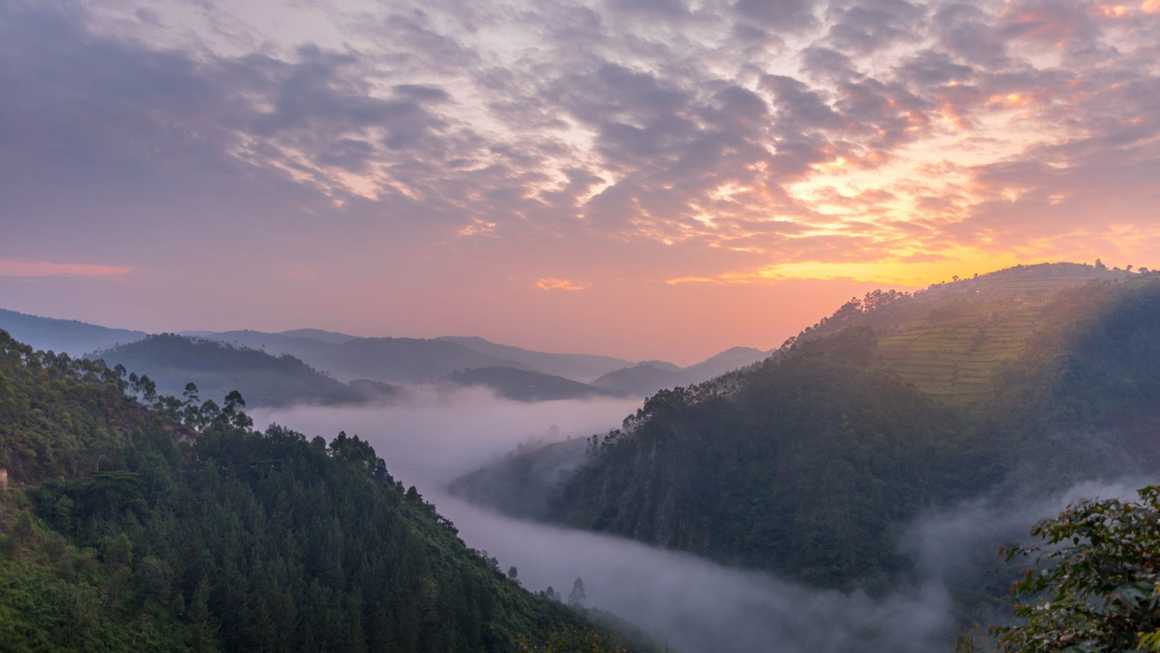
1. Bwindi Impenetrable National Park
Bwindi Impenetrable National Park is Uganda’s flagship gorilla trekking destination and one of the most important conservation areas in Africa.
This ancient rainforest (estimated to be over 25,000 years old) is home to the majority of Uganda’s habituated mountain gorilla families. As a result, it’s one of the most popular places in the country to see Uganda gorillas in the wild.
The park is divided into four trekking sectors, each offering slightly different trekking conditions and landscapes:
- Buhoma. The most established sector with easier access, a wide range of lodges, and generally less steep trekking routes, making it ideal for first-time gorilla trekkers.
- Ruhija. A quieter, higher-altitude sector known for cooler temperatures, scenic views, and moderate trekking conditions with fewer visitors.
- Rushaga. The sector with the highest number of habituated gorilla families, offering more permit availability but steeper, more challenging treks.
- Nkuringo. The most physically demanding sector, set on a dramatic ridge with steep terrain and spectacular views, best suited to adventurous trekkers.
Bwindi Impenetrable National Park’s landscape is exactly as its name suggests: dense, tangled jungle, narrow trails, deep valleys, and steep ridges. The terrain can be challenging in places, but the reward is a deep, immersive rainforest experience.
Fun fact: Bwindi is one of Africa’s most biologically diverse forests, home to hundreds of bird species, butterflies, tree species, and other primates – not just gorillas. Even outside the trek, the park feels alive with sound and movement.
When to go to Bwindi: Bwindi can be visited year-round, but the dry seasons (June to September and December to February) offer easier hiking conditions with less mud and better visibility. That said, Bwindi’s rainforest setting means rain is always possible, regardless of the season.
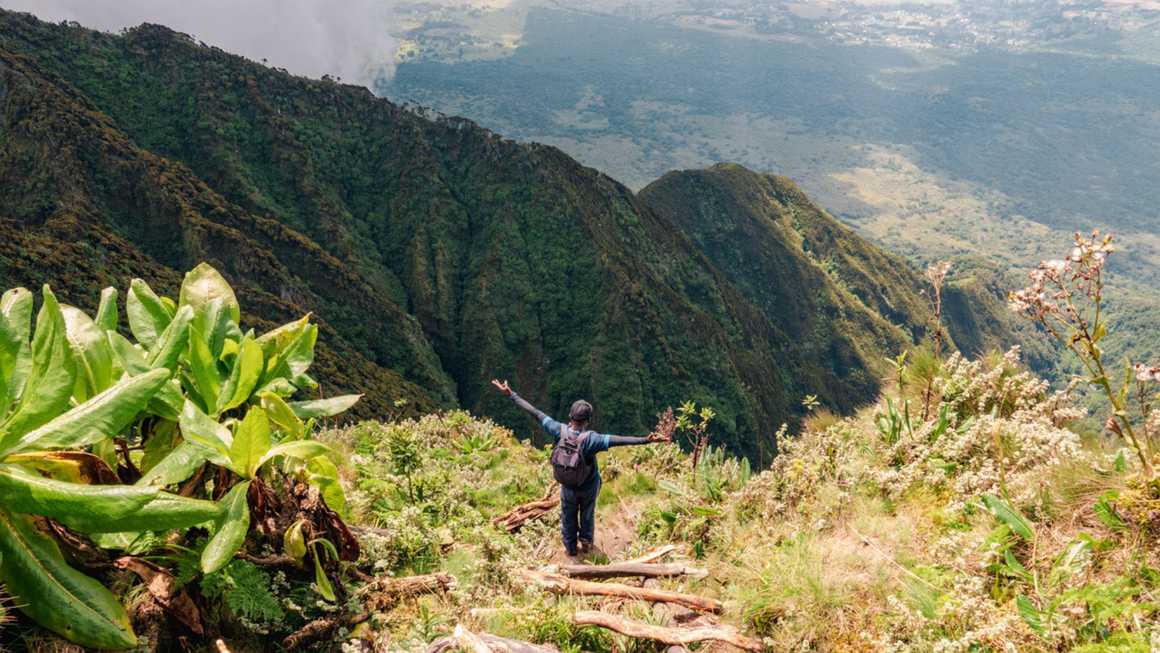
2. Mgahinga Gorilla National Park
Mgahinga Gorilla National Park offers a quieter, more intimate alternative to Bwindi. Set against the dramatic backdrop of the Virunga volcanoes, this small park feels more open and less dense, with sweeping views and a striking volcanic landscape.
Mgahinga is home to one habituated gorilla family, which means far fewer trekking permits are available each day. As a result, treks here tend to be quieter, ideal for an experience away from busier trekking routes.
Fun fact: The park is known for its diverse activities beyond gorilla trekking. Many visitors combine their gorilla trek with golden monkey tracking! You can also enjoy the scenery created by the forested slopes and volcanic peaks that mark the border between Uganda, Rwanda, and the Democratic Republic of Congo (DRC).
When to go to Mgahinga: Mgahinga is best visited during the dry seasons (June to September and December to February), when trails are more manageable and volcano views are clearer.
What permits do you need for a gorilla trek in Uganda?
To trek with mountain gorillas in Uganda, you must have a gorilla trekking permit issued by the UWA. Without it, entry to the parks is not allowed.
These permits are strictly limited each day to protect the gorillas and their habitat, so early booking is essential.
Here’s a breakdown of the gorilla trekking permit costs in Uganda:
- Foreign non-residents: $800 (approximately £630)
- Foreign residents: $700 (approximately £550)
- East African citizens: UGX 300,000 (approximately $80 or £65)
The permit includes:
- One hour observing a gorilla family
- Park entry fees
- Support from experienced park guides
- Security from armed rangers
When you book a gorilla trekking trip with Kandoo, we handle the permit process for you. We secure availability in advance and align permits seamlessly with your itinerary, so you can focus on the experience itself rather than the administration behind it.
When is the best time to do gorilla trekking in Uganda?
Gorilla trekking in Uganda is possible year-round, but the best time to go is during the dry seasons when trekking conditions are easier and visibility in the forest is better.
Best months:
- June to September
- December to February
During these periods, trails are less muddy and slippery, hikes are more manageable, and photography conditions are generally better. These months are also the most popular, so permits and lodges tend to book up well in advance.
Wet (shoulder) seasons:
- March to May
- October to November
While rain is more likely and trails can be challenging, these months have their advantages. For example, fewer visitors, lush green scenery, and sometimes shorter treks if gorillas stay closer to lower elevations.
To sum it up: Choose the dry season for comfort and ease, or the wetter months for fewer crowds and a more atmospheric rainforest experience.
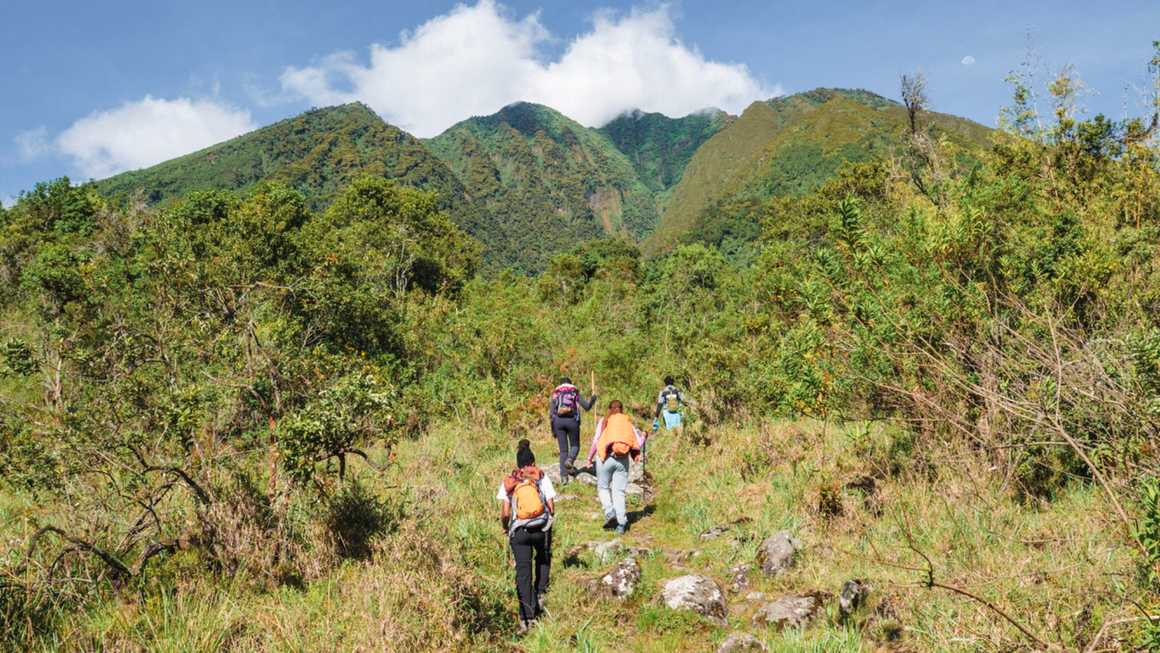
What to wear gorilla trekking
On a gorilla trek, you hike through thick tropical rainforest, meaning you need to be properly kitted out for your gorilla trekking adventure.
Here’s our list of gorilla trekking clothing to help with your packing.
Headgear
- Sun hat – preferably wide-brimmed for protection
- Sunglasses – high UV protection
- Headlamp (plus extra batteries)
Upper body
- Long sleeve shirt/t-shirt – light or medium weight, moisture wicking
- Short sleeve shirt/t-shirt – lightweight, moisture wicking
- Insulated jacket – down or Primaloft
Legs
- Trekking trousers – light or medium weight, convertible trousers work well
- Lightweight trousers – linen trousers are cool in the heat
Feet
- Trekking boots – some people choose to wear Wellington Boots instead of trekking boots due to the extensive mud on the trail
- Training shoe – to wear around the huts
- Mid-weight trekking socks
Other items
- Small rucksack (30-40 litres) – to carry water and personal items
- Duffel bag (70-90 litres) – max weight when full should be no more than 23kg
- Trekking poles
- Water bottle or hydration bag – must be able to carry 1.5-2 litres of water
Why a guided gorilla trek in Uganda is truly worth it
Gorilla trekking takes place in isolated rainforest regions, where logistics, permits, transport, and local knowledge all play a crucial role. Guided trips are designed with this in mind, allowing you to focus on the experience itself rather than all the planning.
With Kandoo, for example, the entire journey is thoughtfully organised. From securing hard-to-get gorilla permits to coordinating transport, accommodation, and expert guiding throughout the trip, we handle the logistics so you can enjoy the trek.
Let’s take a look at the benefits of booking a gorilla trekking trip with Kandoo in more detail.
Expert local guides and wildlife knowledge
Kandoo trips are led by experienced guides who understand Uganda’s landscapes, wildlife, and cultures. During the trek, they provide valuable insight into gorilla behaviour, conservation efforts, and the wider ecosystem.
Hassle-free logistics in remote regions
From airport transfers and long overland journeys to lodge selection and park timings, Kandoo handles the practical details that can be challenging to manage independently.
This support is especially valuable in south-western Uganda, where weather conditions can change quickly!
Guaranteed permits and carefully planned itineraries
Gorilla permits are limited and highly sought after. Booking with Kandoo ensures permits are secured in advance and matched to an itinerary that balances trekking days with time to rest and explore other highlights of Uganda.
Safety, comfort, and support throughout
Gorilla trekking can be physically demanding, and conditions in the rainforest are unpredictable. Having a professional guide, well-planned routes, and reliable support adds reassurance and makes the experience more comfortable and enjoyable.
A richer, more complete Uganda experience
Rather than treating gorilla trekking as a standalone activity, Kandoo trips often combine the trip with other wildlife encounters. For example, you could also join the Mount Stanley climb and safari, where you can see chimpanzees.
As a result, you get a broader and more rewarding view of Uganda’s natural diversity.
Find out more about our other trips in Uganda!
Gorilla trekking Uganda FAQs
How difficult is gorilla trekking in Uganda?
Difficulty levels range from moderate to challenging, depending on the park, sector, and where the gorillas are located on the day of your trek. Expect uneven ground, steep slopes, dense vegetation, and treks that can last anywhere from two to six hours (or more).
A reasonable level of fitness is helpful. Hiring a porter can also make the experience more comfortable if you’re worried about the weight of carrying food, water, and layers on the trek.
How many gorillas are in Uganda?
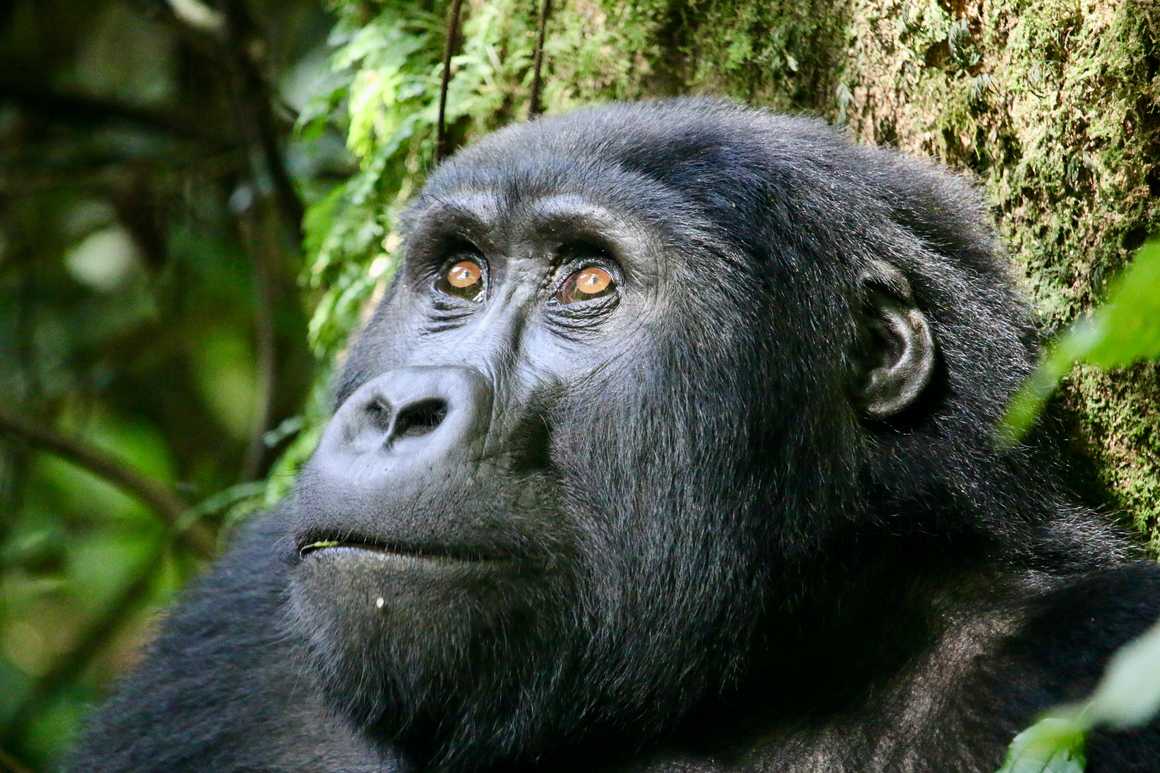
It’s hard to find figures that estimate the exact number of gorillas in Uganda, but we do know that the country is home to over half of the world’s remaining mountain gorillas.
The majority live in Bwindi Impenetrable National Park, and a smaller population lives in Mgahinga Gorilla National Park. Records estimate there are 459 mountain gorillas in Bwindi Impenetrable National Park as of October 2025.
Across Uganda, Rwanda, and the Democratic Republic of Congo, there are more than 1,000 mountain gorillas, up from under 300 in 1991.
How much is gorilla trekking in Uganda?
It’s tricky to confirm a total cost because there are quite a few variables.
The cost of gorilla trekking in Uganda largely depends on the permits, whether you join a guided tour, and how long the trip lasts. Additional costs may include accommodation, transport, porter fees, and tips. These costs can add up to anywhere between £500–£1,500 (around $650–$1,900) depending on your travel style and trip length.
Is it safe to visit gorillas in Uganda?
Yes, gorilla trekking in Uganda is very safe when done with licensed operators and Uganda Wildlife Authority guides. Treks are carefully regulated, group sizes are small, and armed rangers accompany every trek.
Strict health and safety rules protect both visitors and gorillas, ensuring calm and controlled encounters.
Is Uganda or Rwanda better for gorilla trekking?
Both Uganda and Rwanda offer exceptional gorilla trekking experiences, but they suit different travel styles. Uganda is generally better value, with lower permit costs and more trekking sectors. Rwanda offers shorter, often easier treks and more polished infrastructure at a higher price.
The best choice depends on your budget, fitness level, and how adventurous you want your experience to be.
Are gorilla sightings guaranteed?
Most travellers can expect to see mountain gorillas on a Uganda gorilla tour.
Because mountain gorillas are so closely monitored, guides usually know the locations of individual gorilla families. In other words, you have a very high likelihood of seeing them with an experienced guide.
Like any trek or safari, nothing is guaranteed. An overnight thunderstorm or an encounter with a predator may cause a troop to move unexpectedly, but your guides will pick up their trail again soon.
Can I touch the gorillas?
No, absolutely not. You must keep a distance of at least 10 metres at all times. Here’s why:
- Gorillas are strong, wild animals that can be unpredictable
- Gorilla populations are already under severe threat from logging, poaching and human encroachment on their environment
Where do you stay on a gorilla trek?
On a Kandoo gorilla trek, you stay in comfortable safari lodges on a full board basis. Expect to sample local cuisine such as matoke, cassava, chicken and beef stews, fresh fish and millet bread. Western alternatives are also available in most lodges.
Can children go gorilla trekking?
The minimum age for gorilla trekking in Rwanda, Uganda and the DRC is 15 years old. This restriction is in place due to several important factors:
- Gorilla trekking can be physically demanding, often involving long hikes over steep, muddy, and uneven terrain, which may be challenging for younger children.
- There’s also a strong focus on safety and behaviour around the gorillas. Visitors must be able to follow instructions carefully, remain calm, and react appropriately if gorillas move closer.
- Health considerations also play a role. Gorillas are highly susceptible to human illnesses. Older teenagers are better able to understand and comply with health and hygiene rules designed to protect the animals.
Experience gorilla trekking in Uganda with Kandoo
Gorilla trekking in Uganda is one of the most unforgettable wildlife experiences in the world. Whether you choose the biodiverse trails of Bwindi or the volcanic landscapes of Mgahinga, the experience is sure to leave you with memories that last a lifetime.
By booking a guided tour, you ensure a smooth and well-organised adventure that supports local conservation to protect these incredible creatures. From securing permits to expert guiding and comfortable lodges, a guided trek allows you to focus fully on the thrill of being in the presence of mountain gorillas.
For more information about our gorilla tours in Uganda, get in touch with the helpful team at Kandoo HQ. We’re more than happy to help and answer any gorilla-related questions!