
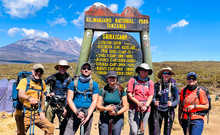
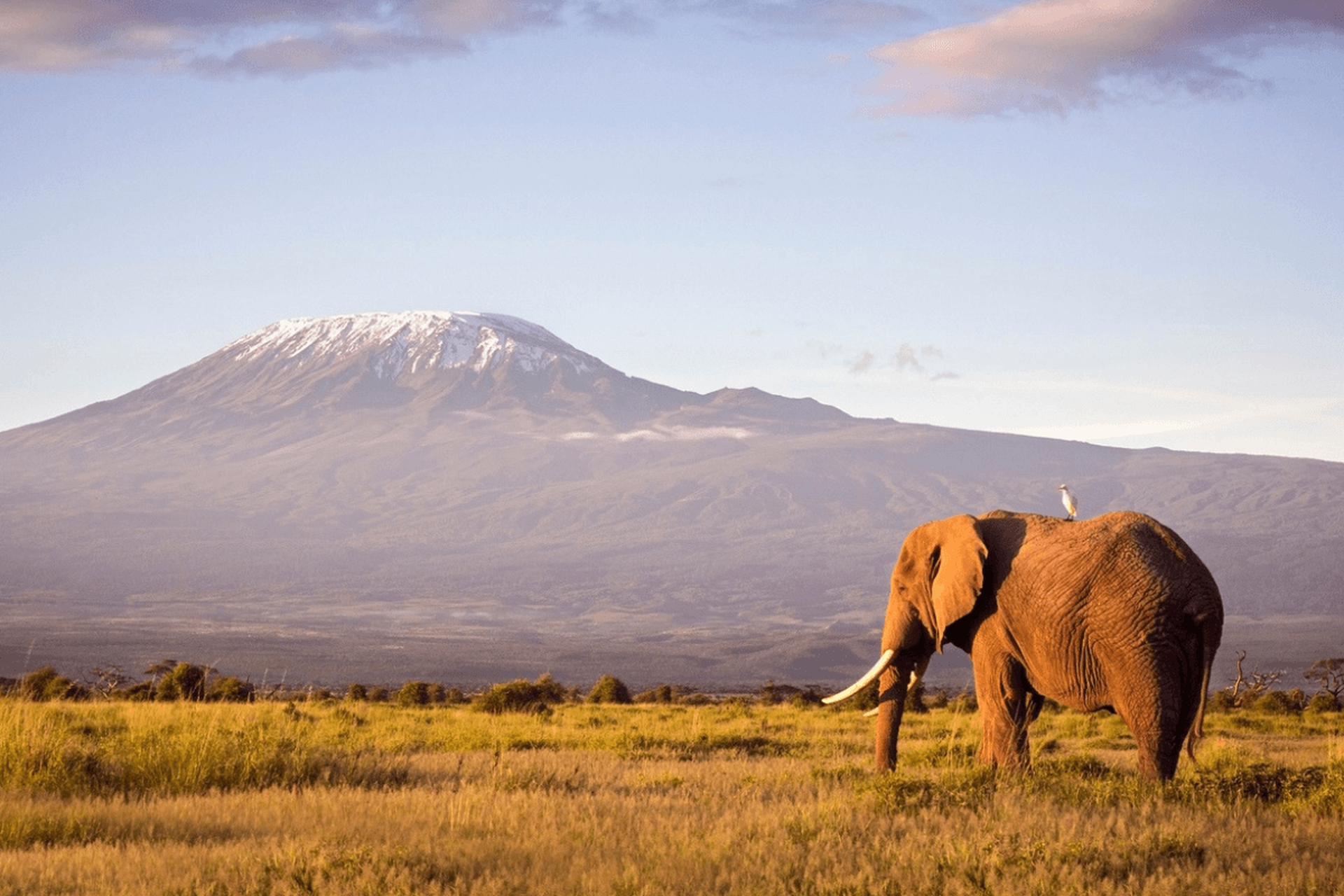
Kilimanjaro is the highest mountain in Africa, and the largest free-standing mountain in the world. But how high is Kilimanjaro? And how much of Kilimanjaro’s height do you climb when trekking to the summit?
Our article breaks down all the details about Kilimanjaro’s height, where to summit, and how it stacks up against other mountains. We also delve into the effects of altitude, and explore alternative route options.
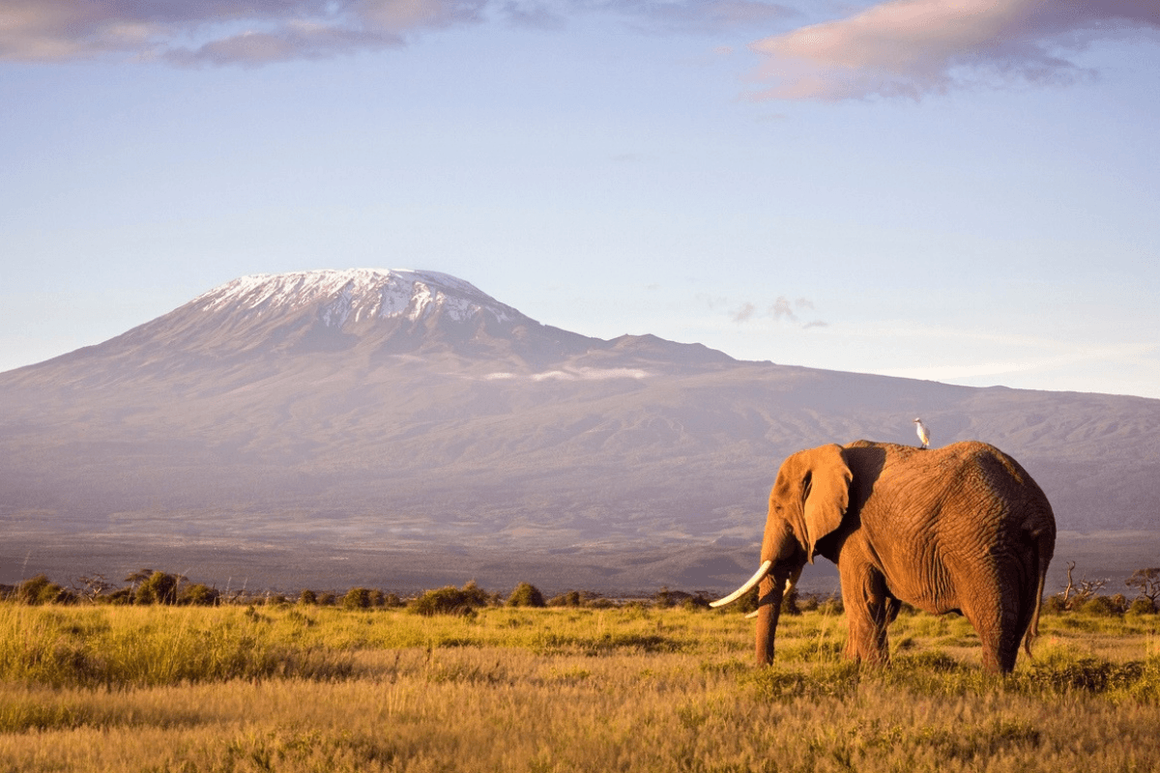
What is the height of Mount Kilimanjaro?
Kilimanjaro is 5,895m high, measured at Uhuru Peak, the highest point on the crater rim of Kibo (the tallest of Kilimanjaro’s three volcanic cones). It’s the highest mountain in Africa, and the largest free-standing mountain in the world.
From the park gate, you climb between 3,500m and 4,100m in about a week. Although it’s often referred to as a climb, Kilimanjaro is technically a trek. You won’t need ropes or crampons.
Seen a different figure online? The official height of Kilimanjaro comes from a British Ordnance Survey measurement in 1952. It’s the figure Tanzania National Parks use, and it’s printed on the summit sign.
Seen 5,892m instead? GPS surveys in 1999 and 2008 came in a few metres lower than the 1952 figure. Then in 2014, surveyors at Ardhi University in Dar es Salaam reworked that GPS data using a more precise model of Tanzania's gravity field. Their result was 5,894.94m, practically the original number.
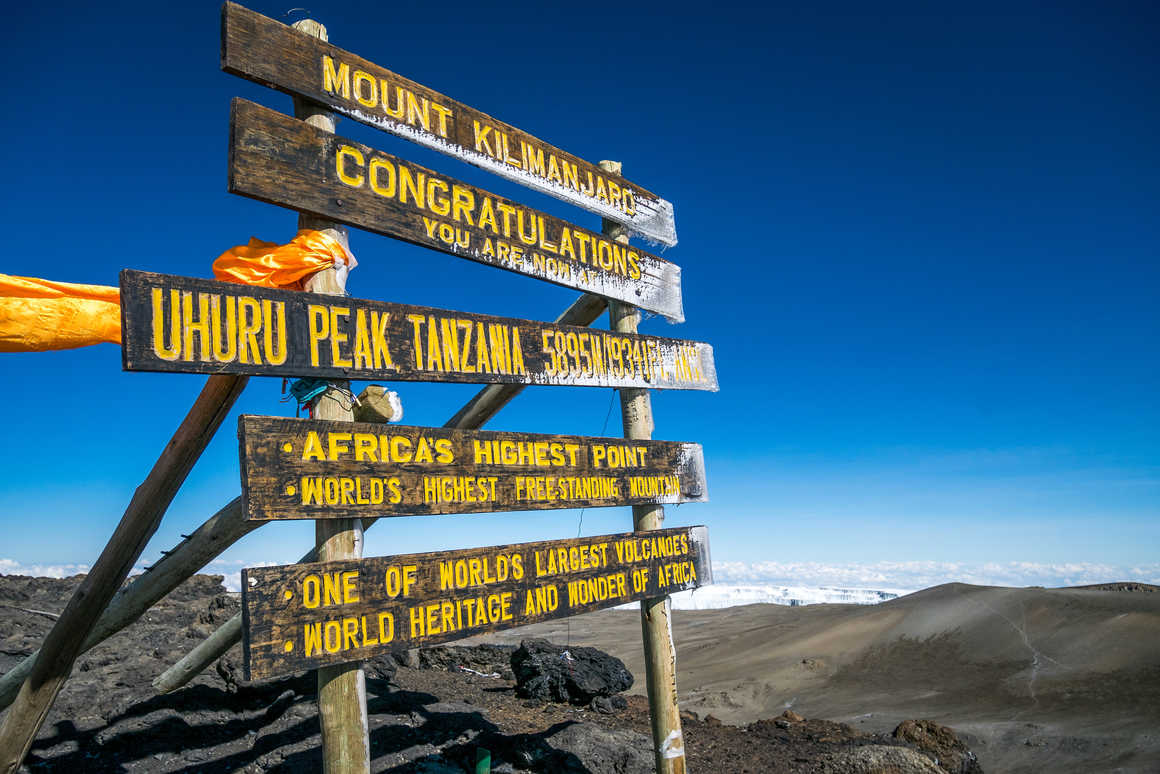
How high is Uhuru Peak, and where else can you summit Kilimanjaro?
Uhuru Peak is the true summit of Kilimanjaro at 5,895m on Kibo’s crater rim. But you can also reach the rim at Stella Point and Gilman’s Point.
While Uhuru is the highest point, it isn’t the only one worth bagging. Kilimanjaro National Park recognises three points on the crater rim:
- Uhuru Peak (5,895m). The true summit and the highest point in Africa.
- Stella Point (5,732m). Where climbers on the Lemosho and Machame routes reach the crater rim. Uhuru is about an hour further on.
- Gilman's Point (5,685m) Where climbers on the Marangu route reach the rim. Uhuru is about two hours further on.
What does this mean for your climb? Reaching the crater rim and reaching Uhuru Peak are two different goals.
By the time you reach Stella Point, you’ve walked around six hours, often through the night, and the last stretch can be difficult at that altitude. We recommend pacing yourself on the steep climb so you have energy left for the final hour.
Our guides set a slow, steady rhythm to help you get there safely.
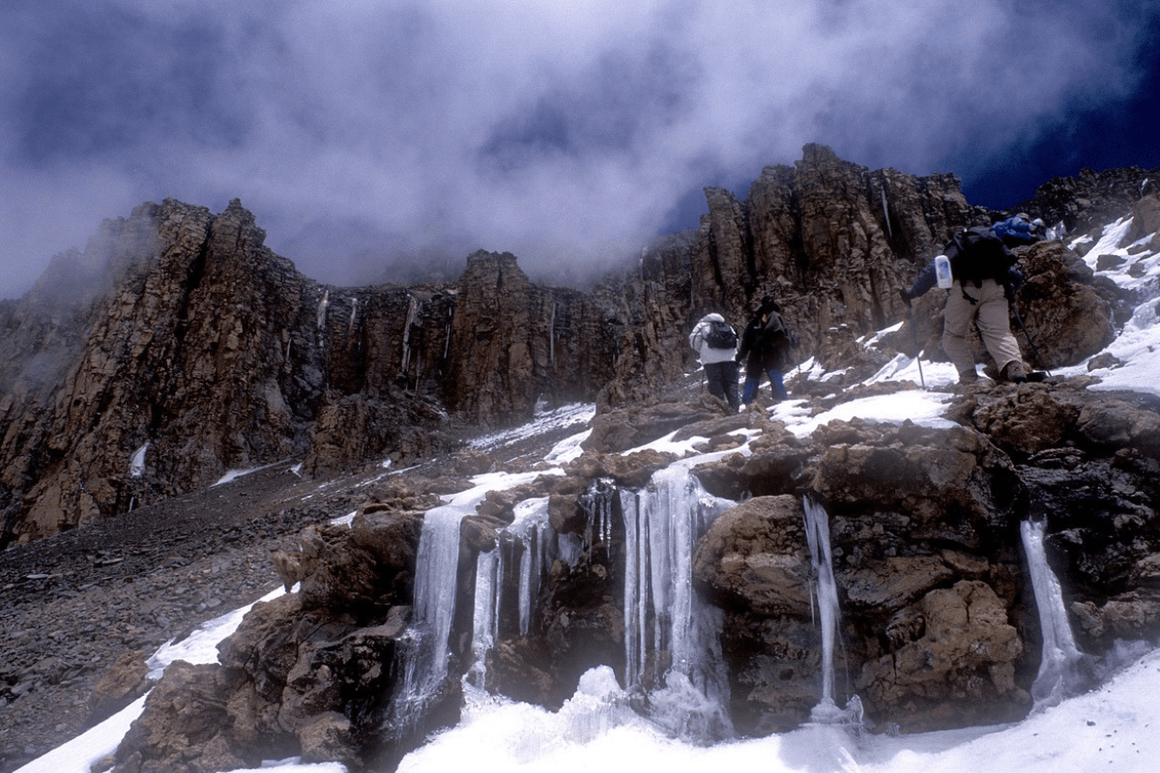
A guide to the three cones: Kibo, Mawenzi and Shira
Kilimanjaro has three volcanic cones, the highest being Kibo, followed by Mawenzi, and then Shira. Kibo is home to Uhuru Peak and the last ice fields.
Here’s a complete guide to the three cones:
- Shira (3,962m): the oldest and lowest cone, which is now extinct. Its collapsed caldera is now the Shira Plateau, where Lemosho and Machame climbers spend their first nights above 3,500m.
- Mawenzi (5,149m): Africa's third-highest summit after Kibo and Mount Kenya. It has a jagged, eroded surface, making it a technical climb. Trekkers usually see it but don't summit it. Marangu walkers get the best views across the Saddle (the largest high-altitude tundra in tropical Africa, between Kibo and Mawenzi).
- Kibo (5,895m): the youngest cone, now dormant, with Uhuru Peak and the last ice fields. Every Kilimanjaro route finishes here.
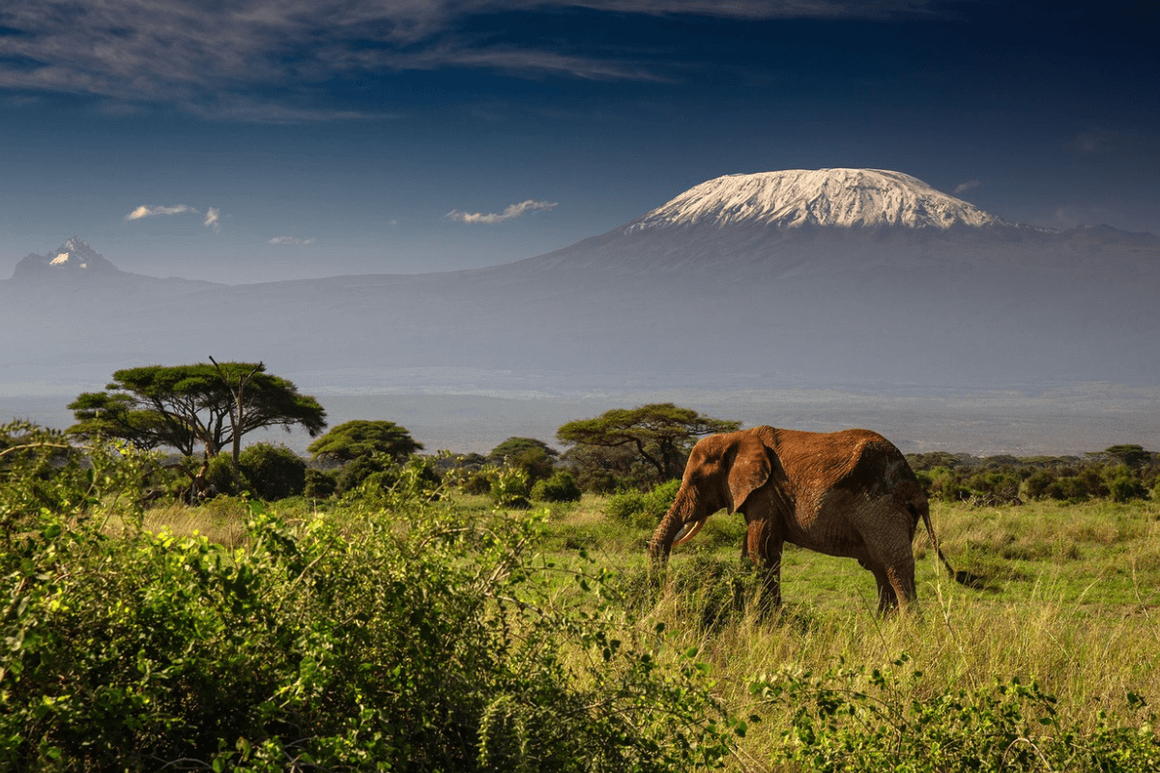
Mount Kilimanjaro height vs other mountains
At 5,895m, Kilimanjaro is the fourth-highest of the Seven Summits. It's higher than Elbrus, Mont Blanc, and Everest Base Camp, but lower than Everest, Aconcagua, and Denali.
Here’s how Kili compares with other major peaks:
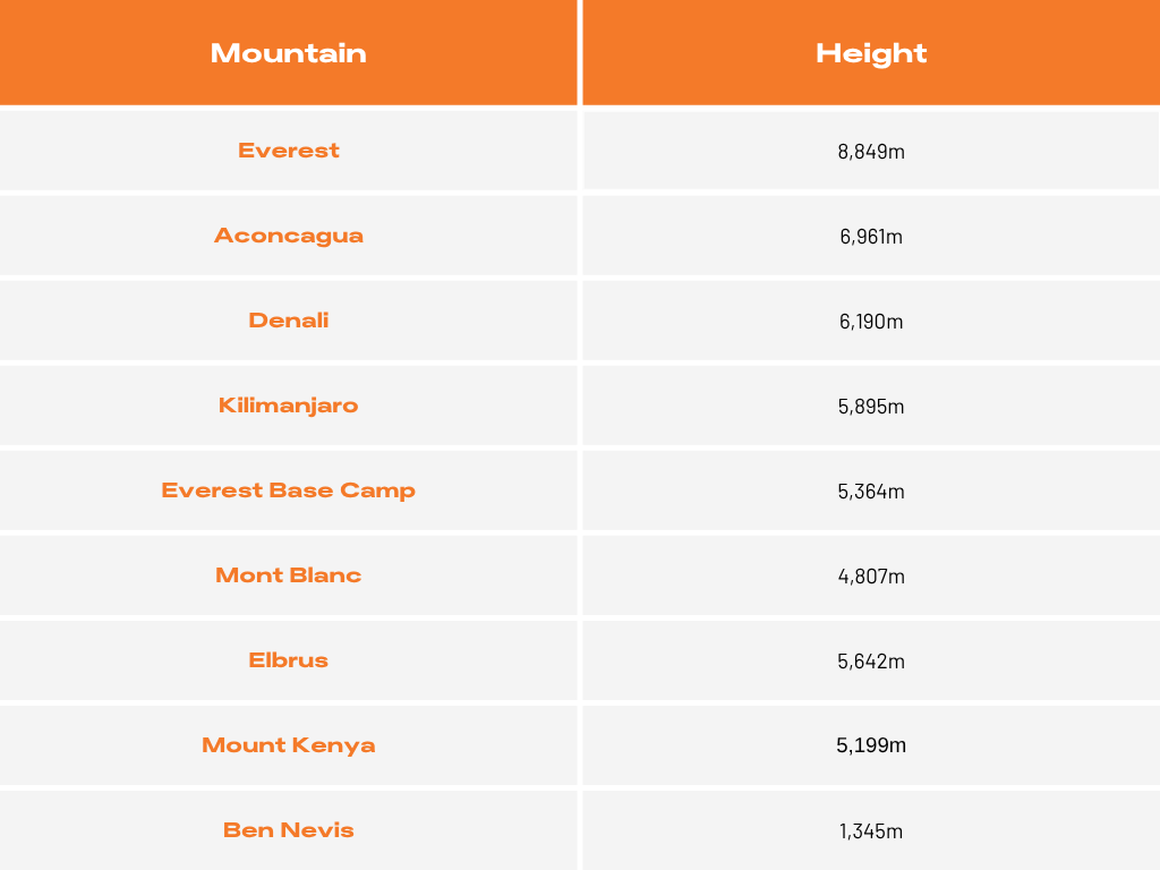
To put Mount Kilimanjaro’s height in context, Mont Blanc is almost 1.1km lower. Kili is also more than four times the size of Britain’s highest mountain, Ben Nevis. And, if you’ve trekked to EBC, summit night on Kilimanjaro takes you more than 500m higher.
Fancy something bigger? See our guide to the Seven Summits of the world.
How much altitude do you gain climbing Kilimanjaro?
You don’t actually climb the full Kilimanjaro height of 5,895m. Most climbs start at a park gate between 1,800m and 2,360m, depending on the route you choose. That means you gain between 3,500m and 4,100m on foot.
The biggest push comes on summit night, when you climb around 1,200-1,300m, usually setting off in the middle of the night. That same day, you descend almost 2,800m before camping. You do all this in the span of 12-16 hours at elevation, where you might feel some of the effects of high altitude.
Here’s a quick breakdown of the elevation gained during different Kilimanjaro routes:
- Machame route: start at 1,800m, trek 4,100m to Uhuru, including a 1,220m summit ascent.
- Marangu route: Start at 1,870m, trek 4,025m to Uhuru, including a 1,195m summit ascent.
- Lemosho route: Start higher at around 2,360m, trek 3,535m to Uhuru, including the longest summit ascent of around 1,295m.
Each route builds up to summit night slightly differently. On our 8-day Lemosho trekking route up Kilimanjaro, you sleep at 2,895m, 3,500m, and 4,200m. On day five, you climb to Lava Tower at 4,600m, where we eat lunch and spend some time acclimatising.
Then, you drop back to around 3,900m to sleep at Barranco Camp. From there, you work up to Barafu Camp at 4,600m. We leave around midnight to reach Uhuru Peak at sunrise, before descending all the way to Mweka Camp at 3,100m.
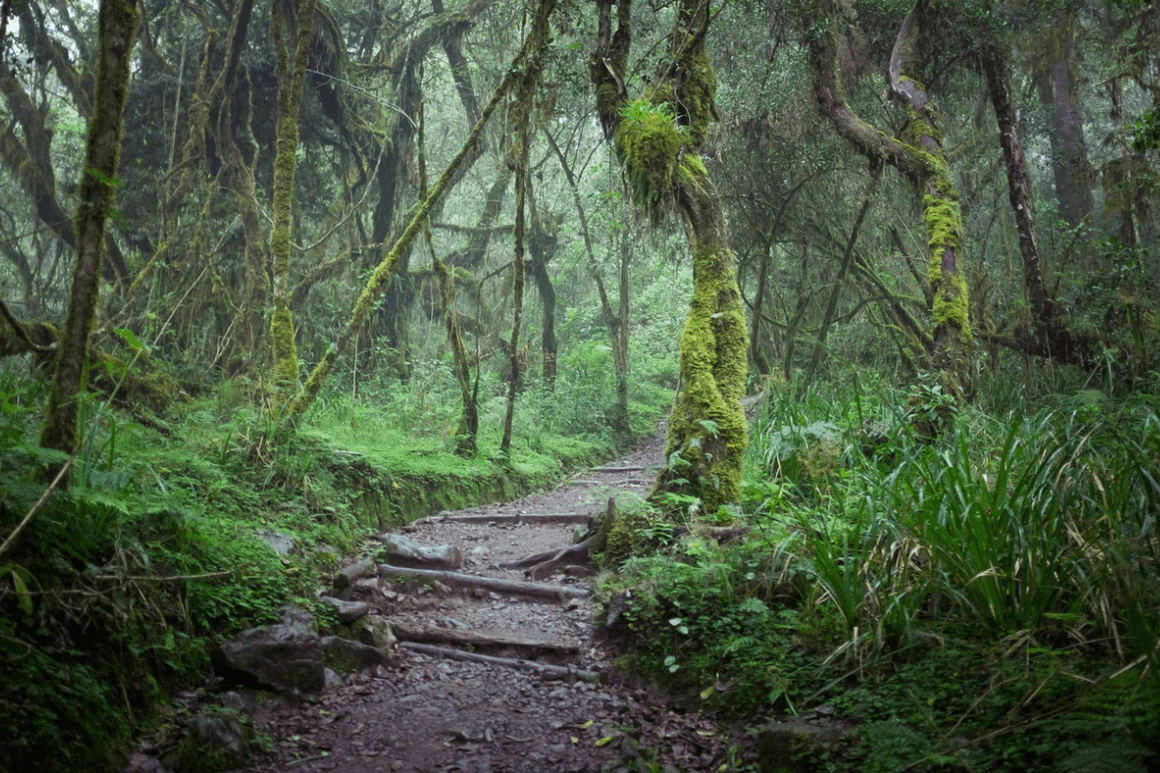
How Kilimanjaro’s height affects altitude sickness
At Uhuru Peak, the air pressure is about half sea level, so each breath carries roughly half the oxygen. Even though the air is still 21% oxygen, in reality, it feels around 10%.
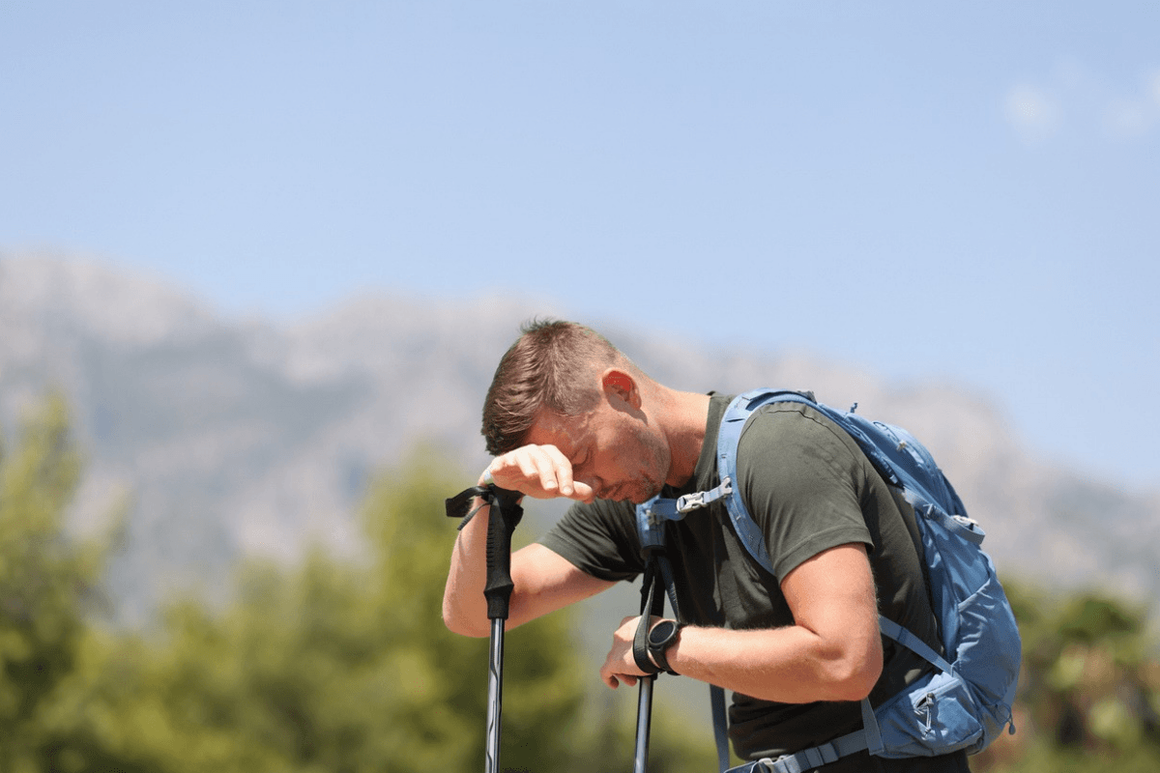
Once you get above 2,500m, you may start to develop symptoms of altitude sickness. Around 4,000m-6,000m, there’s a 50% chance of developing acute mountain sickness (AMS).
Common symptoms of AMS include:
- Headaches
- Nausea
- Vomiting
- Dizziness
Luckily, the risk of serious conditions like high-altitude pulmonary oedema (HAPE) and high-altitude cerebral oedema (HACE) is lower.
One of the simplest ways to prevent and manage altitude sickness is to adjust how quickly you gain height. Above 3,000m, the Wilderness Medical Society recommends raising sleeping altitude by no more than 500m a day, with a rest day every 3-4 days.
The research flags climbing Kilimanjaro in under seven days as a high-risk ascent. The AMS research on Kilimanjaro showed that 77% of trekkers on a 4-5 day Marangu climb developed AMS, and only 61% reached the summit.
Our Marangu route spans six days (eight days including departure and arrival), with the fourth day spent at Horombo to aid acclimatisation.
What this means for how you climb:
- Prioritise a longer itinerary, over extra training, especially if you lack experience trekking at altitude.
- If you feel AMS symptoms coming on, tell your guide as early as possible. Don't go any higher until they ease.
- Check the sleeping altitudes on itineraries.
4 alternative route options for climbing Kilimanjaro
The best Kilimanjaro route is the one with the most days and the gentlest ascent to each night’s camp. When looking for a climb, pay close attention to the number of nights.
Here’s a quick glance at the different routes up Kilimanjaro:
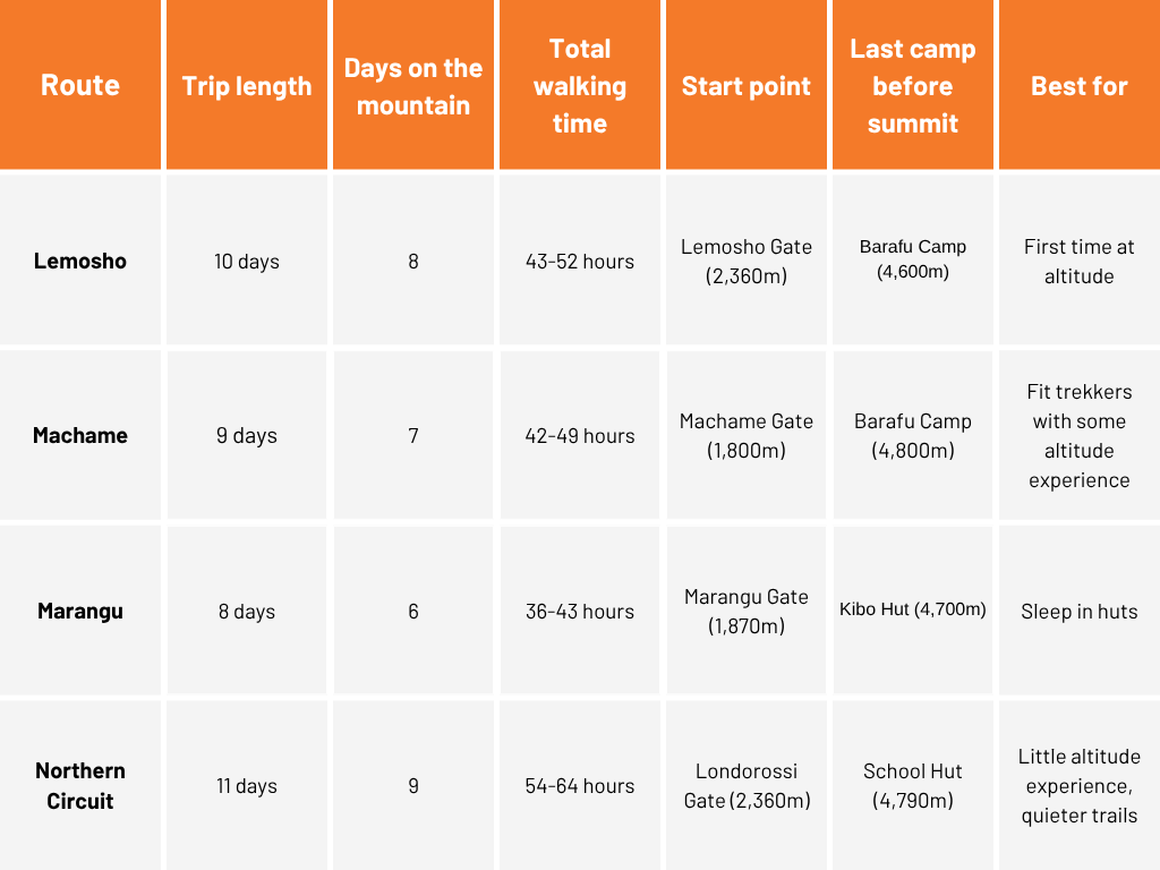
For most people, our Lemosho route is a great option as you spend eight days on the mountain. It starts gently on the quiet western side of the mountain and includes a ‘walk high, sleep low’ day at Lava Tower. The extra day also splits the walk to Barafu, so you arrive by lunch and can rest before the midnight start.
Machame has the same Lava Tower acclimatisation day, but the climb takes one day less. It's a great choice if you're fit and have trekked at altitude before.
Marangu is the shortest route, and the only route with huts instead of tents. For this reason, historically, it has a reputation as the easy option, but its success rate is the lowest on the mountain, at just 42 percent.
This is mainly because people try to climb it in five days, which would be possible if you didn’t have to think about altitude. That’s why we add an acclimatisation day at Horombo to give you a much better chance of summiting.
For the most time to acclimatise, the Northern Circuit spends nine days on the mountain and the extra days make it ideal if you haven’t trekked much at altitude.
Across all our routes, our summit success rate is 95 percent. You undergo a pre-climb briefing and walk with porters and a guide the whole way.
Recommended reading: Kilimanjaro training guide.
Climb Kilimanjaro with Kandoo Adventures
Even though Kilimanjaro stands at an impressive height of 5,895m, there are several routes to the summit, so you can find one to suit your experience and fitness. The more days you spend on the mountain, the easier you find it to acclimatise, and the stronger your summiting chances.
Ready to climb Kilimanjaro?