Everything you need to know about one of the world’s highest glaciers
The Khumbu Glacier is a major landmark that trekkers come across during the final days of the Everest Base Camp trek. It’s one of the world’s highest glaciers, beginning at 7,600m, and features the Khumbu Icefall, one of the most challenging and iconic obstacles for climbers.
Because it’s buried under so much debris from surrounding peaks, there are long stretches of the route where many trekkers don’t realise they’re walking right beside it.
So, what’s the best way to see the sight for yourself? Here’s everything you need to know about the Khumbu Glacier, including how to see it on the route to Everest Base Camp.
What is the Khumbu Glacier in Nepal?
The Khumbu Glacier is a 17 kilometre-long river of ice in Nepal’s Himalayas, flowing down from Mount Everest. It flows down from the slopes of Everest and it’s one of the most famous glaciers in the world because climbers have to cross it on route to the mountain’s summit.
Size and location
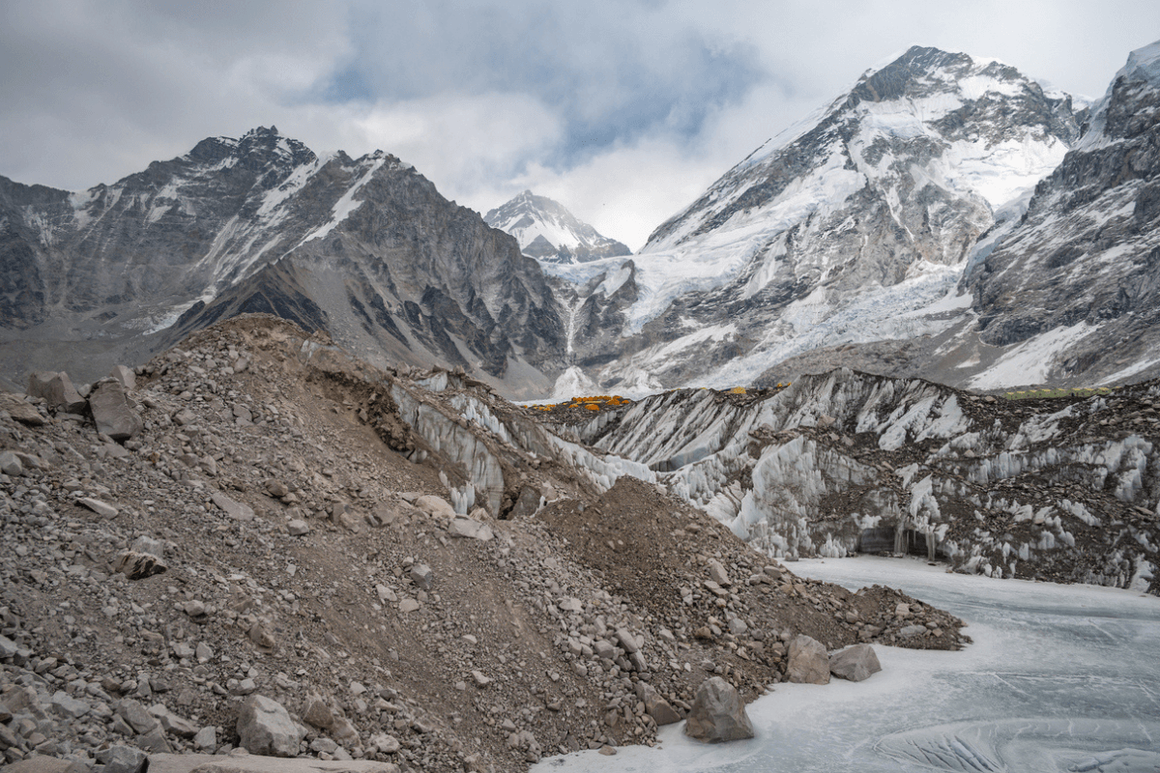
The Khumbu Glacier begins at around 7,600m, and descends to roughly 4,900m. It sits in the UNESCO World Heritage Site of the Sagarmatha National Park in Nepal.
The glacier officially starts in the Western Cwm (between Everest and the Lhotse-Nuptse ridge). From there, it drops through the Khumbu Icefall, before flowing down the valley, and ending just above the village of Dughla.
When you reach Everest Base Camp at 5,364m, you’re standing on the Khumbu Glacier itself, but you’re more than 2,200m below where it begins.
Formation and features
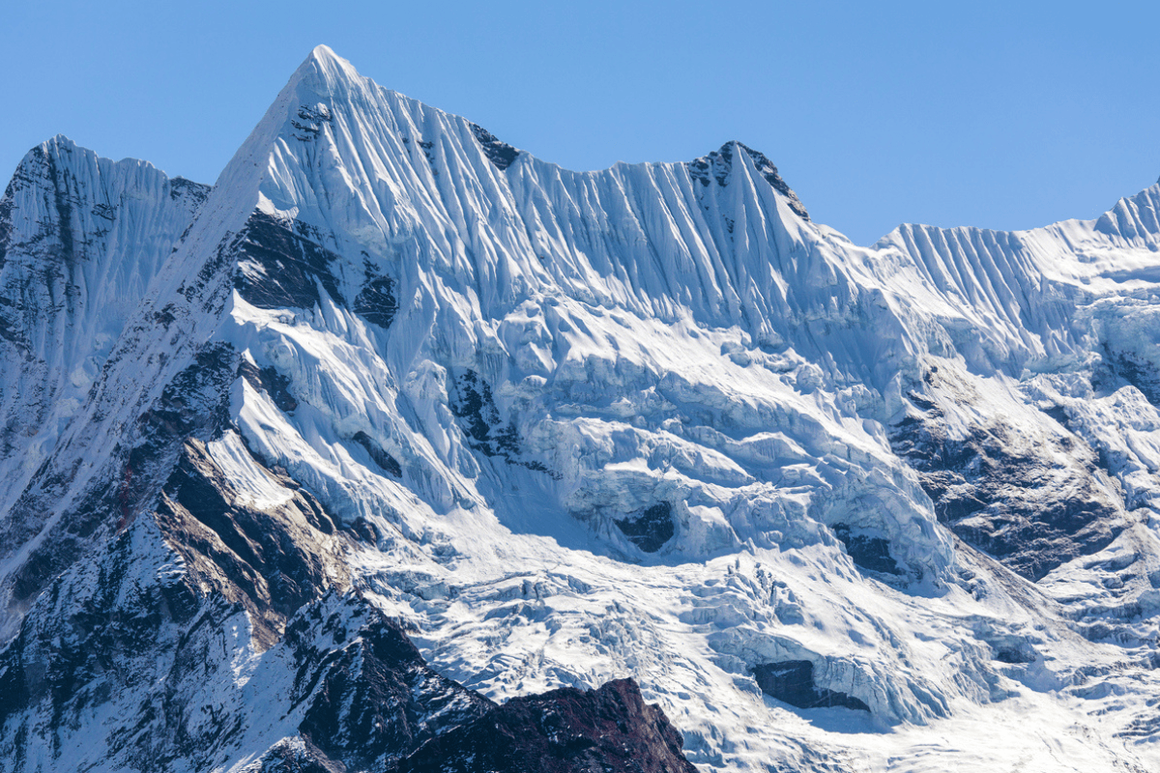
The Khumbu Glacier in Nepal is a spectacular sight, forming part of the rugged landscape across the Everest region. It is known for its debris-covered exterior and the Khumbu Icefall: a notorious obstacle for mountaineers.
Avalanches and rockfall from surrounding peaks drop debris onto the ice mass, so in some places, it hardly looks like a glacier at all. This thick layer of debris covering part of the glacier insulates the ice beneath, slowing down its melting rate.
That said, it’s changing in a surprising way. Since the Little Ice Age, starting in the early 14th century, the Khumbu Glacier has lost about a third of its volume but only 6% of its area, because it’s thinning from within rather than shrinking.
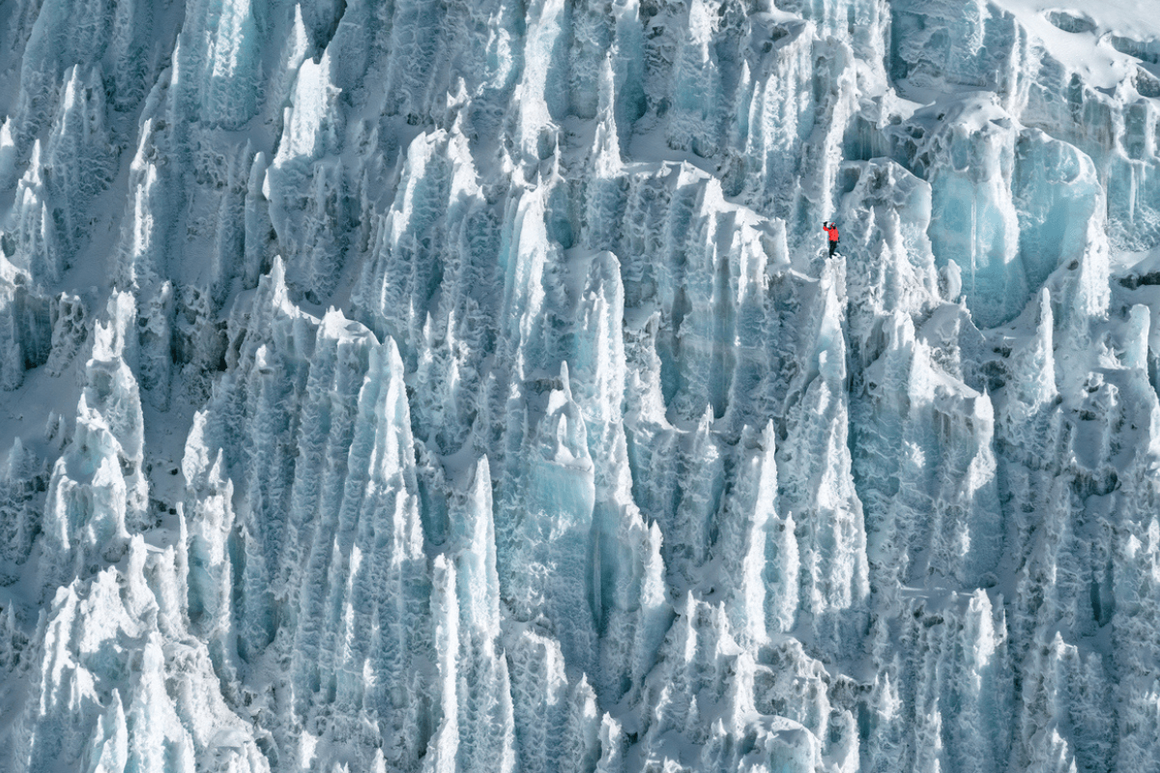
And we can’t cover the features of the glacier without mentioning the Khumbu Icefall, one of the most iconic structures within the mountaineering community. It challenges even the best of climbers due to its ever-shifting towers of ice called seracs.
Culture and ecology
The Khumbu Glacier plays a vital role in the high-altitude ecosystem of the Nepalese Himalayas. It feeds many of the surrounding rivers, including the Dudh Kosi (the river you’ll follow while trekking up from Lukla).
On top of that, the glacier plays a spiritual role for the Sherpa communities that live in the surrounding villages. As their home for over 400 years, they’ve developed a deep knowledge and respect for the glaciers.
Sherpas see the ice formations as sacred entities that need protection. Specifically, the Khumbu Glacier is thought of as a dwelling place for deities who safeguard the valley.
The glacier also supplies water to local villages, including the Khumbu village, so you can see, it’s the backbone of a very complex system.
What is the Khumbu Icefall?
The Khumbu Icefall (sometimes written as Khumbu Ice Fall), is where the glacier begins its descent from the Western Cwm. Spilling over a steep rock step, the ice splinters into a maze of seracs: towering ice blocks that constantly shift.
The Khumbu Icefall starts just above Everest Base Camp, and features a whopping 1,000-metre high drop, which has been fatal for many people. Within the mountaineering community, it’s thought of as one of the most challenging obstacles.
For climbers, there's no avoiding it. The Khumbu Icefall is the only passage on Everest's typical route from Nepal, and expeditions to neighbouring Lhotse and Nuptse use it too. Every spring, a team of specialist Sherpas known as the Icefall Doctors visit the icefall, fixing ropes and ladders across the crevasses, then stay at camp all season to repair the route.
Why is Khumbu Icefall dangerous?
The main reason why the Khumbu Icefall is dangerous is because the ice never stops moving. Crevasses open and close, and seracs (some 30m high) collapse without warning.
There’s also ice cliffs above Khumbu which pose an extra threat. In 2014, ice broke away from Everest’s west flank and landed on the icefall, killing 16 mountain workers. It was the worst single accident on Everest at the time.
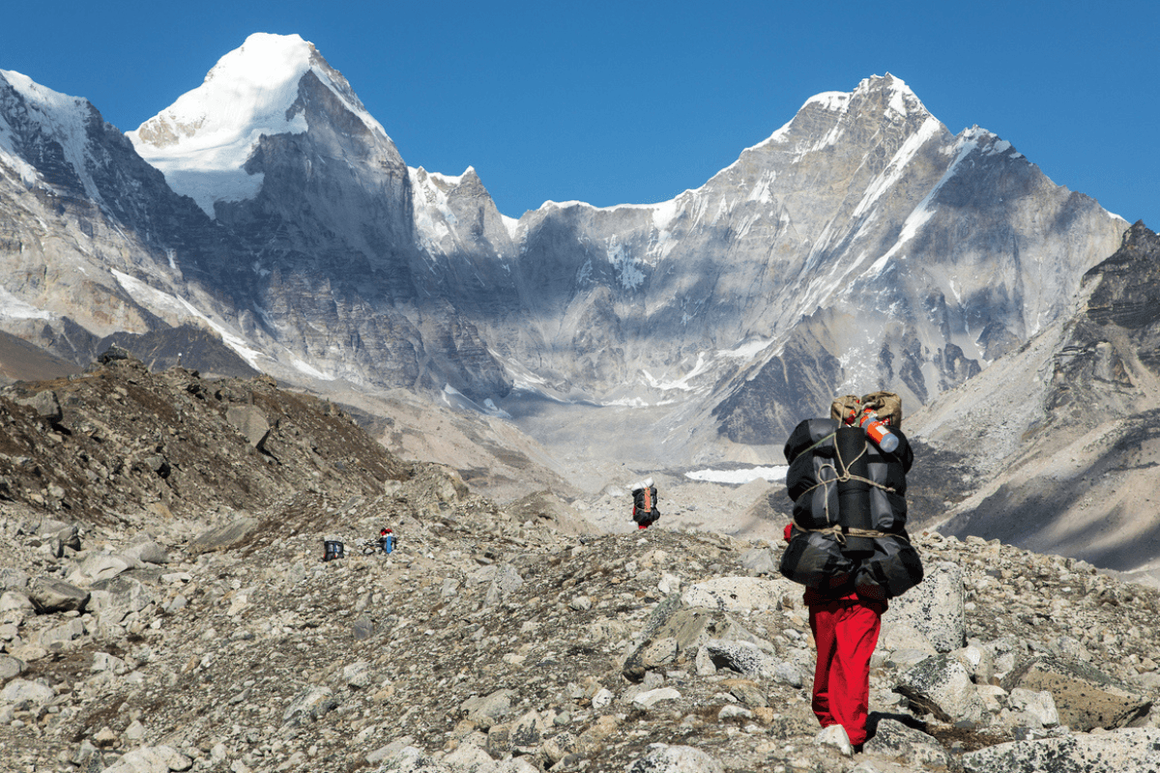
Sherpas carry most of this risk. Roughly 150-300 people pass through each day in season, most of which are Sherpas, carrying loads. The route usually opens in early April.In 2026, it didn’t open until the end of the month due to a serac blocking the route.
Can I go into the Khumbu Icefall?
The Khumbu Icefall is not suitable for trekkers.Only climbers on expeditions to Everest, Lhotse, and Nuptse go through it.
To enter the icefall, climbers need:
- A climbing permit
- Technical skills (experience crossing ladders and fixed ropes)
- Climbing gear (crampons and climbing equipment)
- Weeks of acclimatisation
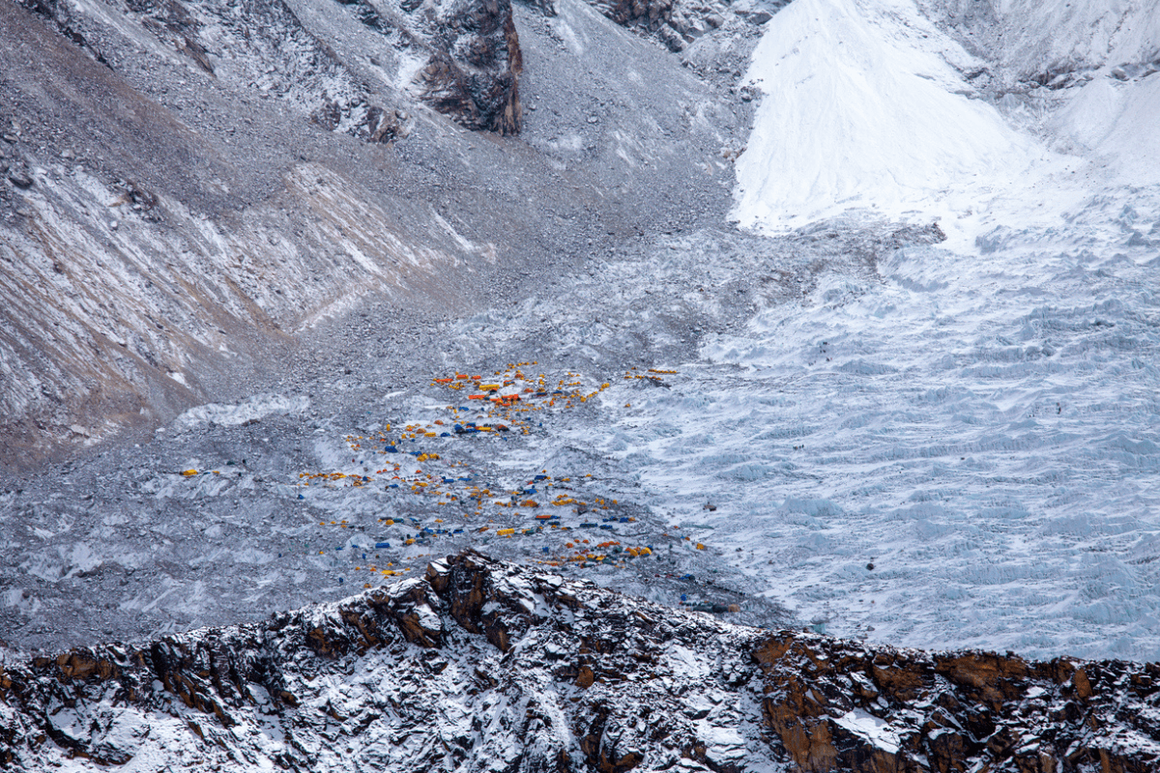
If you’re trekking in this region, you’ll turn around at Everest Base Camp, right at the foot of the icefall. Looking straight up, you’ll see the jumble of seracs and crevasses, and you might even hear the ice cracking, without the risk of setting foot on it.
How can I see the Mount Everest Icefall?
The best way to see the Mount Everest Icefall is on foot, from two places along our Everest Base Camp trek: from Base Camp or from the top of Kala Patthar.
- Everest Base Camp, at 5,364m. You’ll reach camp on day 9 of our itinerary, after following the ice pinnacles and crevasses of the Khumbu Glacier. Here, you’ll stand right at the foot of the icefall.
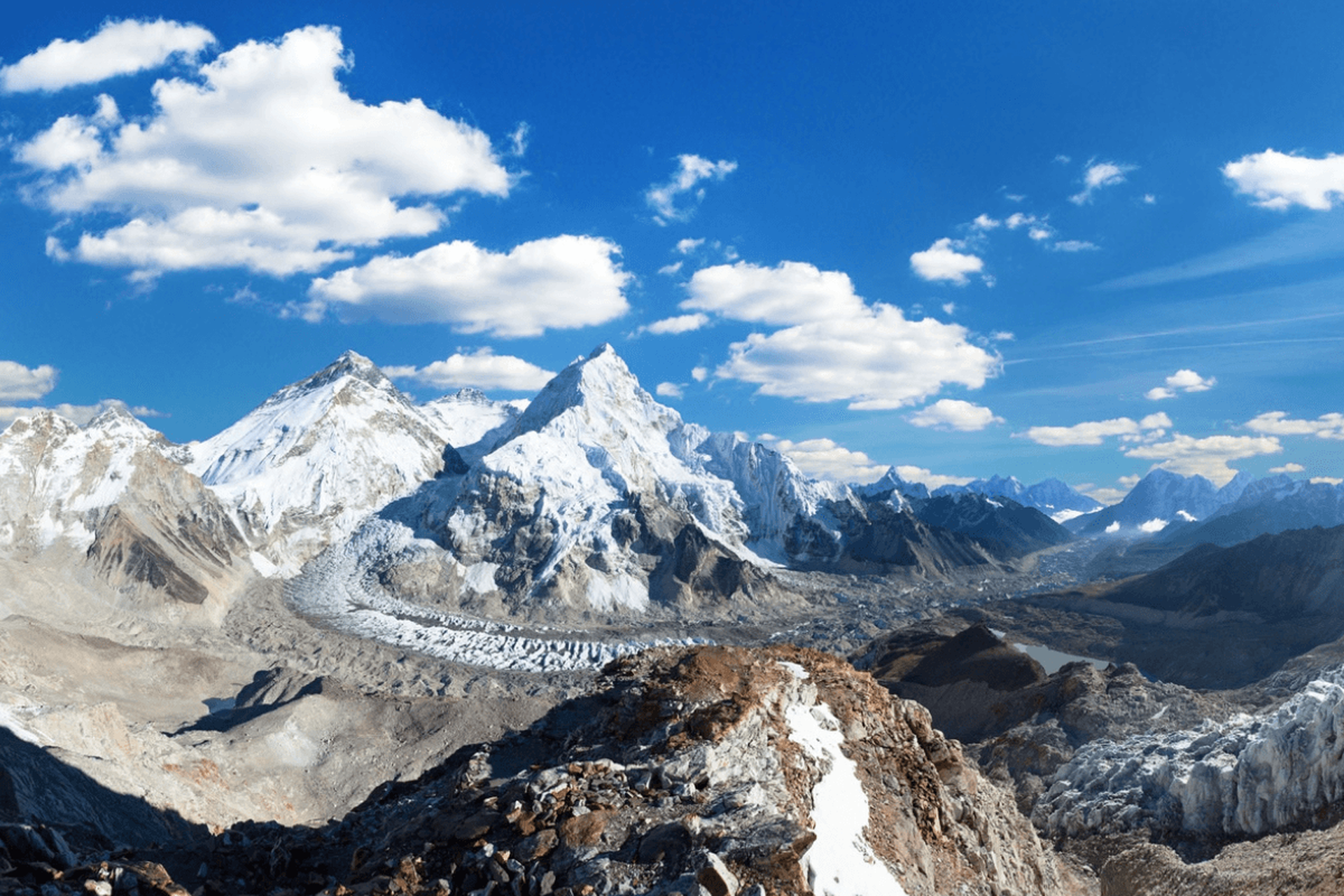
- Kala Patthar, 5,641m. The next morning, we head out before dawn to climb this rocky ridge and discover one of the best viewpoints in the Himalaya. From the top, you can see the face of Everest, the icefall, and the glacier sliding down the valley.
The timing of your visit changes what you’ll see. In spring, Base Camp transforms into a hive of activity as climbers and support teams arrive to summit Everest. In autumn, the expeditions have gone, so Base Camp is a slightly quieter experience.
If you’re not sure when to go, check out our month-by-month guide to Everest Base Camp.
Trekking the Khumbu valley
The Khumbu valley sits within the Sagarmatha National Park, where over 6,000 Sherpas live across more than 20 villages. Sherpas have farmed and traded here for roughly four centuries, all while looking after the forests, fauna, and flora.
On the Everest Base Camp trek, you spend a week walking through the valley before reaching the Khumbu Glacier. The trail climbs from Lukla to Namche Bazaar, which is the main trading village in the Khumbu.
Then, the route continues past Tengboche, where you see the region's largest monastery. Next, we pass through Pangboche, which promises spectacular views of Ama Dablam, before reaching Pheriche.
We build in two acclimatisation days along the way, at Namche and Pheriche, to help prevent altitude sickness as we move higher up.
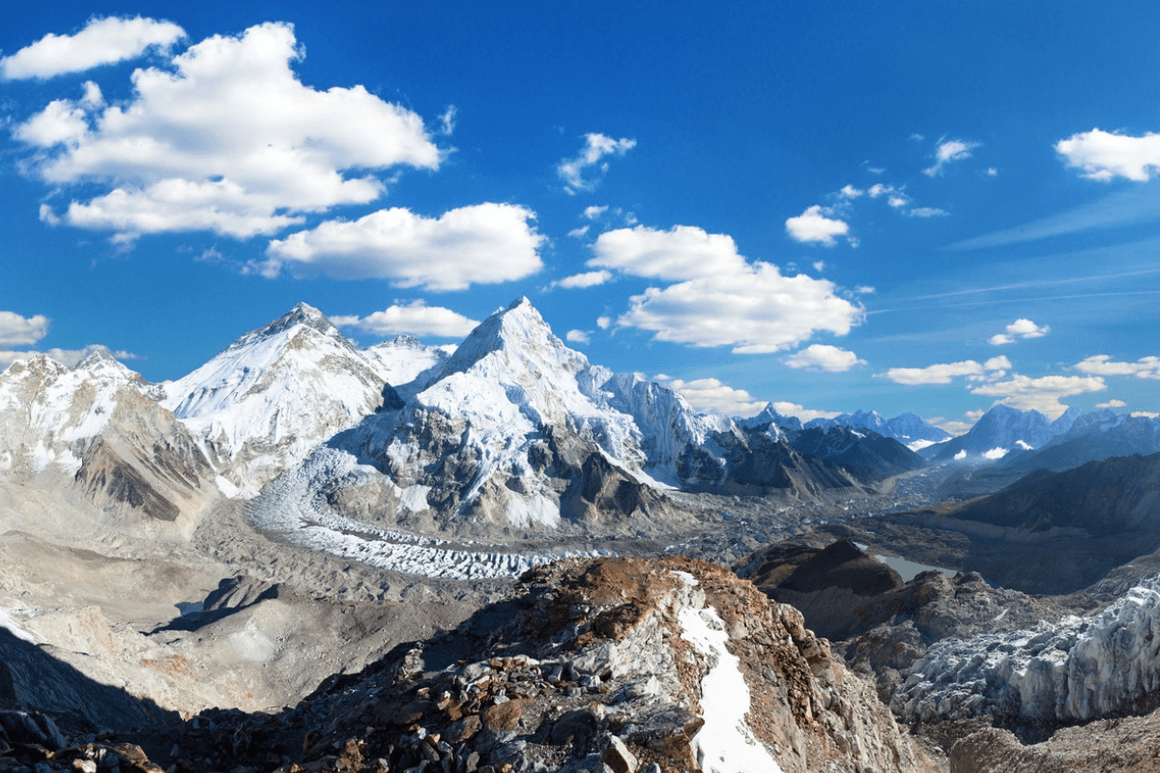
Reaching the glacier from Dughla (day 8)
Day 8 of our Everest Base Camp trip offers your first glimpse of the Khumbu Glacier. In total, this day gains 678m over 4-5 hours. Here are the route details:
- From Pheriche, follow a valley beneath the peaks of Cholatse and Tawache
- Climb to Dughla, the perfect place to stop for lunch
- Travel up through the glacier’s terminal moraine
- Reach the stone cairns, each one a memorial to a Sherpa or climber who lost their life on Everest
- Continue along the edge of the glacier to Lobuche, at 4,930m
Along the glacier to Gorak Shep (day 9)
Day 9 is the longest of the trek, taking roughly 8-9 hours.The Khumbu Glacier is beside you through all of it. Here are the route details:
- Leave Lobuche and trek along beside the Khumbu Glacier
- Take in views of the surrounding peaks as the path climbs to cross a tributary glacier
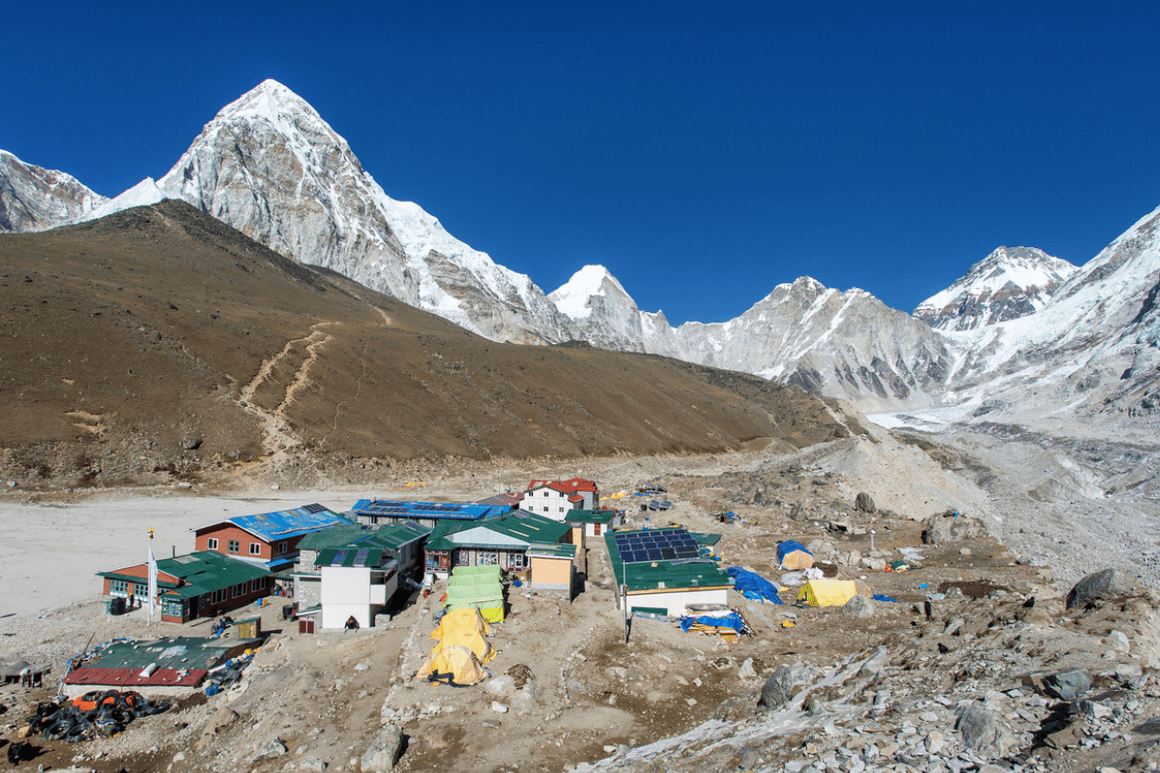
- Reach Gorak Shep, the last settlement before Base Camp, before setting off on the final stretch of the trek
What is the Khumbu cough?
The Khumbu cough is a dry, hacking cough that affects climbers, porters, and trekkers on the upper trails. It’s named after the Khumbu, but you can actually pick it up anywhere in the high Himalaya.
One of Nepal's leading altitude doctors describes the cough as the most common medical problem in the mountains. Research has found that the cough affects 22-42% of people at 4,200-4,900m in the Everest region.
What causes the Khumbu cough?
Doctors and scientists say that the cause of the Khumbu cough is inhaling cold, dry air through the mouth. However, studies show that other factors must be at play, since coughing still persists at altitude in controlled conditions.
The same research suggests that low oxygen and changes in the body’s cough reflex at altitude are also to blame. Because of this, there isn’t a sure-fire way to avoid getting the cough, or to cure it if you do.
However, the following things help to ease the cough:
- Drink plenty of fluids
- Suck on throat lozenges
- Wear a buff over your mouth and nose
Recommended reading: Everest Base Camp packing list: the complete guide.
Always tell your guide if you develop a cough. Breathlessness at rest or a cough that turns wet can be early signs of high altitude pulmonary oedema (HAPE). Check out our guide to find out how to prevent and manage altitude sickness.
See the Khumbu Glacier with Kandoo
You don’t need to be a climber to experience the wonder of the Khumbu Glacier up close. During our 15-day Everest Base Camp trek, you climb through its terminal moraine, travel beside it to Base Camp, and behold its full length from Kala Patthar. You also get to see the dramatic icefall and Mount Everest rising behind it.
Our trip includes dedicated acclimatisation days, expert local guides, accommodation, domestic flights, and more. If you have any questions about the route or your suitability for it, get in touch with our friendly team who are happy to help.