Aconcagua Summit
19-day adventure

Climb Aconcagua

Argentina
  • Summits
  1. Homepage
  2. Argentina
  3. Climb Aconcagua

Code: ARNR

19 days
Tough

Contact
our UK team
Kandoo's view

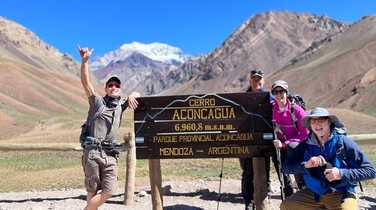
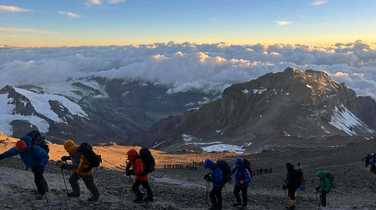
At 6961m, Aconcagua is the highest mountain in the world outside the Himalaya and is in the famed “Seven Summits”. Located in the north of Argentina it forms part of the Andes. With a very short climbing season and limited numbers climbing each season, Aconcagua only supports a small number of climbing operators. We have partnered with the very best local operator who provide support for almost all of the adventure climbing companies worldwide. Their expertise and health and safety procedures are second to none so you are in the safest hands possible.

We added Aconcagua to our program as it is a popular choice for climbers who have summited Kilimanjaro. It is however a significant step up in difficulty and shouldn’t be taken lightly, so training is vital. Aconcagua is not a technically demanding peak if you are in really good condition. The difficulties of the ascent are, as always, those of trekking at extreme altitude. The altitude, weather and environment conspire to make this an adventure that will truly test you.

Trip highlights

  • Reach the top of one of the Seven Summits of the world
  • No technical climbing skills required
  • Extra acclimatisation days for the best chance of success
  • Trip fully carbon offset as standard

Experiences

  • Summits
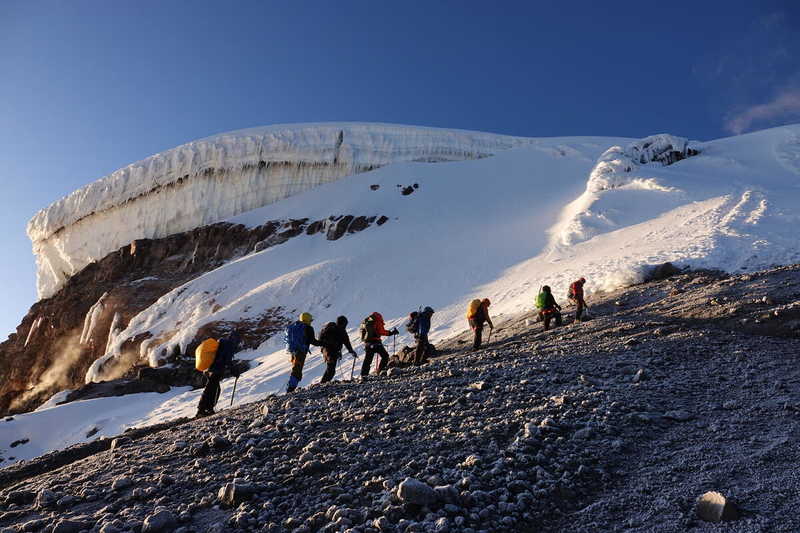
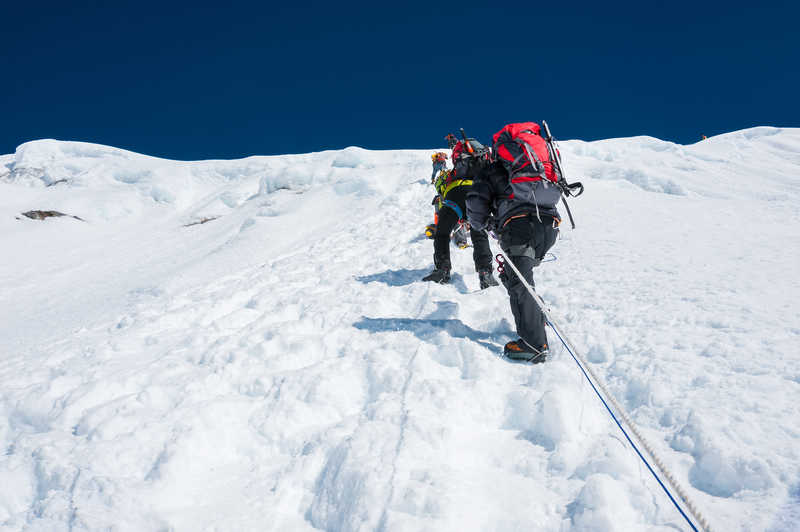
    Climbers on the summit of Island Peak
    Head to the top of a real mountain summit for a real sense of achievement

Gallery

Itinerary

  • Day 1

    Arrival

    On your arrival in Mendoza, you will be met by one of our team and taken to your hotel. This afternoon, there will be a pre-climb briefing at 3pm. This will run through the expedition program and specifics and will be followed by a thorough equipment check. Our team can help with any equipment rental and final packing queries and formalities. After we are finished, you have the evening to explore the bustling city of Mendoza, the centre of wine-making in Argentina. With wide tree lined streets and plazas, the city is easily explored on foot with plenty of shops and restaurants.

    • Accomodation: Hotel
  • Day 2

    Mendoza to Puente del Inca

    This morning, we will visit the logistics base in central Mendoza, where you get the chance to take a peek behind the scenes of our operation and meet some more of the team. Afterwards, we will make a stop for a mountain lunch and then continue to Puente del Inca where we will start the acclimatization process. We will spend the night at the historic Compañía de Cazadores, and will have time today to visit the museum and learn about Aconcagua’s climbing history. Rooms are shared and sleep 4-6 people.

    • Transport: Private transfer
    • Max. altitude: 2575 m
    • Accomodation: Hotel
    • Meals included: Breakfast / Lunch / Dinner
  • Day 3

    Puente del Inca to Confluencia

    On reaching the Park entrance, we will present our climbing permits and your guide will receive updated recommendations from the Park Rangers before we start our hike to Confluencia Camp. This is a short hike, carrying only your daypacks. When we arrive, we will set up our tents for the night.

    • Hiking time: 3 - 4 hours
    • Ascent: 575 m
    • Max. altitude: 3300 m
    • Accomodation: Camping
    • Meals included: Breakfast / Lunch / Dinner
  • See more

Trip information

Difficulty

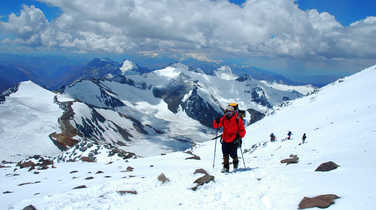
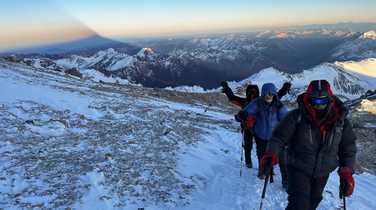
There is no technical climbing on the "Normal Route" up Aconcagua. You need experience walking in crampons and with the use of an ice axe but nothing more. However, the sheer height of Aconcagua, along with extremely cold temperatures on the mountain, make it a challenging ascent, even for accomplished mountaineers. Since the summit is close to 7,000m, climbers have to spend sustained periods camping in tough conditions at high altitude - this can be mentally and physically draining. Climbers also have to help take kit to the high base camp which involves carrying more than your day pack. Moreover, weather conditions high up on the mountain can change rapidly, with extremely cold temperatures as low as -30°C not uncommon. Aconcagua is a big step up from Kilimanjaro and we advise having completed other high-altitude adventures before going for this one. That being said, summiting Aconcagua via the Normal Route is very attainable for those with the right attitude, who have trained well and are mentally prepared for the rigours of high altitude trekking.


Looking for training advice or a training plan in preparation for this trip? We'd recommend checking out Kate Sielmann and her coaching programs that are specific to mountaineering and trekking training. Find more details here.

Food & drink

Before and after your climb meals can be taken at our hotel or in one of the many restaurants nearby in Mendoza. There will be a selection of main courses to choose from.

During your climb you will be accompanied by a team of porters and cooks who will provide heart and delicious meals each day. Eating well and maintaining a healthy appetite is essential for success on the mountain so we place great importance on providing excellent food. Argentine cuisine consists mainly of meat. More precisely, beef.  Argentina is renowned for the quality of its steak and it is a meat lovers paradise.  You will find grilled meats available everywhere including tripe, intestines and even udders.  Meat aside, the cuisine is a mix of Spanish, native American and Italian influences so vegetarians can always fall back on dishes like gnocchi, pasta and pizza.  In the large towns and cities, you will find all dietary requirements are catered for.  You may also have the opportunity to sample “Mate”, a Paraguayan tea made from a variety of holly and typical drank from a “bombilla”.

On the trek we provide water to fill your bottles and flask but you must bring your own filtration system / purification tablets. It will be possible to refill your bottles at a number of points during the day. We recommend Aqua Mira purification drops. Lightweight Steri-Pen UV water purifiers also work well, but are not work well in extremely cold temperatures. You will need to bring spare batteries for a Steri-Pen. Whatever system you decide to use, please ensure that it will be sufficient for the entire duration of your trip (some systems treat only a very small amount of water). As a general guide, plan to be able to treat 4-6 litres per day. 

Accommodation

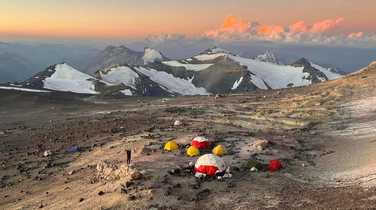
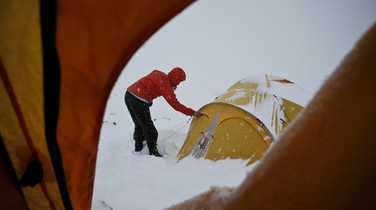
At lower camps, you will stay in large, dorm-style tents with bunk beds that will be shared with other climbers. We use only the very best high-altitude mountain tents to ensure you stay warm, dry and comfortable on your Aconcagua climb.


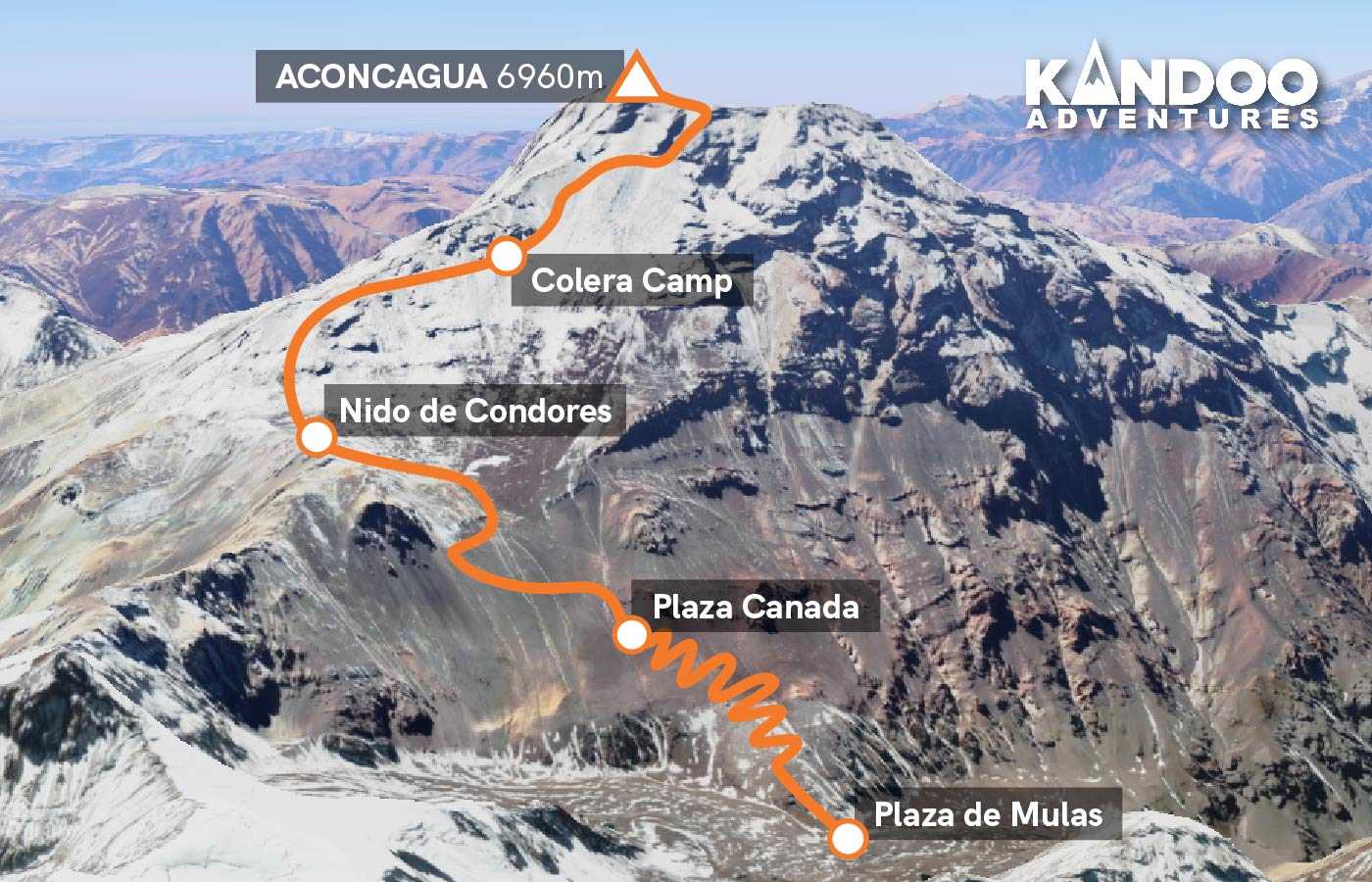
Our base camps at Confluencia, Plaza de Mulas and Plaza Argentina have dining tents, storage tents, clean toilets, electrical charging stations, showers and WiFi. camps have a toilet/washroom tent where you can freshen up after walking in the Aconcagua dust.


Your meals will be taken in a spacious dining tent with tables and chairs, where you will be able to sit comfortably, while you relax and chat to your team-mates and enjoy the wholesome food that our cook has freshly prepared for you. With a full 2 metres of headroom, even the tallest climbers will be able to stretch a bit and move about without hunching over. They are fully waterproof, and regularly withstand the worst weather Aconcagua has to offer. 


At higher camps, you will stay in North Face VE-25 tents, designed to cope with extreme conditions and are spacious but don’t expect to be able to stand up and walk around inside! The dry, dusty conditions on Aconcagua can play havoc with the zips and they can easily jam. Our guides are armed with WD-40 so just ask them for assistance, rather than trying to force the zip.


Hotels before and after your climb will be of 4 star standard. Accommodation is in comfortable twin rooms with private bathrooms. 

Luggage

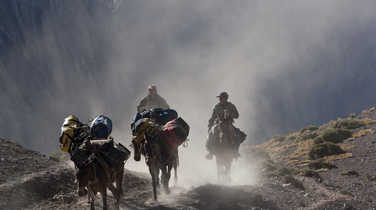
The ideal luggage combination for your Aconcagua climb is 1 large duffle bag (150L) and an expedition backpack (75-105L). Your duffel bag must weigh no more than 30kg as this is the limit the mules can carry. We also recommend checking your baggage allowance with your airline too. 


At the pre-climb briefing, your guide will assist you to pack your bags; one will be filled with gear that you don’t need during the hike up to Plaza de Mulas (items such as insulated summit jacket/trousers, high-altitude boots, crampons, helmet, etc). This will go directly there via mule and will be stored until your arrival. The other bag will contain your equipment for the hike up to Plaza de Mulas. During the hike you will have access to this bag each morning and in the afternoon.


On the hike into Plaza de Mulas, mules carry all of the gear and supplies. You will carry only a day pack with a few items (water, snacks, camera, jacket, sunscreen, etc.) After Plaza de Mulas, you will complete gear carries in which you will be carrying your personal equipment.


On Days 8, 10, 11, 13 and 15 you will carry some or all of your personal equipment. The total weight of this will depend on your equipment and the weight of your bag but you should train to carry up to 20kg. If you do not wish to carry your personal equipment then a personal porter is available to hire for all carry days. Booking a porter early will guarantee the service and also costs less than arranging this service once you are in Argentina. Please ask one of our travel experts for more information.

On the trek all items must be packed inside your main equipment bags. Items should not be attached to the outside, as we are not responsible if items fall off when the bags are being carried by the porters or pack animals. 

Personal porters

Our expeditions include porters to carry all group equipment (tents, cooking equipment, fuel, etc) above Plaza de Mulas. You will be responsible for carrying all of your personal equipment.

Personal porters are also available from Plaza de Mulas upwards on your climb, to carry your personal equipment on carry days from one camp to the next, as this is when the loads are heaviest.


Porters are typically climbers training to become future mountain guides. If you plan on hiring a porter, this is best arranged in advance of your trip so that we can guarantee the service. Also, the cost will be lower. Please ask our team in the UK for more information. 

How do I get there?

You will need to arrive at Mendoza Governor Francisco Gabrielli International Airport on day 1 of your itinerary. The airport code is MDZ.

To reach Mendoza you will need to transit through either São Paulo, Santiago or Panama City. From the UK, British Airways have direct flights to São Paulo and you can then continue to Mendoza with LATAM or Lufthansa have flights from Glasgow, Manchester and Birmingham via Frankfurt to São Paulo then on to Mendoza with LATAM. 

From the US, LATAM have flights via Santiago and COPA offer flights via Panama City from various major airports.

To ensure your baggage allowance stays the same ensure your international ticket reads as being from your departing destination to Mendoza. Split tickets may incur charges on baggage if there is a difference in baggage allowances between the different airlines. 

On arrival, after clearing immigration and collecting your luggage, please look out for a member of our team who will be holding either a "KANDOO" sign or a board displaying your name. 

If you are changing airlines or re-checking your luggage at an airport on route, please ensure you leave a minimum of 3 hours between flights. This will account for any delays on arrival, travel time across airports (this can take longer than you think) and time taken to re-check baggage.

Travelling Responsibly

Here at Kandoo, we like to support our guests to make their travel more sustainable. As of 2025, we are offsetting the carbon on all of our trips from arrival in destination to dropping you back off at the airport. As we don't include flight travel in our trips these aren't included in our offsetting calculations, so we are providing you with the calculator below for you to do this yourselves. 

Pre-trek briefing

It is a requirement of joining any of our climbs that you attend a pre-climb briefing the day before the climb begins. This gives our guide team the opportunity to review the plans for the climb with you, make sure you have all the right gear, arrange any equipment rental and answer any questions you may have. Please ensure that you bring your passport and insurance documents to the briefing, as your guide will need to collate the details required for any insurance claims. We will also carry out a pre-climb health check which must be completed before you trek to high altitude.

Your pre-climb briefing will be held at 3pm on Day One. Your lead guide will explain how to pack your two separate duffel bags as one will go to Confluencia and one to go to Plaza de Mulas (your expedition pack can go straight to Plaza de Mulas as you won’t need it until then). We strongly advise arriving in plenty of time for the briefing or even arriving a day earlier to give yourself plenty of time to get everything in order. However, if you arrive later than 3pm on Day One, we can adjust the time of your briefing so that it works for you.

Your summit climb

Your summit push will be a gruellingly long day, and you may wish to consider including the following options to your climb: 
  • Summit day porters are available for assistance with personal daypacks on your summit push from Colera Camp.  

Supplemental oxygen
All our climbs are equipped with emergency oxygen. If this is administered, you will need to descend. Safety is our number one priority and your guide's word is final.

Budget & change

The Argentinian Peso (ARS) is the local currency of Argentina. Your currency (all major ones like US Dollars, Sterling Pounds and Euros) and traveller’s cheques can be exchanged at Mendoza Airport, banks and hotels. Most money exchange offices prefer $100 bills in good condition and smaller bills are harder to exchange.


It is advisable to bring some cash for the trip. ATM machines are not always reliable or might have a low daily withdrawal limit. Other miscellaneous expenses in Mendoza may also require cash payments (certain restaurants, tips, rental shops etc.) Once on the mountain, you will be able to pay for additional items (e.g. extra porters, beer and wine) using most major credit cards. Please be aware that there is a 3% processing fee when using a credit card. Visa, Mastercard and AmEx are all accepted.


In Mendoza expect to pay $60 for a meal for two in a mid range restaurant and using public transport comes in at around $0.20 for a one-way ticket. If you prefer to travel by taxi, starting price is about $1.60. For every km after this you will then pay $1.50. Our recommended guidance for spending budget in Argentina would be between $50-100 on top of your tips, give you ample souvenir spending money. 

Tips

Tips are not included in the expedition price and our guides and support staff are paid fairly and have good working conditions. We consider tips a personal expression of appreciation for the service received and the decision to tip is entirely up to you. For your guides, groups usually collect an amount they consider appropriate and give it to the lead guide who will distribute it among the guiding team. A suggested total amount for the guide team is around $500 per guide (collected by the entire group).

If you would also like to tip the camp staff, drivers, muleteers or porters, this is done separately. Usually between $10 - $30 per staff member is customary.

Formalities & health

Passport

As soon as possible after booking your tour, please provide Kandoo Adventures with your passport details (first name, last name, date of birth, passport number, issue date, expiry date) along with a photocopy of the photo page. We need this information in order to book your domestic flights (where applicable) and hotels.

Your passport must be valid for 6 months after your departure date.

Visa

United States and UK passport holders do not require a visa to enter Argentina. On arrival you will be granted a maximum 90 day stay in the country. The same applies in Chile.

This information may be subject to change, without notice, by the local authorities. It is your responsibility to check the latest travel requirements and information before departure.

Vaccinations

The World Health Organisation recommend the following vaccinations for travel to Argentina:

Tetanus
Hepatitis A
Hepatitis B
Diphtheria
Typhoid
Yellow Fever

It is your responsibility to check the latest health information before travelling.

Insurance

Before you can join any Kandoo Adventures trek, you will need to insure yourself against accident, injury, and illness.

Your insurance must cover the cost of helicopter evacuation and repatriation if necessary. Make sure your insurer knows of your travel plans, and verify that your policy fully covers your trek, climb, and any other activities you will participate in. Specifically, for all our adventures in Patagonia, you need to be covered for trekking above 2000m. If you are climbing Aconcagua, you need to be covered for climbing up to 7000m. It is your responsibility to ensure that you are fully and adequately insured for the duration of your trip. Please ensure that all activities, excursions and destinations in your itinerary are included in your travel insurance policy, in addition to your regular cover for cancellation and medical expenses.

We ask that you keep a copy of your policy summary (containing policy number and the emergency contact number for your insurer) in your day sack at all times, so that we can access this information should we need to contact the insurer on your behalf. You will also need to bring details of your insurance cover to the pre-trek briefing.

Make sure to choose the correct policy for the altitude you are trekking to. Be sure to read the small print carefully for any policy you are considering - different policies provide different levels of cover, so make sure you understand what is and isn't included in your policy.

Health

Altitude Sickness

Altitude sickness, also known as Acute Mountain Sickness (AMS) or hypobaropathy, is an illness caused by exposure to low air pressure, especially low partial pressure of oxygen, which many climbers experience at high altitudes. AMS is caused by exerting yourself at high altitudes, especially if you have not been properly acclimatised. It is most common at altitudes above 2400m. Our routes have been designed to aid your acclimatisation wherever possible, but the following will also help your body adjust:

Slow and steady. You need to keep your respiration rate low enough to maintain a normal conversation. If you are panting or breathing hard, you must slow down. There is no pressure on you to keep up with other members of your group.

Drink much more water than you think you need. Proper hydration helps acclimatisation dramatically. You need to drink at least three litres each day.

Diamox

There has been a lot of research on Diamox that shows is that it has been reasonably well proven to be helpful in avoiding AMS by speeding up the acclimatisation process. In the UK it is a prescription drug which must be prescribed by a doctor, but some doctors are reluctant to prescribe it. The concern is that by taking Diamox, people believe that they are immune from AMS and can ignore the symptoms. In reality, although Diamox can help prevent the symptoms, should symptoms still develop it means that you are not acclimatising and you have to take notice. Diamox is taken before you start the trek to prevent altitude sickness, not once symptoms have developed.

Malaria

There is no risk of malaria in any of the regions of Argentina we operate in. However, malaria is present in some parts of Argentina so if you intend to go travelling before or after your tour, please check the specific health risks for the areas you will be visiting.

Dehydration

You can easily become dehydrated at high altitudes. The lower air pressure forces you to breathe more quickly and deeply, and you lose a lot of water through your lungs. You will also be exerting yourself, and sweating, and may even suffer from diarrhoea. As a result, you will have to drink much more water than you normally would and you should drink at least 3 litres of fluids every day while trekking. Even when you do not feel thirsty you have to drink this amount as a minimum, preferably more. Stay on the look-out for signs of dehydration in yourself and your fellow trekkers. The most common symptoms include thirst, dry lips, nose or mouth, headache and feeling fatigued or lethargic.

Medication

All climbers should speak with a doctor in plenty of time before this climb and discuss the altitude you will be climbing to and how it may affect you. Our partner company ask that you bring Pepto Bismol, antibiotics such as Ciprofloxacin, Metronidazole and Azithromycin, Diamox and standard extra strength painkillers.   

Equipment & clothing

Clothing to bring


HEADGEAR
  • Buff x 2
  • Neck gaiter or scarf (separate to the 2 buffs) 
  • Sun hat
  • Glacier glasses - must provide full coverage of nose and eyes
  • Balaclava (x2) - one heavyweight and one lightweight that can be layered together
  • Warm hat that covers head and ears well
  • Ski goggles

UPPER BODY
  • 2 thermal base layers - 2 or 3 long-sleeved base layers. Merino or synthetic
  • Mid layer - Light weight, form-fitting fleece to be worn over base layers. Hoods optional but recommended for colder temperatures
  • Lightweight insulated jacket
  • Softshell jacket – must fit well over mid layer and base layer
  • Hardshell outer jacket – must fit over several layers and hood must fit over helmet
  • Expedition Parka – 8000m rated, expedition ready parka
  • T-shirts – to wear in town and trek into basecamp

LEGS
  • Thermal underwear – 2-3 pairs in merino or technical fabric and athletic-fit
  • Thermal base layer leggings - 2 pairs, non-cotton
  • Insulated trousers – synthetic insulated trouser with full-length side-zips (ski-pants are not appropriate)
  • Soft shell trousers - non-insulated and can be worn with / without base layers under (zip-off trousers are too lightweight)
  • Trekking trousers – Lightweight and breathable. Zip-off trousers work well
  • Hard shell trousers – fully waterproof and must be able to be put on / taken off whilst wearing your boots

HANDS
  • Liner gloves - 2 pairs
  • Softshell gloves - midweight, lightly insulated, leather palm preferred
  • Insulated shell gloves with insulated, removeable liners
  • Expedition mittens 

FEET
  • Trekking boots – mid weight with good ankle support 
  • Socks – lightweight liner socks (3 pairs) 
  • Socks – medium to heavy hiking socks (4 pairs) 
  • High-Altitude Double Boot (must separate have high-altitude liner) 
  • Gaiters – full-sized (not needed if your boots have integrated full length gaiters) 
  • Sport Sandal / Water Shoes – For river crossings (Crocs or Teva-style sandals work well)

CLIMBING GEAR

  • Helmet – lightweight climbing-specific, fits over bare head or hat, must fit headtorch 
  • Trekking poles – Collapsible, 3 section models are best 
  • Crampons– modern steel 12 point crampons with anti-balling plates

BAGS AND SLEEPING GEAR 
  • Expedition climbing pack (70-105L) – volume of bag will depend on gear size 
  • Expedition duffel bag (approx. 150L) – waterproof, to transport all gear 
  • Small duffel (40-50L) – ideal to store items at hotel and as carry-on for flights 
  • Daypack – 35-40L pack useful for trek up to Plaza de Mulas 
  • Inflatable sleeping pad – full-length and advisable to bring valve / patch repair kit 
  • Foam pad – to be used under inflatable pad, ¾ or full length 
  • Sleeping bag – rated to -20°F /-29°C, down fill for weight and bulk with stuff sack

Equipment to bring

    • Head torch and spare batteries - 90-200 lumens, water resistant 
    • Water bottles – 2 or 3 1-litre wide-mouthed bottles made from BPA free plastic (Bladders and metal bottles are NOT suitable) 
    • Water bottle parkas x 2 – fully insulated with zip opening (not neoprene covers) 
    • Mug – insulated with removeable lid, should be spill-resistant 
    • Bowl – should have two-cup capacity. Non-collapsible preferred 
    • Knife – sharp, medium and packable 
    • Spoon and fork – designed for backcountry pursuits 
    • Flask – fully vacuum insulated flask, 1L capacity 
    • Suncream for skin and lips – SPF 30+, enough for trip duration (50ml per week) 
    • Water purification tablets – enough to treat 4-6L per day 
    • Personal first aid kit – painkillers, blister plasters, tape, plasters, anti-septic wipes 
    • Medications – please see separate information 
    • Toiletries – toilet paper, hand sanitizer, toothpaste and brush, wet wipes 
    • Hand and toe warmers (they are different!) – 3 sets of each 
    • Ear plugs – several pairs 
    • Food – energy snacks (approximately 12 items) 
    • Travel adaptor, power pack, charging cables 
    • Travel clothes – for travel and not climbing, including t-shirts and swimsuit 

    OTHER USEFUL ITEMS
    • Pee bottle
    • Booties to wear at camp (down / synthetic)
    • Dry bags
    • Camera (Larger SLR-type cameras may not work well in very cold temperatures)
    • Dust mask 
    • Lightweight windshell / shirt

    Gear rental

    We recognize that the cost of some high altitude equipment is very high and many of our guests will prefer to rent rather than buy gear. It is possible to rent the following equipment in Mendoza. Prices given below are approximate and subject to change. Payment is made locally directly to the supplier. 

    • Climbing Boots - 20 day hire ~ $125 - $200
    • Down Jacket - 20 day hire ~ £105
    • Down Gloves - 20 day hire ~ $46
    • Mattress - 20 day hire ~ $26
    • Crampons - 20 day hire ~ $54
    • 80l Backpack - 20 day hire ~ $60
    • Trekking poles - 20 day hire ~ $33
    • Sleeping Bag - 20 day hire ~ $140

    Dates & prices

    From To Price Availability Book Enquire
    28/11/2026 16/12/2026 £6,199 $7,999
    Available
    Book now Enquire now
    04/12/2026 22/12/2026 £6,199 $7,999
    Available
    Book now Enquire now
    11/12/2026 29/12/2026 £6,199 $7,999
    Available
    Book now Enquire now
    18/12/2026 05/01/2027 £6,199 $7,999
    Available
    Book now Enquire now
    28/12/2026 15/01/2027 £6,199 $7,999
    Available
    Book now Enquire now

    Want to ask us a question or book a private trip? Don't hesitate to contact us!

    Contact us
    Price includes

      • 2 Hotel nights in Mendoza
      • Transfers on your arrival from Mendoza airport
      • All ground transport during the trip
      • Prices are based on 2 people sharing a tent and a twin/ double room
      • Aconcagua park entry fees
      • All the meals during the expedition (except in Mendoza)
      • Qualified English-speaking mountain guides (AAGM and EPGAMT certified), assistant guides, porters and cooks
      • Access to emergency oxygen and first aid kit
      • Permanent VHF radio communication
      • Pre-climb briefing (3pm on Day 1) and gear check
      • Assistance to obtain climbing permits
      • High quality mountain specific tents on the climb
      • Porters to carry group equipment

      Price does not include

        • Airfares and visas
        • Items of a personal nature
        • Climbing permit (usually ~$800)
        • Tips for your crew
        • Departure transfer (can easily be booked locally)
        • Personal Travel insurance to include trekking to 7000m
        • Snacks or personal medicine
        • Meals & drinks not specified
        • Personal porters - available for an additional fee
        • Additional nights in hotel in Mendoza should contingency days not be used

        Options

        • Additional hotel nights in Mendoza before or after your climb