

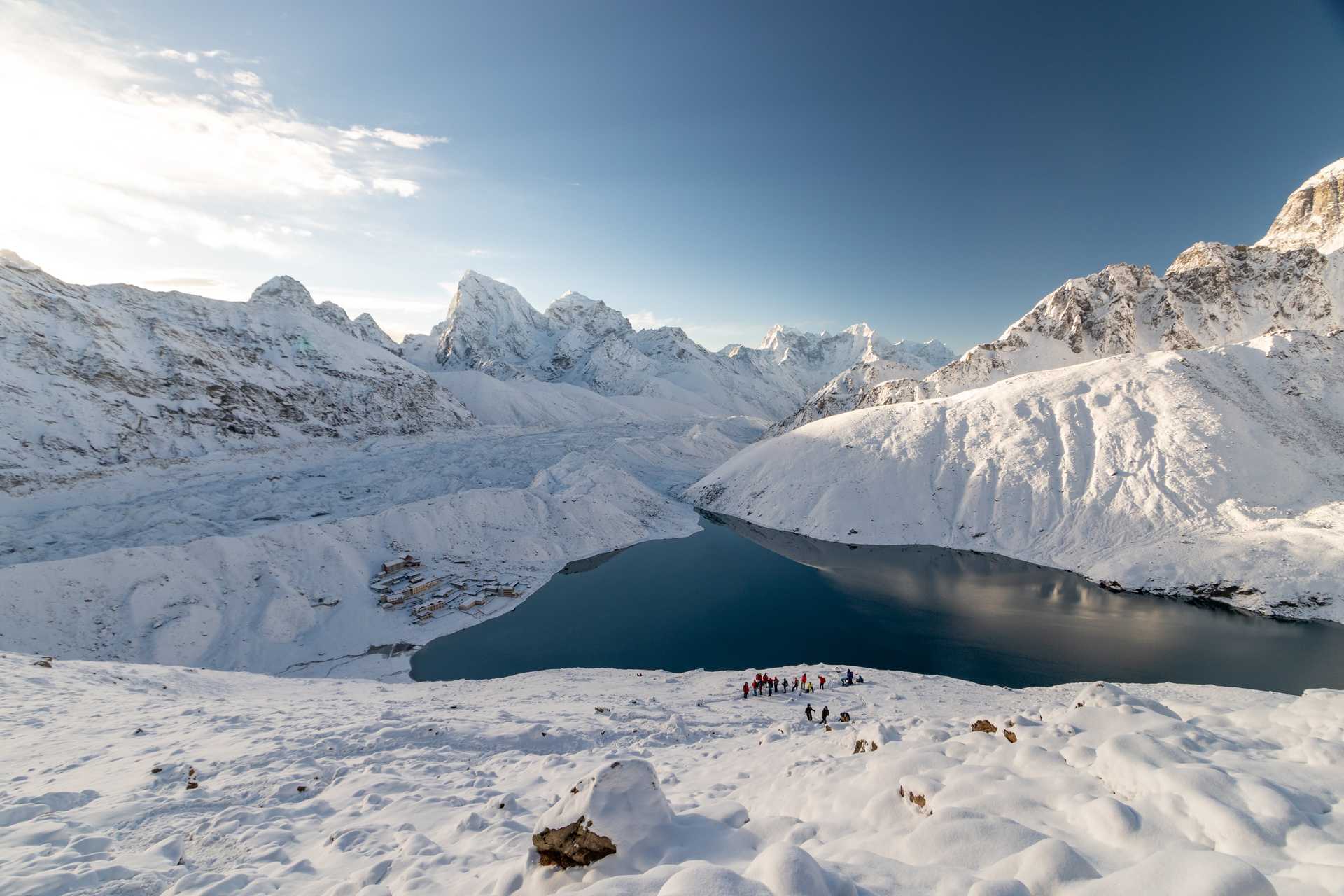
How to choose your Everest Base Camp trek
Trekking to Everest Base Camp is a bucket-list adventure and Nepal's most iconic Himalayan trek. Every year, thousands of trekkers travel to Kathmandu to follow this legendary trail.
But choosing the right Everest Base Camp route isn't always straightforward. The classic EBC trek passes through famous stops like Namche Bazaar and Tengboche, following the historic path of Tenzing Norgay and early Everest expeditions. Meanwhile, alternative routes, including the Gokyo Lakes trek, reveal quieter trails and spectacular Himalayan scenery beyond the crowds.
So, which adventure is right for you? This guide compares the main routes to help you decide.
Everest Base Camp and Gokyo Lakes Trek highlights overview
Use our cheat sheet below to pick your perfect Everest Base Camp trek.
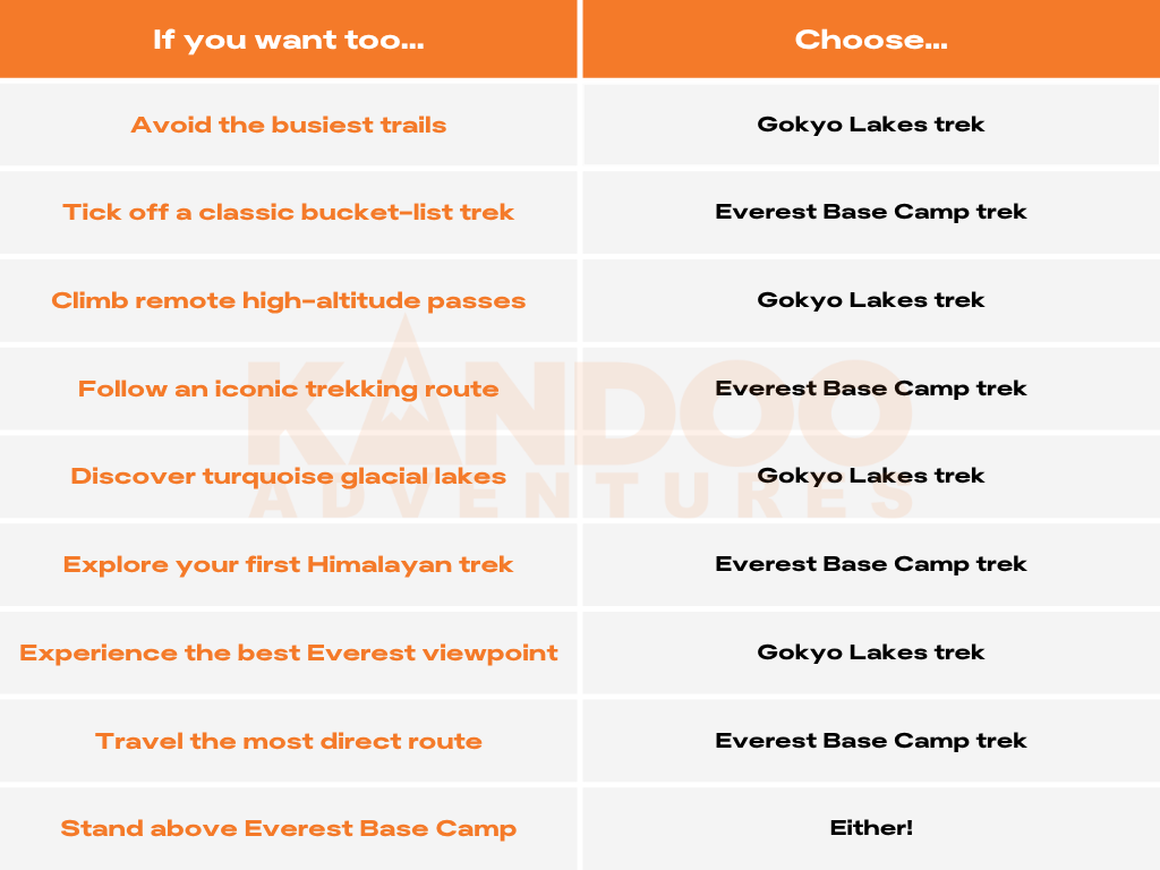
Everest Base Camp and Gokyo Lakes routes overviews
Our overview helps you compare the Everest Base Camp and Gokyo Lakes routes, including their highlights, landscapes and overall trekking experience.
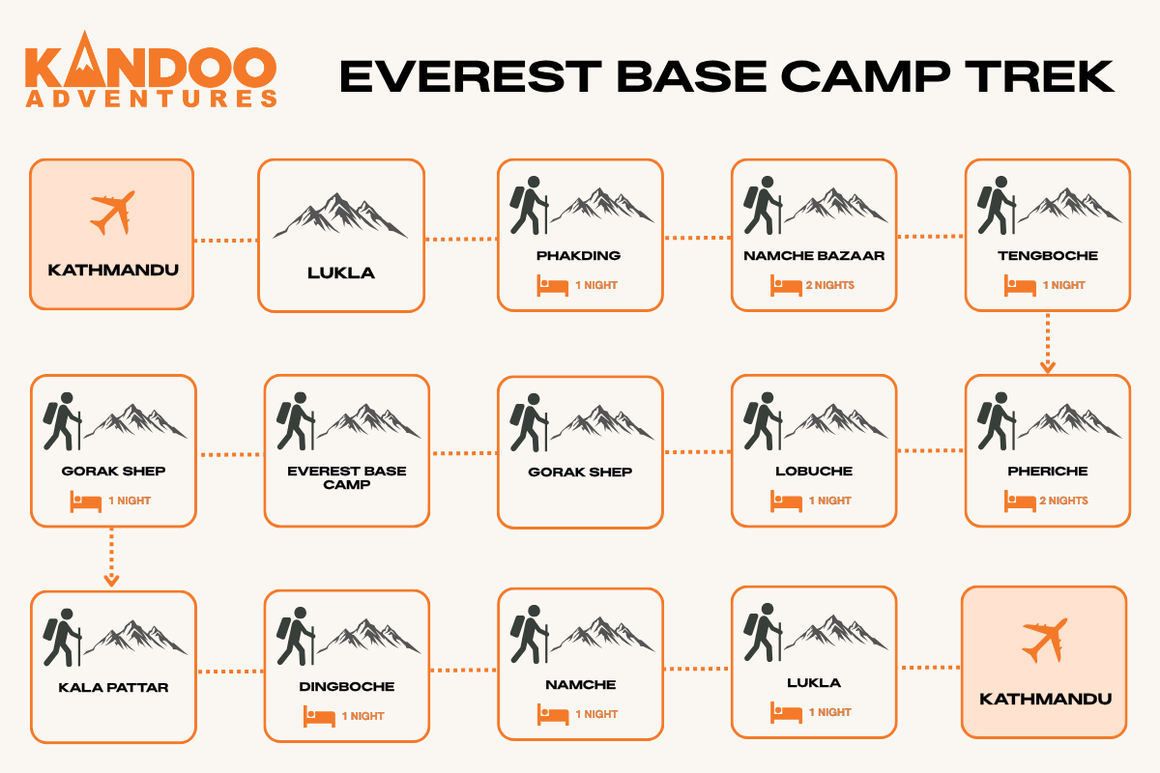
Everest Base Camp Trek
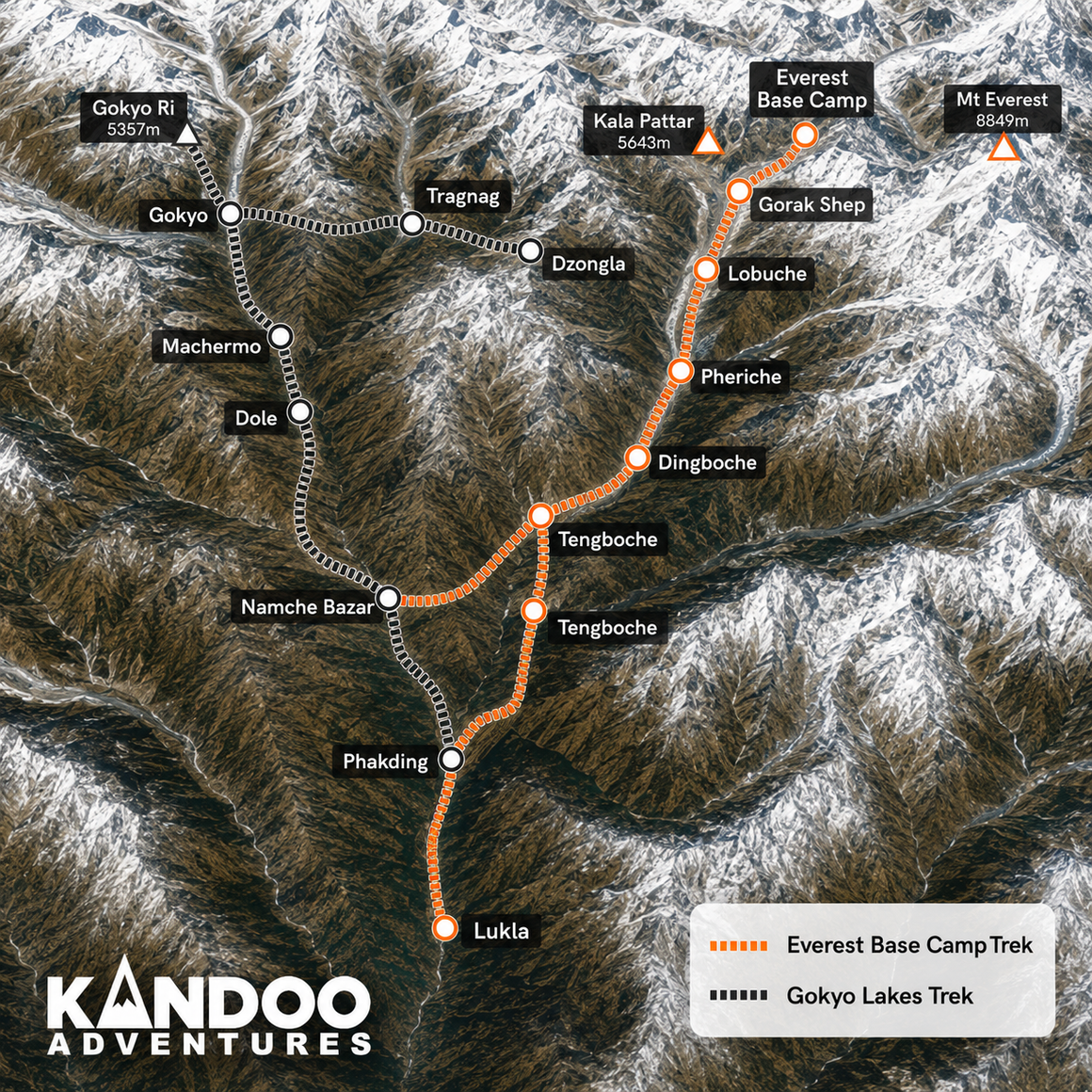
Trek duration: 10-12 days, including acclimatisation + contingency days
Trek distance: 130km/81mi
Maximum altitude: 5,643m
Average walking distance per day: 11km/7mi
Average time walking per day: 7 hours
Accommodation: teahouses
- Begin in Lukla (2,800m) - the gateway to Everest. Most trekkers take the scenic 40-minute flight from Kathmandu, famous for its dramatic mountain runway landing.
- Spend your first night in Phakding, experiencing a traditional teahouse with simple rooms, hearty meals and a chance to swap stories with fellow trekkers.
- Follow the classic Everest trail through Sagarmatha National Park, crossing suspension bridges, passing Sherpa villages like Namche Bazaar and Tengboche, and trekking alongside the Khumbu Glacier.
- Reach Everest Base Camp (5,364m) after several days of gradual acclimatisation, with glimpses of Everest building anticipation as you climb higher.
- Stay at Gorak Shep, then tackle the short but rewarding climb to Kala Pattar for panoramic views of Everest, Base Camp and the Khumbu Icefall. This is one of the trek's biggest highlights.
- Retrace your steps to Lukla, descending the same route at a quicker pace since acclimatisation is no longer needed.
Gokyo Lakes Trek
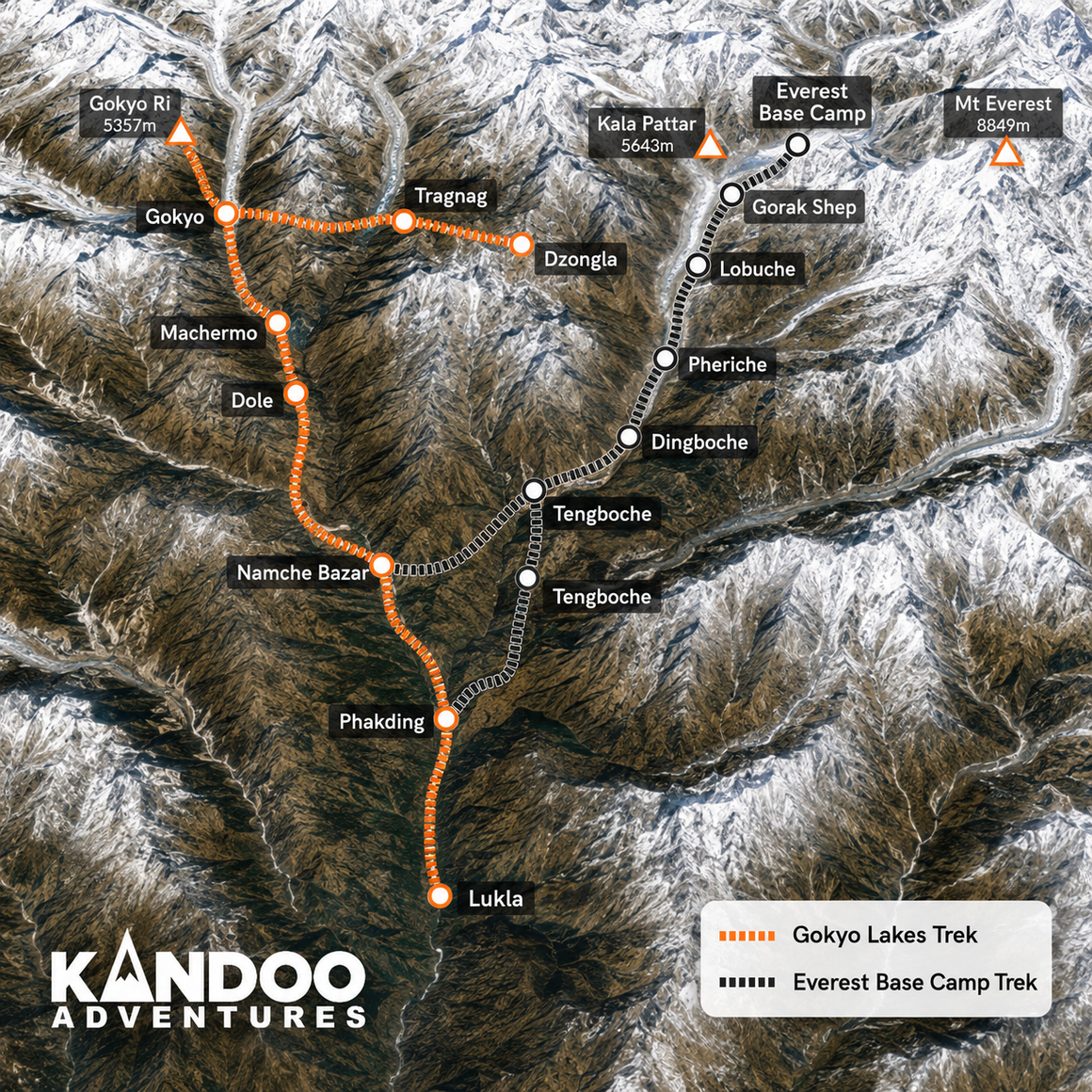
Trek duration: 15 days inc acclimatisation + contingency days
Trek distance: 155km/96mi
Maximum altitude: 5,643m
Average walking distance per day: 10km/6mi
Average time walking per day: 6 hours
Accommodation: teahouses
- Follow the classic Everest Base Camp route from Lukla before branching off after Namche Bazaar to explore the quieter trails of the Gokyo Valley.
- Climb through rhododendron forests and high mountain passes as the route leaves the main trekking trail behind and heads deeper into the Himalayas.
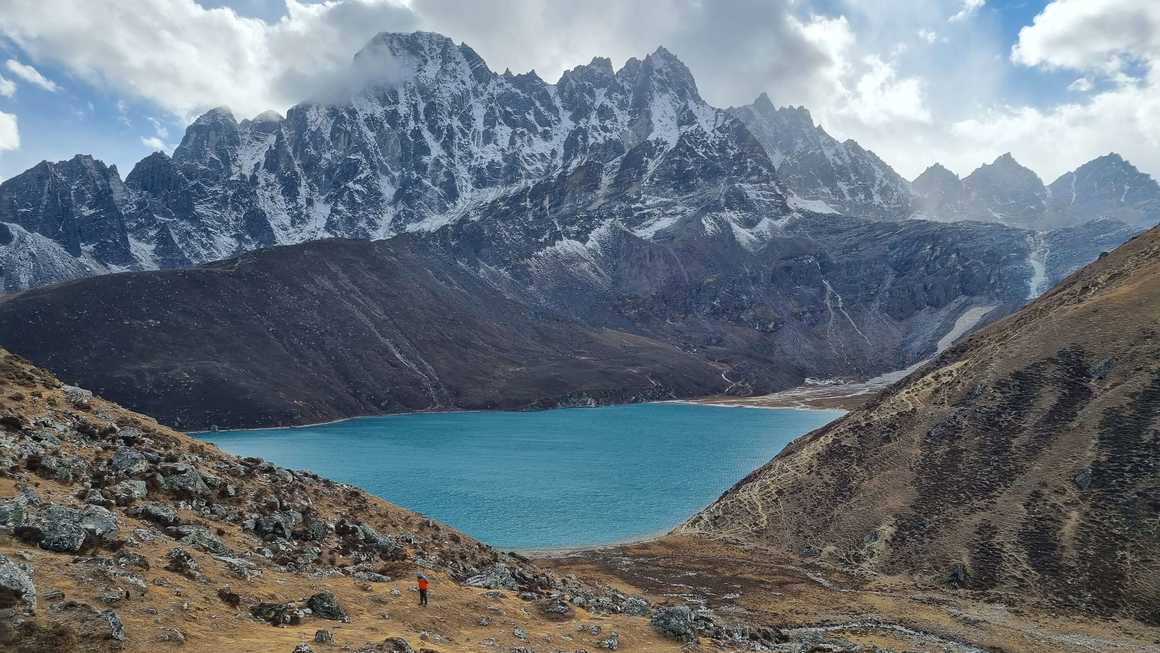
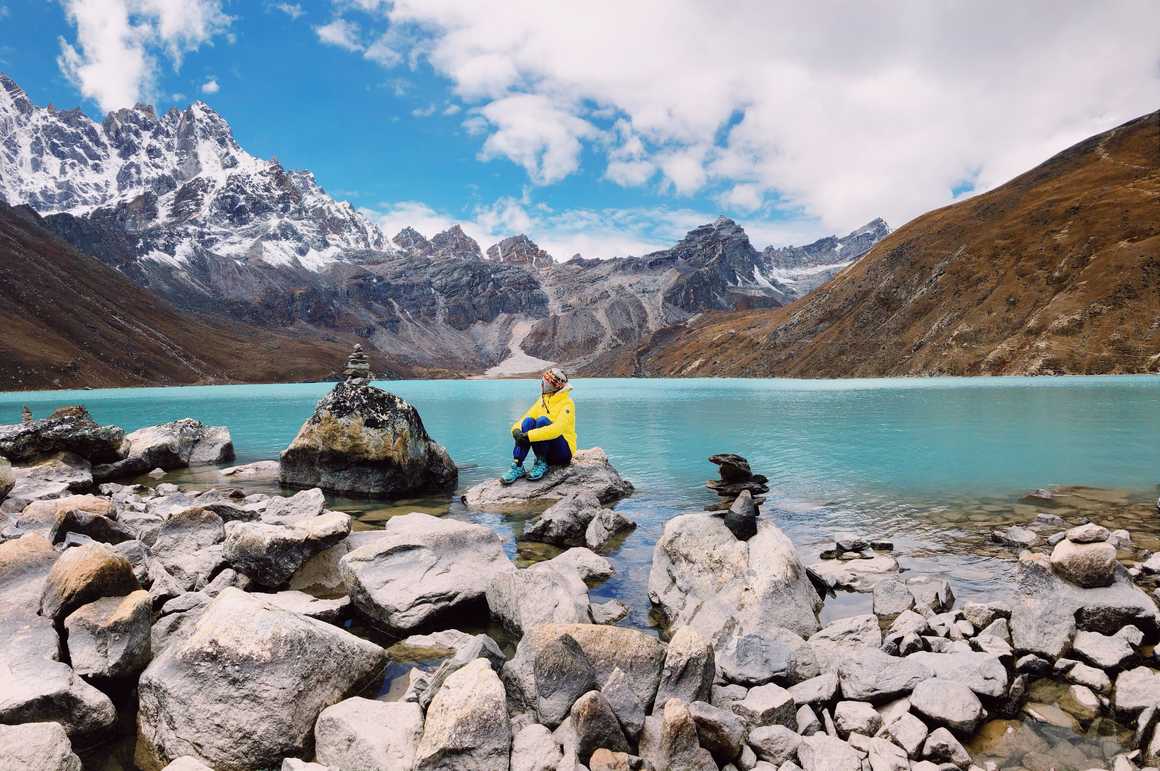
- Discover the spectacular Gokyo Lakes. The vibrant turquoise waters, remote glaciers and sweeping mountain scenery make this one of Nepal's most scenic treks.
- Summit Gokyo Ri (5,357m) for panoramic views of Everest, Lhotse, Cho Oyu, Gyachung Kang and Makalu. Many consider this viewpoint among the finest in the Everest region.
- Enjoy a quieter trekking experience, with fewer hikers, peaceful teahouses and a greater sense of remoteness than the classic Everest Base Camp route.
- Rejoin the main trail near Lobuche, before continuing to Gorak Shep, Everest Base Camp and the iconic viewpoint of Kala Pattar.
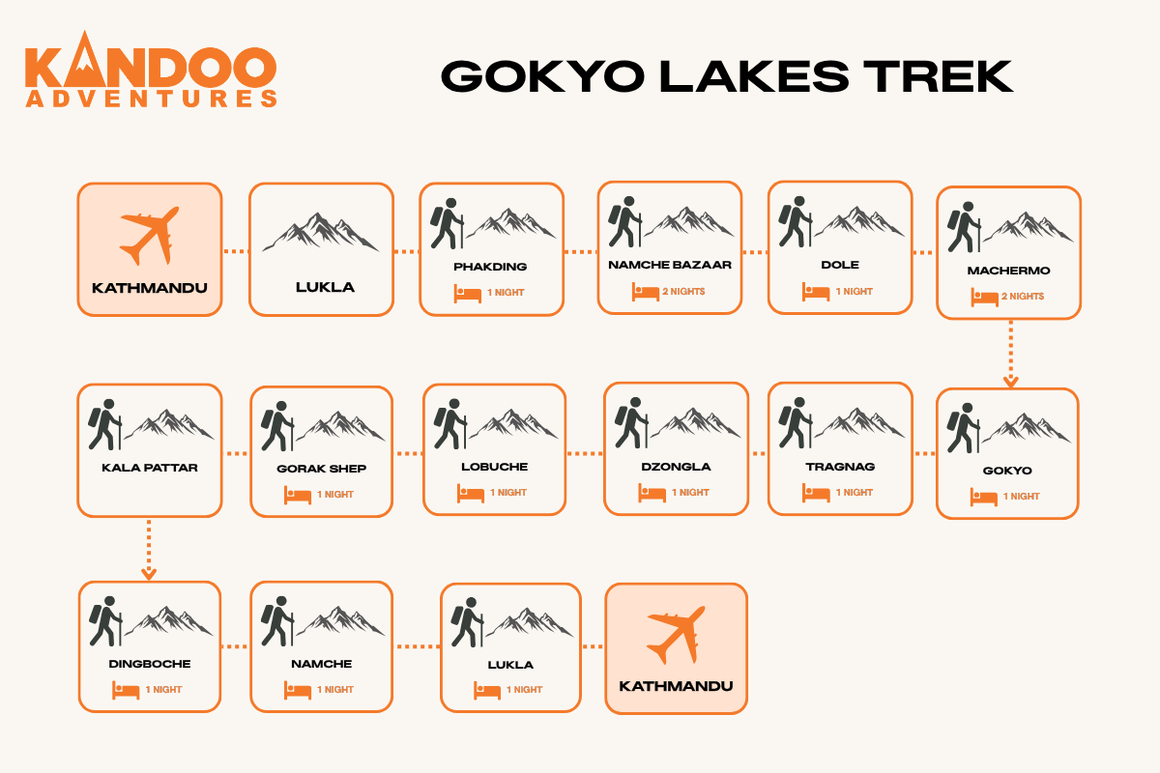
Comparing Gokyo Lakes and Classic EBC Routes
Both routes begin and end in the same place, yet they fundamentally differ in the middle. Let’s look at some of those differences.
Difficulty
- Classic EBC route - moderately hard
- Gokyo Lakes - challenging
The Gokyo Lakes trek is rated as a 4/5 for difficulty. It’s slightly longer and a lot higher than the classic EBC route. More time is also spent at higher altitudes on this route too, which takes it’s toll on your body. Days vary more in distance and trekking time, and trek duration is longer overall, so it’s physically demanding.
Scenery
- Classic route - stunning views of the world’s highest mountains
- Gokyko Lakes - same as above plus more diverse landscapes
The classic route boasts iconic scenery of the majestic Himalayas. You can take in views of some of the world’s highest mountains: Ama Dablam, Lhotse, Nuptse and Everest. The route follows rugged and glacial scenery alongside the Khumbu Glacier.
Trekking the Gokyo Lakes route includes many of the same views as the classic route, plus Cho Oyo, Makalu and Gokyo Ri. There are more lakes, rivers, glaciers, remote mountain passes, and hidden communities. The scenery on the Gokyo Lakes route isn’t necessarily better, just more diverse.
Duration
- Classic route - 10 days trekking
- Gokyo Lakes - 13 days trekking
Different tour operators offer their own itineraries for these routes, so the duration varies depending on what you book. At Kandoo, our classic route involves 10 trekking days with acclimatisation and contingency days built in. We also include time in Kathmandu in our Nepal trips before and after your trek.
The Gokyo Lakes trek includes an additional 3 days hiking to the classic route, as there is more ground to cover and further distance to travel. Again, acclimatisation days are essential for a successful journey and will help travellers get used to progressively higher altitudes.
Accommodation and Facilities
- Classic route - teahouses
- Gokyo Lakes - teahouses
Both routes take advantage of the numerous teahouses scattered at intervals throughout the mountains. They provide twin room or dorm accommodation, hot meals, occasional Wi-Fi and showers, packed lunches and shared facilities.
The higher you trek, the more basic the teahouses become. This is because it’s more logistically difficult to get supplies to higher locations. Toilets may be Western-style at lower altitudes and in larger towns, but become more basic long drop or squat toilets higher up.
You may find a warm shower, for a fee, at the first teahouses you stop at, but as you progress on your journey, water will be cold, if showers are available at all.
Sleeping in teahouses is a quintessential part of any EBC trek and a great way to chat to other travellers, share stories, advice and wind down after a long day on your feet.
Footfall
- Classic route – well known
- Gokyo Lakes – a hidden gem
Travelling to Everest Base Camp is a bucket-list adventure, and the majority of trekkers opt for the classic route. It’s well known to travellers from all over the world; this iconic trail attracts tens of thousands of people each year.
Lesser known than its peer, the Everest Base Camp and Gokyo Lakes trek has gained popularity over the last 50 years as a quieter alternative to the classic Everest Base Camp route. It’s more challenging, but with arguably better scenery, according to some, it offers a comparable route for more experienced trekkers.
The best time to trek to Everest Base Camp
In Nepal, there are two main trekking seasons. These are March to May and September to November. Here’s a snapshot of why:
- Spring. Emerging flora and fauna, mild temperatures and the odd shower, with cool mornings and evenings.
- Autumn. Clear, blue skies, moderate temperatures, lush landscapes and stunning vistas.
Spring and autumn are the best times to trek to Everest Base Camp on either the classic or the Gokyo Lakes route. May and September are the busiest months.
June to August is the monsoon season, and conditions may be unsafe. We recommend avoiding trekking during these months and opting for the shoulder months instead.
Classic Everest Base Camp trek
Best time:
- Spring and autumn
Trek the classic Everest Base Camp route in spring or autumn for the best conditions and weather. For a quieter experience, consider trekking between October and November. With the monsoon over and peak crowds fading, you'll enjoy calmer trails, albeit with colder temperatures.
Gokyo Lakes Trek
Best time:
- Spring and autumn
Spring and autumn are milder higher up than on the classic route, but vegetation is abundant and conditions are generally clear. Experienced trekkers could consider visiting later in the year between November and December when temperatures are colder. There are far fewer people about at this time.
FAQs about Everest Base Camp trekking routes
Is Gokyo harder than Everest Base Camp?
Yes. The trek is longer in duration, spends more time at higher altitudes and travels over several high mountain passes with more ascent and descent. A greater level of fitness is required for the Gokyo Lakes trek, which is why we rate it a 4/5 for difficulty. Comparatively, the classic EBC route is graded as 3/5 for difficulty.
Which trek has the best Everest views?
Both the classic EBC and Gokyo Lakes routes offer epic views of Everest from Kala Pattar, a peak above Everest Base Camp. The Gokyo Lakes trek also offers breathtaking Everest views from the summit of Gokyo Ri, a 5,357m peak high above the Gokyo lakes.
Can beginners do either EBC trek?
Beginners can complete either route with the right preparation. Build your fitness, train for consecutive days of hiking and, if possible, gain some experience at altitude before you go.When the going gets tough, mental resilience matters just as much as fitness. With the support of experienced nepal guides, your fellow trekkers and a positive mindset, reaching Everest Base Camp is well within your grasp.
Which route is less crowded?
The Gokyo Lakes trek is less crowded during the middle section on your ascent to Everest Base Camp. Where it follows the classic route at the beginning and end, it’s busier. Following the classic route for the most direct descent, there is more foot traffic on the return leg.
How many days do you need?
The classic Everest Base Camp route takes approximately 10 days of trekking. Kandoo Adventures build in 2 acclimatisation days for a more comfortable journey, so our EBC trek is 11 days.
Kandoo’s Gokyo Lakes trek takes 13 days with 2 acclimatisation days, which allow travellers to explore the local region, rest and adapt to the altitude for the days to come.
Which trek is more scenic?
Both treks journey through the stunning Khumbu Valley and offer spectacular scenery.
The Gokyo Lakes trek covers more remote terrain. It’s also higher and travels past glacial lakes and through hidden mountain passes in addition to different views of Everest and the surrounding mountains.
The classic EBC route offers more cultural landmarks, and the landscapes are equally scenic.
Which is more scenic is very subjective and depends on what you want to see on your trip.
Can you combine the Everest Base Camp and Gokyo Lakes treks?
Not really. The Gokyo Lakes trek follows the classic route initially and rejoins at Gorak Shep before reaching Everest Base Camp. Think of it as more of a diversion than a completely different route. The benefit of diverting via Gokyo Lakes means you walk in a loop with a different route there and back. The classic EBC is an out-and-back route.
Everest Base Camp Treks with Kandoo Adventures
Kandoo Adventures’ local Nepali team of guides, porters and support staff are the best in the business. We’ve been guiding intrepid travellers to the Himalayas in Nepal for almost two decades, and our team is consistently recognised for their dedication, passion and enthusiasm.
Whatever EBC route you decide, we have Nepal treks to suit all abilities and interests, and guarantee an unforgettable journey. Get in touch with our travel experts at Kandoo HQ to book your next adventure in Nepal.