


A simple breakdown of the best time to go on safari
Tanzania and South Africa both offer world-class wildlife safaris. Each boasts Big Five sighting opportunities and while Tanzania is wild, remote and vast, South Africa offers a more accessible, polished safari experience.
So how do you decide between the two?
In this guide, we break down what to expect from each safari location. By the end, you’ll be able to narrow down your search and choose a safari experience that suits your schedule and goals.
Best time to visit South Africa for a safari vs the best time for a safari in Tanzania
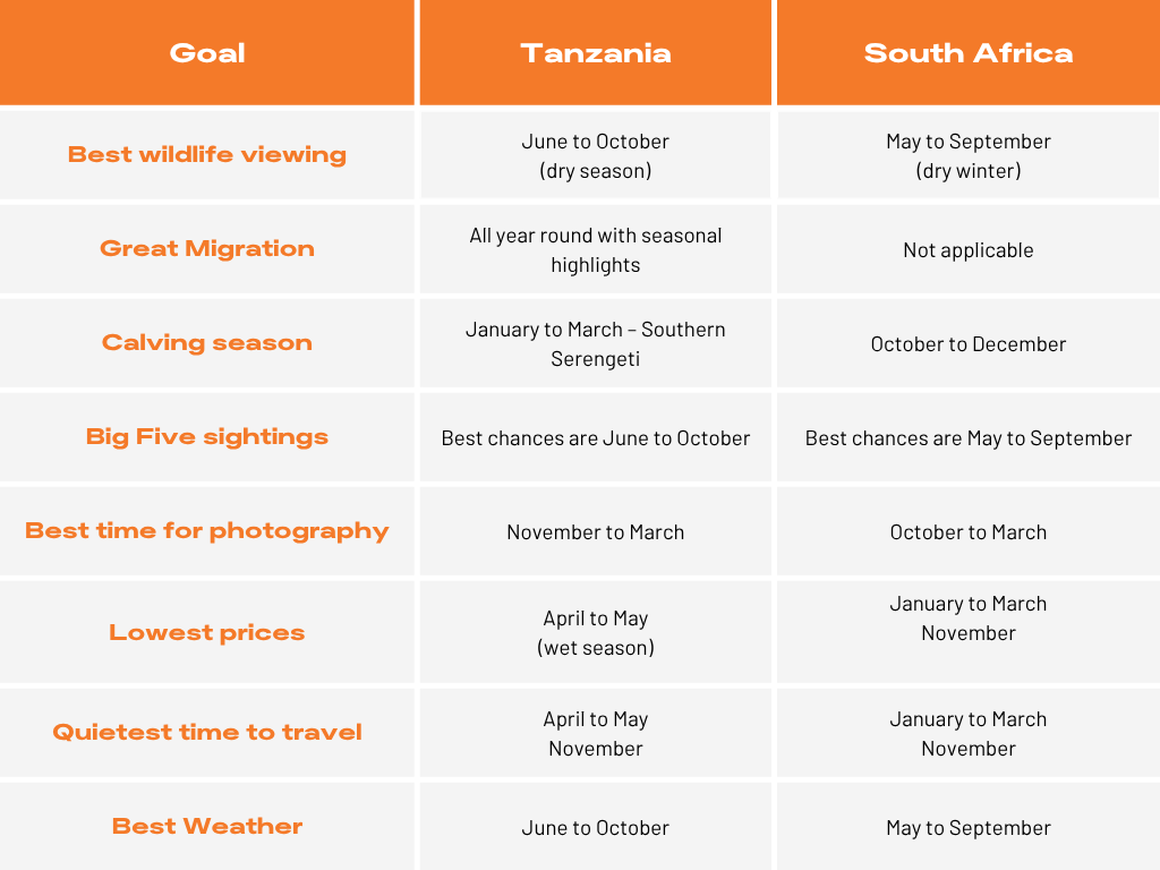
Wildlife encounters vary throughout the year, so the best time and place to visit depends on what you hope to see. If you’re dying to witness the Great Migration, then Tanzania is the place for you. For wildlife spotting with coastal explorations, cuisine sampling and city explorations, South Africa will be more your vibe.
This handy table provides a cheat sheet to help decide.
What is the best time to visit Tanzania for a safari? A month-by-month breakdown
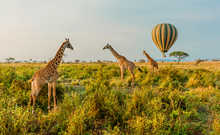
It depends on what you want to see. January to March is best for calving season, when predators are never far behind. June to October covers the dry season and the dramatic Mara River crossings (July and August especially) when the Great Migration takes centre stage.
Prefer fewer crowds and lower prices? November and December offer a quieter, greener safari with plenty of wildlife still on show.
Take a look at this overview of the best time for a safari in Tanzania:
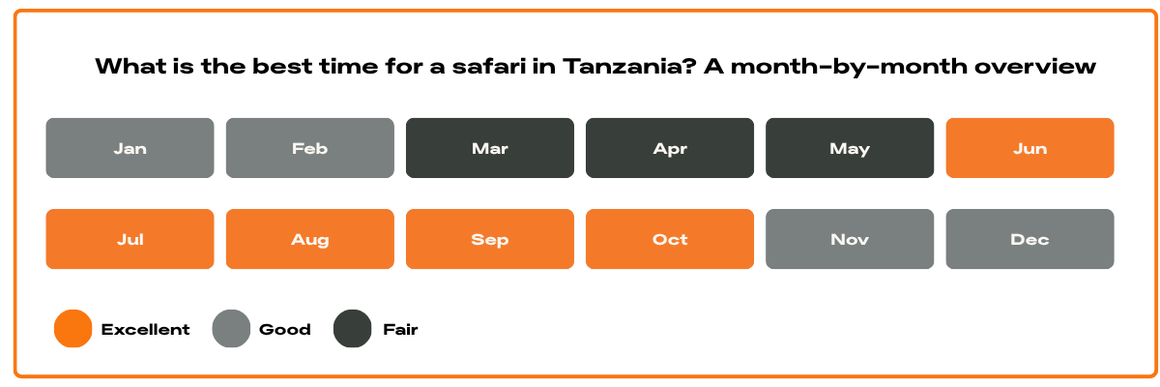
Ultimately, the best time for a Tanzania safari depends on what you want to see. With the Great Migration in constant motion, there's a reason to visit every month of the year.
But to help you choose the best option, here’s a month-by-month breakdown.
January: Calving begins
The short dry season leaves the savannah lush and warm, with only occasional showers. Calving starts in the southern Serengeti, drawing lions, hyenas, and cheetahs to the vulnerable young. Migratory birds arrive, and visitor numbers stay low.
Best park: iSimangaliso Wetland Park to discover crocodiles, hippos, and exciting marine life.
February: Peak calving
Warm, dry conditions continue and calving peaks across the Ndutu Plains, making this the most dramatic month for predator sightings. Birdwatching is excellent, and prices remain reasonable.
Best park: Ndutu Plains of the Serengeti National Park to see hundreds of thousands of young calves grazing the lush savannah.
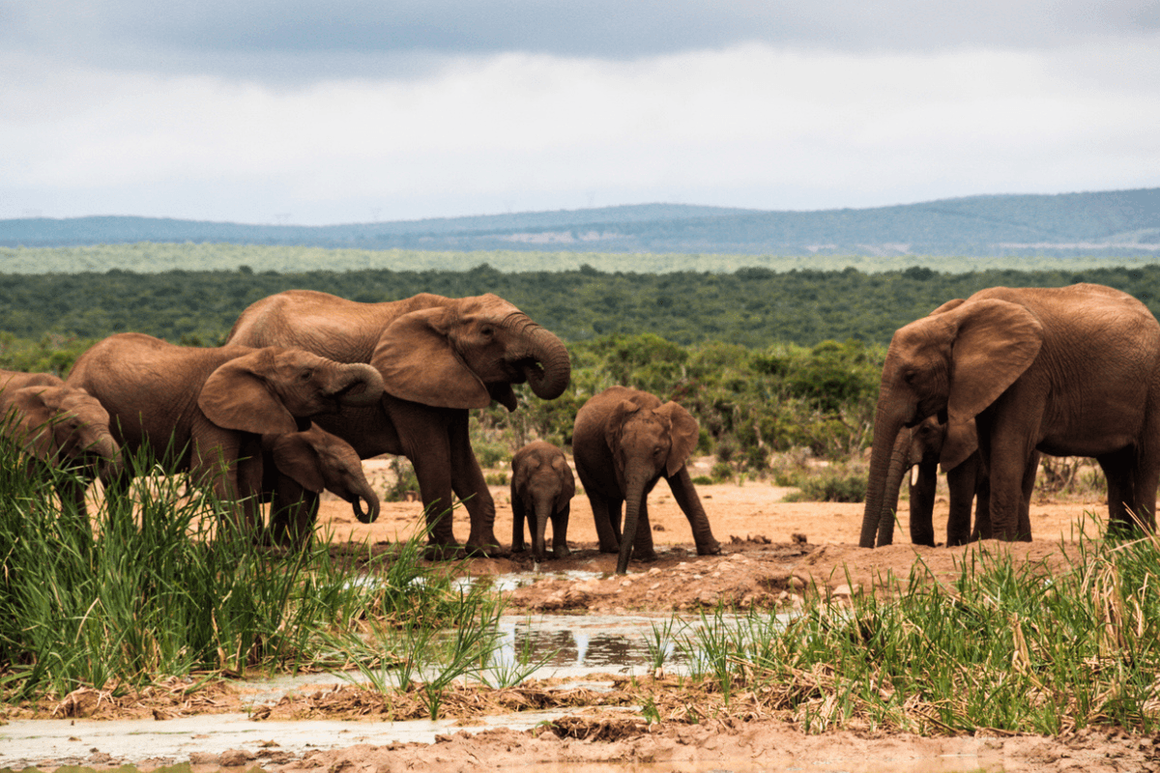
March: Rains arrive
The long rains begin late in the month, humid and cloudy by afternoon. Calving ends and herds start dispersing northwest, though wildlife is still abundant and rates stay competitive.
Best park: Southern and Central Serengeti National Park to see high wildlife concentrations across the plains.
April: Long rains
Monsoon-like downpours make roads muddy and wildlife harder to spot. Some camps close, and parks are quiet.
Best park: Ngorongoro Crater, for reliable Big Five sightings year-round.
May: Shoulder month
As the rains ease, wildlife gathers near the Tarangire River while the migration pushes north. Rates stay low with few visitors, though conditions can still be muddy.
Best park: Tarangire National Park for dense wildlife in a small area.
June: Dry season begins
The landscape dries out and the thinning vegetation makes spotting easier. The migration moves through the central plains, drawing predators, with warm, pleasant temperatures throughout.
Best park: Central Serengeti as the migration moves through.
July: Peak season
Dry, bright days and abundant wildlife define July as the migration nears the Mara River and the first dramatic crossings begin. Trails and camps get busier as peak season kicks in.
Best park: Northern Serengeti National Park for dramatic river crossings.
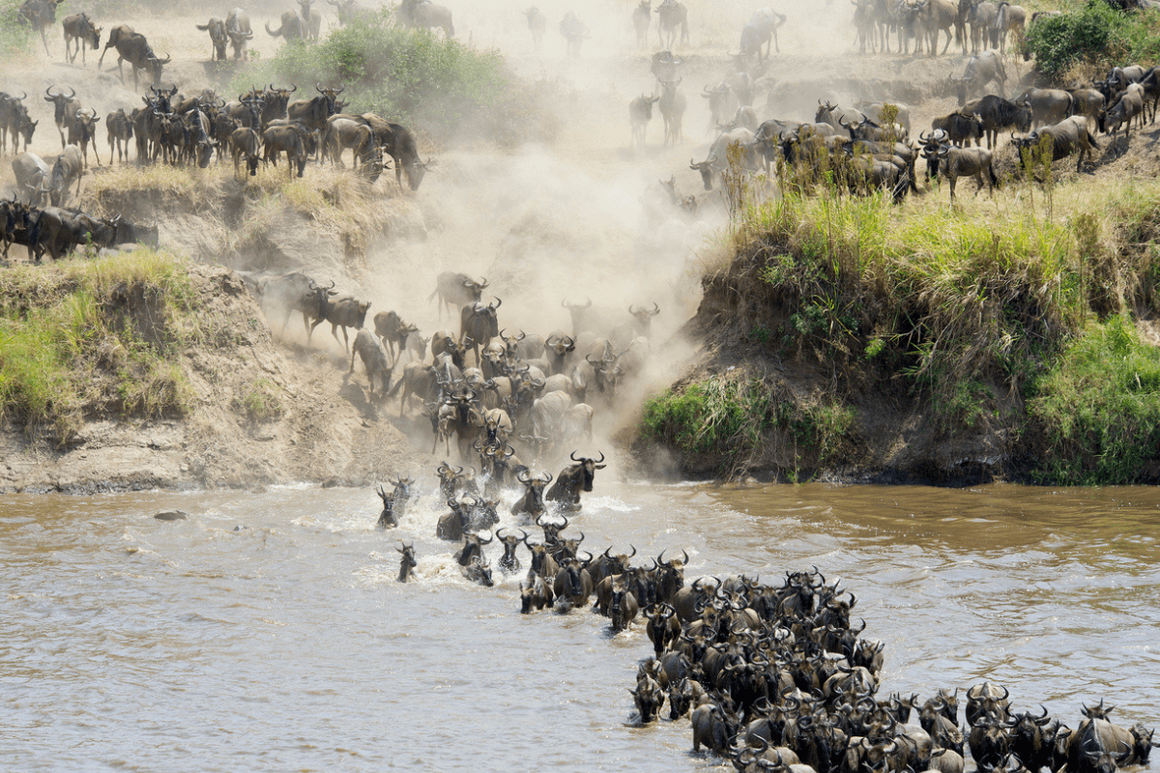
August: Crossings peak
Predator sightings are at their best as herds congregate to cross the Mara River, drawing lions, cheetahs and leopards.
Best park: Northern Serengeti for the peak season of river crossings.
September: Big Five season
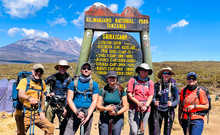
Dry, arid conditions bring elephant and buffalo herds to the remaining water sources, along with the predators that follow. It's also a great time to pair a safari with climbing Kilimanjaro.
Best park: Tarangire National Park for excellent wildlife viewing along the Tarangire River.
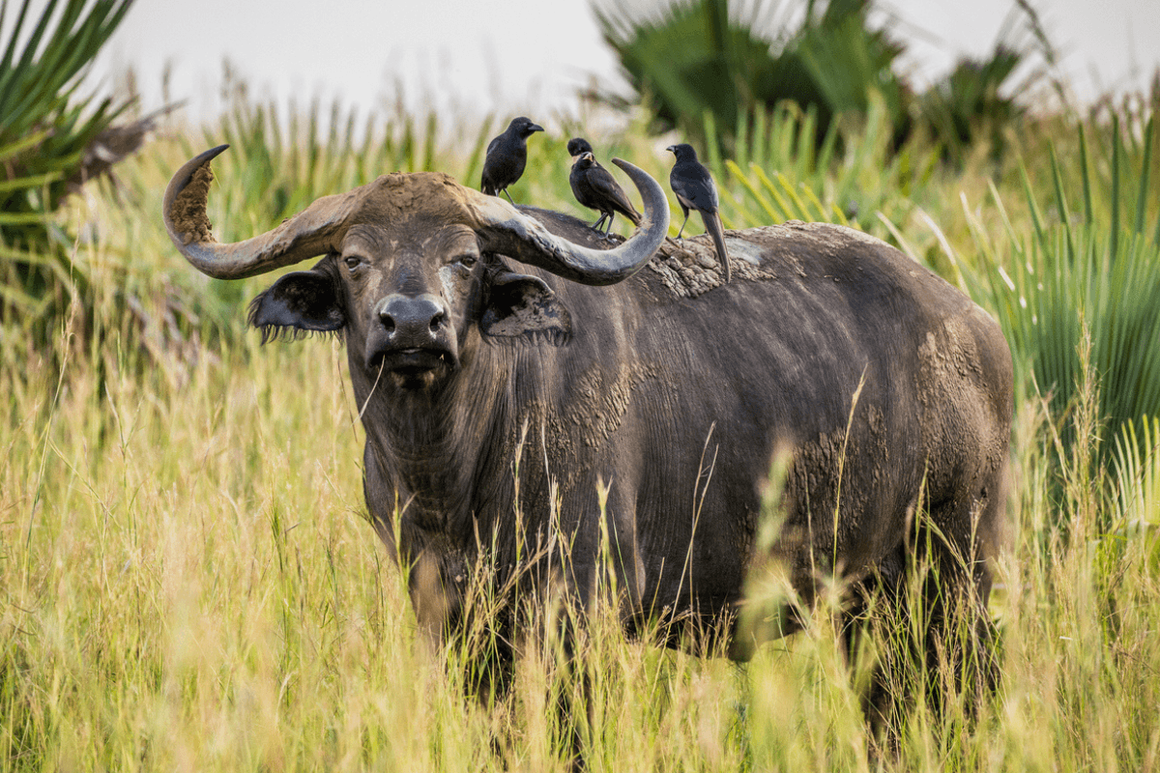
October: Easy spotting
Warm, dry days and arid terrain make wildlife easy to find as animals concentrate around water. Fewer visitors and lower prices make this a favourite shoulder month.
Best park: Tarangire National Park to see high concentrations of elephants along the Tarangire River.
November: Short rains
Three to four weeks of heavy, short showers revive the landscape, making this a beautiful month for photography. The migration starts heading south again, and visitor numbers stay low.
Best park: Southern and Central Serengeti National Park to see the Great Migration begin moving south.
December: Festive season
The short rains ease, leaving a refreshed landscape as the migration continues south. It's a short peak season, but still quieter than the summer months.
Best park: Southern Serengeti National Park as the migration heads back south.
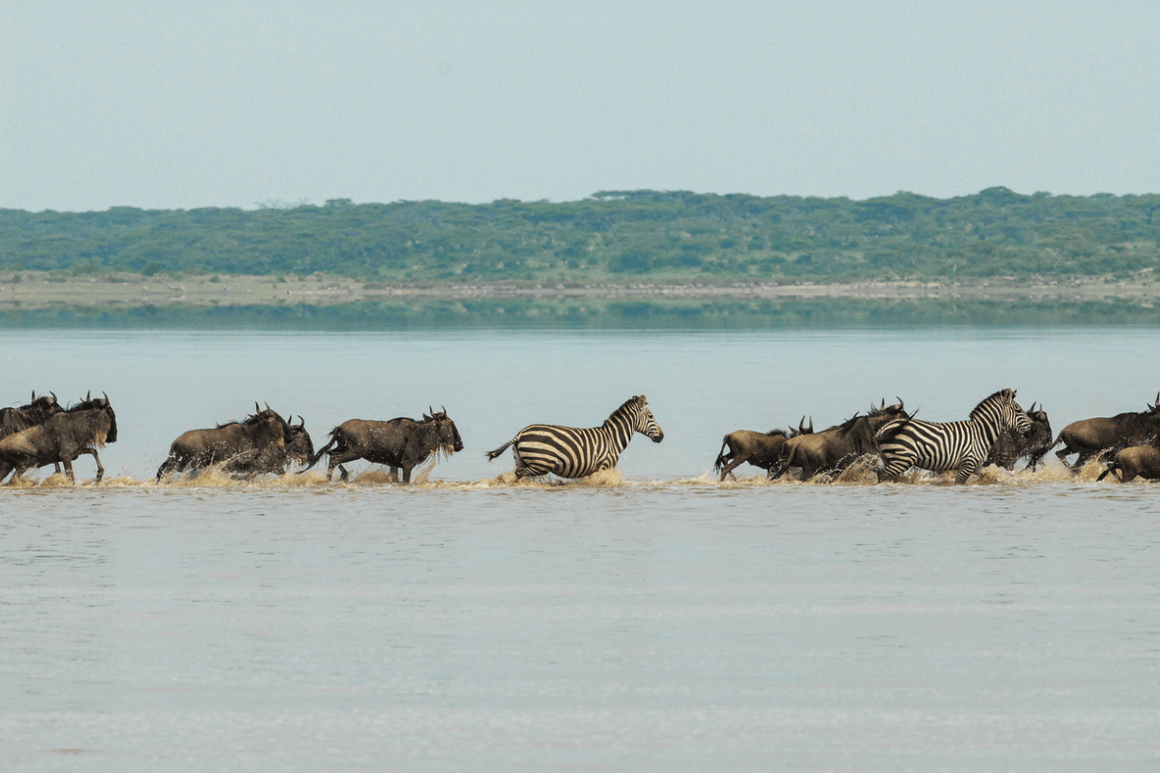
What is the best time for a safari in South Africa? A month-by-month overview
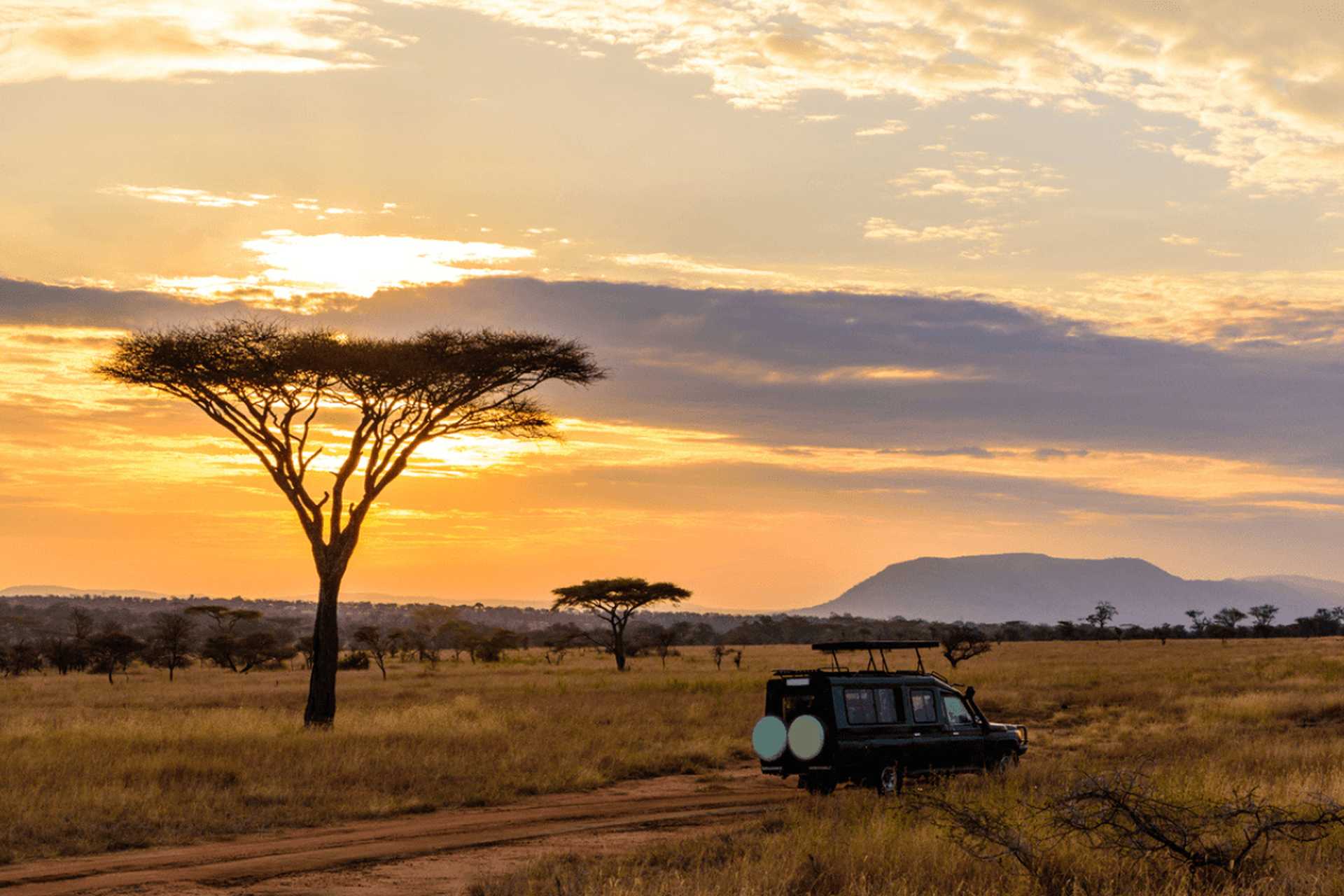
May to September is generally the best time, when the dry season brings animals out to water sources and wildlife spotting is at its easiest.
July is peak season for a reason! Expect fantastic Big Five sightings, though parks are busier too. If you'd rather skip the crowds, April or September are great shoulder months with milder weather and still-excellent game viewing.
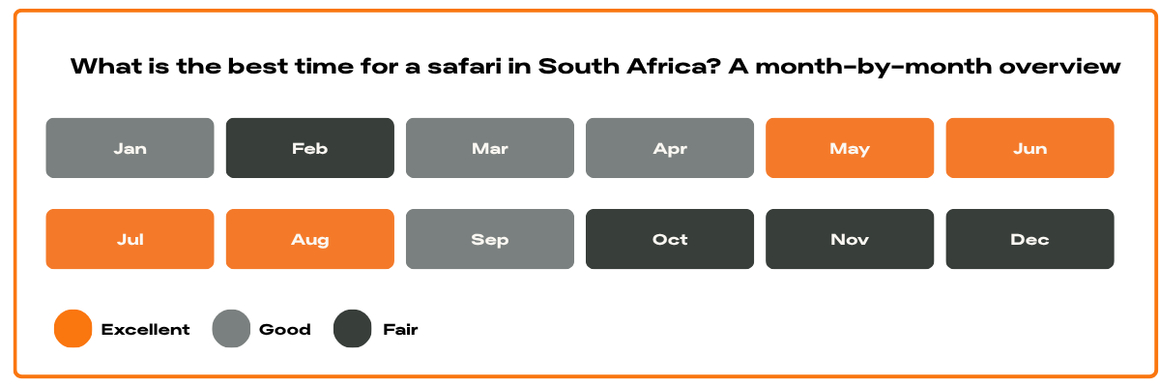
But similarly to safaris in Tanzania, the best time for a South Africa safari depends on what you want to see. Whether you're chasing dramatic predator action or wide-open dry-season game drives, there's a reason to visit every month of the year.
To help you choose the best option, here's a month-by-month breakdown.
Fun fact: South Africa is the only country in Africa with a few malaria-free safari parks. While prophylactics are widely available and preventative measures ensure risks are low, those who are worried or vulnerable may consider this a reason to visit South Africa over Tanzania.
January: Summer begins
Afternoon showers bring the landscape to life, with warm, humid days perfect for combining a safari with time on the coast. Many antelope have young, drawing predators for dramatic wildlife encounters, and migratory birds add plenty of birdsong.
Best park: iSimangaliso Wetland Park to discover crocodiles, hippos, and exciting marine life.
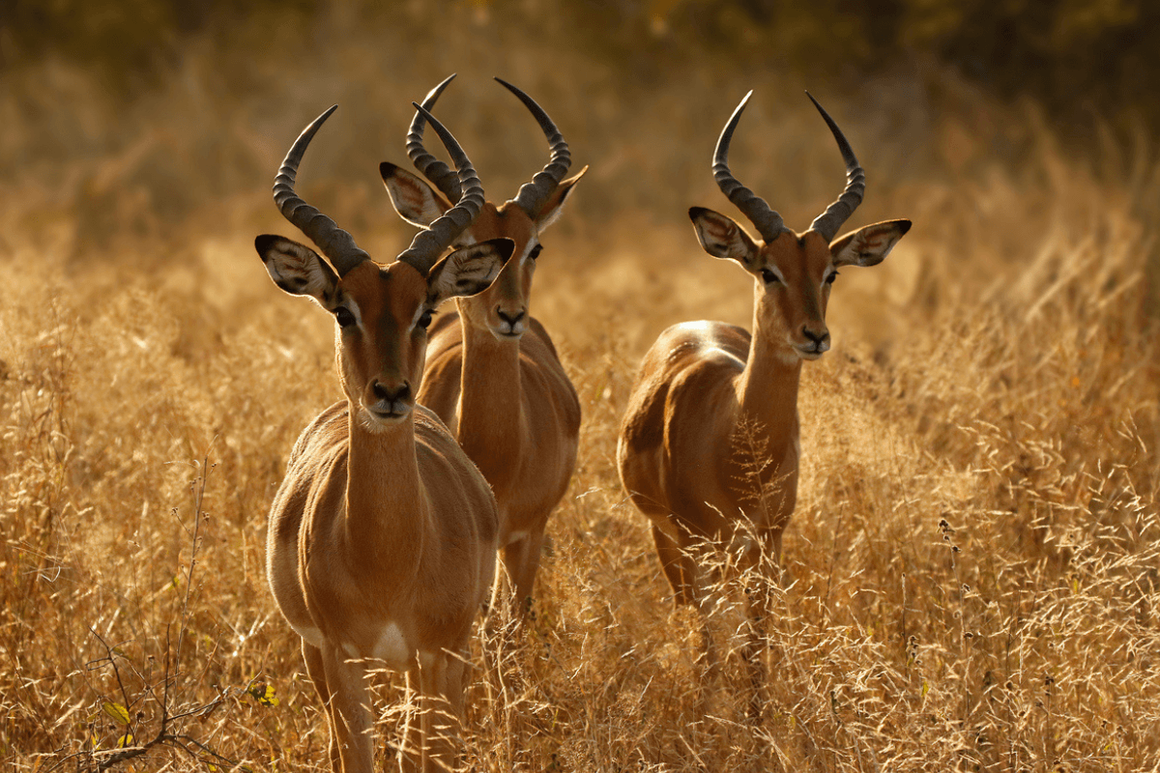
February: Lush landscapes
Vibrant, colourful scenery makes elusive wildlife harder to spot, but patient travellers are rewarded with newborn animal sightings and excellent birdlife.
Best park: Hluhluwe-iMfolozi Park for reliable elephant, buffalo, and rhino sightings.
March: Shoulder month
Hot summer days give way to milder temperatures, and wildlife is easier to find as conditions become more comfortable. Harvest season casts a golden glow across the landscape.
Best park: Madikwe Game Reserve for Big Five and wild dog sightings.
April: Autumn arrives
As the dry season begins, cooler temperatures and thinning vegetation make for easier wildlife spotting and more comfortable game drives, with fewer tourists around.
Best park: Pilanesberg National Park, ideal for first-time safari-goers because it’s malaria-free, compact, and easy to navigate on a self-drive.
May: Dry season starts
Wildlife congregates around permanent water sources as the dry season sets in, making for excellent Big Five sightings and quieter, more popular parks.
Best park: Kruger National Park for quieter encounters.
June: Peak season begins
Winter sets in, and the dry land makes it harder for animals to hide. Days are shorter, mornings and evenings are cool, and early starts reward you with wildlife at its most active.
Best park: Sabi Sand Game Reserve for off-road safaris and elusive leopard sightings.
July: Prime safari season
The most popular month for a South African safari, with sparse vegetation and arid landscapes drawing animals to water sources and predators close behind. Game drives are reliably successful.
Best park: Kruger National Park for wildlife congregating around watering holes.
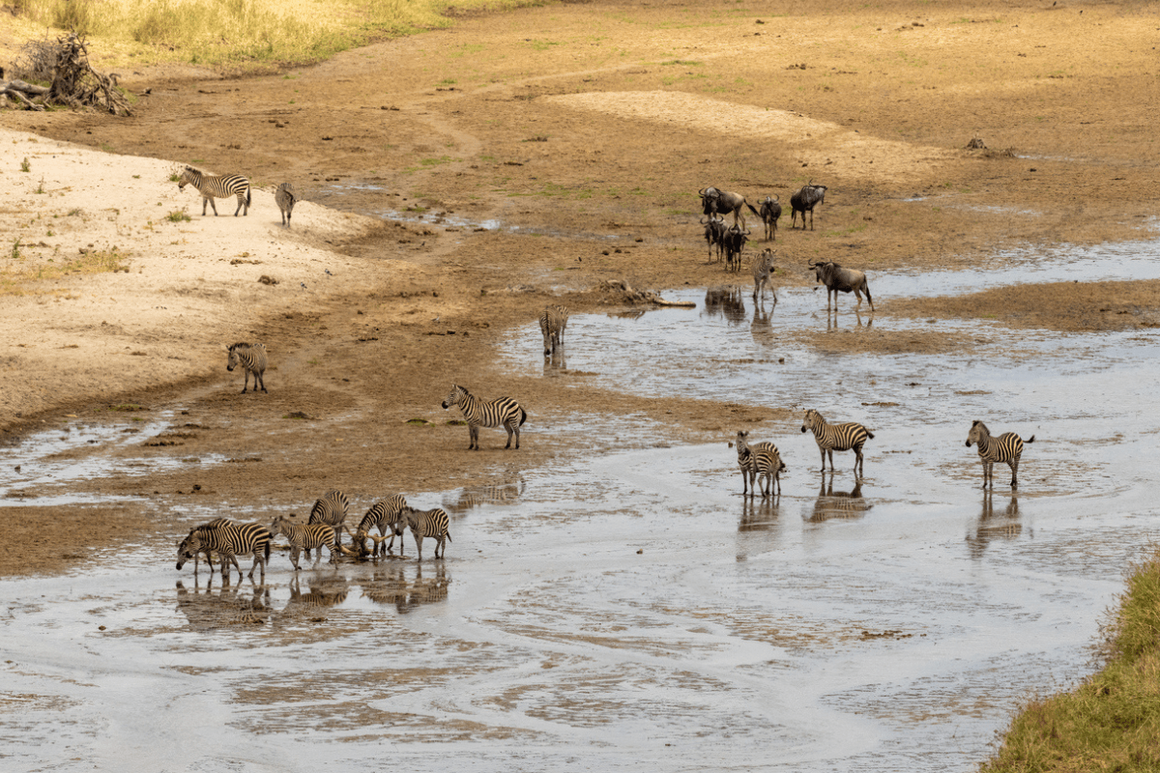
August: Active big cats
Spring wildflowers bloom as mild, sunny days give way to cold nights. Wildlife viewing stays excellent, with animals gathering around shrinking water sources for rewarding Big Five sightings.
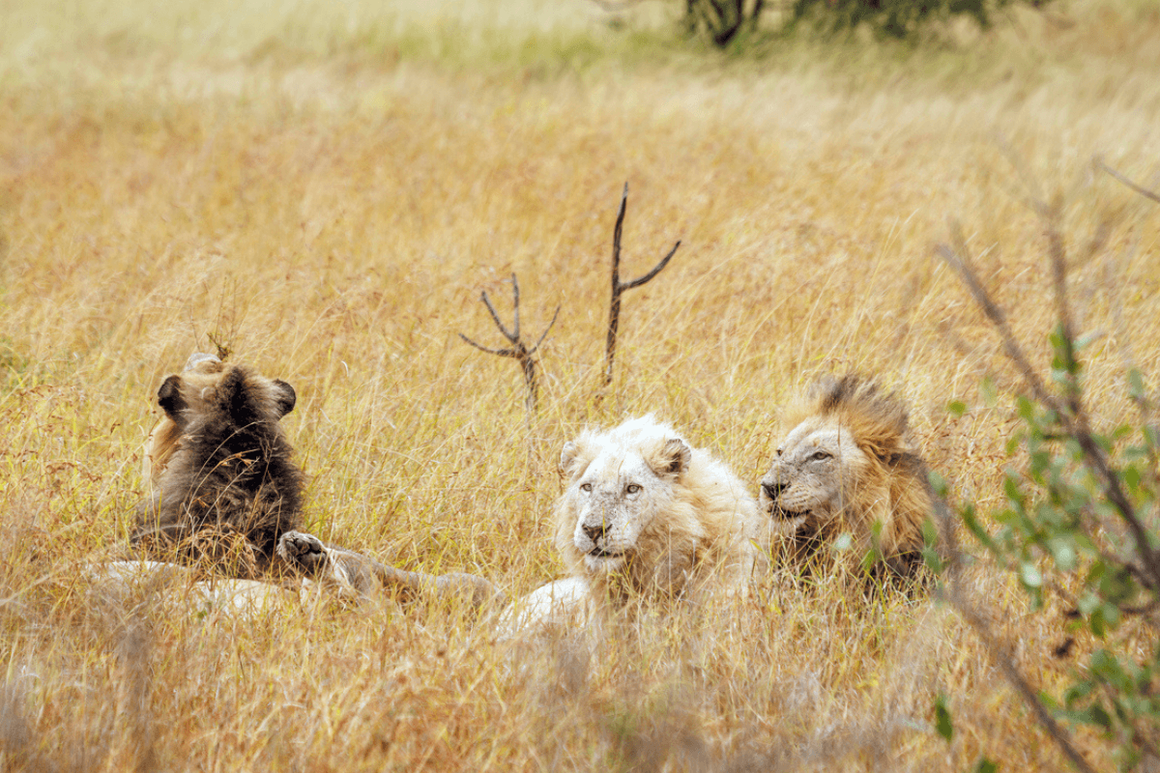
Best park: Timbavati Private Nature Reserve for a chance to spot the famous white lions.
September: Popular shoulder month
Mild temperatures and excellent game viewing make September one of the most popular months to visit, with the added bonus of combining a safari with whale watching, wine tours, or city exploring.
Best park: Kruger National Park for wildlife congregating around watering holes.
October: Newborns arrive
The first summer rains bring fresh grass that draws grazing young and the predators that follow. Mild temperatures and longer days make for excellent, unhurried game drives.
Best park: Madikwe Game Reserve for newborn antelope.
November: Summer rains begin
Hot, wet conditions bring migratory birds from Europe and Asia and fill the savannah with young animals — a great month for photographers who don't mind unpredictable weather.
Best park: Hluhluwe-iMfolozi Park for rhino sightings and fewer visitors.
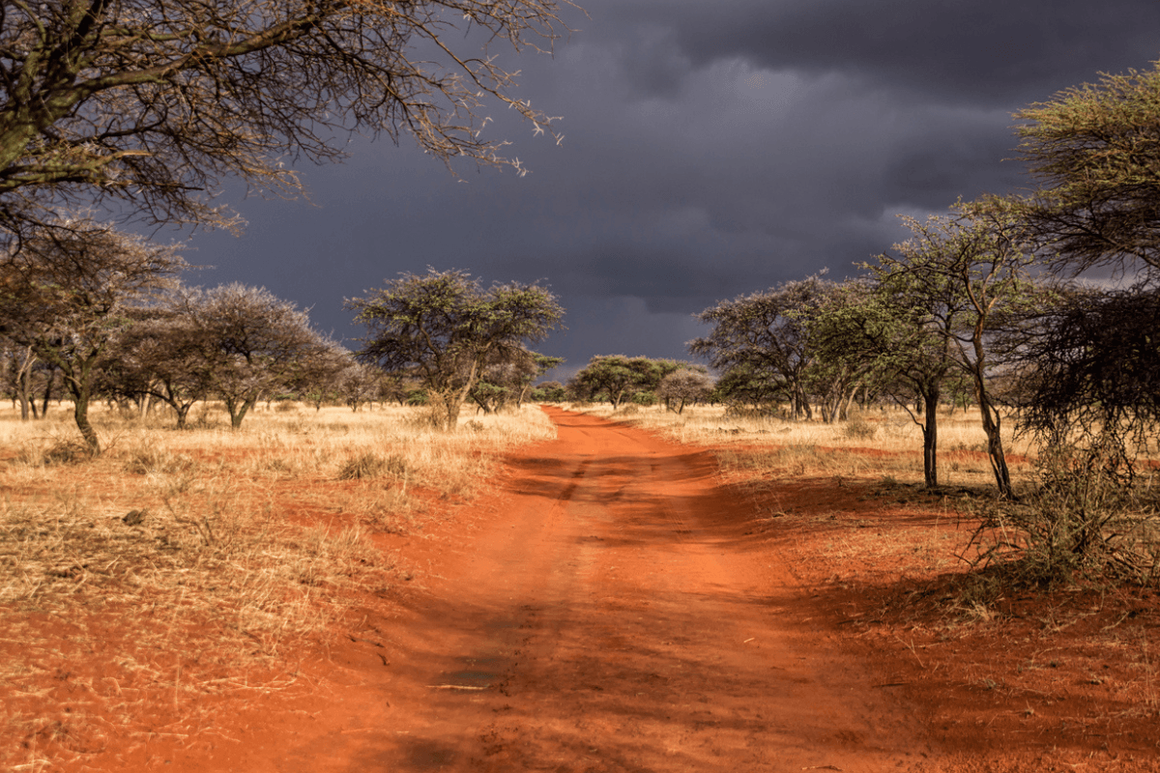
December: Festive season
South Africa's holiday season kicks off, bringing busier travel, lush green landscapes, and vibrant birdlife. Hot, humid weather can make wildlife harder to spot, but there's still plenty to see.
Best park: Addo Elephant National Park, easily combined with a trip down the Garden Route or the beaches of the Eastern Cape.
FAQs about safaris in Africa
What’s the best month to go on safari?
We recommend the shoulder months of June, September, and October. The weather is warm and dry; animals abound, and there are fewer visitors, offering quieter parks.
Is Tanzania or South Africa better for first-time safari travellers?
It depends on what you want to see:
- Tanzania is incredible for the Great Migration, but as travel distances increase, more time is needed to appreciate the destination fully.
- South Africa offers different wildlife in different parks, therefore you might have to travel to several to spot the Big Five but it’s easier to combine visiting the coast, wine regions and vibrant towns and cities with game drives.
When is the Great Migration?
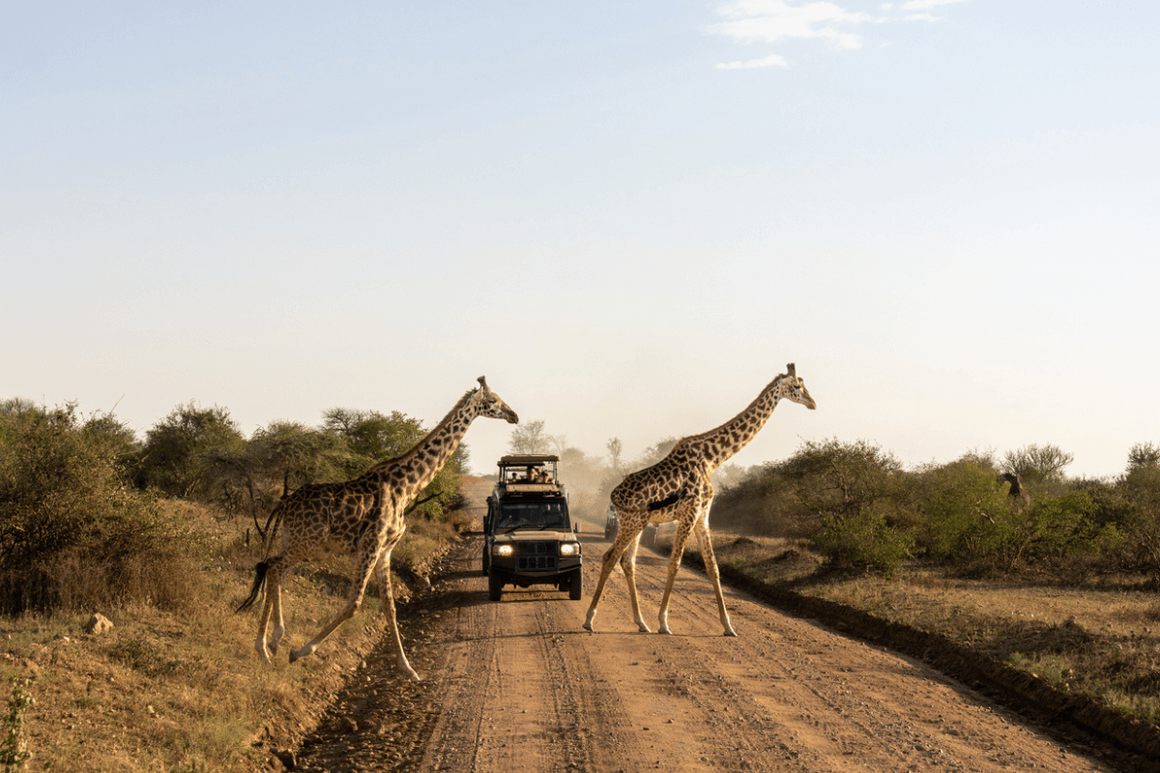
The Great Migration is an endless migratory cycle that begins in the Serengeti in Tanzania and follows the rains north through to Kenya and the Maasai Mara before turning south again to calve.
Peak season for observing young and large predators is January and February. Dramatic river crossings of the Mara River occur in July and August and are some of the most popular times to visit Tanzania.
Is safari worth it during the rainy season?
Definitely! The wet season brings monsoonal rains, which are short and heavy but don’t tend to last all day. Conditions can be challenging, but choosing a destination and itinerary carefully means this can be a great option for travellers on a budget.
Which month is best for seeing lions?
In Tanzania, January and February are great for lion-spotting as they follow the calving herds picking off young. June to October is also a good time to spot lions as the dry landscapes increase visibility.
In South Africa, August and September are best for spotting lions as the late winter season is dry and prides can be found gathering around dwindling waterholes.
Can you see the Big Five all year round?
Yes. In both countries, there are safari parks that are home to all of the Big Five, which can be spotted year-round.
In Tanzania, visit:
- Serengeti National Park
- Ngorongoro Conservation Area
In South Africa, visit:
- Kruger National Park
- Madikwe Game Reserve
- Sabi Sands Game Reserve
- Aquila Private Game Reserve
Which country has better weather?
Tanzania enjoys equatorial weather, which means the temperatures vary very little. Dawn and dusk are more or less the same time every day, and the only major disruptions are the short and long rains.
South Africa has four distinct seasons with varying temperatures across spring, summer, autumn, and winter. Choose the warmer months of spring and autumn to avoid the summer storms.
Experience an African safari with Kandoo Adventures
For truly iconic African safari experiences, look no further. We’ve taken adventurers to incredible destinations for almost two decades. Our guides are local to the regions we visit and love teaching about culture, history, and landscape. They tell amazing stories, too!
Immerse yourself in an authentic safari adventure with Kandoo and make memories to last a lifetime.