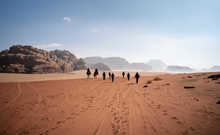
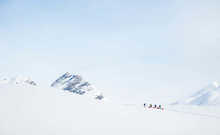
From the sun-drenched shores of the Arabian Sea to the snow-capped peaks of the Karakoram and Himalayas, Pakistan’s geography is incredibly diverse. It is a land shaped by dramatic forces, literally sitting atop the collision zone of the Indian and Eurasian tectonic plates. This unique positioning surrounds Pakistan with Iran, Afghanistan, and India—a geopolitical hotspot marked by historic tensions and the enduring conflict over Kashmir. Yet, this geography also tells a story of deep human connection. Along its western border, the legendary Khyber and Bolan passes have acted as bustling gateways for centuries, shaping history through a constant flow of traders, migrants, and empires between Central and South Asia. The modern layout of the capital city of Islamabad was an architectural concept that was largely constructed in the 1960s and now houses grand, modern architecture and an impressive business district. In stark contrast, the mountain city of Skardu sits at 2500m above sea level and is often called ‘Little Tibet’ due to it’s culture, architecture and language
(Balti) which share ancient connections with Tibetan heritage. Every year, mountaineers, climbers and increasingly trekkers, make their way to Skardu to start their adventure in amongst some of the highest mountains in the world. The staggering beauty and remote nature of the routes, along with the friendly and welcoming nature of the local people, makes Pakistan one of the most incredible destinations you will ever visit and one of the few places where you can still see and learn about authentic Tibetan culture, language and religion. Trekking in Pakistan is both physically tough and a profound cultural journey, making this the perfect destination for the seasoned traveller with plenty of hiking under their belt already.
How to get to Pakistan
Our trips in Pakistan start in Islamabad. From the UK, British Airways offer direct flights from London Airports and you can find indirect flights with Etihad, Turkish Air and Pakistan International Airlines.
For travellers coming from the USA, Emirates, Qatar and Turkish Airlines operate indirect flights from across the United States.
We always recommend taking your time when deciding which airline to travel with as you may find mixed customer experiences relating to customer service and baggage handling. If you are unsure about anything, please reach out to one of our travel experts who will be happy to help.
The vast majority of international flights arrive into Islamabad in the morning which gives you time to settle in at your hotel before the pre-trek briefing on your scheduled arrival day.
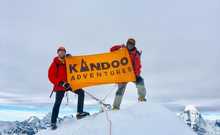
On arrival at the airport, once you have collected your luggage, please look out for a member of our local team in the arrivals area. Please look out for a sign displaying your name or "Kandoo Adventures". They will then travel with you via taxi to our hotel in the Blue Area.
If you are changing airlines or re-checking your luggage at an airport on route, please ensure you leave a minimum of 3 hours between flights. This will account for any delays on arrival, travel time across airports (this can take longer than you think) and time taken to re-check baggage.
Pakistan treks
Pakistan is the perfect place to trek when Nepal and Bhutan are out of season. Our treks here are:
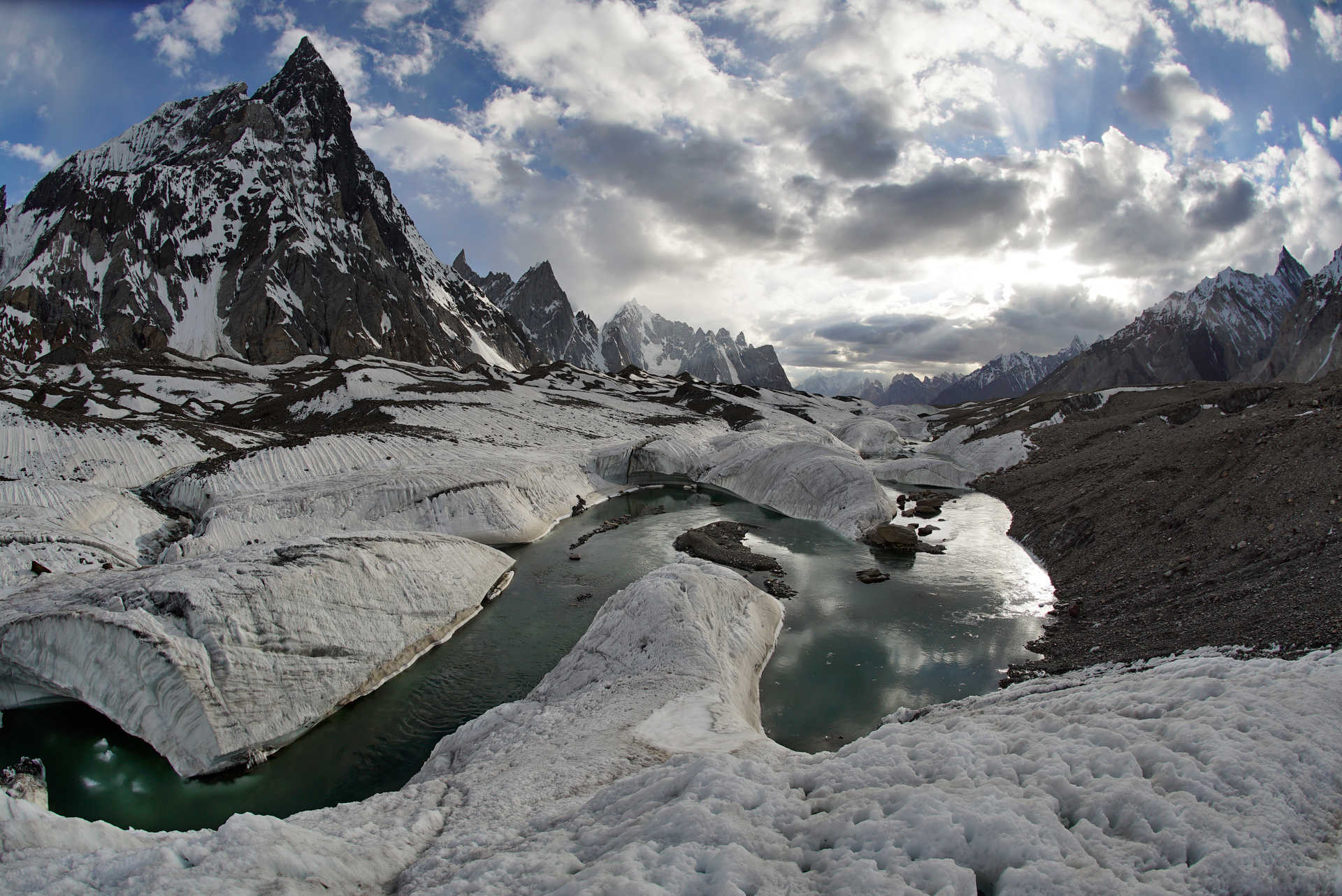
K2 Base Camp and Concordia - The
trek to K2 Base Camp is arguably one of the greatest treks in the world. Over
22 days, we trek into the ‘Throne Room of the Mountain Gods’, surrounded by
some of the largest mountains on earth, including the mighty K2 and Broad Peak. The trekking is challenging, as we make
our way over the ice and rocky moraines of the Baltoro Glacier, reaching altitudes of up to 5150m, but the
breath-taking views make it absolutely
worthwhile.
When to trek
You can find detailed advice on when to trek in our Pakistan Travel Guide.
This a brief summary. The location of the Karakoram means that is is largely protected from the monsoon rains that affect the lower valleys of Pakistan. Their sheltered, high-altitude placement, mean that the air is relatively dry and the climate often described as continental. When it is the wet season in Nepal and Bhutan, it is trekking season in Pakistan. Once the snows have melted in April/May and the temperature begins to rise above freezing, the intense sun allows daytime temperatures to increase to between 10°C and 25°C on sunny days. June to September is Pakistan's peak season with comfortable trekking temperatures and a lack of snow cover.
Training for your trek in Pakistan
Trekking in Pakistan is not dissimilar to Nepalese treks in terms of difficulty, but some regions can be more remote and, as some sections of the trek are without options to top up your drinking water, you should train with a weighted pack as you may need to carry all of your drinking water for the day which could be around 4 litres. What makes trekking in Pakistan challenging is the altitude - you will be at a high altitude most of the time. The lack of oxygen in the air has a range of effects on the human body, but the most obvious is breathlessness. This makes any exertion a lot harder, so the most important thing you can do is go slowly. Exerting yourself too hard is a great way to bring on altitude sickness.
In order to avoid getting altitude sickness you also have to limit the altitude gain in any day. This sometimes results in days when you can only walk for 4-5 hours before you have to stop. So in terms of distance walked and the altitude climbed, a day's trekking in Pakistan will be no more difficult than a typical day's hiking at home. However, doing this for upwards of 12 days consecutively and at altitude do combine to make any trek a tough challenge and you will need to be really fit when you arrive.
AVOIDING ALITUDE SICKNESS IN PAKISTAN
PAKISTAN TRAINING GUIDE
HOW TO LOOK AFTER YOURSELF IN PAKISTAN
RECOMMENDED EQUIPMENT
Accommodation and food in Pakistan
Hotels
In Islamabad, we stay in comfortable 3 star hotels in double or twin ensuite rooms that are located in the city's modern Blue Area. The hotel will have hot water and WiFi available. In Skardu, we stay in basic 3 star hotels that cater for trekkers and mountaineers. Please be aware that 3 star standards in Pakistan may be lower than you would expect in your home country. Power cuts and internet outages are common in Pakistan and you should be prepared for the possibility of this.
Camping
During the trek you will have a 3 man tent to share with one other person in your group. You will be provided with a foam camping mattress to sleep on but are advised to bring a lightweight inflatable sleeping mat (Thermarest or similar) and should bring your own sleeping bag with an appropriate comfort rating. The sleeping bag requirements will differ based on the trek you will be doing. Please refer to the specific packing list for that trek and ask our travel experts if you have any questions. We will also provide a large dining tent with a table and chairs that is used for taking meals but also as a communal space to relax in the evenings. Hot water in a bowl can be provided by your support team so you can have a wash in the evenings. The camp is setup and taken down each day by our local support team and all camping equipment and food are carried by them between camps.
Toilets
The toilet situation is something a lot of our guests want to know about! In Islamabad, the hotels we use has western flushing toilets. Toilets in more rural areas have a mixture of hoses and toilet roll for cleaning purposes. If using a hose is not your cup of tea then it might be worth bringing your own toilet roll. On the trek itself, toilets at the campsites will be very basic with a hole in the ground covered by a small toilet tent for privacy and on route this will be a case of finding somewhere hidden, off the path and going wild. We can guarantee it will be the most scenic toilet break you've ever had!
Budget
To see the latest conversion rates visit
xe.com.
The currency in Pakistan is the Pakistani Rupee (PKR). Pakistan has a closed currency which means Rupees cannot be imported or exported from the country. You can exchange money at the airport in Islamabad on arrival, or at currency exchange offices and some larger hotels. Your hotel in Islamabad is located in the Blue Area which is Pakistan's business district and there are several currency exchange offices within walking distance of your hotel. Alternatively, you can change currency at your hotel but you should expect the exchange rate to be higher. Major credit and debit cards (such as Mastercard and Visa) are often accepted in Islamabad but you should inform your bank if you are planning to use them. Outside of Islamabad, you should not expect to be able to use a card for payments. Pakistan has a mainly cash economy, particularly in rural and remote areas. US Dollars are the easiest currency to exchange and notes must be clean, untorn and less than 10 years old. Please note that payments at restaurants must be made in Pakistani Rupees, but US Dollars may be accepted in emergencies but should not be relied upon.
You
will need to budget for meals in Islamabad and Skardu as well as
any souvenirs. Depending on your tastes,
you can eat for as little as $3 / £2, or treat yourself to a three course meal for around $20 / £15. Souvenirs are also relatively inexpensive. Whilst on your trek, there will be little opportunity to purchase souvenirs but you may find locals offering handmade items in Askole.
Tips
We realise that tipping may not
be a common practice in all countries but it is a long-standing
tradition in Pakistan
that
all operators support and provides valuable support to
the families and communities involved in the trekking industry. The decision on how much to tip
should be determined by how well the team served you while you were on the
trek. Tips are always discretionary and if you are not happy with the service
you have received you do not have to pay tips. Tips should be made in Pakistani
Rupees. The
group tip can be given to your porters and guides during a small farewell
ceremony on your last night in Askole. We recommend a tip of between $165 - $190 / £120 - £140 per
trekker.
Tipping is entirely voluntary
and, if you are not satisfied with the service you have received, you are under
no obligation to tip.