15-day adventure
Everest Base Camp - All Inclusive
Nepal
- Trekking
Contact
our UK team
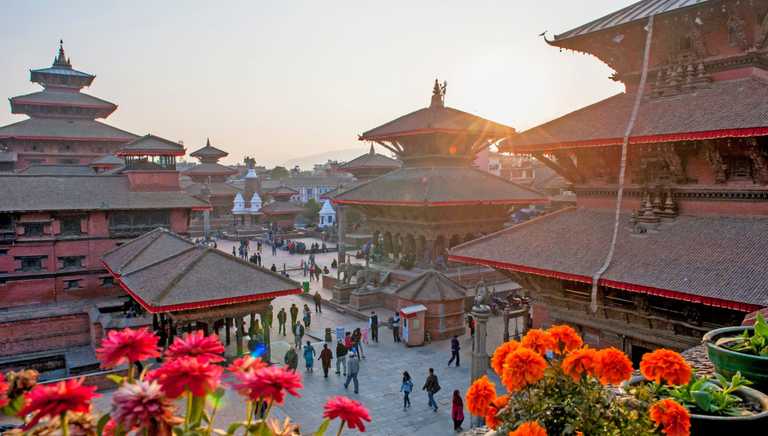
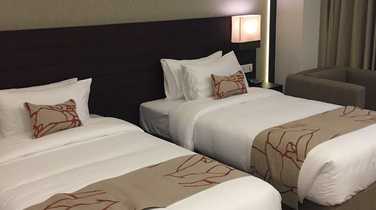
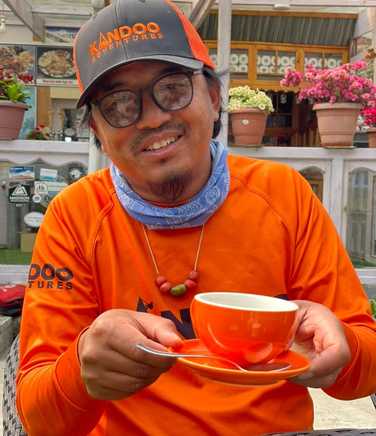
All trekkers need to organise their own flights to Kathmandu International Airport (KTM). From Kathmandu Airport we will arrange a private transfer to your hotel. That night or early the next morning you will meet your local Kandoo representative and have a full pre-trek briefing.
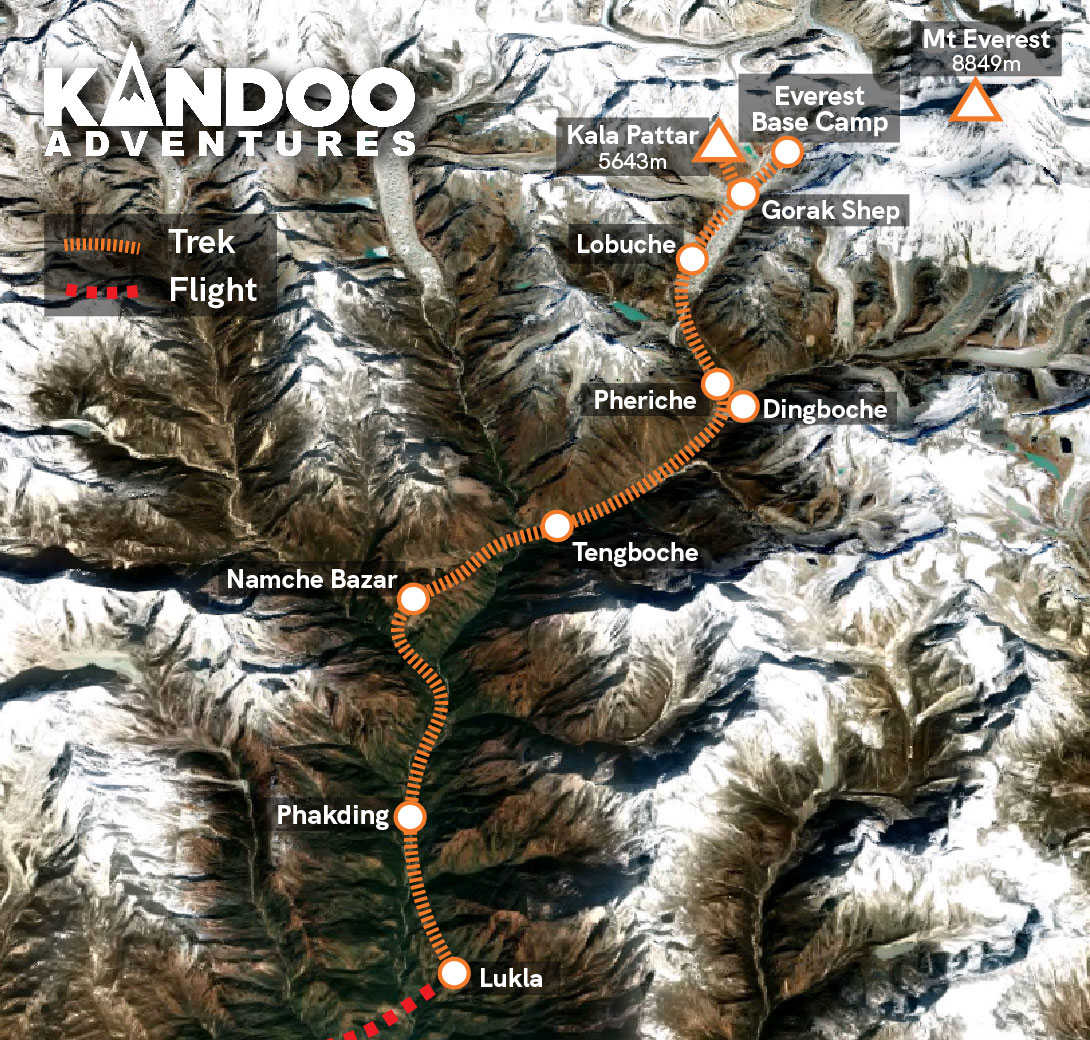
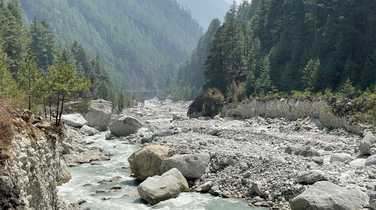
The flight from Kathmandu to Lukla takes 45 minutes and is an adventure in itself with great views of the Everest region (from the left of the plane) and ending with a hair-raising landing on a steep mountain runway. After meeting our crew, we will start our trek by heading up the Dudh Koshi Valley on a well- marked trail to Phakding.
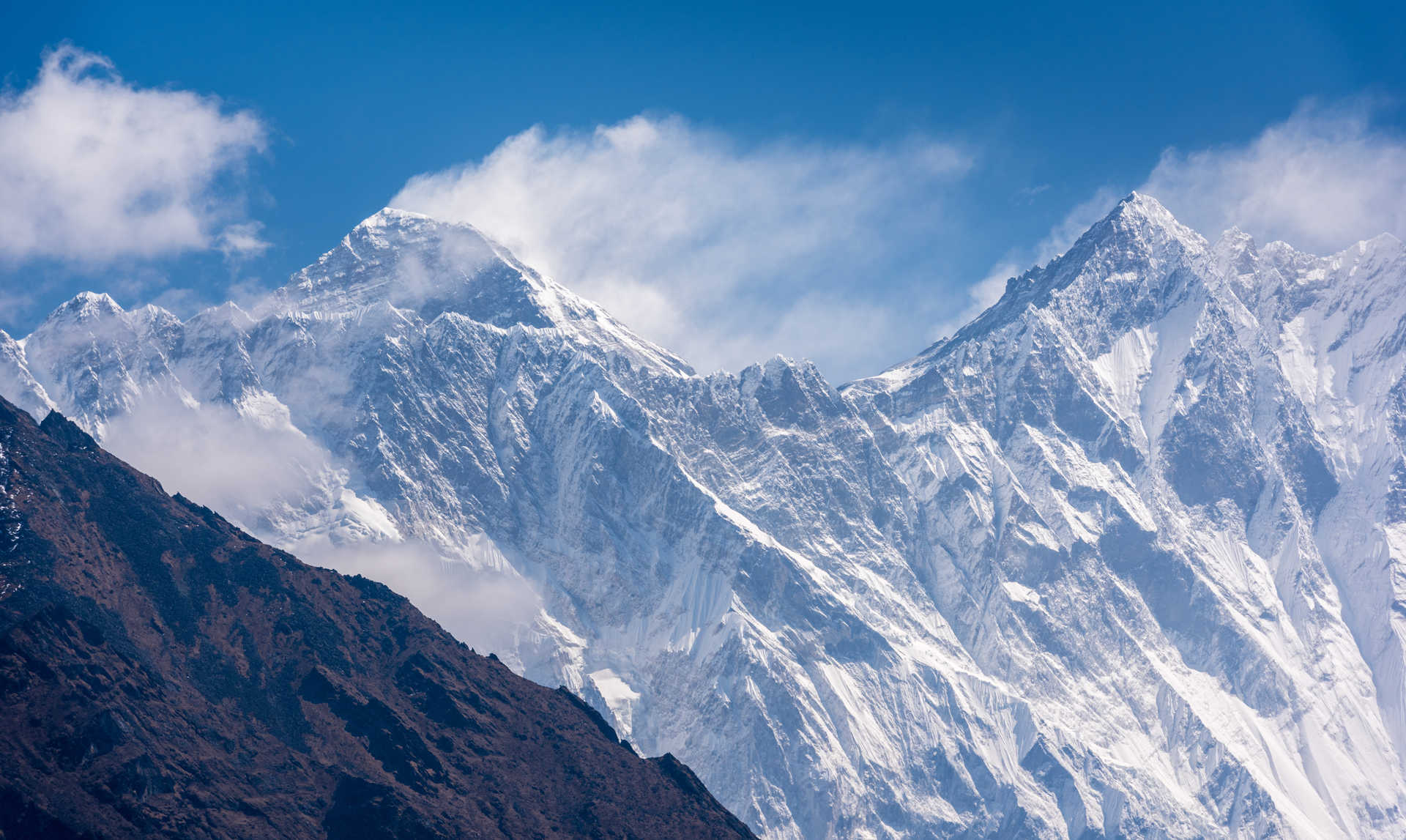
From Phakding, we cross and re-cross the river on high suspension bridges. Beyond Monjo is the entrance to the Sagarmatha National Park, which was set-up to conserve this fragile mountain environment. We then ascend steeply to Namche and along the way, if the weather permits, catch the first glimpse of Mt Everest. Namche Bazaar is the main trading village in Khumbu and has a busy Saturday market. It is a meeting place for the Hindu traders from the lowlands and Tibetan yak caravans that have crossed the glaciated Nangpa La. You can enjoy an Illy coffee and amazing brownies here!
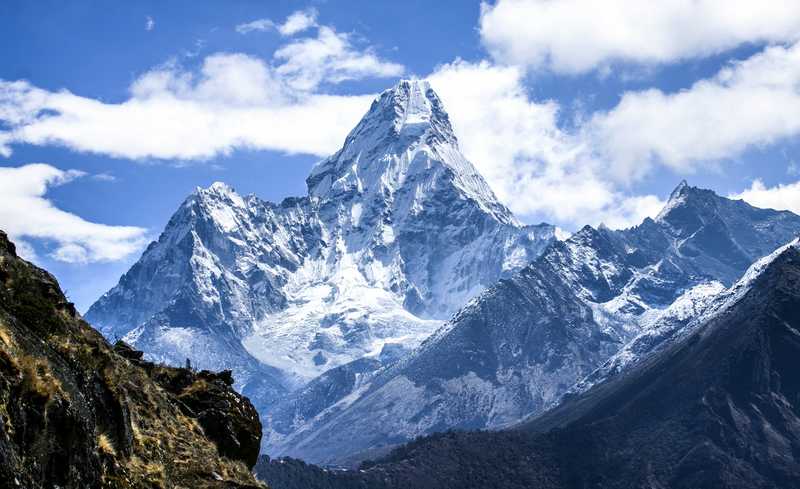
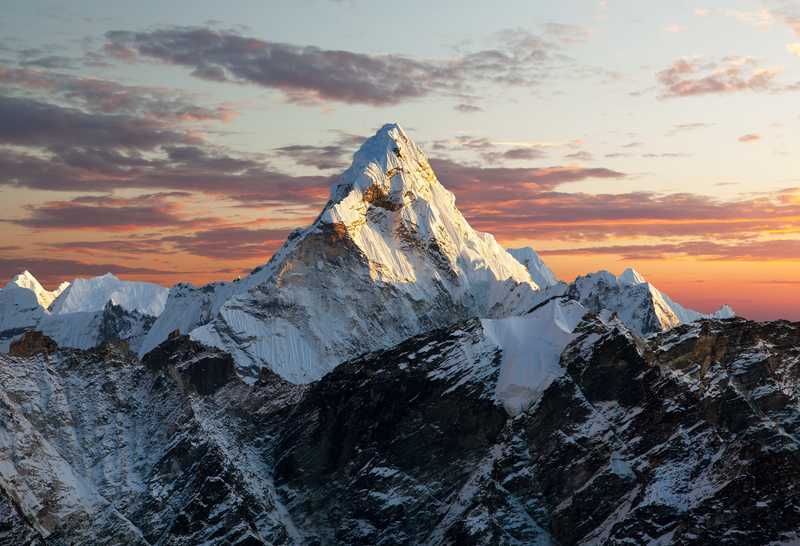
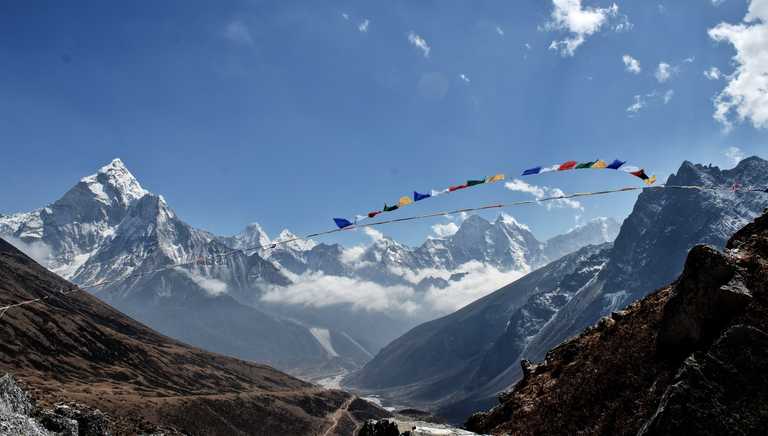
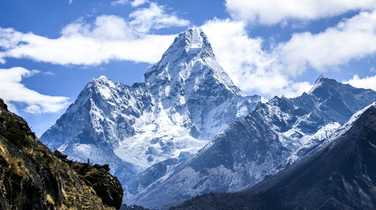
Namche is tucked away between two ridges and has lots of lodges, tea shops and souvenir shops. Today we will trek up to the Everest View Hotel at 3880m for our first view of Ama Dablam and Mount Everest. Following the ‘walk high, sleep low’ principle, this hike will really help with your acclimatisation.
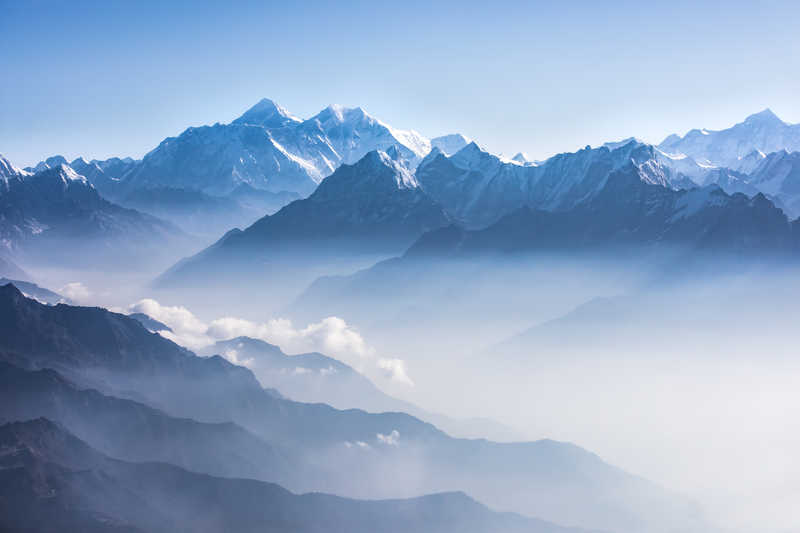
From Namche, the trail contours on to the side of the valley, high above the Dudh Koshi. We will get great views of Everest, Lhotse, Nuptse and Ama Dablam. Passing by several villages and numerous tea shops, we descend steeply to a bridge over the river at Phunki Tenga. The village is an ideal stopover for lunch. Here we can rest before making the steep trek to Tengboche, famous for its legendary monastery, the largest in the Khumbu.
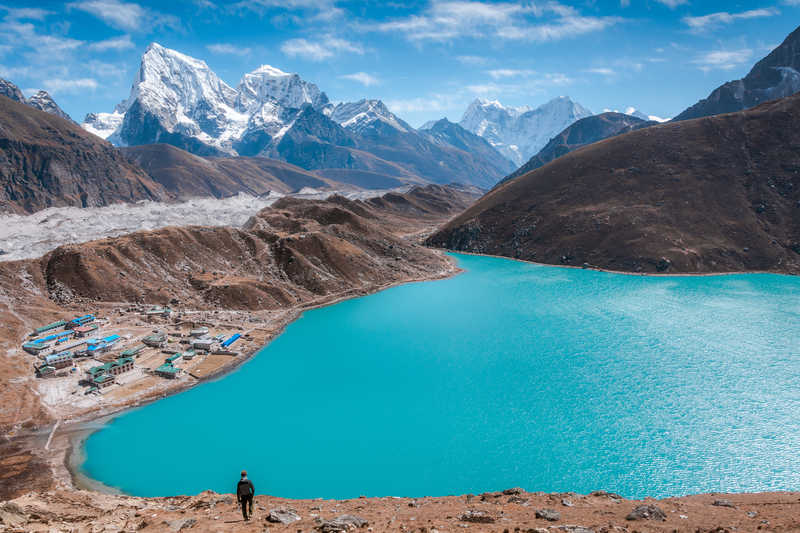
A day for rest and acclimatisation. We also have an opportunity to wander up the valley to look at the Tshola Tsho lake and the perpendicular walls of Cholatse and Tawache. Our guide will take us up onto the ridge overlooking Dingboche for the view of the Imja Valley and the incredible south face of Lhotse.
A day for rest and acclimatisation. We also have an opportunity to wander up the valley to look at the Tshola Tsho lake and the perpendicular walls of Cholatse and Tawache. Our guide will take us up onto the ridge overlooking Dingboche for the view of the Imja Valley and the incredible south face of Lhotse.
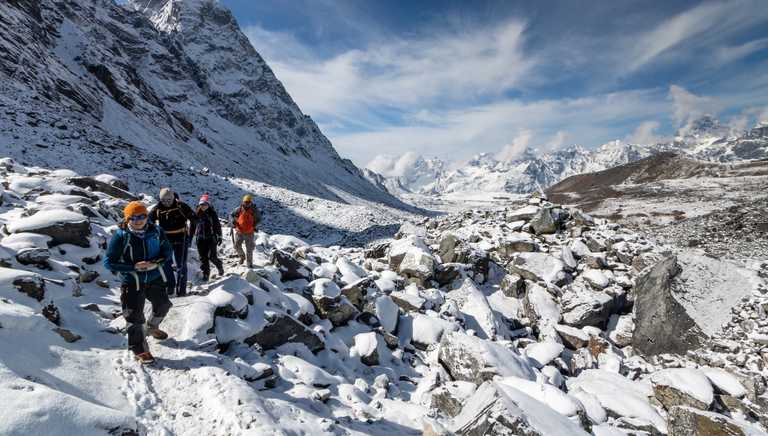
We continue up the wide valley beneath the impressive peaks of Cholatse and Tawache on the left. We then turn right and take a steep trek towards the foot of the Khumbu Glacier. The tea house at Duglha is a good spot to have lunch. The trail zigzags up through the boulders of the glacier's terminal moraine. At the top of this trek there are many stone cairns, built as memorials to the many Sherpas who have died while trekking Mt Everest. The path then treks gently along the glacier, to eventually reach Lobuche.
To reach our next stop, Everest Base Camp, we follow the Khumbu Glacier. The trail offers superb views of the surrounding mountains, especially where the path is forced to rise to cross a tributary glacier. We stop for lunch at Gorak Shep before finally making our way to Base Camp itself (5364m). This takes several hours as the trail weaves its way through ice pinnacles and past the crevasses of the Khumbu Glacier.
A very early start is required to reach the top of Kala Pattar (5641m) for one of the best viewpoints in the Himalaya. From here we can see the face of Everest and deep into the Khumbu icefield. After lunch we then descend to Dingboche (4410m) for the night.
From Dingboche we drop down again to follow the river. After crossing it we trek back up through birch and rhododendron forest back to Tengboche. From here we descend over the Dudh Koshi before making our way back to Namche.
Our final day's trekking follows the Dudh Koshi back down to Lukla. To celebrate our final night, we have dinner altogether this evening as a full team, it is customary for guests to buy dinner for the porters and guides on this night as a thank you for the support they have given you throughout the trek. There will also be an opportunity for you to hand out your tips for the support team during this meal.
After an early breakfast, we will begin our return journey to Kathmandu.
A free day in Kathmandu to explore the city at your leisure. The Monkey Temple at Swayambhunath and the Hindu temple of Pashupatinath are just some of the religious highlights of this fascinating city.
We will collect you from your hotel and transfer you to Kathmandu Airport for your departing flight.
There are really just two things that make the trek tough. First, even with acclimatisation days you are pretty much trekking 5-6 hours a day for at least 12 days. You need to have hardened your body off to walking to cope with this.
Second, is the effect of altitude. By the time you reach base camp you will have lost almost 50% of the oxygen in the air and this makes any exertion tough. It is important, if you are going to cope with this loss of oxygen, that you train hard before you arrive for your trek, then do everything slowly. This is a 'tortoise challenge'!
In
the last few years, trekking in Nepal has become increasingly popular and, as
such the quality of lodges along the trails have improved, along with the food.
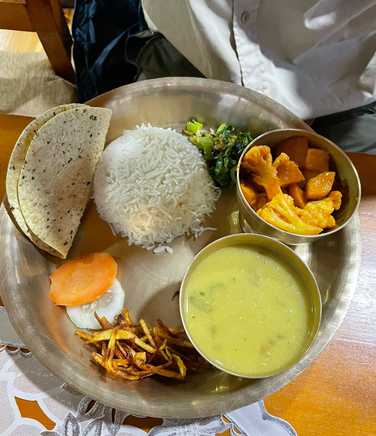
It used to be the case that the only meal available was Dahl Bhat - boiled rice
with a very thin lentil dahl. This is what the porters will eat almost exclusively and you will often hear them
joke "Dhal bhat - 24 hour power". It might be 24 hour power for a Nepali who has lived
on it all his life but for anyone else it might seem pretty unappetising fare on a regular basis.
Fortunately, all but the most remote lodges now offer an extensive menu of food
including local delicacies such as Yak Steak with blue cheese sauce and more
western alternatives such as calzone and chips as well as the standard Dhal
Bhat.
On our
All-Inclusive EBC trek, breakfast, lunch and dinner are all included as well as hot drinks. All food is cooked freshly to order, so your guide will take your order when you check-in at each teahouse. Work out what you want to eat and which hot drink you would like on our arrival and your guide will place the order. Clean, filtered drinking water is also included throughout your trek.
Wifi is available in almost all villages and you will be able to access
the luxury of hot showers at some teahouses. If you wish to use these sundry
items then expect to budget approximately $15 per day if you plan to use WIFi, hot
water / showers and use charging points for any electrical items during your
trek.
Teahouses also sell a selection of snacks, bottled / canned drinks and
items such as toilet paper. If you plan to purchase any of these a budget of
$10 per day should be plenty.
Dining in the lodges will be in a
large open room with tables round the outside and a fire in the centre. Our
guides try to make sure we secure you a spot away from the door and nearer to
the fire but can't always guarantee this.
Duffel bags
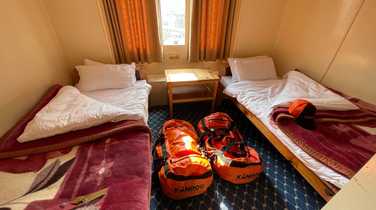
You will be provided with a large duffel bag at the pre-trek briefing that will be yours to use for the duration of your trek. Your equipment will then need to be transferred into this bag. If you are travelling with a duffel bag then it is up to you which bag you choose to use for the trek, if you are travelling with a suitcase then this will need to be left at the pre-trek hotel and collected upon your return as our porters need the bags they carry to be flexible.
All items must be packed in your main equipment bag. They should not be attached to the outside, as we are not responsible if items fall off when the bags are being carried on the trek.
It
is a requirement of joining any of our treks that you attend a pre-trek
briefing the evening before the trek begins. This gives our guide team the
opportunity to review the plans for the trek with you, make sure you have all
the right gear and answer any questions you may have. If
you are borrowing a sleeping bag and down jacket, these will be handed out at
the pre-trek briefing. Please let us know before your trip so that we can
ensure everything is ready for you.
We will
also carry out a pre-trek health check which must be completed before you trek
to high altitude. In order to
set a base line for your daily health check, your resting pulse rate will be
tested and if it is above 100 you will be required to see a doctor before
starting your trek. The briefing in Nepal is held at 4pm the evening before the
trek begins, and we strongly recommend that you book a flight that arrives in
Kathmandu in time for you to attend the briefing.
If
you should arrive on a later flight, you will still need to be given the full
briefing before you go to bed. We need to complete our safety checks in the
evening as we will have an early start in the morning.
The Nepali Rupee is a closed currency so you will not be able
to buy this before you arrive. If travelling from the UK or the US, it is
advisable to travel with your home currency, as both these are widely accepted.
It is very important that bills be new (less than 10 years old), crisp and
untorn. We recommend changing currency in Kathmandu rather than at the airport
as you will get a much better exchange rate. There are exchange kiosks less
than a 5
minute
walk from the hotel and your guide will be happy to assist you in finding these
should you need them to. Alternatively all the hotels in Kathmandu will
change small amounts of money for you.
We recommend that you take local
currency on the actual trek with you, as the teahouses prefer local currency.
You will also get a more favourable exchange rate in Kathmandu than in the
mountains. If you are relying on a credit or debit card for emergency funds,
make sure you tell your card issuer that you will be using it abroad, or you
may find that it won't work when you really need it.
We realise that tipping may not
be a common practice in all countries but for Nepal it is a standard
practice
that all operators support. The decision on how much to tip should be
determined by how well the team served you while you were on the trek. Tips are
always discretionary and if you are not happy with the service you have
received you do not have to pay tips. Tips can be made in US dollars or Nepali
Rupees. It is very important that US bills be new (less than 10 years old),
crisp and untorn.
We are members of the Trekking
Agencies Association of Nepal and the Nepal Mountaineering Association and follow their guidelines when
recommending tip levels for guides and porters. We would suggest you budget
$200 per trekker for your tip contribution on this route. The group tip can be
given to your porters and guides during your celebratory meal in Lukla on the
final night of your trek. Trekking
groups usually club together to buy their guides and porters a meal on the last
night together. If you would like to do this, make sure you keep a little cash
to one side. You
will then say goodbye to your porters the following morning.
You will be provided with a large duffel bag at the pre-trek briefing that will be yours to use for the duration of your trek. Your equipment will then need to be transferred into this bag. If you are travelling with a duffel bag then it is up to you which bag you choose to use for the trek, if you are travelling with a suitcase then this will need to be left at the pre-trek hotel and collected upon your return as our porters need the bags they carry to be flexible.
Our
Everest Base Camp All Inclusive trip includes rental of a quality four season
sleeping bag and warm down jacket. If you plan on borrowing this gear, please
let us know before you travel so we can make sure everything is arranged for
when you get to Nepal. We recommend bringing a sleeping bag liner. If you plan
on renting other items, such as trekking poles, our team in Kathmandu can help
with this. As a guide, you should expect to pay around US$1 per day for
trekking pole rental.
Most
of the rental shops close around 8pm, so if you are arriving on a late flight
the day before the trek starts there will not be an opportunity for you to
visit a rental store. If you are planning on renting any equipment, you need to
make sure you have allowed sufficient time at the beginning of your trip.
All
rental equipment is included in your overall trekking bag weight, so make sure
you have allowed for this when packing your bag at home. A sleeping bag will
weigh around 2kg.
| From | To | Price | Availability | Book | Enquire |
|---|---|---|---|---|---|
| 03/11/2026 | 17/11/2026 | £1,699 $2,295 |
Guaranteed
|
Book now | Enquire now |
| 14/11/2026 | 28/11/2026 | £1,699 $2,295 |
2 more to confirm
|
Book now | Enquire now |
| 28/11/2026 | 12/12/2026 | £1,699 $2,295 |
2 more to confirm
|
Book now | Enquire now |
| 30/01/2027 | 13/02/2027 | £1,699 $2,295 |
2 more to confirm
|
Book now | Enquire now |
| 13/02/2027 | 27/02/2027 | £1,699 $2,295 |
2 more to confirm
|
Book now | Enquire now |
| 06/03/2027 | 20/03/2027 | £1,699 $2,295 |
Guaranteed
|
Book now | Enquire now |
| 27/03/2027 | 10/04/2027 | £1,699 $2,295 |
2 more to confirm
|
Book now | Enquire now |
| 10/04/2027 | 24/04/2027 | £1,699 $2,295 |
2 more to confirm
|
Book now | Enquire now |
| 17/04/2027 | 01/05/2027 | £1,699 $2,295 |
2 more to confirm
|
Book now | Enquire now |
| 01/05/2027 | 15/05/2027 | £1,699 $2,295 |
2 more to confirm
|
Book now | Enquire now |
| 15/05/2027 | 29/05/2027 | £1,699 $2,295 |
2 more to confirm
|
Book now | Enquire now |
| 11/09/2027 | 25/09/2027 | £1,699 $2,295 |
2 more to confirm
|
Book now | Enquire now |
| 02/10/2027 | 16/10/2027 | £1,699 $2,295 |
Guaranteed
|
Book now | Enquire now |
| 23/10/2027 | 06/11/2027 | £1,699 $2,295 |
2 more to confirm
|
Book now | Enquire now |
| 06/11/2027 | 20/11/2027 | £1,699 $2,295 |
2 more to confirm
|
Book now | Enquire now |
| 20/11/2027 | 04/12/2027 | £1,699 $2,295 |
2 more to confirm
|
Book now | Enquire now |
| 04/03/2028 | 18/03/2028 | £1,749 $2,359 |
2 more to confirm
|
Book now | Enquire now |
Want to ask us a question or book a private trip? Don't hesitate to contact us!
Contact us