
Why packing for Everest Base Camp is different from other expeditions
Trekking in Nepal is a true bucket-list experience, appealing to hikers of all abilities for its wealth of mountaineering opportunities and its warm, welcoming nature.
But the iconic Everest Base Camp trek isn't your average adventure. A unique combination of high altitude, variable temperatures, and the multi-week duration pose a challenge many travellers underestimate: packing the right kit for the job.
This is our complete Everest Base Camp packing list with items recommended by our Nepali team of experts.
Some links in this article are affiliate links, which means we earn a small commission if you make a purchase (at no extra cost to you).
Everest Base Camp kit list: A complete checklist
Here’s a top-level Base Camp Everest packing list:
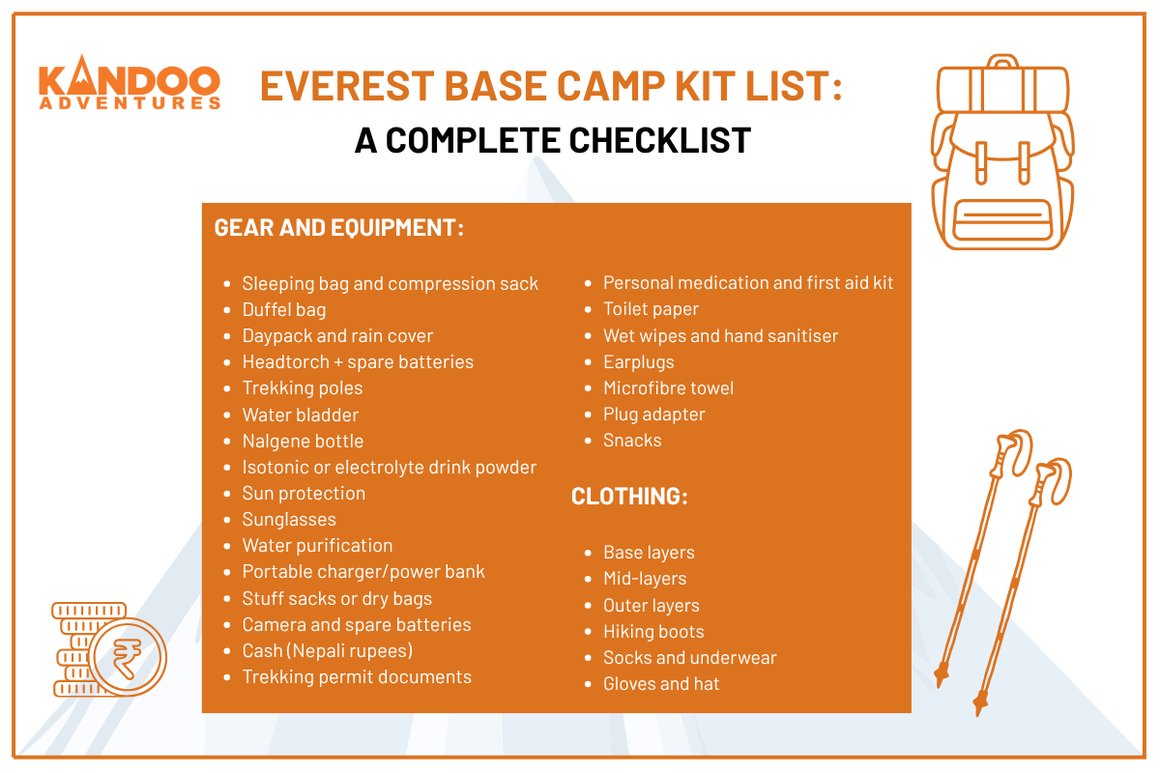
Side note: Our Nepal packing list and Himalayan trekking recommended equipment guides have a detailed list of what to pack, plus recommendations for each item.
And here’s a breakdown of the clothing items in this Everest Base Camp Trek kit list.
Base layers
- Quick-drying, breathable underwear
- Liner socks – breathable, high-wicking (3 pairs)
- Trekking socks (4-5 pairs for walking)
- Thermal socks (2-3 pairs for higher altitudes)
- Thermal base layers (3 thermal top layers and 2 thermal bottom layers)
- Extra thermals for sleeping in
Mid-layers
- Full zip softshell or fleece
- Short-sleeve moisture-wicking top (×2)
- Long sleeve moisture-wicking top (lightweight and medium weight options)
- Trekking trousers for over thermal leggings
Outer layers
- Insulative down jacket (650+ fill power)
- Hiking boots
- Trainers for evening time
- Waterproof trousers
- Warm hat (knitted or fleece)
- Buff or balaclava (to protect from wind and dust that can lead to the Khumbu cough)
- Wide-brimmed sunhat
- Liner or inner gloves (a base layer for your hands and fingers)
- Outer gloves (waterproof and durable)
- Gaiters
- Micro-spikes
Essential gear and equipment for Everest Base Camp
- Daypack (30–40 litres) and rain cover – you carry this daily while porters carry your duffel.
- Headtorch and spare batteries – essential for the pre-dawn ascent of Kala Patar and moving around the teahouses at night (lighting can be limited).
- Trekking poles – reduce knee strain by 20–50%, which is especially useful on the descent.
- Water bladder – aim for at least 3 litres a day (a bladder makes sipping on the move easy)
- Isotonic or electrolyte drink powder – improves hydration and replaces electrolytes lost during trekking
- Nalgene bottle – Nalgene is the only bottle you can fill with hot water at night to use as a bed warmer
- Sun protection – sunscreen and SPF lip balm that you can reapply regularly at altitude
- Sunglasses – aim for a high UV rating to prevent snow blindness and eye damage from intense glare
- Sleeping bag and compression sack – teahouses provide blankets but a sleeping bag rated to at least -15°C keeps you warm on the coldest nights
- Pillow – teahouses don't always provide one (a lightweight inflatable pillow saves space and weight in your duffel)
- Microfibre towel – useful for wiping hands and face each day
- Plug adapter – for charging devices in teahouses and hotels
- Solar portable charger/power bank – electricity at teahouses is limited and often charged per use, so a solar power bank keeps devices topped up (and can charge while trekking if you attach it to your bag)
- Stuff sacks or dry bags – to keep kit organised and dry inside your duffel
- Cash (Nepali rupees) – you might need cash for teahouses, tips, and extras (we recommend taking local currency – other currencies may be accepted but change will be given in rupees and the exchange rate is poor)
- Camera and spare batteries – not essential, but worth taking if you want to have excellent footage of the scenery and your experience
- Trekking permit documents – like the TIMS card and Sagarmatha National Park permit
- Personal medication and first aid kit – include blister plasters, pain relief, and rehydration sachets
- Toilet paper – not provided in teahouse toilets, although you can buy some on the trail if needed
- Wet wipes and hand sanitiser – running water is limited at higher altitudes
- Earplugs – recommended given communal teahouse sleeping
- Snacks – energy bars, nuts, and dried fruit maintain energy between meals on long trekking days
Find out more about what to eat when trekking in Nepal.
What sleeping bag do you need for Everest Base Camp?
We recommend a 4-season, down sleeping bag, rated to at least -15°C/5°F. This type of sleeping bag will keep you warm when sleeping in unheated teahouses and if temperatures drop unexpectedly (which isn’t uncommon at altitude).
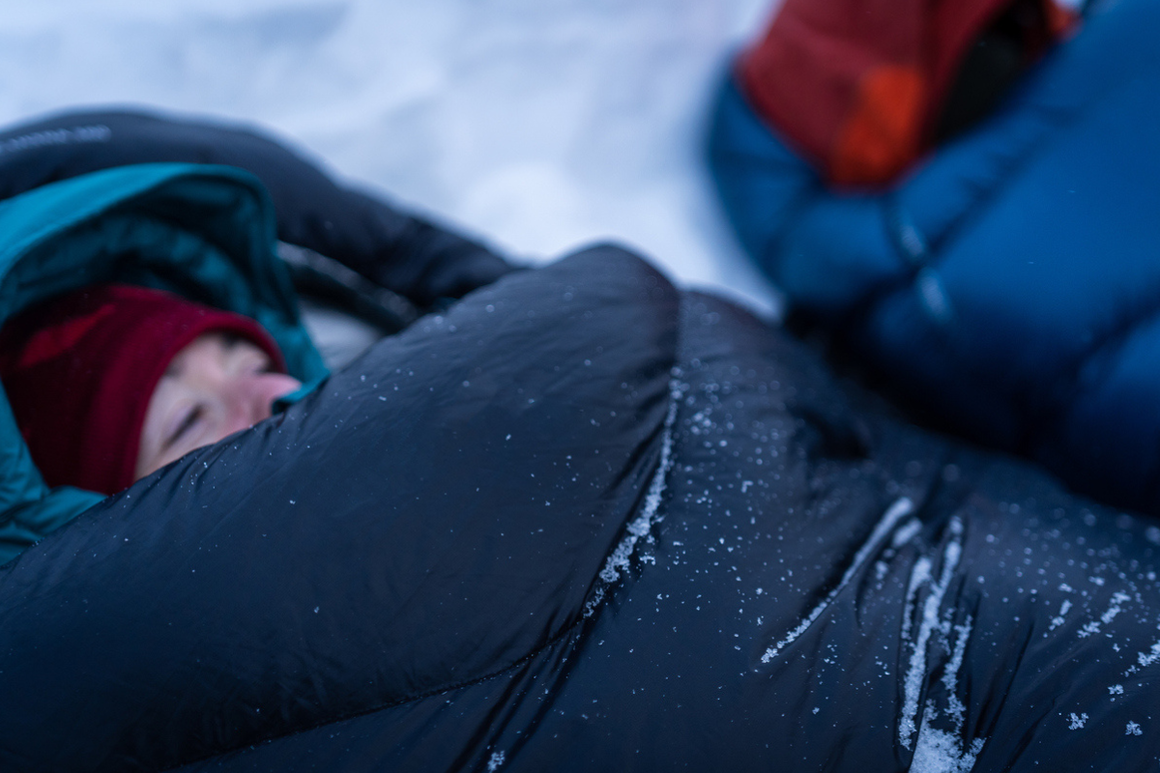
Down versus synthetic sleeping bags: The pros and cons
Down sleeping bags are the most insulative for an Everest Base Camp trek. The natural properties of goose or duck down are excellent at retaining warmth by sealing warm air inside the sleeping bag.
On the downside, they don’t perform well when wet and can take a long time to dry out (they need drying properly to stop the feathers sticking together, which can impact how warm the sleeping bag is). If using a down sleeping bag, ensure you use a waterproof bag or bag cover to avoid getting your sleeping bag wet.
An alternative option is a synthetic filled sleeping bag. Synthetic fibres mimic the properties of natural down, making this type of sleeping bag cheaper to buy. However, they can weigh more and take up more room in your pack than their down alternatives.
Here’s a quick breakdown of the pros and cons of each type of sleeping bag for Everest Base Camp:
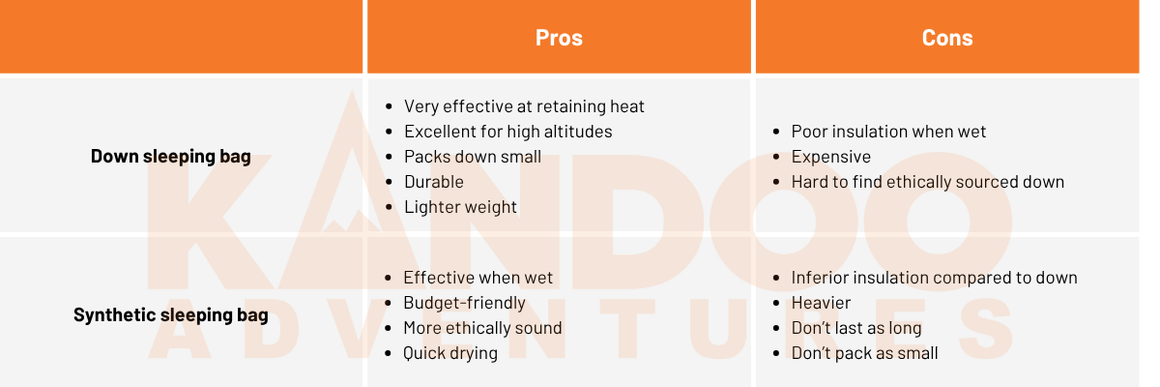
When choosing your Everest Base Camp sleeping bag, consider the weight and bulk restrictions of each option. Sleeping bags typically weigh around 2kg which must be included within your 15kg duffel bag limit.
Top tip: Consider buying a sleeping bag compression sack to reduce your sleeping bag mass as much as possible to take up less room in your pack.
You can buy or rent sleeping bags in Kathmandu before your trek, although we’d recommend bringing your own where possible. We recommend Mountain Hardwear sleeping bags as a solid mid-range option that offers reliable insulation without breaking the bank. If you do rent a sleeping bag, it’s a good idea to use a liner.
The Kandoo team in Nepal can help you source items locally (although quality can be variable, so keep this in mind).
Top tip: If you’re concerned about getting cold at night, bring an insulated sleeping bag liner. This could add a few degrees of extra warmth to your sleeping bag and is a lightweight addition to any packing list.
The right jacket for Everest Base Camp
There is no single “best Everest Base Camp jacket”. We suggest using layers to manage your temperature as conditions change throughout the day, rather than relying on one jacket to do everything.We recommend four layers to cope with the variable conditions you’ll experience on your trek.
1. Moisture-wicking base layer
Opt for lightweight base layers that sit close to your skin with moisture-wicking properties to keep your skin cool when sweating and warm when resting. Merino wool base layers are ideal but synthetic fibres also work well, but avoid cotton base layers as they retain moisture.
Recommendation: We particularly like Icebreaker base layers which use Merino wool (a very fine sheep wool).
- Pack 2-3 short sleeved options for trekking at lower altitudes and 2-3 long sleeved base layers for higher altitudes and sleeping in, if needed.
- Include 1-2 medium weight base layers so you have warm, dry layers to change into in the evening.
2. Mid-layer fleece or softshell
A mid-layer fleece or softshell jacket will add warmth and versatility between your base layer and down jacket. Wear it alone at lower altitudes during active trekking, or underneath your down jacket as temperatures drop higher up and on early morning starts.
Consider full zip options which are easy to open for ventilation while walking, unlike overhead clothing which requires you to stop and remove your pack to change.
Recommendation: The team like a Polartec fleece for mid layers as they’re super light and dry quickly, making them perfect for altitude trekking.
3. Down jacket outer layer
Wear a down jacket over your base and mid-layers to keep warm as you ascend to higher altitudes where the temperature drops.
You could also choose a synthetic jacket, but a down jacket packs lighter, smaller, and is better at retaining heat. The great thing about down is that it packs away easily and takes up little space in your bag.
Tip tip: Choose a jacket with a hood for maximum insulation, especially at higher altitudes.
We suggest buying or renting the best quality down jacket you can afford to stay comfortable during your trek to Everest Base Camp.
Recommendation: Brands like The North Face blend affordability with insulation, offering a range of down jackets to keep you warm on your trek. You can also look for second-hand options to keep costs down.
4. Hardshell outer layer
A hardshell waterproof is an essential layer for protection against wind and rain. Down jackets are typically water resistant but won’t protect you for long, so having a waterproof hardshell packed in your day bag is a good idea for when conditions deteriorate.
Recommendation: Berghaus is a midrange brand that makes decent waterproof jackets balancing affordability with performance.
Top tip: Avoid ski jackets which are bulky in favour of various layers that are more versatile and interchangeable.
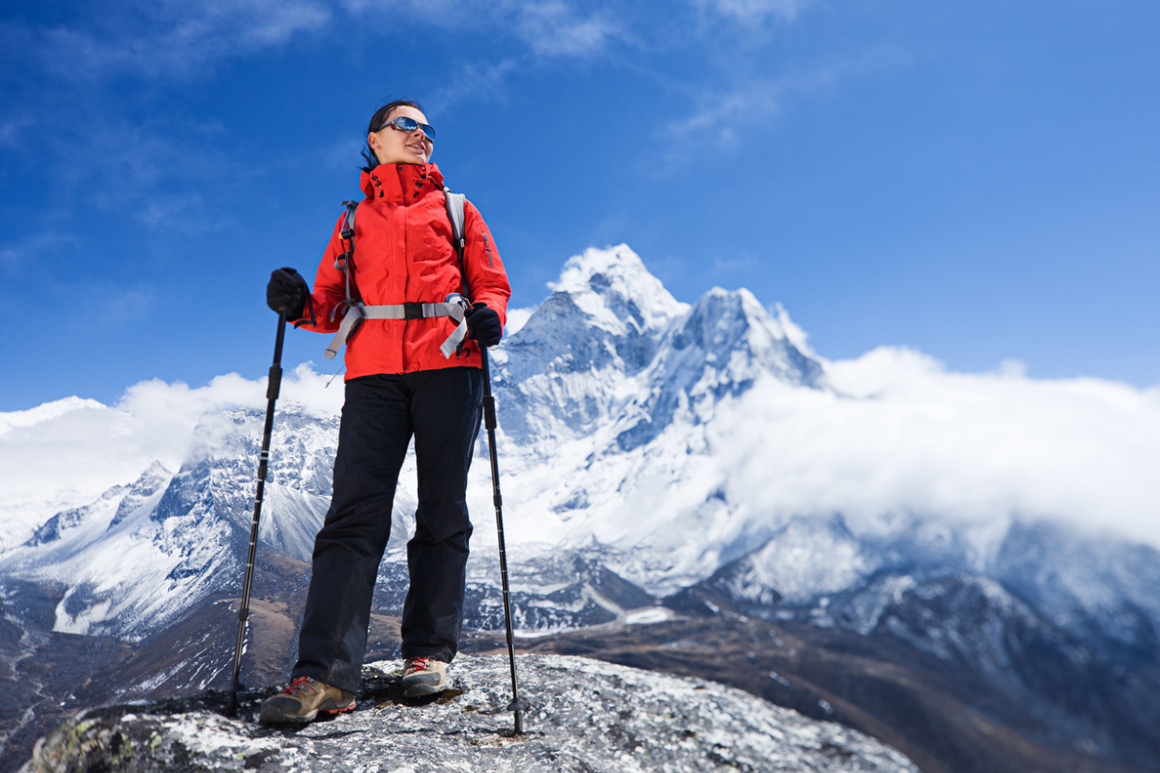
What to wear to sleep on an Everest Base Camp trek
We recommend sleeping in a long-sleeved thermal top and thermal leggings inside your sleeping bag. At lower altitudes, you might prefer a t-shirt and at higher altitudes, you can add a fleece, thick socks, a hot Nalgene bottle and a hat, if required.
Something to note: Most teahouses have twin rooms with two single beds, so you’ll likely be sharing with another person of the same gender from your trekking group.
Boots and footwear for Everest Base Camp
You need a decent pair of walking boots with ankle support to hike to Everest Base Camp. The trek involves walking across established paths that may be uneven in places but don’t require any technical skill.
Your boots should have good tread and tight laces to stop the foot from moving which may cause blisters.
Top tip: Avoid wearing new boots without breaking them in as you’re more likely to get blisters or be uncomfortable on your feet!
Walking boots with a Gore-Tex (or similar) outer will keep your feet warm and dry. Pair your boots with moisture-wicking walking socks and keep a spare dry pair in your day pack.
Wet socks may rub so always keep feet dry. Merino or Smart Wool are great options and come highly recommended by the Kandoo team.
Find out more about how to prevent blisters when hiking.
Daypack vs main duffel: What goes where?
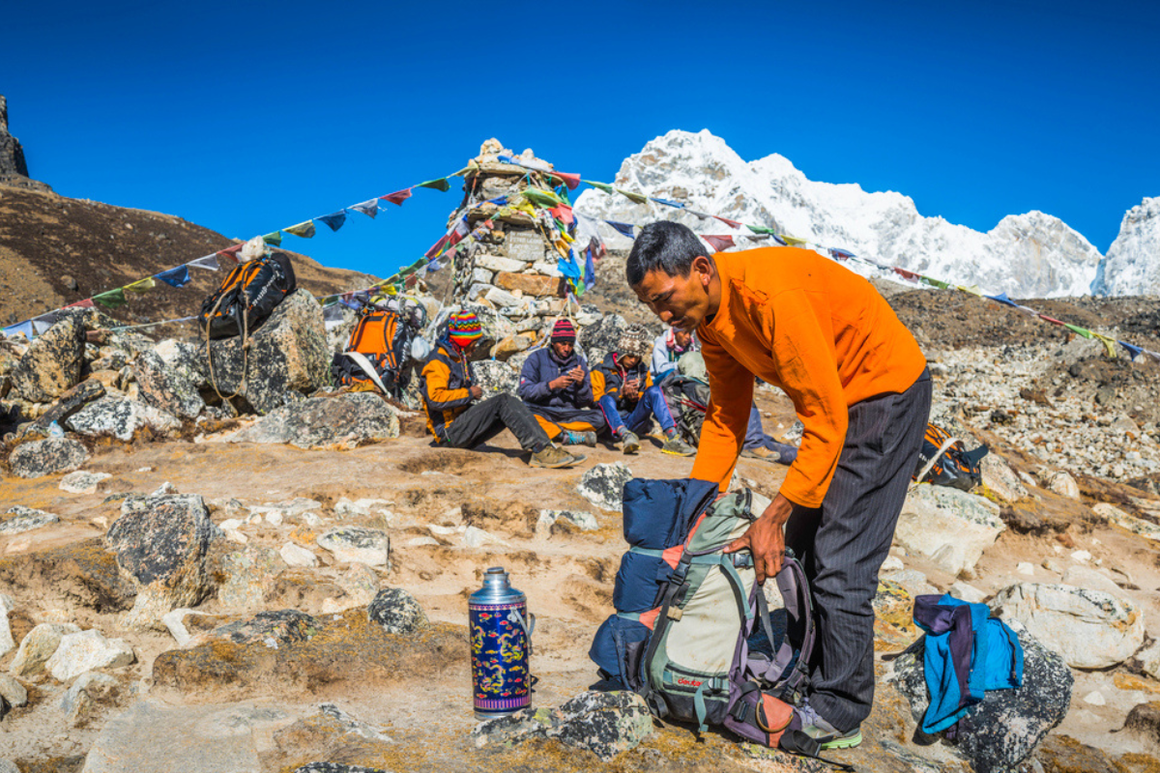
Your duffel is for everything you need on the trek but not during the day (your porter carries it between teahouses). Your daypack is for everything you need on the trail (you carry it yourself).
Here’s a breakdown of what to pack in each bag:
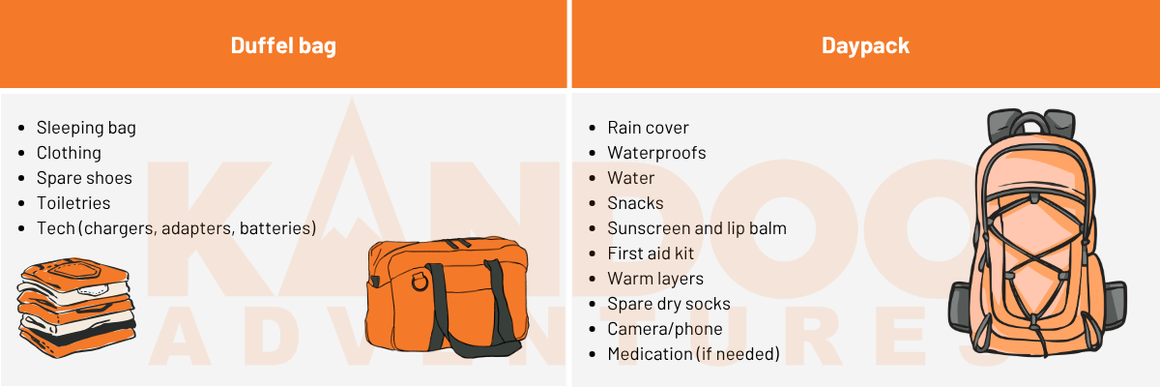
You’re only allowed a maximum of 15kg on your internal flight to Lukla, with 10kg in a duffel and 5kg in a daypack. For this reason, we suggest travelling as light as possible.
You can usually leave excess luggage at your accommodation in Kathmandu.
During your trek, porters will carry your main duffel bag. To make sure they’re not carrying unsafe loads, this must be a maximum of 15kg.
Recommendation: We love an Osprey backpack. A sound investment, an Osprey pack is multi-functional and can be used for all sorts of adventures.
Top tip: Consider keeping valuables hidden in an internal pocket or wear a money belt inside your clothing.
What to buy or rent in Kathmandu for the Everest Base Camp trek
If you don't own all the kit you need, you can rent most items in Kathmandu.
Expect to pay;
- $2 a day for a 4-season sleeping bag
- $2 a day for a down jacket
- $1 a day for trekking poles
The quality of rental kit varies from place to place. Remember to check your items for signs of wear and tear before you commit.
Joining a Kandoo trip? Let us know beforehand if you want to rent items and our local guides will help you source missing items to hire for your Everest Base Camp trek.
Top tips when packing for Everest Base Camp
- Avoid jeans, hoodies and cotton clothing. Your total bag weight is limited to 15kg so pack high-performing items that pack down small over bulky everyday items that will take up space and weight.
- Check any rental kit inside the shop before you pay to make sure it’s of a good standard.
- Invest in base layers. Good quality base layers are something we highly recommend. The fabric sits right next to your skin and is the start of your layering system, so it’s important that it’s comfortable and effective at keeping you warm and cool at different times.
- Choose a mummy-shaped sleeping bag for your Everest Base Camp trek. This will provide more insulation and warmth than a square sleeping bag.
- Break in new walking boots before arriving in Kathmandu! There’s nothing worse than blisters from new, or poorly fitting boots, when you have to walk 6-9 hours a day on consecutive days.
Everest Base Camp Trek with Kandoo
The travel experts at Kandoo HQ are particularly fond of Nepal trekking and the iconic journey to Everest Base Camp. With a fantastic local team in Kathmandu, we’ve been guiding adventurers in Nepal for almost two decades, so our kit list is firmly based on experience!
Whether you’re an experienced hiker or have EBC on your bucket list, look no further for the perfect Everest Base Camp expedition. With three routes to choose from, plus several unique variations of the classic itinerary, our Himalayan adventures all come highly recommended.
Check out our Everest Base Camp trek and find your next adventure. Or if you're looking to push yourself further, our Everest Base Camp and Island Peak expedition combines the classic Base Camp route with a summit climb to 6,189m.